The hidden cause of loud wine fridges often lies in improper placement and load imbalance, which create vibrations that amplify noise and put extra strain on the compressor. If the fridge isn’t level or if bottles and shelves aren’t evenly distributed, vibrations increase, making the noise worse. To keep things quiet, you need to focus on correct placement, balance, and stability. Keep going to discover simple steps to silence your wine fridge effectively.

Get home appliances delivered free — and shop member deals
- Fast, free delivery on millions of items
- Access to Prime Big Deal Days deals on October 6–7
- Prime Video, Amazon Music and more included
Key Takeaways
- Improper placement near heat sources or uneven surfaces amplifies vibrations and internal noise.
- Load imbalance causes excessive vibrations, stressing components and increasing loud operational sounds.
- Faulty or obstructed fan blades generate persistent buzzing or rattling noises.
- Loose or unsecured parts inside the fridge can rattle or hum louder than normal.
- External vibrations transfer through unstable furniture or flooring, making the fridge sound louder.
As an affiliate, we earn on qualifying purchases.
Why Is My Wine Fridge So Loud? Common Causes Explained

If your wine fridge suddenly becomes louder than usual, it’s likely due to common issues that can often be easily identified. One frequent cause is temperature fluctuations, which can cause the compressor to work harder, resulting in increased noise. Check if the fridge is placed near heat sources or if the door isn’t sealing properly. Another culprit is interior lighting. If the light switch is faulty or the bulb is loose, it can cause buzzing or rattling sounds. Sometimes, the light stays on longer than necessary, adding to noise levels. Ensuring proper insulation and confirming that the interior light is secure can help reduce these noises. Additionally, vibrations and stability can contribute to increased noise levels, especially if the fridge is not on a level surface. Improper vibration damping can lead to the compressor and other components rattling more than they should. Regularly checking for component wear and ensuring all parts are secure can help prevent excessive noise. Proper maintenance and routine inspections can also extend the lifespan of your wine fridge and keep it running quietly. Addressing these simple issues often quiets your wine fridge quickly.
How Load Imbalances and Vibrations Make Your Fridge Noisy
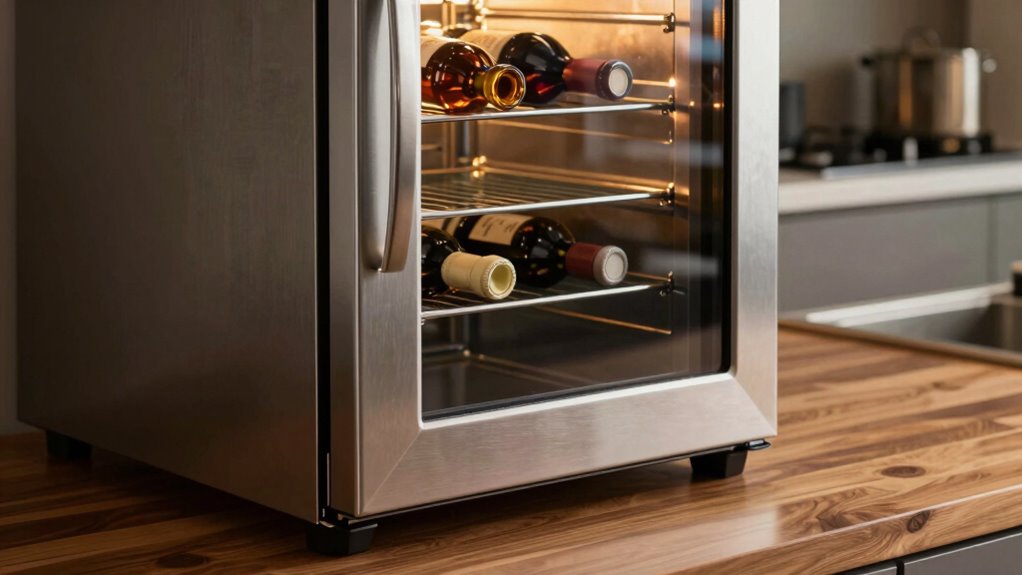
Uneven load distribution inside your wine fridge can cause vibrations that lead to increased noise. When the load isn’t balanced, vibration sources intensify, making your fridge rattle or hum louder than it should. A load imbalance puts extra stress on the compressor and fan, causing them to work harder and generate more vibration. These vibrations transfer through the fridge’s structure, amplifying noise. To reduce this, guarantee bottles and shelves are evenly distributed, preventing concentrated weight on one side. Proper load management minimizes vibration sources and stabilizes the unit, leading to quieter operation. Recognizing how load imbalance impacts vibrations helps you keep your wine fridge running smoothly and quietly, avoiding unnecessary noise caused by avoidable factors. Regular maintenance and auditory processing awareness can further help identify and resolve noise issues early. Additionally, understanding vibration transfer can help you pinpoint and address the source of extra noise. Furthermore, being aware of the structural integrity of your fridge can prevent further vibrations from developing over time. Monitoring the foundation stability of the unit can also prevent additional vibrations caused by uneven surface placement. Moreover, maintaining proper insulation can help absorb vibrations and reduce overall noise levels.
Are Fan or Compressor Issues Causing Unusual Sounds? Here’s What to Check

Unusual sounds from your wine fridge often indicate issues with the fan or compressor. If you notice persistent fan noise, check if the fan blades are obstructed or dirty. A wobbling or rattling fan might need realignment or replacement. Listen for a loud compressor hum, which could signal it’s struggling or malfunctioning. Sometimes, the compressor vibrates excessively if not properly secured, causing noise. Make sure the compressor is level and free of debris around it. If the fan or compressor makes irregular or loud noises, it’s a sign to inspect these parts promptly. Addressing these issues early can prevent more significant damage and quiet your fridge. Regular maintenance of these components keeps your wine fridge running smoothly and quietly. Additionally, understanding how noise indicates specific problems can help you diagnose issues more effectively. Proper airflow and component alignment also play a role in reducing operational noise and extending the lifespan of your appliance. To further minimize noise, ensure that the body jewelry measurements and materials used in the compressor or fan assembly are appropriate, as improper fitting can contribute to vibrations and sounds. Moreover, paying attention to measurement accuracy when assessing parts can help identify issues with motor or component wear before they become severe.
Easy Tips to Reduce Noise and Keep Your Wine Safe

You can cut down on noise by placing your wine fridge on a level, sturdy surface away from walls. Regularly check and clean its components to guarantee smooth operation. Also, keep it away from external vibrations, like nearby appliances or heavy foot traffic, to maintain silence and safety. Ensuring proper mount leveling kits installation can further reduce vibrations and noise. Additionally, inspecting and maintaining the internal filter and compressor systems can prevent operational issues that contribute to excess noise, which is a common concern in personal finance planning to avoid unexpected expenses. Incorporating high-quality vibration dampening materials around the unit can also help absorb vibrations and enhance quietness. Implementing these vibration reduction techniques can significantly enhance the quietness and longevity of your wine fridge.
Proper Placement Matters
Proper placement of your wine fridge is essential for reducing noise and ensuring your wine stays safe. Consider placement considerations carefully, as placing it on an uneven or unstable surface can cause vibrations that increase noise and risk damage. Keep your fridge away from appliances or areas with constant vibrations, which can amplify sound. Ambient temperature is also critical; avoid spots exposed to direct sunlight or near heat sources, as fluctuations can make the compressor work harder, creating more noise and affecting wine quality. Choose a cool, stable spot with good ventilation to help your fridge operate efficiently and quietly. Vibration mitigation is also important; using anti-vibration pads can further reduce noise and protect your wine. Proper placement not only minimizes noise but also maintains ideal conditions for your wine’s safety and longevity.
Regular Maintenance Checks
Regular maintenance checks are a simple yet effective way to keep your wine fridge running quietly and safely. Regularly inspecting and cleaning your fridge’s components helps prevent dust buildup that can cause noise and reduce efficiency. Pay special attention to cleaning routines around the condenser coils and fan to ensure smooth operation. Additionally, calibrate the temperature regularly to avoid overworking the compressor, which can lead to loud noises. Use a thermometer to verify the internal temperature and adjust the controls as needed. When you stay on top of these checks, you reduce the risk of mechanical issues that cause noise and protect your wine’s quality. Consistent maintenance is a cost-effective way to extend your fridge’s lifespan and keep it operating quietly. Understanding appliance noise sources] can help you identify and address specific issues early.
Minimize External Vibrations
External vibrations from nearby appliances, floors, or furniture can transfer noise to your wine fridge, making it sound louder than it actually is. To minimize these external vibrations, focus on improving shock absorption and reducing contact points that transfer vibrations. Here are some easy tips:
- Place your fridge on a sturdy, level surface
- Use vibration-absorbing rubber pads beneath the feet
- Avoid placing the fridge near appliances that vibrate
- Secure loose furniture or flooring that might transfer vibrations
- Keep the fridge away from heavy foot traffic areas
- Consider the contrast ratio of your environment to optimize noise perception, as lower contrast can sometimes make noise seem more prominent
- Additionally, evaluating your environmental factors can help identify sources of external vibrations that might be overlooked. For example, flooring material can significantly influence vibration transfer and noise levels, and choosing sound-dampening flooring can further reduce vibrations. Incorporating vibration isolation pads under the fridge can also provide an extra layer of protection against external vibrations.
These simple adjustments can considerably reduce external vibrations, helping your wine fridge operate quietly and keeping your wine safe. Proper shock absorption and isolation are key to preventing noise caused by external vibrations.
When to Call a Professional for Your Noisy Wine Fridge
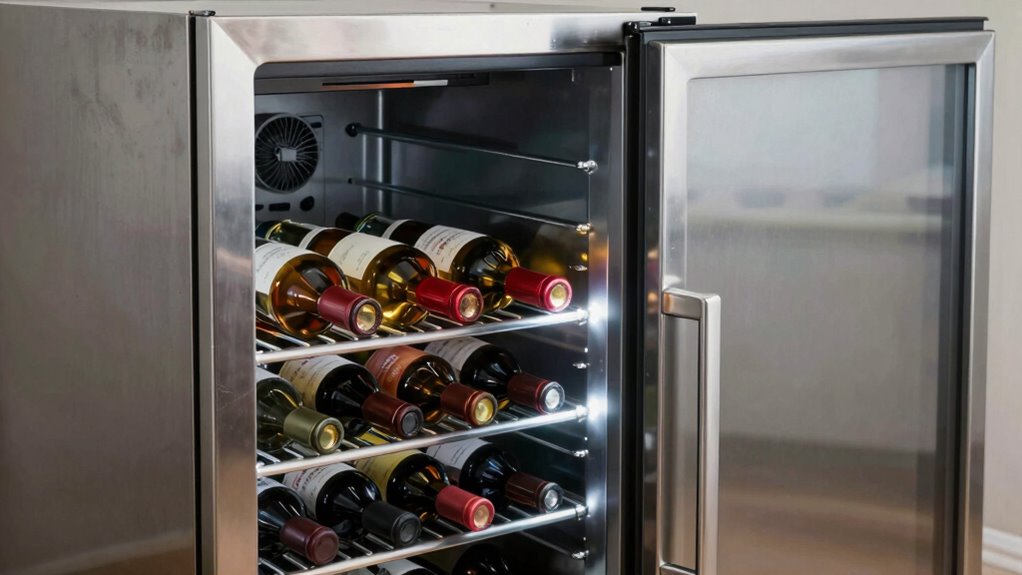
If your wine fridge makes persistent unusual noises, it’s a sign you should consider calling a professional. Frequent mechanical issues that you can’t fix yourself can also indicate a problem that needs expert attention. Don’t ignore these signs, as they could lead to more serious damage or compromise your wine storage. Recognizing signs of mechanical problems early can prevent costly repairs later on. Additionally, understanding the signs of early failure can help you address issues before they escalate. Being aware of accessibility features can also assist you in monitoring and maintaining your appliance more effectively.
Persistent Unusual Noises
When your wine fridge starts making persistent, unusual noises, it’s a clear sign that something isn’t right. These sounds can indicate deeper issues, especially if they persist despite your efforts. Don’t ignore them—professional help might be needed. Consider calling a technician if you notice:
- Loud humming or buzzing sounds that don’t stop
- Unusual rattling or banging noises during operation
- Vibrations that seem excessive or unbalanced
- Sounds that seem to originate from the compressor area
- Noises that are amplified due to poor sound insulation or noise dampening
Addressing sound issues early can prevent further damage. A professional can assess whether noise dampening measures or better sound insulation could reduce the noise, ensuring your wine fridge operates quietly and efficiently.
Frequent Mechanical Issues
Frequent mechanical issues are a clear sign that your wine fridge needs professional attention. If you notice inconsistent wine temperature or persistent lighting issues, it’s time to call in an expert. These problems often indicate underlying motor or compressor faults. Imagine:
| Issue | Possible Cause |
|---|---|
| Noisy compressor | Worn-out motor or loose parts |
| Fluctuating temp | Faulty thermostat |
| Lighting flickers | Electrical wiring problems |
| Vibration or rattling | Misaligned fan or motor |
| Inconsistent cooling | Refrigerant leak or blockage |
If these issues persist, addressing them promptly prevents further damage and ensures your wine stays perfectly stored. Don’t overlook ongoing mechanical problems—professional help is essential.
Quick Fixes to Silence Your Wine Fridge Today
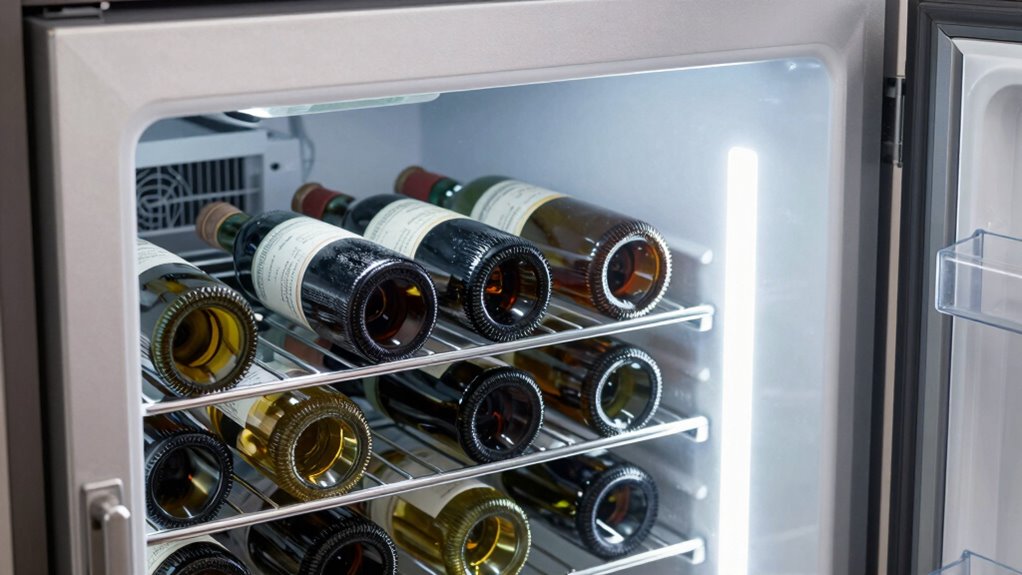
Sometimes, a noisy wine fridge can be a quick fix away from silence. Start by checking if it’s level; an uneven fridge causes vibrations and noise. Make certain your beverage storage is organized, preventing bottles from knocking against each other. Adjust the shelves to reduce contact with the compressor or fan. Clean the condenser coils to improve airflow and reduce noise. Place the fridge away from high-traffic areas to minimize vibrations. Consider using vibration-dampening mats under the unit. Finally, if noise persists, try repositioning the fridge to a cooler, less crowded spot—this can improve performance and reduce sound. These simple steps help keep your wine pairing experience peaceful without costly repairs, making your wine storage quiet and efficient.
Frequently Asked Questions
Can Location Affect My Wine Fridge’s Noise Levels?
Yes, location affects your wine fridge’s noise levels. Proper placement matters—avoid placing it near walls or in tight spaces where vibrations can amplify sound. Guarantee good insulation around the fridge to reduce noise transmission and prevent it from rattling or vibrating loudly. Keep it on a stable, level surface, and avoid placing it in enclosed or overly tight spots, which can cause the compressor to work harder and increase noise.
Do Temperature Settings Influence Fridge Noise?
Imagine your wine fridge quietly humming, like a gentle breeze. Your temperature settings do influence noise levels because setting the thermostat too low causes the compressor to run more often, increasing noise. Proper thermal insulation helps maintain consistent temperatures, reducing frequent compressor cycles. When you adjust settings thoughtfully, you minimize these cycles, keeping your wine fridge quieter and more efficient. So, set it just right for ideal silence and performance.
How Often Should I Clean My Fridge to Prevent Noise?
You should clean your fridge at least once every three to six months to prevent noise. Regular cleaning reduces dust buildup on the condenser coils, which can cause the compressor to work harder and create more noise. By maintaining a consistent cleaning frequency, you promote noise reduction and keep your wine fridge running smoothly. Don’t forget to check and clean the door seals and interior shelves during each cleaning session for ideal performance.
Are Older Wine Fridges More Prone to Loud Noises?
Yes, older wine fridges are more prone to loud noises because their compressors age and develop vibration issues over time. As the compressor wears out, it can cause increased vibrations, leading to louder operation. Regular maintenance, such as tightening loose parts and checking for wear, can help reduce noise. If your fridge is old and noisy, consider replacing the compressor or upgrading to a newer model for quieter performance.
Can Ambient Room Noise Mask Fridge Sounds Effectively?
You can definitely mask fridge sounds with ambient room noise, especially if you use soundproofing techniques or noise-canceling devices. These methods create a barrier that reduces the perception of noise, making your fridge less noticeable. Experiment with adding soft furnishings, like curtains or rugs, to absorb sound, or invest in noise-canceling speakers. Combining these strategies helps effectively hide the noise, ensuring your space remains peaceful and undisturbed.
Conclusion
By understanding the common culprits behind your noisy wine fridge, you can tackle the problem head-on before it worsens. Regular maintenance and simple tweaks often do the trick, saving you time and money. Remember, don’t let the noise become a thorn in your side—address it now before it turns into a bigger headache. With a little know-how, you can keep your wine safe and your fridge humming softly, like a well-oiled machine.
Cold & flu season Picks
humidifiers
As an affiliate, we earn on qualifying purchases.