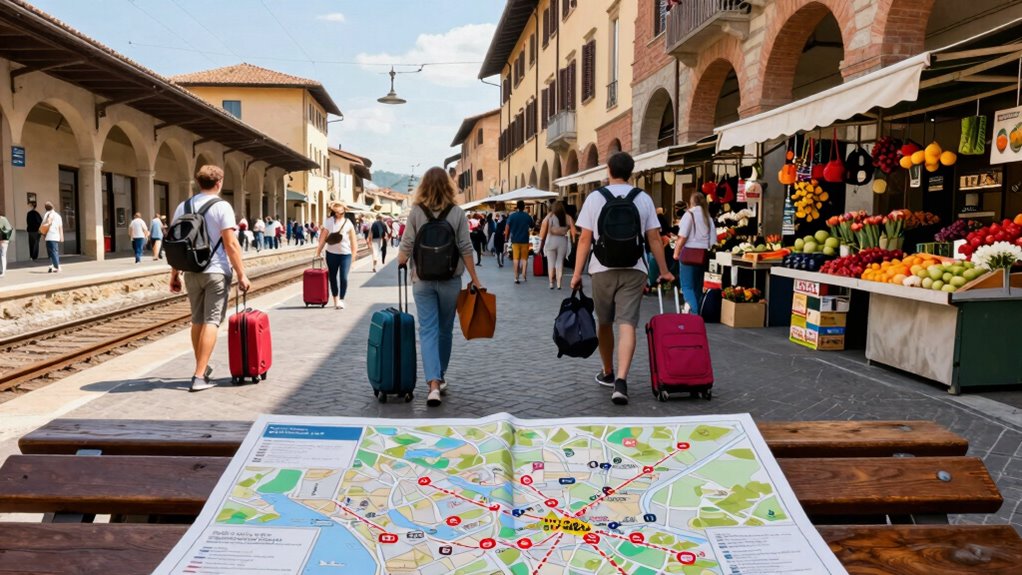

To choose the right base city for your multi-stop Italy trip, consider its transportation options, like train networks or proximity to airports, which make traveling easier. Pick a city that matches your interests, whether it’s a vibrant culinary scene, historic charm, or a lively atmosphere. Also, think about regional access—whether you want to explore the Alps, coast, or countryside easily. Keep these factors in mind, and you’ll find the perfect starting point for your Italian adventure.
Key Takeaways
- Consider cities with extensive train networks for easy regional travel and connections.
- Choose locations known for authentic regional cuisine to enhance culinary experiences.
- Match the city’s character—urban, charming, or historic—to your travel style and interests.
- Opt for cities near major highways or airports for flexible multi-region exploration.
- Balance size and accessibility to ensure convenient transportation to nearby attractions.
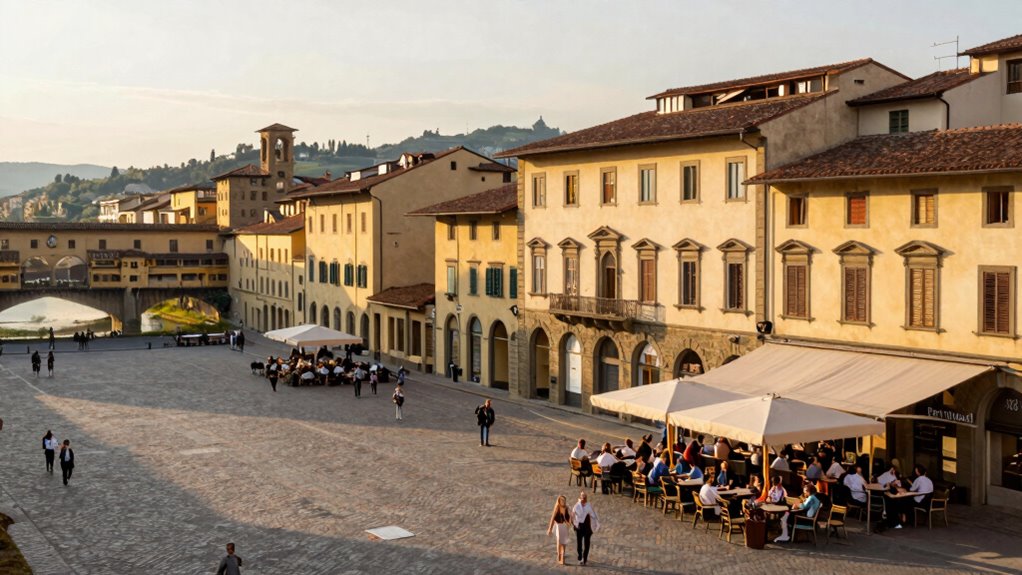
Planning a multi-stop trip to Italy can be exciting, but choosing the right base city is essential to making your journey smooth and enjoyable. Your choice of city influences your overall experience, from how easily you can explore neighboring destinations to how immersed you feel in local culture. To select the best base, consider what interests you most—whether it’s art, history, food, or scenery—and how well the city connects to other regions.
Start by looking at transportation options. Italy’s train network is efficient and extensive, making cities like Florence, Milan, or Bologna excellent hubs for travel by rail. If smooth, quick access to multiple destinations is a priority, pick a city with good train connections. The train network coverage can make a significant difference in your travel experience. Alternatively, if you prefer driving, choose a location near major highways or rental car agencies, giving you flexibility to explore rural areas or less accessible towns. Also, consider proximity to airports if you plan to arrive or depart via flights. Larger cities often have international airports with multiple carriers, simplifying your logistics.
Choose a city with excellent train links or nearby highways for easy multi-region exploration.
Next, think about the local cuisine. Your base city should offer authentic culinary experiences that you can enjoy both locally and as a launchpad for regional food trips. For example, Florence is renowned for its Tuscan dishes, while Naples is a must-visit for pizza lovers. Picking a city with a vibrant food scene means you can indulge in local specialties without traveling far. Plus, cities with diverse dining options—ranging from trattorias to markets—enhance your immersion into Italy’s rich culinary traditions.
While selecting your base, also evaluate the character of the city. Do you prefer a bustling urban environment, a charming small town, or a historic city full of landmarks? A larger city like Rome or Milan provides a mix of attractions and transportation hubs, but smaller cities like Verona or Lecce offer intimacy and easier access to countryside or coastal regions. Your choice should align with your travel style and interests. Additionally, choosing a city with cultural attractions can greatly enrich your trip and provide deeper insights into Italy’s history and traditions.
Finally, think about the logistics of multi-stop travel. Some cities serve as perfect jumping-off points because they allow quick access to multiple regions or attractions. For example, a city in northern Italy might make it easier to visit the Swiss Alps or the lakes of Lombardy, while a southern base might be ideal for exploring the Amalfi Coast or Sicily. Balancing your desire for cultural immersion with practical considerations like transportation options and local cuisine will help you pick the ideal city as your base, ensuring your Italian adventure is both memorable and hassle-free.

Touring Italy by Train: Essential Italy Travel Tips and Easy Self-Guided Itineraries for First-Time Visitors (Real Travel Guides)
As an affiliate, we earn on qualifying purchases.
As an affiliate, we earn on qualifying purchases.
Frequently Asked Questions
How Many Days Should I Spend in Each City?
You should spend at least 2-3 days in each city to truly enjoy its local cuisine and explore key historical landmarks. Larger cities like Rome or Florence deserve more time, around 4-5 days, to soak in their rich history and culinary delights. Smaller towns can be covered in 1-2 days. This way, you get a balanced experience without feeling rushed, making your trip memorable and fulfilling.
What Is the Best Transport Option Between Cities?
Like Odysseus steering treacherous waters, you’ll find trains are your best bet for traveling between Italian cities—fast, scenic, and reliable. Consider high-speed options like Trenitalia or Italo for comfort and speed. Remember, travel insurance is essential to cover unexpected delays, and packing tips help you stay light for quick transfers. This way, you embrace Italy’s journey seamlessly, making each leg memorable and stress-free.
How Do I Handle Language Barriers While Traveling?
When facing language barriers in Italy, learn some basic phrases and cultural etiquette to ease interactions. Carry a translation app or phrasebook for emergencies, and don’t hesitate to use gestures or visuals. Respect local customs, and remain patient and polite. Being prepared for emergencies, like knowing nearby help centers, guarantees you stay safe. These steps help you communicate confidently and enjoy your trip despite language differences.
Are There Specific Travel Passes or Discounts Available?
Yes, you can save money with regional passes and student discounts. Look into Italy’s regional train passes, like Trenitalia’s CartaFRECCIA or regional tickets, which offer discounts for multiple journeys within a specific area. If you’re a student, always carry your ID or student card to access discounts on trains, museums, and attractions. Planning ahead and researching these options helps you maximize savings during your trip.
How Can I Find Local Events or Festivals?
You can find local events or festivals by checking local event calendars online, which often list upcoming happenings in your chosen city. Visit tourism websites or social media pages for festival recommendations, as they frequently highlight seasonal celebrations and cultural events. Additionally, ask at your accommodation or local info centers for brochures and suggestions. Staying updated with these sources helps you immerse yourself in authentic local experiences during your Italy trip.
Conclusion
Choosing the right base city in Italy is like finding the perfect keystone for your journey’s arch—set the tone and shape your entire adventure. When you pick wisely, each day’s exploration becomes a symphony of discovery, seamlessly woven into the fabric of your travels. Trust your instincts and plan thoughtfully, for this decision is the compass guiding your Italian odyssey. With the right foundation, your trip will blossom into an unforgettable mosaic of memories.