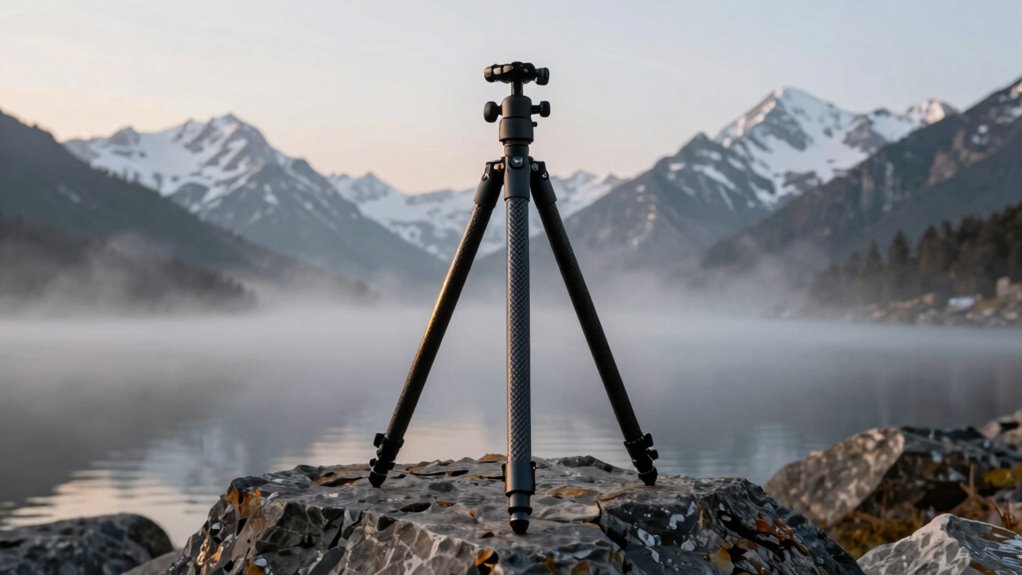

Investing in a carbon fiber tripod makes sense when you need lightweight gear that’s strong and durable enough for demanding outdoor conditions. If you often hike long distances or shoot in remote locations, the weight savings and quick setup can markedly reduce fatigue. For professional shoots or challenging environments, the added stability and longevity justify the higher cost. Keep exploring how the premium can pay off for your specific needs.
Key Takeaways
- When weight savings are critical for portability during long hikes or remote shoots.
- In professional settings requiring maximum stability and durability under challenging outdoor conditions.
- For frequent travelers who benefit from lighter gear reducing fatigue and transportation costs.
- When long-term durability and resistance to wear justify higher upfront investment.
- In environments where quick setup and reliable performance are essential for efficient workflow.
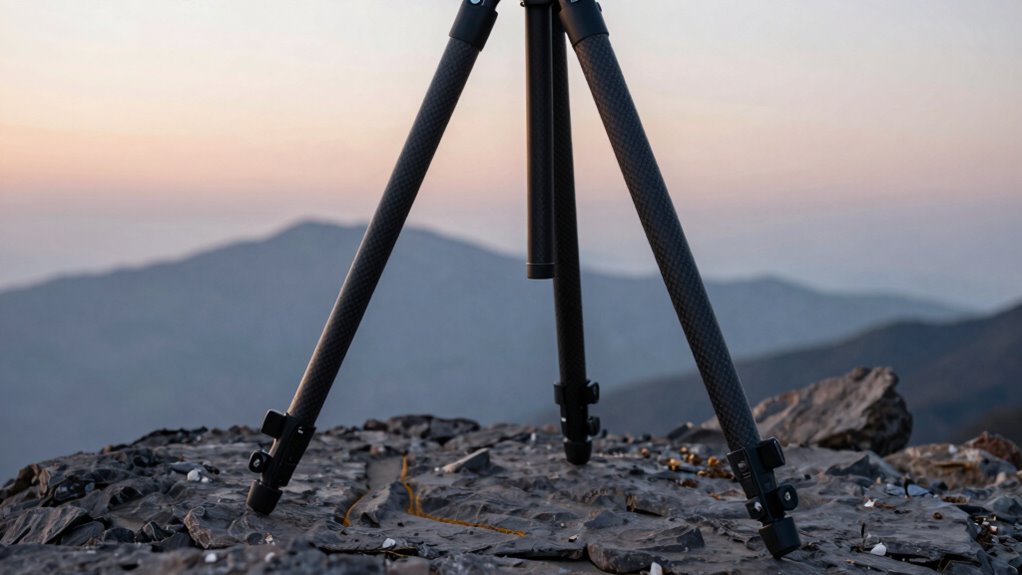
While carbon fiber tripods offer unmatched strength and lightweight design, they also come with a higher price tag. The reason behind this premium primarily lies in the use of lightweight materials and the manufacturing costs associated with producing them. Carbon fiber, known for its strength-to-weight ratio, allows you to carry a sturdy tripod without feeling weighed down, especially during long hikes or extended shoots. However, these advantages come at a cost. The raw materials—carbon fibers—are more expensive than aluminum or plastic, and the process of weaving these fibers into a durable, reliable tripod involves complex, labor-intensive manufacturing.
You might notice that the production of carbon fiber tripods demands specialized equipment and meticulous craftsmanship. This increases manufacturing costs considerably compared to traditional tripods made from metal or plastic. The process involves layering sheets of carbon fiber fabric, impregnating them with resin, and then curing them in controlled environments. Each step requires precision to guarantee the final product’s strength and stability. These meticulous procedures contribute to the higher retail prices, but they also assure you get a product that’s lightweight yet incredibly durable.
You’ll find that the premium pays off when you’re out in the field, especially if your work involves frequent travel or long hours of shooting. The lightweight nature of carbon fiber means you’ll carry less weight overall, reducing fatigue and making it easier to set up quickly in challenging environments. If you’re a professional photographer or videographer who needs gear that won’t slow you down, investing in a carbon fiber tripod can be a game-changer. It’s also ideal if you often shoot in remote locations, where every ounce of weight matters and durability is essential.
However, the high manufacturing costs of carbon fiber tripods are reflected in their price. If you primarily shoot in a controlled environment or on shorter outings, a less expensive tripod made from aluminum or other materials might suffice. But if you demand top-tier stability, portability, and longevity, then the extra investment in a carbon fiber model will likely pay off in the long run. The key is understanding when the benefits of lighter weight, enhanced stability, and durability justify the higher cost, especially given the premium materials and manufacturing processes involved.

K&F Concept 60" Carbon Fiber Camera Tripod, Detachable Monopod for SLR DSLR
- Material: Aerospace-grade carbon fiber for strength and stability
- Weight: Lightweight at only 1kg/2.2 lbs
- Adjustable Height: From 18 to 60 inches in seconds
As an affiliate, we earn on qualifying purchases.
As an affiliate, we earn on qualifying purchases.
Frequently Asked Questions
How Long Do Carbon Fiber Tripods Typically Last?
You can expect a carbon fiber tripod to last around 5 to 10 years with proper care. Its material longevity is high because carbon fiber resists corrosion and fatigue better than aluminum. To maximize lifespan, follow maintenance requirements like avoiding extreme temperatures, cleaning regularly, and storing it properly. With good maintenance, your tripod will stay sturdy and reliable, making the higher investment worthwhile over the long term.
Are Carbon Fiber Tripods Easier to Transport?
Yes, carbon fiber tripods are easier to transport because of their lightweight design, making them more portable than aluminum options. Their reduced tripod weight means you can carry them for longer distances without fatigue, and they fit comfortably into backpacks or carry cases. These portability benefits make carbon fiber tripods ideal for travel, hiking, or quick setup, giving you convenience without sacrificing stability or durability.
Do Carbon Fiber Tripods Improve Photo Quality?
Yes, carbon fiber tripods can improve your photo quality by providing better stability, which enhances image stabilization. This stability reduces camera shake, especially in low-light conditions or long exposures. Additionally, carbon fiber’s consistent construction helps maintain color accuracy by minimizing vibrations that can distort colors. While more expensive, investing in a carbon fiber tripod pays off when you seek sharper images, more reliable performance, and superior overall photo quality.
Can I Repair a Damaged Carbon Fiber Tripod?
You can sometimes repair a damaged carbon fiber tripod through DIY repairs, but it depends on the damage. For example, if a leg is cracked, you might reinforce it with epoxy or carbon fiber patches. However, for serious issues, professional tripod maintenance is advised. Attempting repairs yourself can void warranties or cause further damage, so weigh the risks before proceeding. When in doubt, consult a repair specialist to ensure safety and longevity.
How Do Weather Conditions Affect Carbon Fiber Tripod Durability?
Weather conditions can impact your carbon fiber tripod’s durability, especially with temperature sensitivity and UV resistance. Extreme temperatures may cause the material to expand or contract, weakening the fibers over time. Prolonged sun exposure can degrade UV resistance, leading to cracking or fading. To protect your tripod, store it in a shaded, cool place when not in use, and avoid exposing it to harsh weather for extended periods.
Conclusion
Ultimately, investing in a carbon fiber tripod pays off if you value lightweight durability and stability, especially for frequent or demanding use. While they cost more initially, their resistance to vibrations and easier portability can enhance your photography experience and protect your gear. Trust that the premium is worth it when you need reliable performance in tough conditions. So, if quality and longevity matter to you, a carbon fiber tripod might just be the smart choice you’ve been looking for.