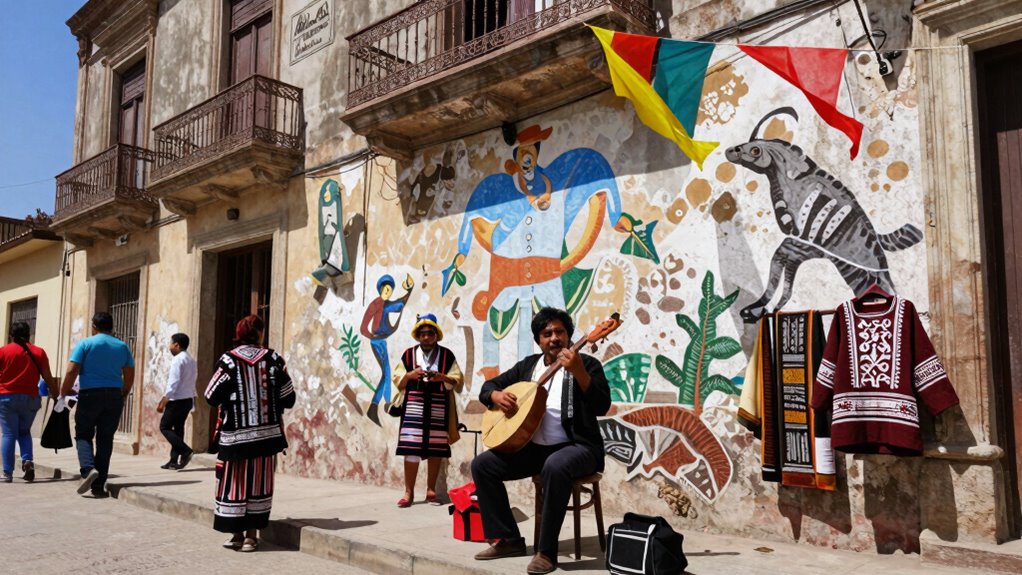

Regional songs serve as living records that preserve history, culture, and identity more vividly than textbooks. They pass stories of struggles, triumphs, and everyday life across generations, embodying traditions that national archives often overlook. These songs reinforce cultural pride, often containing symbols and dialects unique to their communities. By participating in these melodies, you keep history alive and relevant. Keep exploring to uncover how these songs continue to shape identities and resist cultural erasure.
Key Takeaways
- Regional songs serve as living oral records, passing down history, culture, and values across generations without relying on written texts.
- They convey personal stories of hardship, triumph, and daily life, making history emotionally accessible and immediate.
- Songs act as acts of resistance, safeguarding local dialects and customs during times of cultural suppression.
- They preserve linguistic diversity and unique cultural practices often absent from formal educational materials.
- Musical traditions are integral to rituals and social gatherings, reinforcing community identity and cultural continuity.
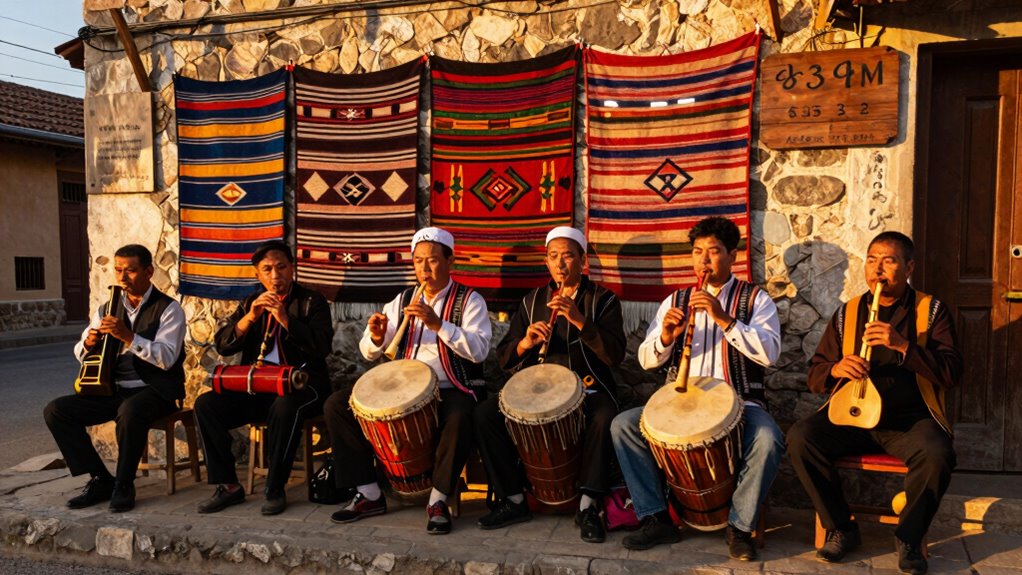
Regional songs serve as vibrant echoes of history, capturing the stories, struggles, and celebrations unique to each community. When you listen to these songs, you’re not just hearing melodies; you’re experiencing a living record of cultural significance that’s been passed down through generations. These tunes embody more than just entertainment—they’re an essential part of oral traditions that keep history alive in ways textbooks often can’t match. Unlike written records, which can become outdated or forgotten, regional songs are dynamic and adaptable, resonating with each new generation and reinforcing cultural identity.
Regional songs are living records that pass down stories and culture across generations, shaping identity and preserving history.
You might notice that these songs often tell stories of hardship, triumph, or everyday life, making history feel personal and immediate. The oral traditions embedded within them serve as a bridge between the past and present, allowing communities to share their collective memories in a way that’s accessible and emotionally impactful. When elders teach these songs to younger members, they’re doing more than passing on lyrics—they’re transmitting values, lessons, and a sense of belonging. This process ensures that history isn’t just stored in archives or textbooks but lives vividly in the community’s collective consciousness.
Regional songs also serve as a form of resistance and pride. In times of hardship or cultural suppression, singing these tunes becomes an act of resilience, reaffirming identity and sovereignty. You may find that certain melodies or lyrics are deeply symbolic, representing struggles that might otherwise be lost to time. These songs become living archives, preserving local dialects, customs, and history that aren’t always documented elsewhere. When you engage with them, you’re participating in a tradition that refuses to let history fade. Additionally, because they are part of cultural preservation, they contribute to safeguarding intangible heritage that might otherwise be overlooked. Furthermore, these songs often incorporate local dialects or unique linguistic elements, making them vital for linguistic diversity and preservation. This linguistic richness helps maintain the diversity of languages, ensuring that even lesser-known dialects continue to be spoken and celebrated.
Furthermore, the cultural significance of these songs extends beyond their narratives. They often accompany rituals, ceremonies, and communal gatherings, reinforcing social bonds and cultural continuity. You might witness a festival or a celebration where singing regional songs is the highlight, reminding everyone of their shared heritage. In this way, the songs aren’t just about the past—they shape identities and foster a sense of unity in the present. Their oral tradition ensures that history is constantly reborn, reinterpreted, and kept relevant through singing, making them powerful tools for cultural preservation that surpass the static nature of textbooks. The intergenerational transmission of songs ensures that these stories remain vibrant and relevant across time.
As an affiliate, we earn on qualifying purchases.
Frequently Asked Questions
How Do Regional Songs Influence Local Cultural Identity?
Regional songs influence your local cultural identity by serving as a powerful part of oral tradition, keeping stories and values alive across generations. When you sing or listen, you participate in community memory, reinforcing shared history and pride. These songs evoke emotions and connections, shaping how you see your heritage. They unify people, preserve customs, and make your cultural identity more vibrant and authentic through active engagement.
Are Regional Songs Used in Educational Curricula Worldwide?
You’ll find that regional songs, rooted in musical folklore and oral traditions, are sometimes incorporated into educational curricula worldwide. These songs serve as engaging tools to teach history and culture, especially where written records are scarce. In many regions, educators use oral traditions to preserve local stories, making learning more relatable. While not universal, including regional songs in education helps students connect deeply with their cultural identity.
Can Regional Songs Change Over Time to Reflect New History?
Yes, regional songs can change over time to reflect new history through oral traditions and lyrical evolution. You might notice how storytellers adapt lyrics to include recent events or reinterpret past ones, keeping the song relevant. This dynamic process allows songs to serve as living records, continuously updating historical narratives. As a result, they preserve cultural memory in a way textbooks often can’t, making history more engaging and accessible.
What Are the Most Preserved Regional Songs Across Different Regions?
Did you know that over 60% of regional folk narratives have evolved through musical evolution? You’ll find that traditional songs like “Auld Lang Syne” or “La Cucaracha” are among the most preserved across regions. These songs serve as living histories, reflecting local culture and changes over time. Their enduring popularity helps keep regional stories alive, demonstrating how folk narratives adapt while preserving core historical elements.
How Do Regional Songs Differ From National Anthems in Historical Storytelling?
Regional songs differ from national anthems in their focus on local stories, traditions, and oral histories, making them rich in historical storytelling. While national anthems often symbolize unity and patriotism, regional songs use musical storytelling to preserve unique cultural identities and events. You’ll find regional songs more adaptable, passed down through generations via oral traditions, capturing detailed, authentic histories that textbooks might overlook or forget.
Conclusion
You see, these regional songs are like living tapestries, weaving history into melodies that stick with you long after the notes fade. They’re more than just tunes; they’re echoes of the past whispering stories you can almost see and feel. By embracing these songs, you keep history alive—fresher than textbooks, richer than words on a page. Let these melodies be your bridge to the past, where every note holds a piece of history’s soul.