
Italian food markets have a rich history, starting in medieval times as simple open-air barter spots in town squares. Over centuries, they grew into organized hubs where artisans showcased regional crafts, foods, and traditions. During the Renaissance, markets became centers of trade and cultural exchange. Today, many still blend historic charm with modern amenities, preserving Italy’s culinary and cultural heritage. If you explore further, you’ll discover how these markets continue to reflect Italy’s vibrant history and craftsmanship.
Key Takeaways
- Italian food markets originated in medieval times as open-air barter systems in prominent town squares.
- Artisans and vendors preserved regional culinary traditions through handcrafted cheeses, cured meats, and baked goods.
- Markets evolved during the Renaissance into centers of trade, cultural exchange, and regional craftsmanship.
- Modern markets blend historic charm with contemporary infrastructure while maintaining artisan vendors and cultural significance.
- Today, Italian markets continue to celebrate cultural heritage, showcasing centuries-old recipes, craftsmanship, and regional identity.

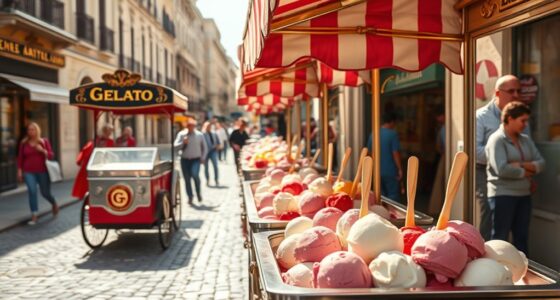
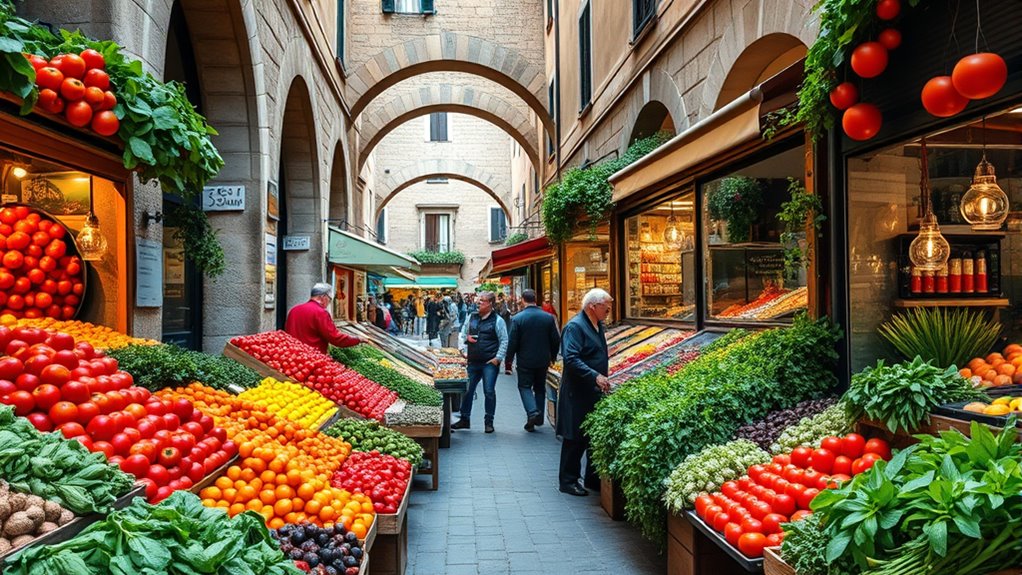
Italian food markets have long been the heartbeat of local communities, serving as vibrant hubs where tradition and daily life intersect. These markets aren’t just places to buy fresh produce; they’re living stories of Italy’s rich history and culture. From medieval times to today, they’ve evolved alongside society, reflecting changes in commerce, food, and community life. As you explore these markets, you’ll notice how local artisan vendors play a crucial role in maintaining tradition. These vendors often bring family recipes, handcrafted cheeses, cured meats, and baked goods passed down through generations. Their stalls are more than just businesses; they’re repositories of craftsmanship and cultural identity. In medieval Italy, markets started as simple open-air gatherings where townspeople bartered goods. Over time, these gatherings became more organized, often centered around prominent squares or marketplaces. Early on, local artisan vendors began to emerge, offering specialized products that distinguished their stalls from others. These artisans didn’t just sell food—they sold stories, skills, and heritage. As the market developed, it became a reflection of the local economy and social fabric. Each region cultivated its own unique food traditions, and markets became the stage where these traditions thrived. You can imagine the bustling scenes: vendors shouting to attract customers, families browsing for the freshest ingredients, and craftsmen displaying their handmade cheeses or cured meats. The historical market development in Italy shows a gradual shift from simple barter systems to more organized commercial enterprises. During the Renaissance, markets gained importance as centers of trade and cultural exchange. Artisans gained recognition, and their products became highly sought after, sometimes even exported beyond Italy’s borders. Today, these markets still retain their lively character, but many have modernized with new infrastructure, yet still preserve their traditional charm. You’ll see that local artisan vendors continue to be the heart of these markets, offering authentic, handcrafted goods that tell stories of local history and craftsmanship. Modern markets often incorporate elements of the past, blending tradition with contemporary needs. Despite changes over centuries, the essence remains the same: markets serve as an indispensable link between Italy’s history and its present, celebrating local artisans and their enduring craft. Visiting an Italian food market today, you’re experiencing centuries of history and culture in every stall, in every handcrafted product, and in the lively interactions that continue to define Italy’s beloved marketplaces. Additionally, the development of these markets illustrates how artisan vendors have played a vital role in preserving regional food identities throughout history.

MARKY'S Gourmet Cheese Gift Set – 14-Piece French & Spanish Artisan Assortment – Includes Manchego, Brie, Truffle Honey, Fig Cake & Crackers – Premium Tasting Board Platter
- European Artisan Cheeses: Includes Manchego, Brie, Bleu, Raclette, and more
- Gourmet Pairings: Includes butter, crackers, honey, and more
- Perfect for Entertaining: Ideal for holidays, parties, and gifts
As an affiliate, we earn on qualifying purchases.
As an affiliate, we earn on qualifying purchases.
Frequently Asked Questions
How Did Italian Food Markets Influence Regional Cuisine Development?
You see, Italian food markets shape regional cuisine by showcasing local culinary traditions and regional product diversity. They allow you to experience authentic ingredients, fostering community connections and culinary innovation. These markets influence your cooking choices, inspire traditional recipes, and preserve local flavors. As a result, they play a essential role in maintaining Italy’s rich, diverse gastronomic heritage, ensuring each region’s unique culinary identity thrives through accessible, fresh, and regional products.
What Were the Main Social Roles of Food Markets Historically?
You see, food markets historically served as crucial social hubs where community gatherings thrived, fostering a sense of connection. They also played a key role in economic exchange, enabling local vendors and farmers to trade goods directly with consumers. These markets weren’t just places to buy food; they strengthened community bonds and supported local economies. Their social functions made them essential spaces for interaction, culture, and economic activity.
How Have Italian Food Markets Adapted to Modern Technology?
You’ve probably noticed Italian food markets now embrace modern tech by adopting digital transactions, making shopping more convenient. Many vendors also connect with online marketplaces, reaching customers beyond local streets. This shift helps preserve market traditions while enhancing efficiency and safety. As a result, you can enjoy authentic Italian products with ease, whether visiting in person or browsing online, ensuring these vibrant markets stay relevant in today’s digital age.
What Are the Most Famous Food Markets in Italy Today?
You’ll love exploring Italy’s famous food markets today, where local produce and artisanal vendors shine. Don’t worry about modern changes; these markets, like Florence’s Mercato Centrale or Milan’s Mercato di Via Fauche, still capture authentic Italian flavors. You get fresh ingredients, handcrafted goods, and vibrant atmospheres. These bustling markets remain essential spots for both locals and visitors seeking genuine, delicious experiences in Italy’s rich culinary culture.
How Do Italian Food Markets Compare to Other European Markets?
You’ll notice that Italian food markets excel in market organization and vendor diversity. Compared to other European markets, Italian markets often feature a vibrant mix of local artisans, farmers, and specialty vendors, making shopping lively and authentic. Their well-structured layout helps you find fresh produce, cheeses, and meats easily. This dynamic setup creates a rich, immersive experience, setting Italian markets apart from more uniform or traditional markets elsewhere in Europe.
Conclusion
As you’ve seen, Italian food markets have evolved from bustling medieval hubs to vibrant modern spaces. They reflect Italy’s rich history, culture, and passion for fresh, quality ingredients. Isn’t it fascinating how these markets continue to connect communities and preserve traditions? Whether ancient or contemporary, they remind us that food is more than sustenance—it’s a celebration of heritage and life itself. So, next time you visit one, ask yourself: aren’t these markets truly the heart of Italy?