
Smart home energy monitors help you track electricity usage across your household, enabling smarter energy decisions and potential cost savings. The best models balance accuracy, ease of use, and integration with existing systems. Emporia Vue 3 stands out as the overall top pick for its comprehensive features and reliability. For those seeking budget-friendly options, the Refoss Smart Home Energy Monitor offers excellent value, while the Home Energy Monitor for Home Assistant excels for automation enthusiasts. However, these products vary in complexity, compatibility, and price, making the right choice depend on your specific needs. Keep reading for a detailed comparison that will help you find the perfect fit.
Complete the kit


Key Takeaways
- Most top-rated monitors support real-time data, which is crucial for immediate insights and quick adjustments.
- Compatibility with smart home platforms like Home Assistant or Open API features significantly broadens a monitor’s usefulness.
- Higher sensor counts generally provide more granular data but come with increased complexity and cost.
- Wired Ethernet options tend to offer more reliable data transmission compared to WiFi-only models.
- Budget models often lack advanced features like solar monitoring or detailed cost tracking but still deliver essential energy usage info.
| Smart Home Energy Monitor with Multiple Circuit Sensors and WiFi |  | Best Overall for Versatile Whole-Home Monitoring | Sensors: 16 x 50A, 3 x 300A or 200A | Connectivity: WiFi 2.4 GHz | Measurement Accuracy: ±2% | VIEW LATEST PRICE | See Our Full Breakdown |
| WiFi Home Energy Monitor with 2 x 120A CTs and Power Tracking |  | Best for Solar and Single-Phase Power Monitoring | Connectivity: 2.4 GHz WiFi | Current Transformers: 2 x 120A CTs | Monitoring Type: Bi-directional, single-phase 3-wire | VIEW LATEST PRICE | See Our Full Breakdown |
| Smart Home Energy Monitor with 3 80A Clamps EdgeAnt, Real-Time Energy Tracking, WiFi |  | Best for Real-Time Solar and Home Energy Optimization | Current Clamps: 3 x 80A | Connectivity: 2.4 GHz WiFi | Measurement Accuracy: ±2% | VIEW LATEST PRICE | See Our Full Breakdown |
| Emporia Energy Monitor with 16 Sensors and 4 Smart Plugs Bundle |  | Best for Whole-Home Automation and Detailed Circuit Monitoring | Sensors: 16 | Smart Plugs: 4 | Compatibility: iOS, Android, Alexa | VIEW LATEST PRICE | See Our Full Breakdown |
| Refoss Smart Home Energy Monitor with 16 60A Circuit Sensors, Local Control, Real-Time Power Usage, Open API, Home Assistant Integration, Electricity Cost Tracking, Solar Metering, ETL Certified |  | Best for Privacy-Focused, Long-Term Data Analysis | Number of Sensors: 16 | Sensor Current Rating: 60A | Main Sensors: 2 (up to 200A) | VIEW LATEST PRICE | See Our Full Breakdown |
| Home Energy Monitor for Home Assistant – Real Time Electricity Usage Monitor, Power Usage Meter, AI-Ready Energy Monitor, Automation Module, Solar Self-Consumption Trace |  | Best Overall for Customizable Automation and Scalability | Monitoring Circuits: 10 circuits per unit, scalable up to 30 | Connectivity: Wi-Fi and Ethernet | Supported Power Systems: North American split-phase, single-phase, three-phase | VIEW LATEST PRICE | See Our Full Breakdown |
| Smart Home Energy Monitor with 16 50A Circuit Sensors, Real-Time Power & Cost Tracking, Compatible with Home Assistant |  | Best for Rental Homes and Property Management | Sensor Count: 16 sensors | Sensor Current: 50A | Connectivity: WiFi 2.4GHz | VIEW LATEST PRICE | See Our Full Breakdown |
| Refoss Smart Home Energy Monitor with Open API, Home Assistant, No Cloud, 16 Circuit Sensors, Real-Time Electricity Usage |  | Best for Privacy-Conscious, Tech-Savvy Users | Model: EM16P | Number of Circuits: 16 | Current Range: 1–60A per branch, 2–200A for main | VIEW LATEST PRICE | See Our Full Breakdown |
| Emporia Vue 3 Home Energy Monitor – Real-Time Electricity Usage and Power Consumption Meter |  | Best Certified Safety and Compatibility | Certification: UL Listed | System Support: Single phase, 3-phase | Sensor Type: Clamp-on sensors | VIEW LATEST PRICE | See Our Full Breakdown |
| Emporia Vue 3 Home Energy Monitor – Real-Time Electricity Usage and Solar Monitoring |  | Best for Solar & Cost Optimization | Certification: UL Listed | Supported Systems: Single and multi-phase systems | Sensor Type: Clamp-on sensors | VIEW LATEST PRICE | See Our Full Breakdown |
| Smart Home Energy Monitor 200A WiFi/Ethernet Whole House Power Consumption Meter |  | Best Overall for Whole-House Energy Monitoring | Current Capacity: 200A | Connectivity: WiFi 2.4 GHz, Ethernet | Sensors: 2x200A sensors | VIEW LATEST PRICE | See Our Full Breakdown |
| 3-Phase Energy Meter 200A/600V WiFi/Ethernet with Real-Time Data | 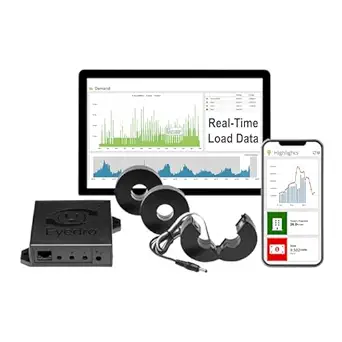 | Best for Multi-Voltage and Solar Applications | Current Rating: 200A | Voltage: up to 600V | Connectivity: WiFi 2.4 GHz, Ethernet | VIEW LATEST PRICE | See Our Full Breakdown |
| Emporia Vue 3 Home Energy Monitor – Real-Time Electricity Usage and Power Consumption Meter |  | Best for Expandable, Certified Home Monitoring | Certification: UL Listed | Supported Systems: Single and multi-phase systems | Sensor Compatibility: Supports up to 16 sensors | VIEW LATEST PRICE | See Our Full Breakdown |
| Meross Smart Home Energy Monitor, Real-Time Power & Cost Tracking, Supports Home Assistant, No Subscription, 16×60A CT Sensors |  | Best for Privacy and Local Control | Supports: Home Assistant, Open API | Sensors: 16×60A CT sensors | Circuits: 2 main + 16 branch circuits | VIEW LATEST PRICE | See Our Full Breakdown |
| smart home energy monitor | Connectivity |
|---|---|
| Smart Home Energy Monitor with | WiFi 2.4 GHz |
| WiFi Home Energy Monitor with | 2.4 GHz WiFi |
| Smart Home Energy Monitor with | 2.4 GHz WiFi |
| Emporia Energy Monitor with 16 | — |
| Refoss Smart Home Energy Monit | — |
| Home Energy Monitor for Home A | Wi-Fi and Ethernet |
| Smart Home Energy Monitor with | WiFi 2.4GHz |
| Refoss Smart Home Energy Monit | — |
| Emporia Vue 3 Home Energy Moni | 2.4 GHz Wi-Fi |
| Emporia Vue 3 Home Energy Moni | 2.4 GHz Wi-Fi |
| Smart Home Energy Monitor 200A | WiFi 2.4 GHz, Ethernet |
| 3-Phase Energy Meter 200A/600V | WiFi 2.4 GHz, Ethernet |
| Emporia Vue 3 Home Energy Moni | 2.4 GHz Wi-Fi |
| Meross Smart Home Energy Monit | — |
More Details on Our Top Picks
Smart Home Energy Monitor with Multiple Circuit Sensors and WiFi
This energy monitor excels at providing detailed, real-time data for multiple circuits, making it ideal for homeowners seeking comprehensive oversight. Its support for Tuya and SmartLife apps enables seamless integration into existing smart systems, offering a level of customization that surpasses simpler monitors like the EdgeAnt. However, the installation requires technical skill and careful sensor setup, which could be a hurdle for DIY enthusiasts. Compared with the Refoss model, it offers more flexible compatibility but demands professional installation for safety. Its accuracy and user-friendly app make it a strong choice for those wanting in-depth insight without sacrificing ease of use—if you’re comfortable with technical setup, this is a compelling pick.
Pros:- Accurate real-time energy data across multiple circuits
- Supports integration with Tuya and SmartLife smart home systems
- Easy to install and operate via mobile app
- Supports detailed data analysis for energy savings
Cons:- Installation should be performed by qualified personnel for safety
- Requires 2.4 GHz WiFi, limiting network flexibility
- Sensor setup errors can lead to inaccurate readings
Best for: Homeowners needing a flexible, detailed energy monitoring solution across multiple circuits, with existing smart home integration.
Not ideal for: Renters or casual users seeking a quick, plug-and-play device without complex installation or setup needs.
- Sensors:16 x 50A, 3 x 300A or 200A
- Connectivity:WiFi 2.4 GHz
- Measurement Accuracy:±2%
- Data Interval:2 seconds
- Compatibility:SmartLife, Tuya apps
- Installation:Lightweight, easy to install
Our verdict“This monitor is best suited for homeowners who want detailed, customizable insights and are comfortable with a more involved setup process.”
WiFi Home Energy Monitor with 2 x 120A CTs and Power Tracking
This model stands out for its high accuracy in measuring voltage, current, and power, especially suitable for homes with solar systems or single-phase setups. Its plug-and-play design and split-core CTs make installation straightforward, more so than the more complex multi-sensor options like the Refoss. The main tradeoff is its focus on single-phase, limiting its use in larger or three-phase systems, which makes it less versatile for some homes. Compared to the EdgeAnt, it provides more precise readings but lacks bidirectional measurement, which is vital for solar users. This monitor makes sense for users wanting reliable, real-time energy data with minimal installation fuss, especially in single-phase or solar-equipped homes.
Pros:- Highly accurate for home and solar energy systems
- Easy installation with pluggable terminals and split-core CTs
- Supports real-time data via a smart app
- Good for automation and energy management
Cons:- Limited to single-phase 3-wire systems
- WiFi connection required for full functionality
- May be complex for users unfamiliar with energy systems
Best for: Homeowners with solar panels or single-phase electrical systems seeking accurate, real-time energy data.
Not ideal for: Homes with three-phase power or those needing extensive circuit monitoring, which this device does not support.
- Connectivity:2.4 GHz WiFi
- Current Transformers:2 x 120A CTs
- Monitoring Type:Bi-directional, single-phase 3-wire
- Accuracy:Class 1
- App:SmartLife
Our verdict“This monitor is ideal for solar-equipped or single-phase homes that prioritize accuracy and ease of use without extensive circuit monitoring needs.”
Smart Home Energy Monitor with 3 80A Clamps EdgeAnt, Real-Time Energy Tracking, WiFi
The EdgeAnt monitor provides real-time, accurate energy data through three clamp sensors, making it suitable for homes with split-phase or multi-wire systems. Its bidirectional measurement supports solar energy tracking, which is a key feature for homeowners seeking to optimize solar production and consumption. Compared with the more comprehensive Emporia bundle, it offers a simpler, more focused approach—however, it limits users to single-phase or specific systems, and WiFi dependency means network issues can impair performance. Its straightforward installation makes it accessible for most homeowners, though it lacks the extensive circuit monitoring of larger systems. This pick makes the most sense for users who want precise, real-time data on a few circuits, especially if solar is part of their energy strategy.
Pros:- Provides real-time, accurate energy data via smartphone app
- Supports bidirectional measurement for solar energy
- Easy clamp-on installation into most home panels
- Exports detailed energy reports
Cons:- Limited to certain electrical system types (single-phase, split-phase)
- Dependent on WiFi connection for monitoring
- Not suitable for large or three-phase systems
Best for: Homeowners with split-phase or multi-wire systems interested in real-time energy tracking and solar integration.
Not ideal for: Large homes or those with three-phase systems, as it doesn’t support more complex electrical configurations.
- Current Clamps:3 x 80A
- Connectivity:2.4 GHz WiFi
- Measurement Accuracy:±2%
- Compatibility:Single-phase, split-phase, 2-wire, 2-phase, 3-wire Wye
Our verdict“This device is well-suited for solar-savvy homeowners seeking real-time, focused energy insights without complex setup.”
Emporia Energy Monitor with 16 Sensors and 4 Smart Plugs Bundle
This bundle offers comprehensive home energy management, combining 16 sensors for detailed circuit analysis with four smart plugs for remote device control. Its strength lies in the ability to monitor entire home consumption and individual circuits simultaneously, unlike simpler monitors like the Refoss or EdgeAnt. The inclusion of smart plugs enhances automation possibilities, making it attractive to tech-savvy users who want both detailed data and control. However, setting up the app and understanding the system can be complex for those unfamiliar with energy monitoring, and the bundle’s cost reflects its advanced capabilities. Compared with the Refoss, it offers more user-friendly remote control, but requires more initial configuration. This is the best choice for users looking for a complete, layered energy management system.
Pros:- Detailed monitoring of entire home and individual circuits
- Includes 4 smart plugs for remote control and automation
- Supports solar net metering and real-time energy management
- App-based control with scheduling and analytics
Cons:- Requires technical setup and familiarity with apps
- Higher cost due to bundled features
- Installation can be complex for novices
Best for: Tech-savvy homeowners seeking detailed circuit data combined with remote device control and automation.
Not ideal for: Casual users or those seeking a simple plug-and-play solution with minimal setup.
- Sensors:16
- Smart Plugs:4
- Compatibility:iOS, Android, Alexa
- Features:Whole-home monitoring, real-time control, solar net metering
Our verdict“This bundle is perfect for households that want a detailed, integrated energy management system with automation features.”
Refoss Smart Home Energy Monitor with 16 60A Circuit Sensors, Local Control, Real-Time Power Usage, Open API, Home Assistant Integration, Electricity Cost Tracking, Solar Metering, ETL Certified
The Refoss monitor emphasizes local control and long-term data storage, making it ideal for users concerned about data privacy and system customization. Its support for an open API and Home Assistant integration offers advanced users the ability to tailor automation and analytics without relying on cloud services—unlike the other models that depend on app-based monitoring. While installation may require some technical knowledge, its detailed data retention for up to five years and smart alerts provide valuable insights over time. The device’s limitation to specific electrical systems and the need for WiFi for full features are tradeoffs for its focus on privacy and data control. It’s best suited for users who value privacy and long-term analytics over plug-and-play simplicity.
Pros:- Provides detailed real-time monitoring for multiple circuits
- Supports local control via Web UI and API
- Long-term data storage with export and smart alerts
- Supports solar energy management and data privacy
Cons:- Installation may require technical expertise
- Limited to specific electrical systems (single-phase, split-phase, 3-phase Wye)
- Full features depend on WiFi connectivity
Best for: Power users and privacy-conscious households seeking long-term data analysis and local control without cloud dependency.
Not ideal for: Users unfamiliar with technical installation or those requiring a simple, quick setup without advanced customization.
- Number of Sensors:16
- Sensor Current Rating:60A
- Main Sensors:2 (up to 200A)
- Supported Systems:Single-phase, Split-phase, 3-phase 4-wire Wye
- Data Storage Duration:5 years
- Certification:ETL
Our verdict“This monitor is best for users prioritizing data privacy, long-term analytics, and local control over ease of initial setup.”
Home Energy Monitor for Home Assistant – Real Time Electricity Usage Monitor, Power Usage Meter, AI-Ready Energy Monitor, Automation Module, Solar Self-Consumption Trace
This monitor excels for users who want deep integration with Home Assistant and scalable circuit monitoring. Its support for up to 30 circuits and bidirectional metering enables detailed insights into energy flow, making it ideal for advanced automation setups. Compared to the Refoss EM16P, its scalability and local data storage provide more flexibility for larger or more complex systems. However, it demands some electrical expertise during installation and is limited to North American power systems, which could be a hurdle for international users. The device’s seamless integration with smart home automation makes it a versatile choice for power users.
Pros:- Supports up to 30 circuits for detailed energy breakdowns
- Seamless integration with Home Assistant for automation
- Secure local data storage ensures privacy
- Easy plug-and-play with automatic device discovery
Cons:- Requires familiarity with electrical systems for installation
- Limited to North American power configurations
Best for: Homeowners who want extensive circuit-level control and advanced automation with a scalable setup.
Not ideal for: Renters or those unfamiliar with electrical wiring who prefer plug-and-play solutions without complex installation.
- Monitoring Circuits:10 circuits per unit, scalable up to 30
- Connectivity:Wi-Fi and Ethernet
- Supported Power Systems:North American split-phase, single-phase, three-phase
- Certifications:FCC, CE, UL/IEC
- Installation:Circuit panel mounting with spring terminals
- Environment:Stable operation in harsh environments
Our verdict“This pick is perfect for tech-savvy homeowners seeking a scalable, automation-ready energy monitor.”
Smart Home Energy Monitor with 16 50A Circuit Sensors, Real-Time Power & Cost Tracking, Compatible with Home Assistant
This energy monitor is well-suited for those managing multiple circuits in rental properties or shared apartments. Its clamp-on sensors make installation straightforward on most panels, and supporting real-time power and cost tracking adds value for property owners. When compared to the Emporia Vue 3, its focus on cost tracking and multi-phase support makes it ideal for multi-tenant scenarios. However, it requires some technical setup, particularly if users want to leverage MQTT or integrate deeply with Home Assistant, which could be a barrier for non-technical users. Its local operation and detailed circuit data make it a smart choice for managing energy costs efficiently.
Pros:- Easy clamp-on installation in most panels
- Provides real-time energy and cost data
- Supports multi-phase systems and appliances
- Local operation ensures privacy
Cons:- Requires technical setup for automation integration
- Limited to 240VAC systems, not suitable for Delta configurations
Best for: Property managers or landlords needing detailed circuit monitoring in rental units.
Not ideal for: Home users without technical experience or those seeking a simple plug-and-play solution.
- Sensor Count:16 sensors
- Sensor Current:50A
- Connectivity:WiFi 2.4GHz
- Compatibility:Home Assistant, MQTT
- Supported Voltages:Up to 415Y/240VAC
- Warranty:1 year
Our verdict“Ideal for property managers wanting detailed, real-time energy insights without cloud dependency.”
Refoss Smart Home Energy Monitor with Open API, Home Assistant, No Cloud, 16 Circuit Sensors, Real-Time Electricity Usage
The Refoss EM16P stands out for its focus on local control and privacy, providing circuit-level insights without relying on cloud services. Its open API and Home Assistant integration make it attractive for users wanting full automation control. Compared to Emporia Vue 3, it offers higher accuracy and supports AI-driven optimization, making it suitable for maximizing solar energy use. Its complex setup may challenge non-technical users, and installation can be tricky if unfamiliar with APIs. This device is perfect for those prioritizing data privacy and customization in their energy management.
Pros:- Local control with no cloud dependency
- Supports AI automation and solar optimization
- High accuracy circuit-level data
- Supports long-term data storage (up to 5 years)
Cons:- Requires technical setup for API and automation
- Installation may be complex for non-technical users
Best for: Tech-savvy homeowners seeking local control and privacy with advanced automation features.
Not ideal for: Casual users or those uncomfortable with API configuration and complex installations.
- Model:EM16P
- Number of Circuits:16
- Current Range:1–60A per branch, 2–200A for main
- Accuracy:±1% (200A), ±2% at low current
- Data Storage:Up to 5 years
- Certifications:ETL, UL 61010
Our verdict“Best for users who want maximum privacy, customization, and advanced automation capabilities.”
Emporia Vue 3 Home Energy Monitor – Real-Time Electricity Usage and Power Consumption Meter
The Emporia Vue 3 offers a reliable, UL-certified solution for real-time energy monitoring across a variety of electrical systems. Its support for multiple configurations, including single and three-phase setups, makes it versatile for different home types. When contrasted with the Refoss EM16P, its safety certification and broad compatibility stand out. However, the need for Wi-Fi and additional sensors for some 3-phase systems could complicate installation. Its straightforward app interface makes remote management accessible, though data retention for 1-second intervals is somewhat limited. Overall, it balances safety, versatility, and ease of use.
Pros:- UL-certified for safety and reliability
- Supports various electrical system configurations
- Real-time energy data with app control
- Easy installation with clamp-on sensors
Cons:- Wi-Fi dependency for full functionality
- Additional sensors needed for some 3-phase setups
Best for: Homeowners seeking a safe, reliable, and easy-to-install energy monitor with broad system support.
Not ideal for: Users seeking advanced automation or local-only solutions without Wi-Fi dependence.
- Certification:UL Listed
- System Support:Single phase, 3-phase
- Sensor Type:Clamp-on sensors
- Connectivity:2.4 GHz Wi-Fi
- Data Retention:7 days for minute data, indefinite hourly
- Warranty:1 year
Our verdict“A solid choice for safety-conscious homeowners needing versatile, certified energy monitoring.”
Emporia Vue 3 Home Energy Monitor – Real-Time Electricity Usage and Solar Monitoring
This version of the Emporia Vue 3 emphasizes solar and net metering support, making it ideal for homeowners with solar panels. Its detailed real-time data and automation options help optimize energy consumption and reduce bills. Compared with the Refoss EM16P, its focus on solar integration and system support broadens its appeal for renewable energy users. Installation remains straightforward, but users need a stable Wi-Fi connection for consistent data access. Its comprehensive monitoring and automation features make it well-suited for those seeking to maximize solar savings and energy efficiency.
Pros:- Supports solar and net metering integration
- Real-time data with detailed reporting
- App-based remote control and automation
- UL-certified for safety
Cons:- Requires Wi-Fi for full functionality
- Additional sensors needed for some system types
Best for: Homeowners with solar panels aiming to monitor and optimize solar energy use and costs.
Not ideal for: Users without solar installations or those who prefer local-only solutions.
- Certification:UL Listed
- Supported Systems:Single and multi-phase systems
- Sensor Type:Clamp-on sensors
- Connectivity:2.4 GHz Wi-Fi
- Data Retention:7 days for minute data, indefinite hourly
- Warranty:1 year
Our verdict“Ideal for solar owners seeking detailed monitoring and automation to maximize savings.”
Smart Home Energy Monitor 200A WiFi/Ethernet Whole House Power Consumption Meter
This monitor stands out for offering comprehensive real-time insights into your entire home’s power consumption and production, especially for those with solar setups. Its dual connectivity options—WiFi and Ethernet—provide flexible installation in various home environments, making it more adaptable than models like the Emporia Vue 3, which relies solely on WiFi. However, the need for two sensors for net metering can complicate setup, and it’s confined to North American standards, limiting international use. Its cloud access is straightforward and free, unlike some competitors requiring subscriptions. This pick makes the most sense for homeowners seeking a detailed, whole-house view with solar integration, who value flexibility and don’t mind a more involved initial setup.
Pros:- Provides detailed real-time energy consumption data for entire house
- Flexible connectivity with WiFi and Ethernet options
- Supports solar, grid, and net metering applications
Cons:- Requires two sensors and more complex setup for net metering
- Limited to North American safety standards and standards
Best for: Homeowners with solar panels and complex energy setups needing detailed, whole-house data
Not ideal for: Renters or users in regions outside North America, due to regional compatibility and setup complexity
- Current Capacity:200A
- Connectivity:WiFi 2.4 GHz, Ethernet
- Sensors:2x200A sensors
- Compatibility:North American standards, supports solar, grid, net metering
- Includes:Ethernet cable, power adapter, cloud access
Our verdict“This monitor is ideal for solar-equipped homeowners seeking comprehensive, flexible, whole-house energy data.”
3-Phase Energy Meter 200A/600V WiFi/Ethernet with Real-Time Data
This 3-phase meter offers detailed, real-time energy data across multiple voltages, making it well-suited for larger or more complex solar and commercial setups. Its split-core sensors allow non-invasive installation, a significant advantage over the Emporia Vue 3, which requires dedicated sensors and additional wiring for detailed monitoring. Compared to the Smart Home Energy Monitor 200A, which is geared toward single-phase homes, this model supports a broader range of voltage configurations, ideal for multi-phase or industrial environments. However, it requires cloud setup and account creation, which may be a barrier for users seeking local-only control. European adapters are sold separately, adding to setup considerations. It’s best for users comfortable with cloud platforms and needing multi-voltage support in solar or grid-tie applications.
Pros:- Provides detailed real-time data with graphs and multiple parameters
- Easy installation with split-core sensors, no wiring modifications needed
- Supports various voltage configurations and solar applications
Cons:- Requires cloud platform setup and account creation
- European power adapters sold separately, complicating international use
Best for: Professionals or advanced homeowners managing multi-phase or larger-scale solar and grid-tied systems
Not ideal for: Casual users or those preferring local-only monitoring without cloud dependencies
- Current Rating:200A
- Voltage:up to 600V
- Connectivity:WiFi 2.4 GHz, Ethernet
- Measurement Parameters:kWh, Watts, Amps, Volts, Power Factor, Cost
- Sensor Type:Split-core CT sensors
- Compatibility:Solar, Net Metering, Grid-tie
Our verdict“This model is best for users managing multi-voltage systems who are comfortable with cloud-based setup and installation.”
Emporia Vue 3 Home Energy Monitor – Real-Time Electricity Usage and Power Consumption Meter
The Emporia Vue 3 is distinguished by its UL certification, offering reliable safety and expanded monitoring through support for up to 16 branch sensors—ideal for detailed appliance tracking. Compared with the Meross Smart Home Energy Monitor, which mainly targets circuit-level monitoring, Vue 3’s expandability allows for more granular insights, especially in larger homes or multi-apartment setups. Its app provides real-time data, but it depends on Wi-Fi, and sensors for branch monitoring are sold separately, which could increase total cost and setup complexity. Some advanced configurations might require additional sensors, making it less plug-and-play than simpler monitors. It suits users prioritizing safety certification and detailed, scalable monitoring with app control.
Pros:- UL-certified for safety and reliability
- Supports up to 16 branch sensors for detailed monitoring
- Provides real-time data via smartphone app
Cons:- Sensors for branch-level monitoring are sold separately
- Wi-Fi dependency can affect real-time data access
Best for: Homeowners wanting a safe, expandable system with detailed appliance-level insights
Not ideal for: Users seeking a simple, plug-and-play device without ongoing sensor purchases or complex setup
- Certification:UL Listed
- Supported Systems:Single and multi-phase systems
- Sensor Compatibility:Supports up to 16 sensors
- Connectivity:2.4 GHz Wi-Fi
- Data Retention:7 days for minute data, indefinite hourly
- Warranty:1 year
Our verdict“This monitor is ideal for safety-conscious users seeking a scalable, detailed energy monitoring system.”
Meross Smart Home Energy Monitor, Real-Time Power & Cost Tracking, Supports Home Assistant, No Subscription, 16×60A CT Sensors
The Meross Smart Home Energy Monitor excels in privacy and local control, providing real-time data without subscription fees. Its 16 clamp-on sensors support detailed circuit monitoring, similar to the Emporia Vue 3, but with the advantage of integration with Home Assistant via open API. Compared to the Smart Home Energy Monitor 200A WiFi/Ethernet Whole House Power Consumption Meter, Meross offers a more DIY-friendly, local data approach, appealing for tech-savvy users. Its clamp-on design simplifies installation, yet it requires compatible US electrical systems and offers no cloud backup, which might concern users needing remote access or cloud storage. This model suits users prioritizing privacy, local data handling, and automation integration.
Pros:- Supports local data storage with no subscription fees
- Easy clamp-on installation for multiple circuits
- Integrates with Home Assistant and open API for automation
Cons:- Requires compatible US electrical systems
- No cloud-based data backup or remote access
Best for: Tech-savvy homeowners wanting detailed, local energy data with automation support
Not ideal for: Users requiring cloud access or in regions outside the US with incompatible electrical standards
- Supports:Home Assistant, Open API
- Sensors:16×60A CT sensors
- Circuits:2 main + 16 branch circuits
- Warranty:2 years
- Standards:ETL-certified, UL 61010
- Installation:Clamp-on
Our verdict“This monitor is perfect for users who want detailed local control and automation without recurring fees.”

How We Picked
To evaluate these smart home energy monitors, I focused on key factors that matter most to buyers: measurement accuracy, ease of installation, system compatibility, and data accessibility. Devices were ranked based on their feature set, build quality, and how well they balance cost with functionality. I also considered user feedback regarding reliability and ongoing maintenance. The goal was to highlight options suited for different user needs—from beginners to automation experts—ensuring that each recommendation provides clear value for its price point.Factors to Consider When Choosing Smart Home Energy Monitors
Choosing a smart home energy monitor involves weighing several factors to match your household’s needs and technical setup. Understanding these can help you avoid costly mistakes and select a device that will serve you well over time.Compatibility with Existing Smart Home Ecosystems
Many monitors integrate with platforms like Home Assistant, SmartThings, or Alexa. Compatibility ensures you can centralize control and automate responses based on energy data. Consider whether your existing devices support open APIs or require proprietary apps. Incompatibility can limit functionality or necessitate additional hardware, increasing complexity and cost.
Sensor Count and Circuit Coverage
The number of sensors directly affects how granular your data will be. Higher sensor counts enable monitoring of individual circuits or appliances, offering detailed insights. However, more sensors mean higher costs and potentially more complicated installation. Balance your need for detail with your comfort level installing multiple sensors.
Measurement Accuracy and Data Reliability
Accurate readings are essential for making informed decisions about energy use. Look for products with proven calibration and positive user reviews on data consistency. Wireless data transmission should be stable, especially if you rely on real-time updates for automation or cost management.
Ease of Installation and Maintenance
Some monitors are plug-and-play, while others require wiring or circuit breaker access. Consider your technical skills and whether professional installation is needed. Also, think about how much effort is involved in keeping the device updated and troubleshooting issues over time.
Pricing and Long-term Value
While budget options can provide basic data, investing in higher-end models may unlock advanced features like solar metering, detailed cost tracking, or automation support. Consider whether these extras justify the price and fit your energy management goals. Sometimes, spending a bit more upfront can lead to greater savings and convenience later.
Frequently Asked Questions
Can I install a smart home energy monitor myself or do I need a professional?
Many smart home energy monitors are designed for DIY installation, especially plug-in or clamp-based models that require minimal wiring. However, models that involve wiring into your electrical panel or circuit breakers often need a licensed electrician to ensure safety and compliance. Assess your comfort level and technical skills before attempting installation, and consider professional help if in doubt. Proper installation is crucial for accurate readings and safety.
Will a smart energy monitor work with my existing smart home devices?
Compatibility depends on the monitor’s supported platforms and protocols. Many monitors support WiFi, Zigbee, or Z-Wave, facilitating integration with popular systems like SmartThings or Hubitat. Some are also compatible with voice assistants such as Alexa or Google Assistant. Always check the product specifications and supported ecosystems to ensure seamless integration with your current setup.
How accurate are these energy monitors for real-world use?
Most reputable models offer a high degree of accuracy, generally within a few percentage points of actual consumption. Accuracy can be affected by installation quality, sensor placement, and electrical noise. Reading user reviews can provide insights into any discrepancies, and choosing a well-reviewed product from a trusted brand helps ensure reliable data.
Are there energy monitors suitable for solar power systems?
Yes, some monitors include solar metering features, allowing you to track both consumption and solar generation. These models are especially useful if you want to optimize self-consumption or evaluate solar system performance. Check whether the monitor supports bi-directional metering and has the necessary sensors for your solar setup before purchasing.
What features should I prioritize if I want to automate my energy use?
Automation requires monitors with open APIs, compatible integration platforms, or built-in automation features. Look for models that support real-time data feeds and can connect with your smart home hub or voice assistants. Features like detailed circuit-level monitoring, programmable alerts, and energy cost tracking also enhance automation capabilities, helping you set rules for device management or energy savings.
Conclusion
For general users seeking a reliable, all-around smart energy monitor, the Emporia Vue 3 offers a balanced mix of features, ease of use, and affordability. Budget-conscious buyers will find the Refoss Smart Home Energy Monitor delivers excellent value without sacrificing core functionality. Those interested in advanced automation and integration should consider models like the Home Energy Monitor for Home Assistant or Refoss Open API version. For households with solar or multi-phase systems, specialized options like the 3-Phase Energy Meter are better suited. Ultimately, your choice hinges on your technical comfort, desired features, and budget constraints.