Climate change is dramatically affecting the Mediterranean ecosystem by causing shifts in marine species, damaging coral reefs, and increasing coastal erosion. Rising sea levels and stronger storms threaten beaches, habitats, and communities. These changes reduce biodiversity and weaken natural defenses, making ecosystems more vulnerable to future shocks. If you want to understand how these impacts could affect both nature and people, there’s more to explore about the challenges and solutions ahead.
Key Takeaways
- Rising temperatures cause marine species to shift habitats, threatening biodiversity and disrupting ecological balance.
- Sea level rise and stronger storms accelerate coastal erosion, damaging habitats and human infrastructure.
- Coral bleaching weakens reefs, reducing habitat complexity and biodiversity in the Mediterranean.
- Loss of habitats and species decreases ecosystem resilience, making the environment more vulnerable to future shocks.
- Conservation measures like marine protected areas help mitigate impacts and preserve biodiversity under changing climate conditions.
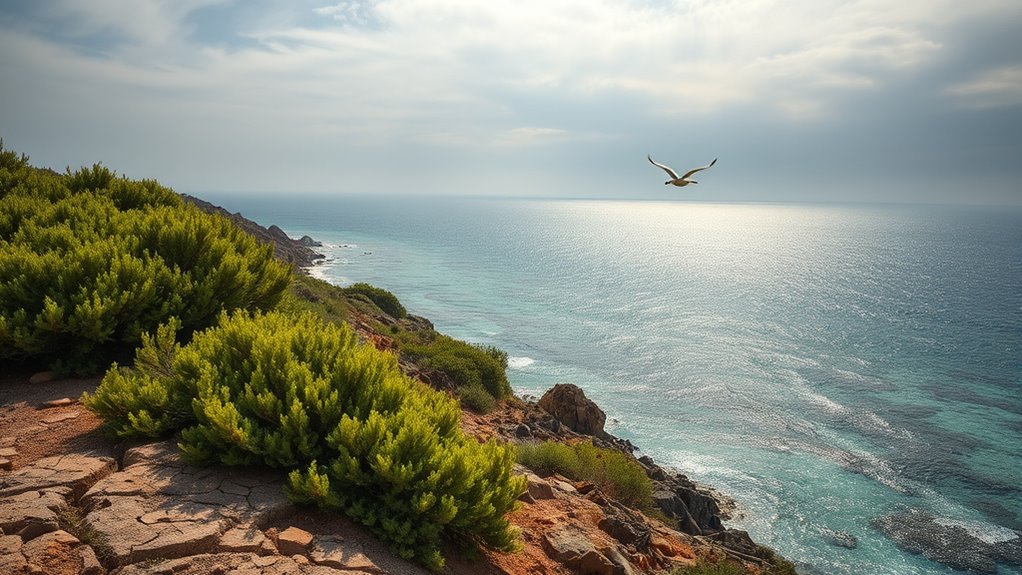
Climate change is increasingly threatening the delicate balance of the Mediterranean ecosystem, disrupting its unique plant and animal communities. As global temperatures rise, you’ll notice significant impacts on marine biodiversity, which is crucial for maintaining the health and resilience of this region. Warmer waters cause shifts in species distributions, pushing some marine organisms to deeper or cooler areas and threatening those unable to adapt quickly. Coral reefs, which serve as essential habitats for countless marine species, are particularly vulnerable, suffering from bleaching events that weaken their structure and diminish biodiversity. The loss of biodiversity doesn’t just reduce the visual richness of the Mediterranean; it undermines the entire food web, affecting fisheries, local economies, and the livelihoods of communities dependent on natural resources. Additionally, the decline of native species can lead to the dominance of invasive species, which further disrupts ecological balance and resilience.
Climate change threatens Mediterranean biodiversity, disrupting marine life and ecosystems vital for regional resilience and livelihoods.
Alongside these changes in marine life, you’ll also see coastal erosion accelerate as climate change intensifies. Rising sea levels, driven by melting ice caps and thermal expansion of seawater, threaten to swallow beaches and coastal habitats. Increased storm frequency and intensity, fueled by warmer atmospheric conditions, batter coastlines with stronger waves and storm surges, stripping away sand and destabilizing cliffs. This erosion not only destroys natural landscapes but also threatens infrastructure, tourism, and local settlements. As coastlines recede, the protective buffer of beaches and dunes diminishes, exposing inland areas to further damage from the sea. The loss of these natural barriers also impacts marine biodiversity by altering habitats that many species rely on for breeding, feeding, and shelter.
You’ll find that the combined effects of disrupted marine biodiversity and coastal erosion have a compounding impact. As habitats vanish and species decline, the ecological integrity of the Mediterranean weakens, making it less resilient to future climate shocks. The erosion of coastlines also affects human communities, forcing relocations and increasing vulnerability to climate-related disasters. You might observe that efforts to combat these issues, such as restoring coastal dunes or establishing marine protected areas, are becoming more urgent. These measures aim to preserve biodiversity, stabilize coastlines, and ensure the long-term sustainability of the Mediterranean’s natural environment. Promoting ecosystem-based adaptation strategies can help communities better withstand climate impacts while conserving biodiversity.
Ultimately, if climate change continues at its current pace, the Mediterranean ecosystem’s delicate balance will be further destabilized, risking irreversible damage. Protecting marine biodiversity and coastal areas isn’t just about conserving nature; it’s about safeguarding the livelihoods and resilience of human communities who depend on this vibrant, yet fragile, environment. Your awareness and actions can contribute to efforts aimed at mitigating these impacts and promoting sustainable solutions for the future of the Mediterranean.

Warning Property Protected By A U.S. Marine 12 inch by 8 inch Metal Tin Sign
- Material: Tin and metal construction
- Size: 8×12 inches with holes
- Durability: Waterproof, anti-glare, fade-resistant
As an affiliate, we earn on qualifying purchases.
As an affiliate, we earn on qualifying purchases.
Frequently Asked Questions
How Do Invasive Species Thrive Due to Climate Change in the Mediterranean?
You might notice invasive species thrive due to climate change in the Mediterranean because warmer temperatures and altered water conditions weaken native species’ resilience. Invasive species take advantage of this reduced climate resilience, spreading more easily and outcompeting local flora and fauna. As you observe these changes, it’s clear that climate change creates an environment where invasive species can flourish, further disrupting the ecosystem’s balance and health.
What Are the Economic Impacts of Climate Change on Mediterranean Fisheries?
You’re fishing for trouble if climate change continues unchecked, as it threatens Mediterranean fisheries’ economic resilience. Rising sea temperatures and changing currents disrupt fish stocks, making sustainable fisheries management harder. This leads to reduced catches, lower income for fishermen, and economic instability in coastal communities. Without adaptive strategies, the region risks losing its essential fisheries industry, turning a promising catch into a sinking ship.
How Does Climate Change Affect Mediterranean Marine Protected Areas?
You’ll notice that climate change impacts Mediterranean marine protected areas through coral bleaching and sea level rise. As temperatures increase, corals bleach and weaken, reducing biodiversity. Rising sea levels threaten coastlines and habitats, making it harder for protected species to thrive. These changes compromise the effectiveness of marine protected areas, highlighting the urgent need for conservation efforts to adapt and mitigate the effects of climate change on these essential ecosystems.
Are There Successful Adaptation Strategies for Mediterranean Ecosystems?
Yes, you can adopt successful adaptation strategies for Mediterranean ecosystems by promoting traditional farming methods that maintain biodiversity and soil health. Water conservation is vital—implementing efficient irrigation and rainwater harvesting helps preserve scarce resources. These strategies help ecosystems withstand climate change impacts, support local communities, and preserve the region’s unique biodiversity. By integrating traditional practices with modern conservation, you actively contribute to the resilience of Mediterranean ecosystems.
How Is Climate Change Influencing the Migration Patterns of Mediterranean Species?
Climate change is causing Mediterranean species to alter their migration patterns considerably. You’ll notice species dispersal happening earlier or later than usual, as they adjust to shifting temperatures and food availability. Breeding shifts also occur, with some species nesting at different times or locations to adapt to new conditions. These changes disrupt traditional migration routes, forcing species to find new habitats, which can impact the entire ecosystem’s balance and biodiversity.
Conclusion
As you see, climate change is transforming the Mediterranean ecosystem rapidly. For instance, rising sea temperatures threaten coral reefs, much like what happened in the 2019 bleaching event. If these trends continue, you might witness further loss of biodiversity and altered habitats. It’s essential for you to understand how your actions impact this fragile environment and support efforts to reduce greenhouse gases. Together, you can help preserve the Mediterranean’s unique ecosystems for future generations.