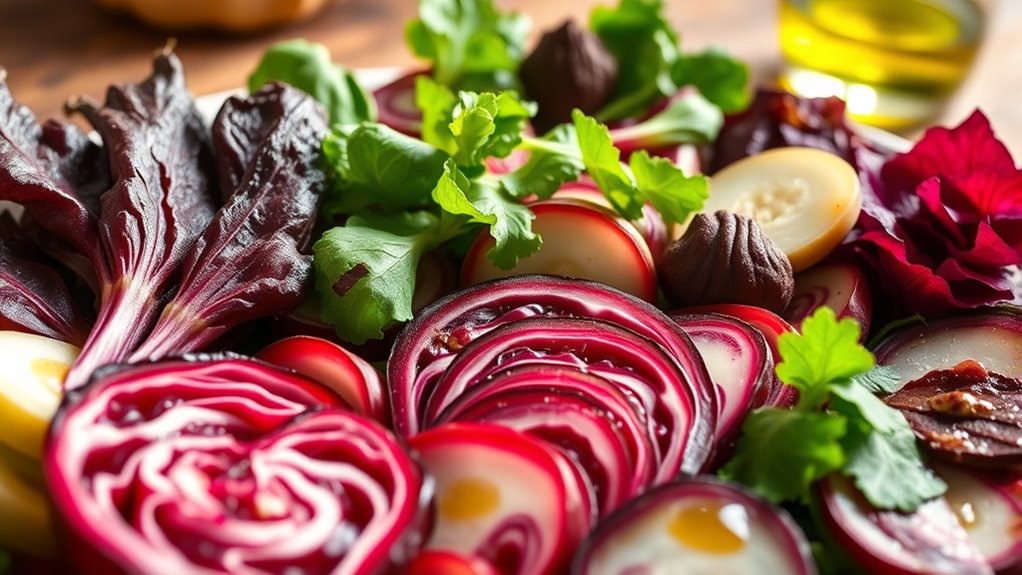

In Italian cuisine, bitter foods like radicchio, endive, and arugula add depth and balance to dishes while supporting digestion. They signal your body to produce enzymes and bile, helping process rich cheeses and meats more easily. Pairing bitter greens with sweet or acidic elements creates harmony and enhances flavors. Incorporating herbs like dandelion and gentian boosts both taste and health benefits, offering a mindful way to enjoy vibrant, nourishing meals. Keep exploring to discover more about their culinary and digestive powers.

Get home appliances delivered free — and shop member deals
- Fast, free delivery on millions of items
- Access to Prime Big Deal Days deals on October 6–7
- Prime Video, Amazon Music and more included
Key Takeaways
- Bitter foods like radicchio and arugula add flavor complexity and balance richness in Italian dishes.
- They stimulate digestive enzymes and bile production, aiding digestion and promoting gut health.
- Herbal bitter ingredients such as dandelion support liver detoxification and overall digestive wellness.
- Pairing bitter greens with sweet or acidic elements enhances flavor harmony and physiological benefits.
- Incorporating bitter foods contributes to a nutritious, well-balanced Italian diet with digestive and health advantages.

Italian cuisine is renowned for its rich flavors and diverse ingredients, and bitter foods play a surprising yet essential role in balancing these tastes. You might not immediately think of bitterness as a key element in Italian dishes, but it’s often the secret to creating harmony in complex flavors. These bitter components, whether found in herbs, vegetables, or drinks, aren’t just for taste—they also serve as herbal remedies that support your digestion and overall health. When used thoughtfully, they help achieve a well-rounded flavor balance that elevates even the simplest dishes.
In Italy, you’ll notice bitterness in ingredients like radicchio, endive, and arugula, which add depth and contrast to salads and sautés. These greens, with their sharp, slightly astringent taste, cut through rich cheeses and fatty meats, providing a rejuvenating counterpoint. Incorporating such bitter foods isn’t merely for flavor; it’s a strategic move to stimulate your digestive system. The bitterness signals your body to produce digestive enzymes and bile, making it easier to process heavy or greasy foods. This natural digestive aid aligns with traditional herbal remedies that have long used bitter herbs and greens to promote gut health and prevent indigestion. Bitter foods also contain compounds that may help detoxify your liver, enhancing overall health.
Bitter herbs like dandelion and gentian are also used in Italian cooking, often in small doses to add complexity to sauces or broths. These herbs not only enhance flavor but also serve as herbal remedies, helping to detoxify your liver and improve digestion. When you include a touch of bitterness in your meals, you’re practicing a form of flavor balance that benefits both your palate and your health. It’s a subtle reminder that balance isn’t just about taste but also about the physiological effects foods have on your body.
Furthermore, bitter foods are often paired with sweet or acidic ingredients to create a harmonious flavor profile. For example, a bitter radicchio salad might be accented with sweet balsamic vinegar or honey, balancing the sharpness and creating a satisfying taste experience. This interplay is a tribute to the Italian culinary philosophy of harmony and complexity, where every element has a purpose—whether for flavor or for supporting your well-being. Embracing bitter foods allows you to enjoy the full spectrum of Italian flavors while also harnessing their digestive benefits, making your meals not only delicious but also nourishing and beneficial for your health.
As an affiliate, we earn on qualifying purchases.
Frequently Asked Questions
How Do Bitter Foods Influence Overall Gut Health?
Bitter foods positively influence your gut health by enhancing gut microbiome interactions, promoting a balanced and diverse microbial community. The bitter flavor profiles stimulate digestion and increase enzyme production, helping break down food more efficiently. By including these foods, you support better nutrient absorption and reduce inflammation. Incorporating bitter flavors into your diet can lead to improved overall gut function and long-term digestive wellness.
Are Bitter Ingredients Suitable for Everyone’s Digestive System?
Bitter ingredients aren’t suitable for everyone’s digestive system, as health implications vary based on individual tolerance and taste preferences. If you have digestive conditions like acid reflux or ulcers, you should be cautious, since bitter foods can sometimes trigger discomfort. However, for many, they offer benefits and enhance flavor. Always listen to your body and consult a healthcare professional if you’re unsure about incorporating bitter ingredients into your diet.
Can Consuming Bitter Foods Improve Appetite Regulation?
Think of bitter foods as the conductor of your appetite orchestra, guiding your cravings and balance. Consuming bitter foods can improve appetite regulation by reducing bitter food cravings, making it easier to stick to healthy portions. They act as natural appetite suppression techniques, helping you feel full longer. Incorporate these flavors into your meals to regain control over your appetite and enjoy more satisfying, balanced eating experiences.
What Are Traditional Italian Bitter Recipes Beyond Appetizers?
You can enjoy traditional Italian bitter recipes beyond appetizers like herbal infusions and traditional tonics. For example, try a bitter herbal tea made with gentian or dandelion roots, which are known for their digestive benefits. Another option is a bitter liqueur such as Amaro, crafted with herbs and roots, often served after meals. These recipes enhance digestion and provide a unique, authentic taste of Italian culinary tradition.
How Do Bitterness Levels Vary Among Different Italian Herbs?
Think of Italian herbs like a symphony, each with its own bitterness intensity and herb flavor profiles. Rosemary and sage have a gentle bitterness that adds depth, while arugula and radicchio bring bold, sharp notes. Basil and parsley tend to be milder, balancing dishes without overpowering. Your palate will notice these variations, allowing you to craft dishes with the perfect level of bitterness to enhance flavor complexity.
Conclusion
Next time you enjoy Italian dishes, remember that bitter foods aren’t just flavorful—they also boost digestion and overall health. Embrace these flavors, and you’ll find your meals not only delicious but also beneficial. As the saying goes, “Bitter pills may be hard to swallow, but they’re good for you.” So, don’t shy away from those bitter greens and herbs—they’re your tasty allies for better digestion and wellness.
NFL season / tailgating Picks
team gear
As an affiliate, we earn on qualifying purchases.