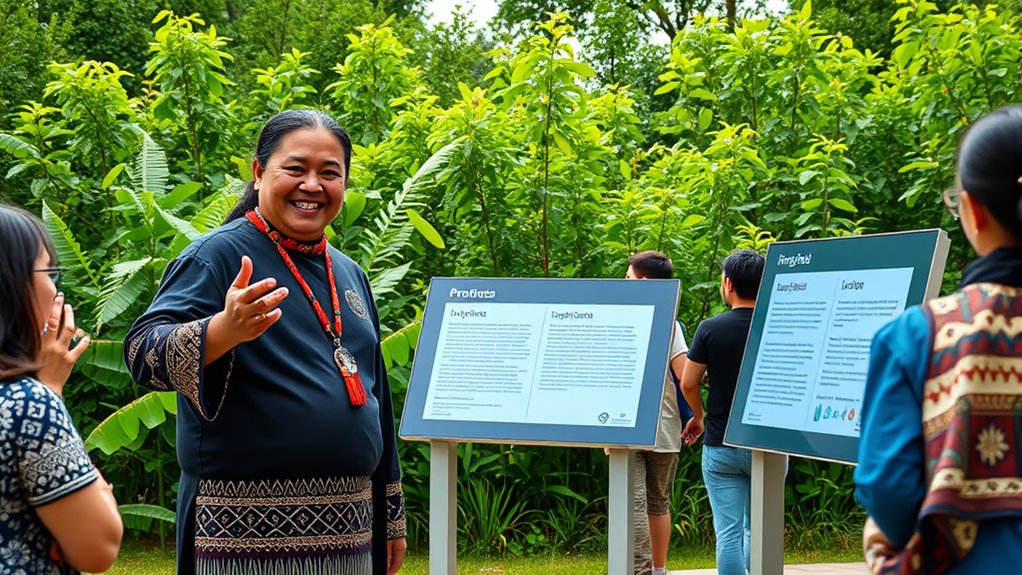

AI helps preserve Indigenous languages at tourist attractions by creating immersive experiences and improving accessibility. It records and digitizes languages, supports real-time translation, and enables virtual reality storytelling with elders. These technologies empower communities to take ownership of their cultural narratives, foster understanding among visitors, and guarantee languages stay vibrant for future generations. If you want to discover how AI transforms cultural preservation and visitor engagement, keep exploring this exciting topic.
Key Takeaways
- AI digitizes and archives Indigenous languages, ensuring preservation for future generations within tourism contexts.
- Interactive AI tools, such as translation apps and AR/VR, enhance visitor engagement with Indigenous languages and stories.
- AI supports community-led language learning and documentation, strengthening Indigenous cultural identity at tourist sites.
- Technology-driven exhibits promote cultural awareness, respecting and showcasing Indigenous traditions to visitors.
- Real-time translation and immersive experiences bridge language gaps, fostering understanding and appreciation of Indigenous cultures.
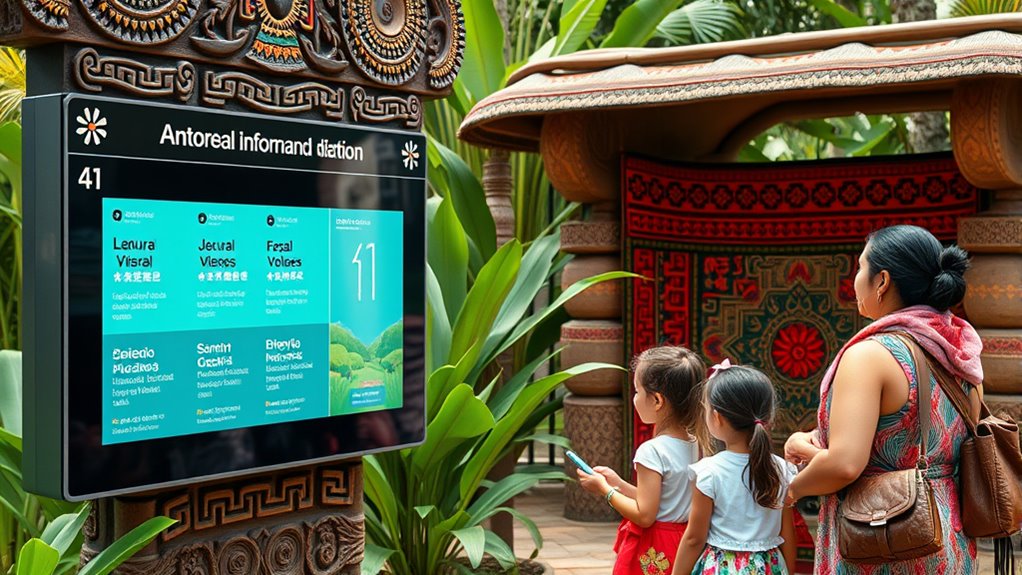
As tourism continues to grow, preserving Indigenous languages has become more urgent than ever, and AI offers innovative solutions to support this effort. When you visit tourist attractions that feature Indigenous communities, you often notice the importance of cultural representation—how these sites showcase traditions, stories, and languages. AI can be a powerful tool in language revitalization, helping to record, digitize, and teach Indigenous languages in ways that are accessible and engaging. By integrating AI-powered translation apps or interactive displays, you can experience the richness of a language that might otherwise be at risk of disappearing. This technology enables you to hear native pronunciations, learn key phrases, and understand cultural nuances, all in real time.
AI helps preserve Indigenous languages through recording, translation, and interactive learning at cultural sites.
AI-driven language tools can also help Indigenous communities actively preserve their linguistic heritage. For instance, voice recognition and machine learning can transcribe spoken language into written form, creating digital archives that serve as resources for future generations. This not only safeguards the language but also makes it easier for community members and visitors alike to engage with it authentically. When you encounter these efforts at tourist sites, you’re witnessing a conscious effort to keep Indigenous languages alive and vibrant through technology. It’s a way of honoring cultural identity while making it accessible to a broader audience.
Moreover, AI can facilitate cultural representation by creating immersive experiences that highlight linguistic diversity. Virtual reality (VR) and augmented reality (AR) applications can incorporate Indigenous languages into storytelling, allowing you to step into a world where language is intertwined with tradition and history. For example, you might explore a virtual village where elders narrate stories in their native tongue, or interact with digital exhibits that translate Indigenous chants or songs. These innovations help you understand and appreciate the depth of Indigenous cultures, fostering respect and awareness.
As you explore these attractions, you may also notice how AI helps Indigenous communities regain ownership of their language and cultural narratives. By providing tools that support language learning and documentation, AI empowers communities to share their stories on their own terms. This enhances cultural representation at tourist sites, ensuring that visitors not only observe but also learn and connect with Indigenous identities authentically. In this way, AI becomes a bridge—preserving endangered languages while enriching your experience and promoting meaningful cultural exchange.
Frequently Asked Questions
How Does AI Ensure Accurate Representation of Indigenous Languages?
AI guarantees accurate representation of indigenous languages by using advanced algorithms that focus on language accuracy and dialect adaptation. You can rely on AI to analyze vast linguistic data, capturing nuances and regional variations. It continuously learns from native speakers’ inputs, improving its understanding. This way, AI helps preserve authentic pronunciation, grammar, and vocabulary, ensuring indigenous languages are respectfully and accurately represented in various contexts, including tourist attractions.
What Are the Ethical Considerations in Using AI for Language Preservation?
Think of it like walking a tightrope; you must balance cultural sensitivity and data sovereignty. When using AI, you need to respect indigenous communities’ wishes and safeguard their data rights. Ethical use requires transparent practices, respecting cultural values, and avoiding misrepresentation. You should prioritize consent, ensure community involvement, and protect their language and knowledge, so technology uplifts rather than exploits, honoring their heritage and identity.
Can AI Adapt to Dialectal Variations Within Indigenous Languages?
Yes, AI can adapt to dialectal variations through advanced dialect recognition technology. You can train AI models to identify and differentiate linguistic diversity within indigenous languages, capturing subtle pronunciation, vocabulary, and grammatical differences. By doing so, AI helps preserve and promote dialectal richness, ensuring that linguistic diversity remains vibrant and accessible, even across different communities. This approach supports nuanced language preservation and fosters greater cultural understanding.
How Do Indigenous Communities Feel About AI Involvement in Language Preservation?
You might find that many indigenous communities appreciate AI’s potential for language preservation, but they also feel cautious. They value community engagement to guarantee their cultural authenticity isn’t compromised. You should recognize that communities want control over their language use and preservation methods. When AI involves respectful collaboration, communities see it as a helpful tool, but they remain vigilant to protect their cultural heritage from misrepresentation or oversimplification.
What Measures Are in Place to Protect Indigenous Cultural Data?
You’re protected by strict data privacy measures, ensuring your cultural data stays secure and confidential. Community engagement plays a essential role, involving Indigenous voices in decision-making processes to respect their rights and traditions. These measures foster trust, safeguard your cultural heritage, and promote respectful collaboration. By prioritizing data privacy and active community involvement, we aim to honor Indigenous communities and preserve their cultural identity for future generations.
Conclusion
By embracing AI in tourist attractions, you’re not just saving indigenous languages—you’re transforming them into unstoppable forces that will outlast civilizations themselves. With every spoken word preserved and every cultural story digitally immortalized, you’re wielding technology to defy time, ensuring these languages thrive against impossible odds. It’s not just preservation; it’s an epic battle for the soul of a culture, and AI is your unstoppable weapon in this extraordinary quest.