
AI assistants are user-friendly tools designed to help with everyday tasks like answering questions or managing schedules. AI agents are more autonomous, capable of decision-making in specific areas like customer service, often learning and improving over time. Workflows are sequences of automated steps that streamline complex processes, reducing manual effort. Understanding these distinctions helps you use automation more effectively; explore further to see how each can best serve your needs.

Get home appliances delivered free — and shop member deals
- Fast, free delivery on millions of items
- Access to Prime Big Deal Days deals on October 6–7
- Prime Video, Amazon Music and more included
Key Takeaways
- AI assistants focus on user-specific tasks and personalization, while agents operate autonomously within specific domains using complex decision-making.
- Workflows are sequences of automated steps designed to complete larger, repetitive tasks across multiple AI tools or systems.
- AI assistants prioritize user-friendliness and customization, whereas agents require oversight for fairness and ethical operation.
- Workflows automate entire processes, reducing manual effort and enabling higher-level decision-making.
- The main distinction lies in scope: assistants support individual users, agents handle autonomous decisions, and workflows coordinate complex task sequences.
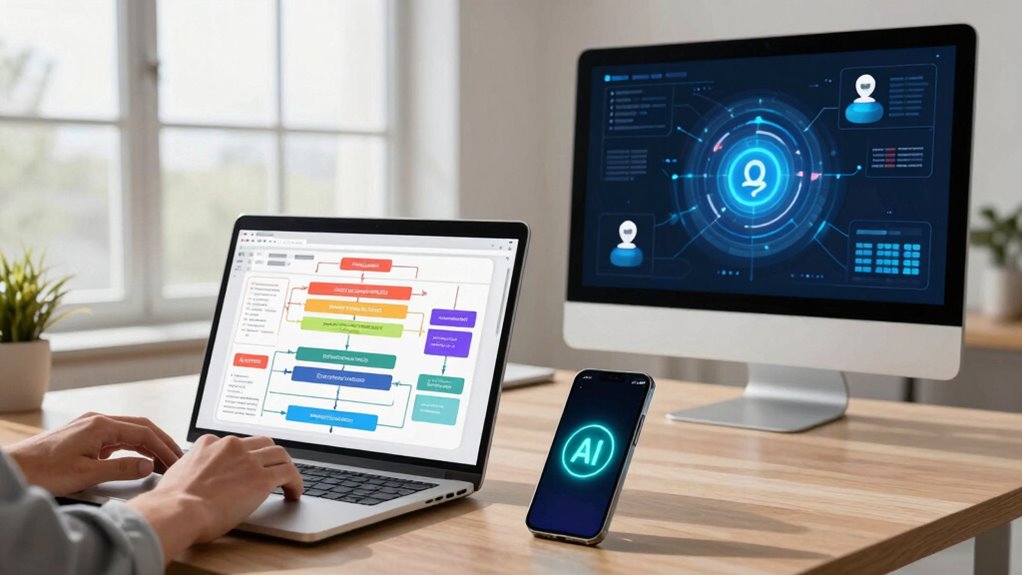
AI assistants, agents, and workflows have become indispensable tools that streamline tasks and boost productivity. But understanding the real difference between these technologies helps you use them more effectively. AI assistants are typically designed to help you perform everyday tasks—answering questions, managing schedules, or providing quick information. They’re often user-friendly and focus on user customization, meaning you can tailor their responses and functions to suit your preferences. This customization not only enhances your experience but also raises ethical considerations about data privacy and how your information is used. You want to feel confident that your data stays secure and that the AI respects your boundaries.
AI agents, on the other hand, are generally more autonomous and capable of making decisions based on complex data or specific rules. They often operate within specific domains, such as customer service or automation, and can perform tasks with minimal human intervention. You’ll find that agents are often used behind the scenes to handle more sophisticated processes, like troubleshooting issues or executing transactions. Their decision-making capabilities require careful oversight, especially considering ethical considerations like bias and transparency. You need to ensure that these agents act fairly and that their actions are explainable, to prevent unintended consequences. Additionally, many AI agents utilize complex decision-making to optimize their performance and adapt to new situations, which can also involve learning algorithms to improve over time. Implementing ethical AI principles is essential to ensure that these systems operate responsibly and align with human values. When designing or deploying these systems, transparency becomes critical so users understand how decisions are made and trust is maintained. Regular monitoring and evaluation of AI agents can help detect and mitigate potential issues before they impact users or operations.
Workflows are different still—they’re sequences of automated steps designed to complete larger, often repetitive tasks. Instead of interacting directly with you, workflows execute predefined processes that might involve multiple AI assistants or agents working together. For example, a workflow might automatically gather data, generate reports, and send notifications—all without your constant input. These workflows streamline complex operations, freeing you to focus on higher-level decision-making. When setting up workflows, user customization is crucial because you want them to align perfectly with your specific needs. Properly configured workflows also raise ethical considerations, especially around data security and the potential for automation to replace human jobs. It’s important to evaluate these workflows regularly to ensure they remain aligned with your ethical standards and operational goals. As these systems become more sophisticated, integrating automation tools can further enhance efficiency and accuracy across your processes.
As an affiliate, we earn on qualifying purchases.
Frequently Asked Questions
How Do AI Assistants Learn Over Time?
AI assistants learn over time through machine learning, which involves analyzing new data and adjusting their responses accordingly. You provide data training by feeding the assistant relevant information, allowing it to recognize patterns and improve accuracy. As it processes more data, it becomes better at understanding your preferences and needs, making interactions smoother and more personalized. This continuous learning helps AI assistants become more efficient and effective in assisting you.
Can Agents Operate Independently Without Human Oversight?
Yes, agents can operate independently through autonomous decision-making, but they still need human oversight, especially considering ethical considerations. While they can perform tasks and adapt in real time, complex or sensitive issues require human judgment to guarantee responsible actions. You should regularly monitor their decisions and set clear boundaries, so they act ethically and align with your goals, balancing autonomy with necessary oversight.
What Industries Benefit Most From AI Workflows?
AI workflows benefit industries like customer support and supply chain management the most. You’ll see faster resolution times and improved accuracy when automating routine tasks, freeing your team to focus on complex issues. In customer support, AI workflows handle inquiries efficiently, while in supply chains, they optimize logistics and inventory management. By integrating AI workflows, you streamline operations, reduce errors, and enhance overall productivity in these sectors.
How Secure Are AI Assistants in Handling Sensitive Data?
AI assistants are generally secure in handling sensitive data when they use data encryption and adhere to strict privacy protocols. These measures protect your information from unauthorized access, guaranteeing confidentiality. However, it’s essential that the AI provider maintains rigorous security standards and regularly updates their systems. You should also stay informed about their privacy policies to ensure your data remains protected and your trust is maintained.
Are Workflows Adaptable to Changing Business Needs?
Workflows are highly adaptable to changing business needs through dynamic adaptation and process flexibility. While static processes can become obsolete quickly, flexible workflows adjust seamlessly as priorities shift. You can modify steps, integrate new tools, or reallocate resources without disrupting operations. This agility guarantees your business stays responsive, competitive, and efficient, even amid rapid market changes, empowering you to meet new challenges head-on with confidence.
Conclusion
Understanding the differences between AI assistants, agents, and workflows helps you choose the right tool for your needs. Did you know that businesses implementing AI workflows see up to a 30% increase in efficiency? By leveraging these technologies thoughtfully, you can streamline tasks, boost productivity, and stay ahead in today’s digital landscape. Embrace the right AI solution, and you’ll gain access to new levels of performance and innovation for your organization.
Fall yard work Picks
leaf blowers
As an affiliate, we earn on qualifying purchases.