
Autonomous delivery robots are transforming urban logistics in Italian cities, but there are key challenges to overcome. You’ll need to take into account infrastructure limitations like narrow streets and historic architecture, and ensure regulations keep pace with technology. Safety, cybersecurity, and clear pathways are critical for smooth operation. With proper planning and updates, cities can harness these robots’ potential for faster, contactless deliveries. Keep exploring to discover how Italy is balancing innovation with safety and accessibility.
Key Takeaways
- Infrastructure modifications, such as dedicated lanes and sensors, are essential for safe navigation of delivery robots in historic and narrow Italian city streets.
- Updating legal and regulatory frameworks is crucial to address safety, liability, and privacy concerns associated with autonomous delivery systems.
- Urban planning must balance technological innovation with accessibility, ensuring infrastructure upgrades support seamless robot integration.
- Cybersecurity measures are vital to protect autonomous robots from hacking, malicious interference, and ensure city security.
- Clear signage, designated pathways, and policy updates foster safer, more efficient deployment of delivery robots, enhancing urban logistics.
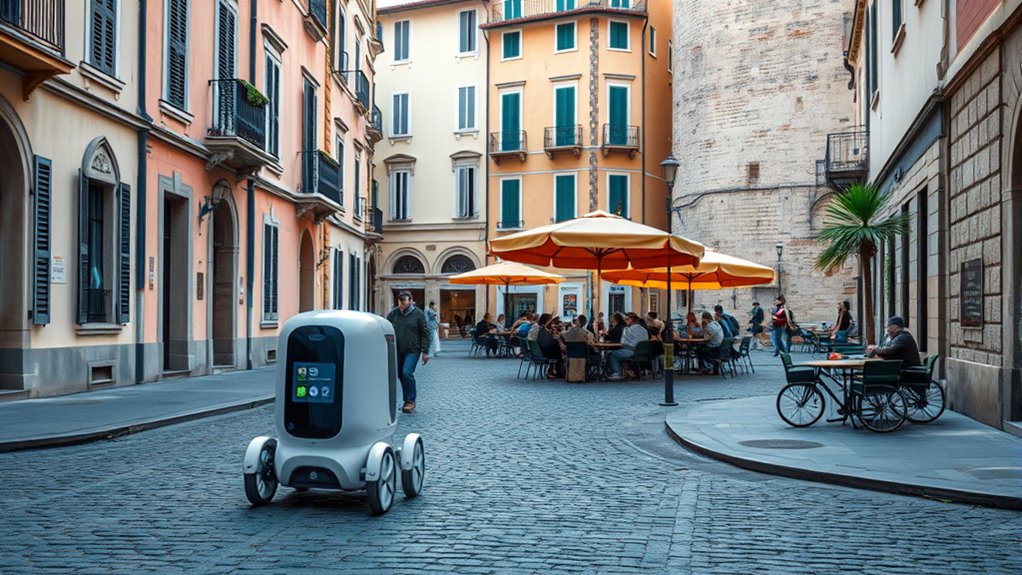
Autonomous delivery robots are increasingly becoming a common sight in Italian cities, transforming the way goods are transported and received. As these robots navigate busy streets and crowded sidewalks, they challenge existing urban infrastructure and demand a reevaluation of city planning. Italian cities, known for their historic architecture and narrow streets, face unique hurdles in integrating these new delivery methods. You’ll need to consider how urban infrastructure supports or hinders robot movement. For example, sidewalks may need modifications to accommodate these devices, or dedicated lanes might become necessary to prevent conflicts with pedestrians and vehicles. Existing infrastructure wasn’t designed with autonomous delivery in mind, so municipal authorities must adapt by installing sensors, charging stations, and clear signage to facilitate safe and efficient robot operation. Additionally, ongoing AI security concerns, such as vulnerabilities to hacking or malicious interference, highlight the importance of robust cybersecurity measures for these autonomous systems. Legal regulations play a crucial role in shaping the deployment of autonomous delivery robots. Italy’s legal framework must evolve to address safety, liability, and privacy concerns associated with these devices. You’ll find that current laws may not fully cover autonomous delivery operations, creating gray areas around responsibilities if a robot causes an accident or damages property. Regulatory bodies are working to establish guidelines that specify where and how robots can operate, requiring companies to obtain permits and adhere to strict safety standards. Additionally, data privacy laws must be taken into account, as robots collect and transmit information during their routes. Navigating these legal complexities is essential for businesses looking to implement autonomous delivery services without running afoul of regulations. The interplay between urban infrastructure and legal regulations determines how smoothly autonomous robots can be integrated into city life. For instance, if the city’s infrastructure isn’t equipped with appropriate signage or designated pathways, robots may struggle to operate safely, leading to potential accidents or disruptions. Conversely, clear legal regulations can encourage innovation by providing a framework within which companies can experiment and expand their services. As a user, you’ll notice that cities proactively update their policies and infrastructure to keep pace with technological advancements, aiming to balance innovation with safety and accessibility.
autonomous delivery robot sensors
As an affiliate, we earn on qualifying purchases.
As an affiliate, we earn on qualifying purchases.
Frequently Asked Questions
How Do Delivery Robots Navigate Complex Italian Urban Environments?
You can see delivery robots navigate complex Italian urban environments by using advanced navigation algorithms that adapt to crowded streets and narrow alleys. They carefully manage pedestrian interactions, slowing down or rerouting to guarantee safety. These algorithms process real-time data from sensors, cameras, and maps, allowing the robots to detect obstacles and pedestrians, making their movement smooth and efficient despite the busy, unpredictable city terrain.
What Are the Legal Regulations for Autonomous Delivery in Italy?
You should be aware that Italy’s legal frameworks for autonomous delivery robots emphasize regulatory compliance with local and national laws. Regulations focus on safety standards, data privacy, and traffic rules, requiring operators to obtain permits and adhere to specific guidelines. By staying informed about evolving legislation, you can guarantee your delivery robots operate legally, safely, and efficiently within Italian cities, helping you avoid penalties and promote public trust.
How Do Italian Residents Perceive Autonomous Delivery Robots?
Imagine a bustling piazza where new dancers, autonomous robots, step into the crowd. You notice that public acceptance varies: some residents see these robots as helpful couriers, while others view them with suspicion rooted in cultural perceptions. Overall, Italians are cautiously open, appreciating innovation but wanting assurance that these robots respect local customs and safety. Their perceptions hinge on trust, familiarity, and how well these new “dancers” integrate into daily life.
What Technological Innovations Are Enhancing Robot Navigation in Italy?
You see that AI integration and sensor advancements are revolutionizing robot navigation in Italy. These innovations enable your delivery robots to better interpret their surroundings, avoid obstacles, and adapt to complex urban environments. Advanced sensors, like LiDAR and cameras, provide real-time data, while AI processes this information quickly. As a result, your robots navigate more safely and efficiently, improving delivery reliability and helping them seamlessly integrate into Italian cityscapes.
How Do Weather Conditions Affect Robot Delivery Operations in Italy?
Weather conditions considerably impact your robot delivery operations in Italy. Heavy rain, snow, and fog reduce visibility and create slippery surfaces, making navigation more difficult. These weather impacts challenge your robots’ sensors and climate resilience, increasing the risk of delays or accidents. To guarantee reliable service, you need to enhance weather-resistant features and adapt routes based on real-time weather data, maintaining efficiency despite Italy’s diverse climate conditions.
robot navigation signage for urban delivery
As an affiliate, we earn on qualifying purchases.
As an affiliate, we earn on qualifying purchases.
Conclusion
You might think autonomous delivery robots are just a futuristic idea, but they’re already transforming Italian cities today. Imagine a future where these robots seamlessly navigate narrow streets, reducing traffic and pollution. It’s almost like a theory come true—technology working harmoniously with urban life. Embrace this shift, because if we don’t adapt now, we risk missing out on a cleaner, smarter, more efficient tomorrow. The future is knocking; are you ready to open the door?
delivery robot charging station
As an affiliate, we earn on qualifying purchases.
As an affiliate, we earn on qualifying purchases.
cybersecurity protection for autonomous robots
As an affiliate, we earn on qualifying purchases.
As an affiliate, we earn on qualifying purchases.