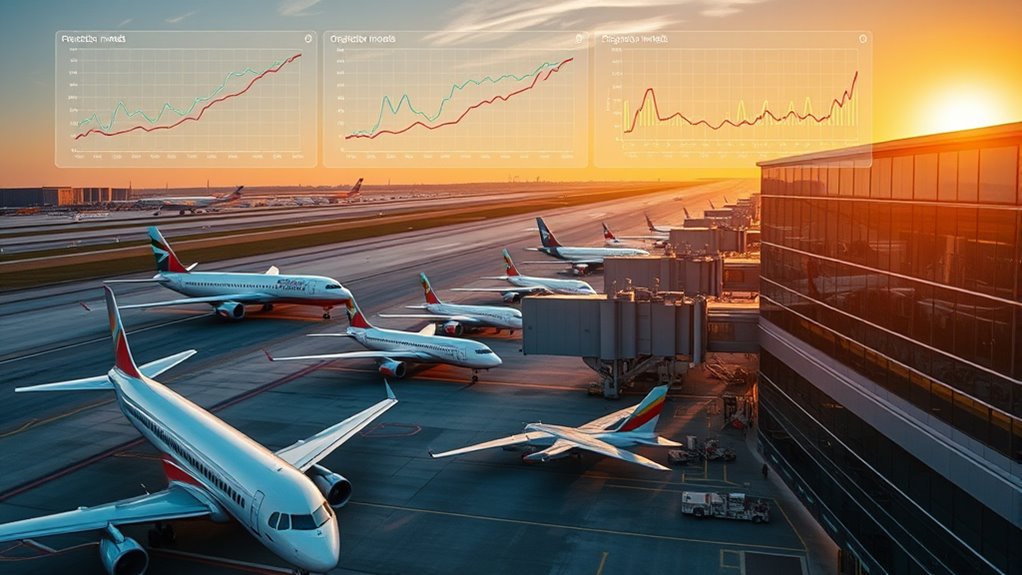

To predict flight delays with machine learning, you analyze a mix of operational, environmental, and historical data, including weather, air traffic volume, maintenance issues, and staffing levels. These models identify patterns and build forecasts for congestion and delays, helping airlines optimize schedules proactively. By integrating real-time updates and diverse variables, you can improve accuracy and minimize disruptions. Keep exploring how these methods work to better understand their capabilities and future potential.

Get home appliances delivered free — and shop member deals
- Fast, free delivery on millions of items
- Access to Prime Big Deal Days deals on October 6–7
- Prime Video, Amazon Music and more included
Key Takeaways
- Machine learning models utilize historical data on weather, traffic, and airport capacity to forecast potential flight delays.
- Features such as passenger demand, crew availability, and maintenance status are integrated into predictive algorithms.
- Techniques include classification and regression models that identify high congestion periods and delay risks.
- Real-time data analysis enables dynamic updates and proactive scheduling adjustments to minimize disruptions.
- Enhanced prediction accuracy supports better resource allocation and improves overall airline operational planning.

Flight delays can disrupt travel plans and cause frustration, but advances in data analysis are making it easier to predict them accurately. One key factor influencing delays is air traffic congestion, which occurs when airports and airspace become overwhelmed with flights, especially during peak hours or adverse weather. Understanding how congestion builds and affects flight schedules helps airlines and air traffic controllers manage their operations more effectively. By analyzing historical data on air traffic volume, weather patterns, and airport capacity, machine learning models can forecast periods of high congestion, enabling airlines to adjust their schedules proactively. This means you might experience fewer last-minute delays because airlines can better anticipate these congestion spikes and plan accordingly.
Airline scheduling, another critical component, directly impacts the likelihood of delays. When flights are scheduled too tightly, even minor disruptions can cascade through the system, causing widespread delays. Machine learning techniques allow airlines to optimize scheduling by analyzing past performance data, passenger demand, crew availability, and airport capacity constraints. These models help identify ideal departure and arrival times, reducing the risk of cascading delays. As a result, your flight is less likely to be delayed due to scheduling issues, and the airline can better allocate resources, such as crew and gate assignments, to ensure smoother operations.
Predictive analytics also considers other variables like weather conditions, maintenance issues, and staffing levels, which influence airline scheduling and air traffic congestion. For instance, if an airport expects severe weather, models can recommend adjusting flight times or delaying certain departures to prevent congestion and safety risks. This proactive approach means fewer surprises for travelers, and you benefit from more dependable schedules. Analyzing these factors with machine learning models improves the accuracy of delay predictions and helps airlines prepare better contingency plans. These data-driven methods also support real-time decision-making, allowing airlines to reroute flights or adjust schedules dynamically as new information becomes available.
In essence, by leveraging machine learning, airlines and air traffic authorities gain a clearer picture of potential disruptions before they happen. They can anticipate congestion points and fine-tune schedules to avoid or mitigate delays. This not only enhances operational efficiency but also improves your travel experience, making delays less frequent and less stressful. As these technologies continue to evolve, your flights will become more punctual, transforming the way we navigate the complexities of air travel.
airline flight delay prediction device
As an affiliate, we earn on qualifying purchases.
As an affiliate, we earn on qualifying purchases.
Frequently Asked Questions
How Do Weather Conditions Influence Flight Delay Predictions?
Weather conditions considerably influence flight delay predictions by affecting turbulence impact and seasonal variations. You should consider how turbulence impacts flight schedules, as severe turbulence can cause delays. Additionally, seasonal variations, like winter storms or summer thunderstorms, increase unpredictability. By incorporating weather data into your models, you can better anticipate delays, allowing airlines to optimize scheduling and improve passenger experience despite weather uncertainties.
What Role Does Airline Scheduling Play in Delay Forecasting?
Airline scheduling plays a crucial role in delay forecasting by setting the tone for operational efficiency. When schedules are optimized, delays become less likely, helping machine learning models predict smoother flights. Conversely, tightly packed schedules or last-minute changes can introduce uncertainties. Your understanding of airline scheduling allows you to better anticipate potential delays, making your forecasts more accurate and helping airlines improve overall punctuality and passenger satisfaction.
Can Machine Learning Models Predict Delays for International Flights?
Yes, machine learning models can predict delays for international flights. They analyze factors like airport congestion and security procedures, which often cause delays. By examining historical data on these variables and real-time airport conditions, your models can identify patterns that signal potential delays. This helps airlines and passengers prepare better, reducing frustration and improving overall travel experiences. Machine learning offers a powerful way to manage complex international flight delay predictions effectively.
How Is Real-Time Data Integrated Into Delay Prediction Systems?
Imagine data streams merging seamlessly as you optimize delay predictions; that’s how real-time data is integrated. You feed current information from sources like weather updates, air traffic control, and aircraft sensors into your models alongside historical data. By ensuring high data accuracy, your system adapts instantly, refining predictions on the fly. This continuous flow allows your machine learning models to stay responsive, providing timely insights and minimizing delays effectively.
What Ethical Considerations Arise With Using Passenger Data for Predictions?
You should prioritize passenger privacy and data security when using passenger data for predictions. You might face ethical concerns if personal information is mishandled or shared without consent. Guarantee you implement strict data security measures and anonymize data to protect individuals. Transparency about data collection and usage builds trust, and complying with privacy laws helps prevent potential legal issues. Respecting passenger rights is essential for ethical and responsible data use.
Conclusion
By applying machine learning to flight data, you can accurately predict delays and improve planning. Some might think it’s too complex or unreliable, but with the right methods, these models become surprisingly effective. Embrace the technology—it’s designed to help you avoid surprises and make smarter decisions. So, don’t let doubts hold you back; harness machine learning to turn unpredictable delays into manageable events, making your travel smoother and more predictable.
Fall Picks
fall essentials
As an affiliate, we earn on qualifying purchases.