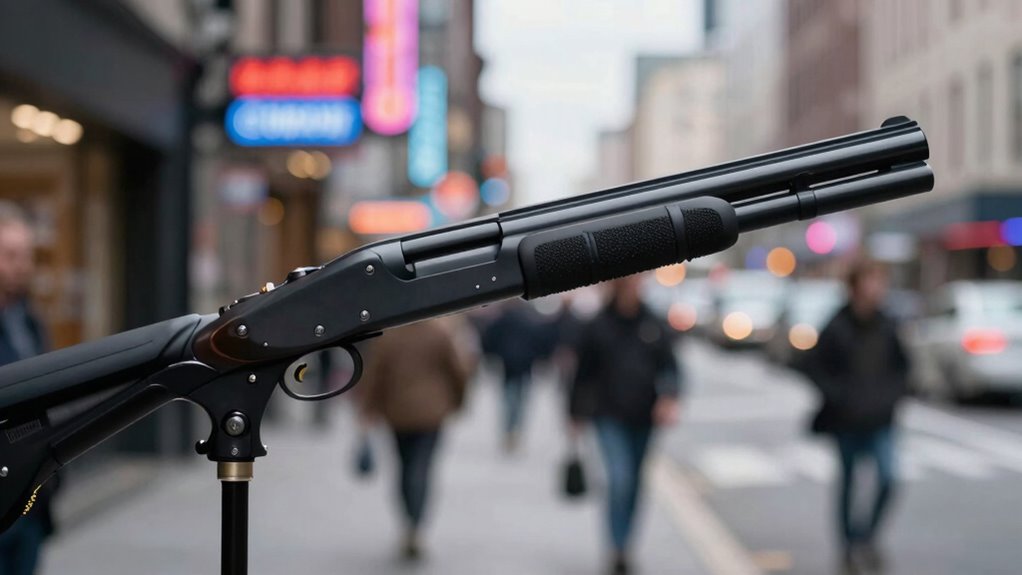

Shotgun microphones are excellent for capturing focused sound from a distance, but they can be problematic if misaligned or pointed at the wrong source. Their directional design emphasizes sound from the front, so inaccuracies in positioning or polarization can cause muffled audio or sound loss. Background noise and feedback issues also become prominent if you don’t properly account for environment and equipment setup. Keep these tips in mind—there’s more to mastering their use to avoid common pitfalls.

Get home appliances delivered free — and shop member deals
- Fast, free delivery on millions of items
- Access to Prime Big Deal Days deals on October 6–7
- Prime Video, Amazon Music and more included
Key Takeaways
- Proper alignment is crucial; mispointing can cause muffled audio or loss of important sound sources.
- Directionality helps focus on intended sources but can miss or distort sounds if not correctly aimed.
- Understanding polarization patterns prevents unintended sound pickup and ensures clearer audio capture.
- Multiple sound sources require precise positioning to avoid muffling or losing certain sounds.
- Environmental factors like background noise and speaker placement influence the microphone’s effectiveness and feedback risk.
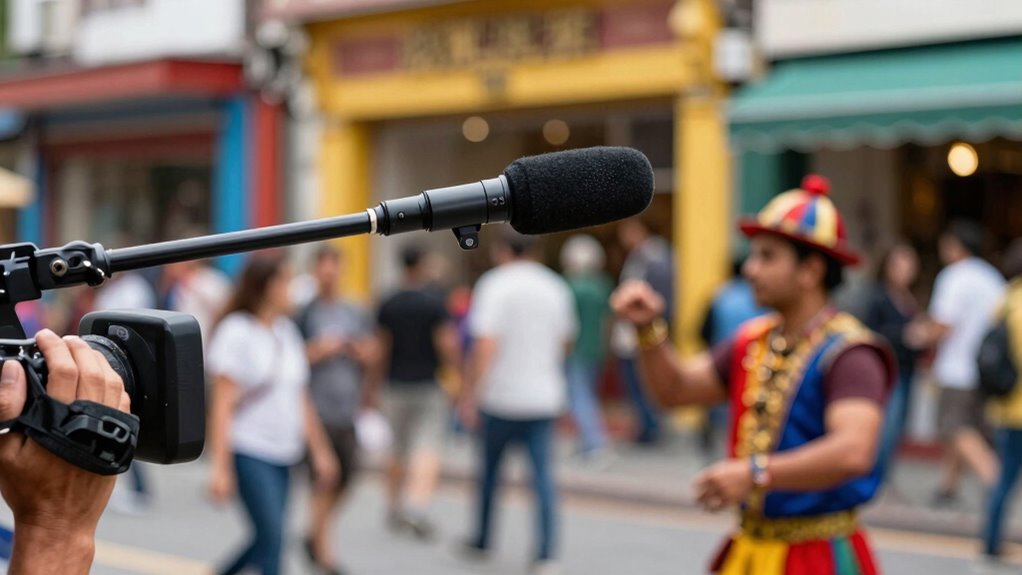
Shotgun microphones are celebrated for their ability to capture clear, focused sound from a distance, making them a staple in film, broadcast, and live events. But as powerful as they are, they aren’t foolproof. When you point them at the wrong source or don’t consider their limitations, you can run into issues that impact your audio quality. Two common problems you might face are polarization issues and feedback challenges, which often arise when using shotgun mics improperly or in complex environments.
First, polarization issues can occur when the microphone’s design doesn’t match the sound source’s orientation. Shotgun mics are highly directional, meaning they pick up sound most effectively from the front and reject noise from the sides and rear. If you’re not aligned correctly or if the sound source is moving unpredictably, you may find that the mic struggles to pick up clear audio. Additionally, if you’re using a shotgun mic in a scenario with multiple sound sources, the microphone’s polarization can cause uneven pickups, where some sounds get muffled or lost altogether. This can be frustrating because it might seem like your equipment is malfunctioning, but really, it’s a matter of positioning and understanding the mic’s polarization characteristics.
Feedback challenges are another common hurdle, especially in live settings. Shotgun mics are sensitive, and when you point them at loud speakers or monitor systems, you risk creating a feedback loop. This happens when the microphone picks up the sound from the speakers it’s supposed to be capturing, amplifies it, and sends it back through the speakers repeatedly. Feedback can be a nightmare, causing loud screeches that disrupt your recording or performance. To avoid this, you need to carefully position your shotgun mic away from speakers and monitors, and sometimes use directional controls or filters to minimize feedback. Understanding polarization patterns can help you better tailor your microphone placement in various environments.
It’s easy to fall into the trap of assuming a shotgun mic will automatically solve your sound problems. But if you don’t pay attention to polarization issues and feedback challenges, you might find yourself fighting an uphill battle for good audio. Always consider the environment, the placement of your mic, and the sound sources involved. Proper positioning and understanding your equipment’s limitations are key to leveraging the full potential of shotgun mics without falling prey to these common pitfalls. Additionally, understanding the polarization characteristics of shotgun mics can help you optimize their use in various environments.
As an affiliate, we earn on qualifying purchases.
Frequently Asked Questions
How Do Shotgun Mics Handle Wind Noise Outdoors?
You’ll find that shotgun mics handle wind noise outdoors better with proper wind protection, like a furry windscreen or dead cat, which reduces handling noise and wind interference. Without these, wind noise can overwhelm your recordings, making speech hard to understand. Always attach reliable wind protection, especially in breezy conditions, to guarantee your audio remains clear and professional, even when facing challenging outdoor environments.
What Are the Best Accessories for Shotgun Microphones?
Think of your shotgun mic like a garden needing protection; the right accessories can be its shield. A high-quality shock mount prevents unwanted vibrations from sneaking in, while a windscreen or deadcat tackles wind noise. Pay attention to the polar pattern—choosing the right one enhances focus and reduces background noise. These accessories keep your sound clear, allowing your voice to shine through even in challenging outdoor environments.
Can Shotgun Mics Be Used for Live Music Recordings?
Yes, shotgun mics can be used for live music recordings, especially in studio applications. They excel at capturing focused sound from a distance, making them ideal for isolating individual instruments or performers. When applying interview techniques, you’ll want to position the mic carefully to avoid unwanted noise. Keep in mind, in dynamic live settings, other mics might better handle the ambient sound, but shotgun mics are versatile for controlled environments.
How Do I Prevent Phase Issues With Shotgun Microphones?
To prevent phase issues with shotgun microphones, you gotta master the art of positioning! Always consider the polar pattern—shotguns are super directional, so point them directly at your source. Keep the frequency response in mind; avoid placing the mic where reflections or off-axis sounds cause phase cancellations. Use proper angling and distance techniques, and if needed, employ phase alignment tools during post-production to keep your sound crystal clear and in phase.
Are Shotgun Mics Suitable for Video Conferencing?
Shotgun mics aren’t ideal for video conferencing because background noise can be a problem, and their effectiveness depends heavily on proper microphone placement. If you point them directly at your mouth, they pick up your voice clearly, but they also risk capturing more background noise if not positioned correctly. For casual calls, simpler built-in mics usually work better. Use a dedicated mic only if you need high-quality audio and can manage placement carefully.
Conclusion
Remember, a shotgun mic is a sharp arrow—precise and powerful, but only if you aim it wisely. When you point it at the wrong problem, it’s like hitting a target that’s not even in the room. Stay focused, listen carefully, and direct your tools where they matter most. Otherwise, you risk shooting blanks in the vast echo chamber of chaos, missing the true sound you’re trying to capture. Aim true, and let your message resonate.
Fall Picks
fall essentials
As an affiliate, we earn on qualifying purchases.