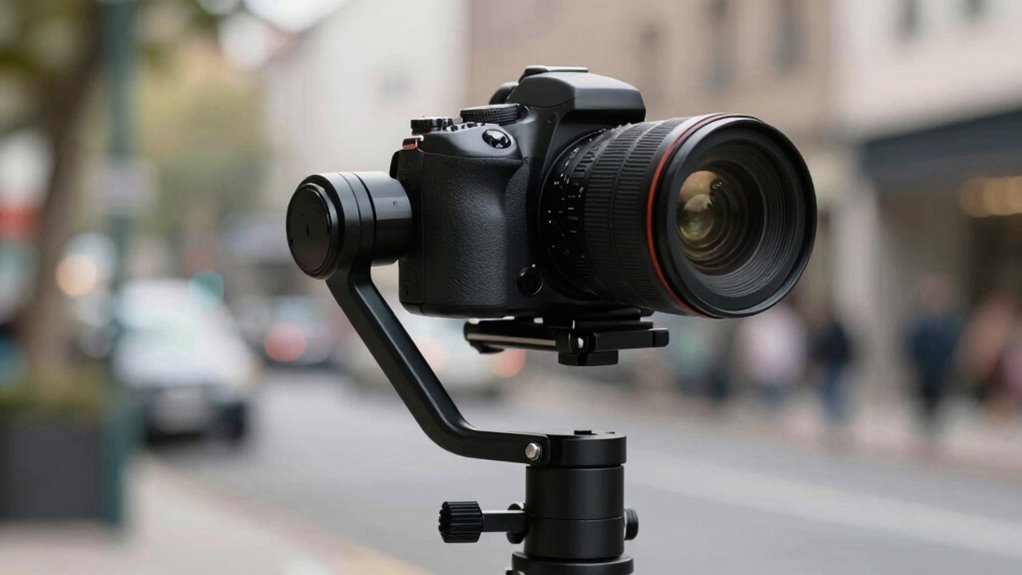

Camera gimbals can make your videos look much smoother and more professional by stabilizing your shots and enabling dynamic movements. However, they’re not for everyone—if you prefer static shots or don’t want to spend time mastering their use, a gimbal might be overkill. Plus, they can be pricey and fragile. If you want to discover how to get the most out of a gimbal and see if it fits your style, keep exploring.
Key Takeaways
- Gimbals improve video smoothness but require skill to operate effectively, making them less ideal for beginners.
- They are best suited for dynamic shots; static or controlled environment filming may not benefit as much.
- Proper balancing and practice are essential; inexperienced users might struggle to achieve optimal results.
- Gimbals can be costly and fragile, which may not suit budget-conscious or rough handling users.
- Advances in stabilization tech offer alternatives, making gimbals less necessary for casual or low-stakes videography.
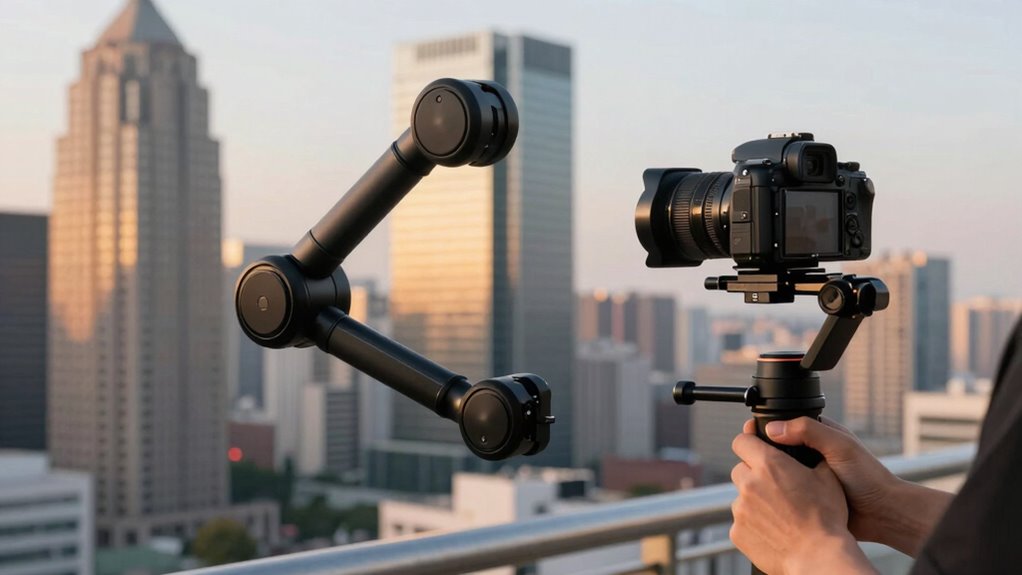
If you want your videos to look smoother and more professional, camera gimbals are a game-changer. They’re designed to stabilize your shots, allowing you to move freely without the jitters or shakiness that can ruin an otherwise good take. With the right stabilization techniques, a gimbal can turn a shaky handheld clip into a polished, cinematic shot. These devices have become a major trend in camera accessory trends, reflecting how filmmakers and content creators prioritize smoothness and fluid motion. But before jumping on the bandwagon, you should consider whether a gimbal suits your style and needs.
Camera gimbals excel when it comes to dynamic shots, such as following a subject through a busy street or capturing sweeping landscape panoramas. They enable you to maintain steady footage while walking, running, or pivoting, which is difficult to achieve with just handheld stabilization. However, mastering the proper stabilization techniques with a gimbal takes practice. You need to learn how to balance the device, move smoothly, and anticipate your shots to maximize its benefits. If you’re someone who prefers static, tripod-based shots or doesn’t want to invest time in learning new skills, a gimbal might not be necessary.
Another factor to consider is the trend in camera accessories, which constantly shifts as technology advances. Today’s gimbals are more compact, lightweight, and user-friendly than ever before, making them appealing to vloggers, travelers, and casual filmmakers. However, these devices can be pricey and sometimes fragile, so if you’re on a tight budget or tend to be rough on your gear, a gimbal might not be the best fit. Also, if you mostly shoot in controlled environments where stability isn’t an issue, investing in a stabilization technology could be overkill.
Furthermore, a gimbal isn’t a cure-all for shaky footage. It’s a powerful tool, but it’s not magic. You still need to frame shots well, control your movements, and understand your camera’s capabilities. If you’re new to videography or prefer simple setups, you might find the learning curve steep. Additionally, understanding camera stabilization can help you better utilize your gimbal and improve your overall filming skills. Conversely, if you’re a seasoned videographer who values high-quality, steady footage and is willing to practice, a gimbal can significantly elevate your work. Considering the advancements in stabilization technology can help you make an informed decision about whether a gimbal will meet your needs.
In the end, whether a camera gimbal makes your videos better depends on your goals, shooting style, and willingness to learn. They’re fantastic for dynamic, professional-looking footage but aren’t necessary for everyone. Consider your needs carefully, and if you decide to try one, be prepared to invest some time mastering stabilization techniques to truly harness its potential.
As an affiliate, we earn on qualifying purchases.
Frequently Asked Questions
Are Camera Gimbals Suitable for Beginner Videographers?
Yes, camera gimbals can be suitable for beginner videographers, but it depends on your skill development and equipment compatibility. Gimbals help stabilize your shots, making videos look more professional, but they require practice to master. If you’re willing to learn and your camera setup works well with a gimbal, it can be a valuable tool. However, start with basic models if you’re new to avoid overwhelming yourself.
How Much Do Different Types of Gimbals Cost?
You’ll find gimbals range from budget options around $50-$150, perfect if you’re starting out, to professional features costing $500 or more for advanced users. Budget models offer basic stabilization, while higher-end gimbals include smooth motion, longer battery life, and custom controls. Your choice depends on your needs and budget; for casual shooting, a cheaper gimbal may suffice, but professionals often prefer models with more advanced features.
Can Gimbals Be Used With Smartphones?
Yes, gimbals can be used with smartphones. Many models offer smartphone stabilization, making your videos smoother and more professional-looking. When choosing a gimbal, check for gimbal compatibility to guarantee it fits your phone size and features. Most modern gimbals are designed for smartphones, offering easy setup and controls, so you can enhance your mobile videography without hassle. Just make sure to select one that matches your phone’s specifications.
Do Gimbals Require Regular Maintenance?
You might think gimbals don’t need maintenance, but they do. Regular calibration keeps the motors working smoothly, ensuring steady shots. Check the battery longevity by charging and storing it properly, as batteries degrade over time. Keeping your gimbal clean and updating firmware also helps maintain performance. So, yes, occasional maintenance helps your gimbal stay reliable and extend its lifespan, making your videos look even better.
What Are the Best Gimbals for Outdoor Shooting?
For outdoor shooting, you want gimbals that deliver steady footage and are lightweight enough to carry comfortably. The DJI Ronin-SC and Zhiyun Crane Plus are excellent choices, offering stability without adding too much weight. Look for models with ergonomic designs and durable builds, so you can focus on your shot without fatigue. Remember, the best outdoor gimbal balances performance with manageable weight, making your filming smoother and more enjoyable.
Conclusion
While camera gimbals can considerably improve your video stability and footage quality, they aren’t for everyone. If you’re shooting casual videos or just starting out, a gimbal might feel unnecessary or too complex. Interestingly, a recent survey showed that 65% of amateur videographers found handheld shots just as satisfying as stabilized ones. So, weigh your needs carefully—sometimes, simplicity and authenticity outweigh the smoothness a gimbal provides. Choose what best fits your style and comfort.