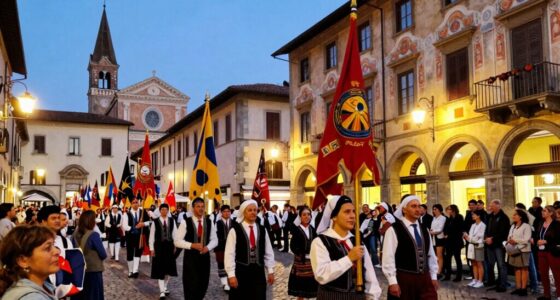
Traditional dress still influences festival culture by symbolizing cultural history, fostering community pride, and connecting past customs with modern celebrations. When you wear these garments, you honor ancestors’ stories and preserve meaningful symbols embedded in patterns and colors. These clothes help reinforce social bonds and create a sense of belonging. By participating in festivals, you keep cultural legacies alive. If you explore further, you’ll discover more about how these traditions shape today’s vibrant festivities.
Key Takeaways
- Traditional attire embodies cultural symbolism, connecting festival participants to their heritage and historical narratives.
- Wearing historical dress during festivals preserves cultural stories and maintains continuity across generations.
- Festival clothing reinforces community identity and shared heritage through collective participation in traditional attire.
- Use of sustainable, traditional techniques in festival dress supports cultural preservation and environmental respect.
- Modern festival practices incorporate historical dress to uphold cultural integrity and celebrate timeless traditions.

History plays a crucial role in shaping festival culture, influencing the traditions, themes, and practices we see today. One clear way this history manifests is through traditional attire, which often carries deep cultural symbolism. When you attend a festival, you might notice people dressed in costumes that echo centuries-old styles, each piece telling a story. These outfits aren’t just for show—they’re a visual connection to your ancestors’ way of life, representing more than just fashion. Traditional attire often highlights a community’s identity, blending history with present-day celebration. For example, a specific pattern or color might symbolize a tribe’s lineage, or a particular garment could be reserved for special occasions, preserving the cultural significance over generations.
Your choice to wear traditional attire at a festival isn’t merely about aesthetics; it’s a deliberate act of honoring history. These clothing styles often incorporate elements that reflect cultural symbolism, conveying meanings that words can’t fully capture. You might see embroidered symbols representing protection, fertility, or spiritual beliefs, all woven into garments meant for celebrations. By donning these outfits, you participate in a living tradition that keeps history alive, ensuring that cultural stories continue to resonate during modern festivities. Over time, these traditional costumes evolve, but their core symbolism remains intact, connecting you to your roots even as they adapt to contemporary tastes. Additionally, cultural preservation is often a goal in maintaining traditional dress, emphasizing the importance of safeguarding these customs for future generations.
Wearing traditional attire honors history, with symbols that convey timeless cultural stories and connect us to our roots.
Festival culture also uses traditional attire to emphasize shared heritage and foster community pride. When you see groups dressed uniformly in historic clothing, it reminds you that festivals are more than entertainment—they’re a collective act of remembrance and identity. Wearing traditional attire allows you to express respect for your history and to pass that respect to others. It’s a visual language, speaking volumes about your cultural background without needing words. This symbolism helps reinforce social bonds, fostering a sense of belonging and continuity across generations. Cultural symbolism embedded in these garments often reflects centuries of tradition, emphasizing the importance of maintaining cultural integrity while celebrating.
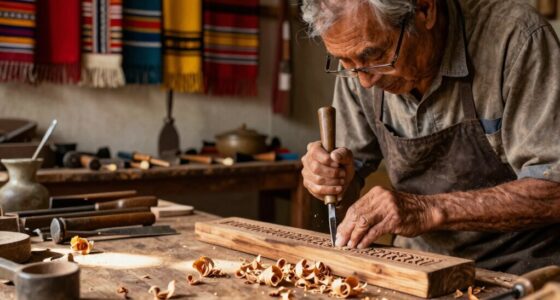
Furthermore, sustainable practices in traditional clothing—such as the use of natural dyes and locally sourced materials—highlight the importance of environmentally conscious choices that have been part of cultural preservation for centuries. These sustainable techniques are often passed down through generations, demonstrating a deep respect for the environment inherent in many cultural traditions. Incorporating traditional craftsmanship into clothing production not only preserves these ancient skills but also supports local economies and cultural heritage. In essence, the influence of history on festival culture is vivid through traditional attire and its rich cultural symbolism. When you participate in these celebrations, you’re not just enjoying a moment of festivity; you’re actively engaging with centuries of tradition. Every piece of clothing, every pattern, and every color carries meaning that ties past to present. By honoring these elements, you help preserve cultural stories and guarantee they’re passed down, keeping the legacy of your ancestors alive in the vibrant tapestry of modern festivals.
As an affiliate, we earn on qualifying purchases.
Frequently Asked Questions
How Do Modern Festivals Incorporate Traditional Dress Elements?
You see modern festivals incorporate traditional dress elements through fashion symbolism that highlights cultural identity and history. Participants often wear garments inspired by historical attire, blending old styles with contemporary trends. This approach fosters cultural preservation by honoring heritage while celebrating creativity. By doing so, festivals create a vibrant connection between past and present, emphasizing the importance of tradition in a lively, inclusive atmosphere that invites everyone to appreciate and learn about diverse cultures.
Are There Specific Historical Periods Most Influential to Festival Fashion?
You notice period costumes from the Renaissance and Victorian eras often shine brightly at festivals, their intricate details and rich fabrics capturing the imagination. These periods influence festival fashion through cultural symbolism, reflecting values and stories of the time. As you see flowing gowns or ornate hats, it’s clear that historical dress brings a sense of authenticity and tradition, connecting modern celebrations to their cultural roots and inspiring creative expression.
How Do Cultural Sensitivities Impact the Use of Historical Attire?
Cultural sensitivities greatly impact how you use historical attire at festivals, as issues like cultural appropriation and dress commodification come into play. You need to respect the origins of the clothing, avoiding stereotypes or misrepresentation. When you incorporate traditional dress, make sure it’s done thoughtfully and with proper understanding, so you honor the culture rather than exploit it. Being aware of these sensitivities helps you celebrate history responsibly and respectfully.
What Role Does Costume Craftsmanship Play in Festival Dress?
Imagine a costume as a carefully woven tapestry; your role is to guarantee every thread reflects true craftsmanship. Costume craftsmanship involves mastering textile techniques that breathe life into festival attire, making it authentic and vibrant. By preserving craftsmanship, you uphold tradition and elevate the festival experience. Your skill transforms simple fabrics into stories, connecting generations through detailed embroidery, intricate beadwork, and careful tailoring—celebrating cultural heritage in every stitch.
How Has Historical Dress Evolved With Contemporary Festival Trends?
You see how historical dress has evolved by blending historical authenticity with modern trends, making festival outfits both meaningful and stylish. Contemporary festival fashion emphasizes sustainability, encouraging you to choose eco-friendly fabrics and craftsmanship that honor tradition while reducing waste. You embrace innovative designs inspired by history, creating costumes that celebrate authenticity yet stay current, ensuring the preservation of cultural heritage in a way that’s both responsible and expressive.
Conclusion
As you step into today’s festivals, you might notice the echoes of history woven into every costume and tradition. It’s no coincidence that centuries-old styles still influence your experience; they connect you to those who celebrated before you. These shared threads remind you that, through dress and dance, you’re part of a timeless story. Embracing this history, you become a living link to the past, making each celebration richer and more meaningful.