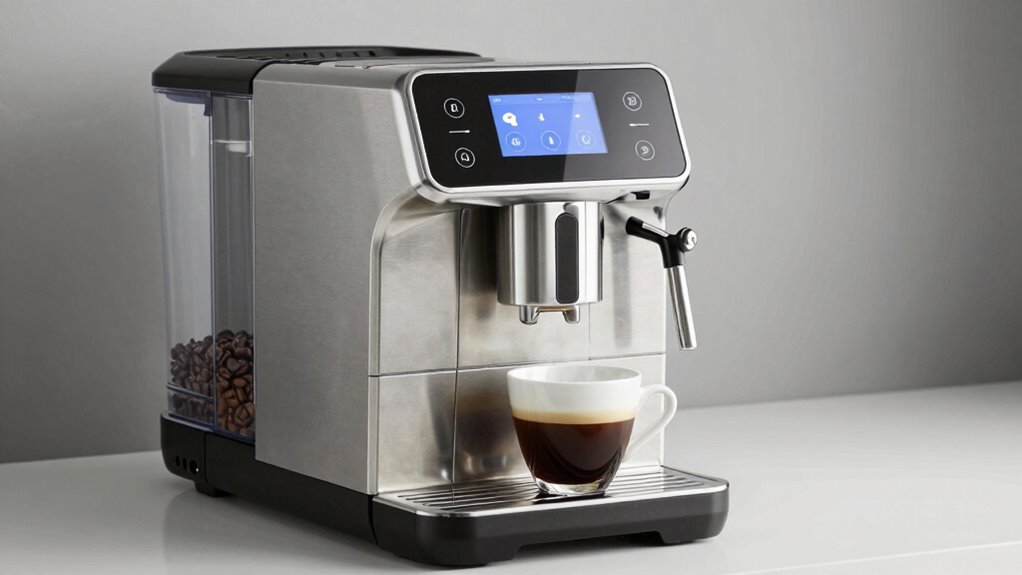

Bean-to-cup machines either emphasize convenience or control. Fully automatic models handle everything at the push of a button, offering quick, consistent brews with minimal effort. Control-focused machines let you tweak grind size, water temp, and brewing time for personalized results, perfect if you enjoy experimenting. Your choice depends on whether you prefer speed and ease or hands-on customization. Keep exploring to discover which type suits your coffee habits best.

Get home appliances delivered free with Prime
- Fast, free delivery on millions of items
- Prime Video, Amazon Music and more included
- Member-only deals all year
Key Takeaways
- Convenience-focused machines automate brewing steps with preset buttons for quick, easy coffee preparation; control-focused models offer manual adjustments for customization.
- Fully automatic machines prioritize speed, minimal maintenance, and consistent results, ideal for busy routines.
- Control-oriented machines appeal to enthusiasts who enjoy fine-tuning grind size, water temperature, and extraction variables.
- Convenience machines typically have fewer manual controls but are easier to operate; control machines require user involvement and skill.
- Choice depends on user preference for speed and simplicity versus personalization and experimentation.
automatic bean-to-cup coffee machine
As an affiliate, we earn on qualifying purchases.
As an affiliate, we earn on qualifying purchases.
What Are Bean-to-Cup Machines and How Do They Work?

Bean-to-cup machines are designed to simplify the process of making fresh coffee by grinding beans and brewing directly from whole beans. You control the grind consistency, which affects flavor and strength, by adjusting the machine’s settings. Proper machine calibration ensures that each brew meets your preferences, whether you like a stronger or milder cup. These machines automatically grind the right amount of coffee and enhance the brewing process, saving you time and effort. You simply load whole beans, select your settings, and the machine handles the rest. The key to great coffee with a bean-to-cup machine is maintaining consistent grind quality and regularly calibrating the machine to keep performance ideal. This combination guarantees a fresh, flavorful cup every time. Energy efficiency is also an important aspect to consider, as many modern machines are designed to minimize power consumption without compromising quality.
Benefits of Fully Automatic Bean-to-Cup Coffee Makers
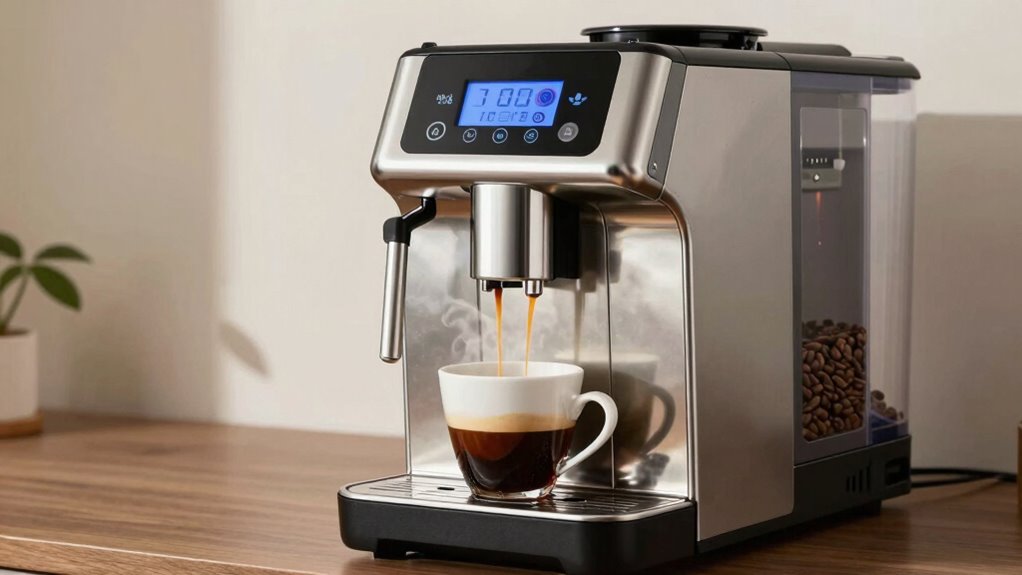
Fully automatic bean-to-cup coffee makers offer unparalleled convenience by handling every step of the brewing process at the push of a button. You get consistently fresh coffee thanks to precise grinding consistency, ensuring each cup has the right flavor and strength. These machines often include built-in water filtration systems, removing impurities and minerals that can affect taste and damage internal components. With no manual grinding or measuring required, you save time and effort while enjoying high-quality coffee. Many models automatically adjust grind size, water temperature, and brewing time for ideal results. The convenience of having a freshly brewed coffee at any time outweighs the need for manual control, making fully automatic machines perfect for busy mornings or office settings. Additionally, color accuracy in the brewing process can enhance the overall flavor profile of your coffee. Integrating smart technology can further optimize brewing parameters for personalized taste preferences. Moreover, considering the maintenance costs associated with these machines can help ensure their long-term performance and reliability. Regular cleaning and descaling are often automated, reducing maintenance effort and prolonging the lifespan of the machine.
Why Coffee Lovers Sometimes Prefer Manual Control
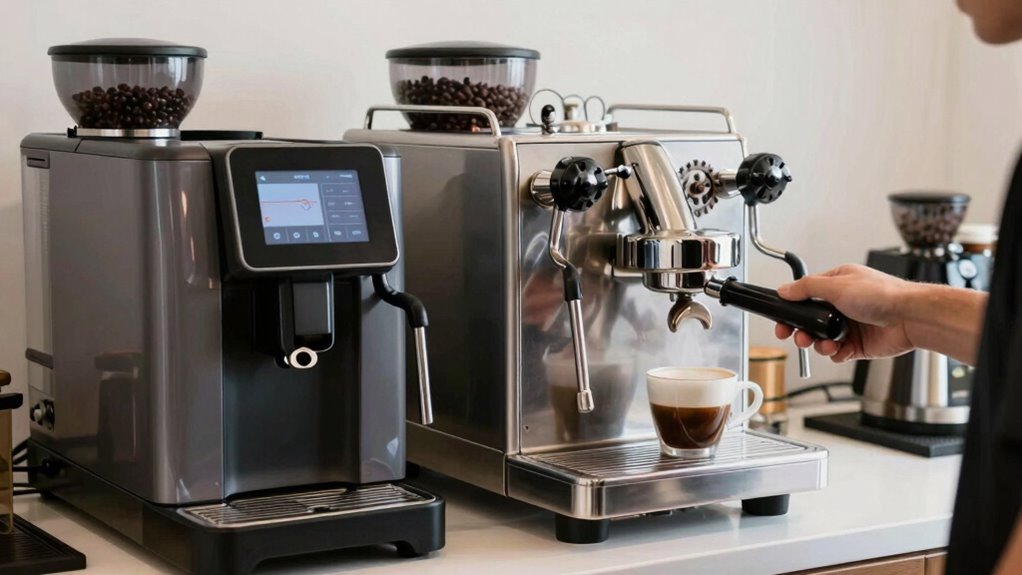
Although automatic machines offer convenience, many coffee lovers prefer manual control because it allows them to tailor each cup to their exact taste. Manual brewing gives you the opportunity to tweak variables like grind size, water temperature, and extraction time for ideal flavor customization. This hands-on approach appeals to those who enjoy the craft of coffee making and want to fine-tune every detail. You might appreciate: – Adjusting grind size for different beans – Controlling water flow for extraction balance – Experimenting with brewing time – Selecting precise temperature settings – Creating unique flavor profiles tailored to your preferences. Understanding brewing variables can help you better grasp how each adjustment influences your coffee’s flavor and quality. Additionally, engaging in sensory awareness during brewing can enhance your ability to detect subtle flavor differences. Moreover, choosing manual control over automatic functions allows for greater experimentation and personalization in your coffee experience. Developing barista skills can further elevate your homemade coffee and deepen your appreciation for the brewing process.
Key Features to Look for in a Convenient Bean-to-Cup Machine
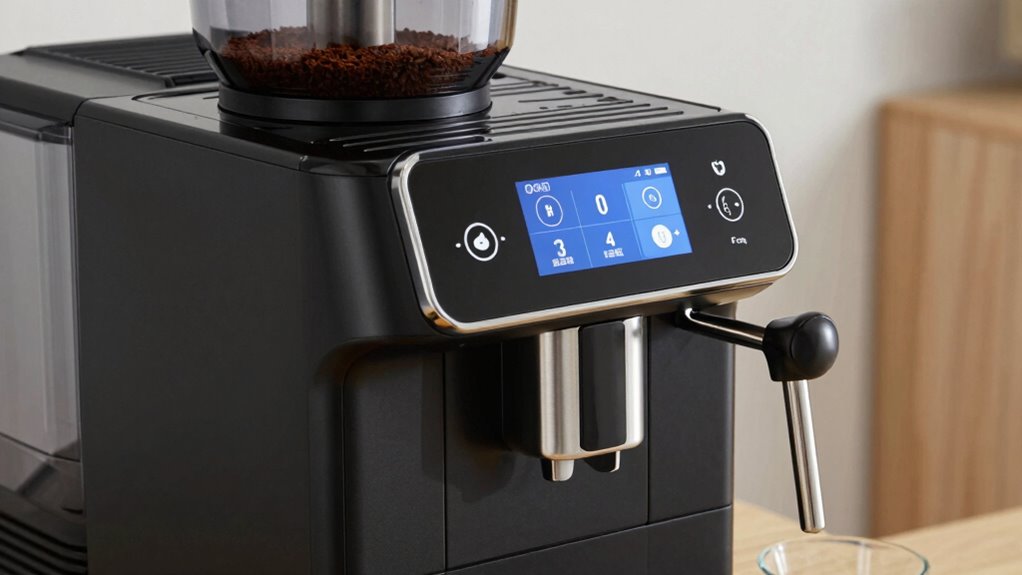
When choosing a convenient bean-to-cup machine, look for an intuitive user interface that makes brewing simple. Speed matters too—select a machine that delivers your coffee quickly without compromising quality. These features ensure you enjoy a perfect cup with minimal effort. Additionally, consider whether the machine offers customizable settings to tailor your brew to your preferences, aligning with your desired Free Floating experience.
User-Friendly Interface Design
A user-friendly interface is essential for making your coffee experience simple and enjoyable. A well-designed user interface, especially a touch screen, allows you to customize drinks effortlessly. Look for machines that offer intuitive navigation, clear icons, and straightforward controls, so you waste less time figuring out settings. A good interface minimizes confusion and enhances convenience.
Key features to contemplate include:
- Responsive touch screen with smooth operation
- Clear display of drink options and customization settings
- Simple menu structure for quick selection
- Visual cues for maintenance alerts
- Customizable preset profiles for personalized beverages
Prioritizing these elements ensures your machine is easy to operate, saving you time and frustration while delivering your perfect cup every time.
Quick Brewing Speed
To enjoy your coffee without long waits, prioritize machines with quick brewing speeds. The grinding speed plays a vital role here, as faster grinding means your beans are ready for brewing sooner. Look for a machine with a swift grinding process that doesn’t compromise on grind consistency. Once ground, the brewing pace should be efficient, allowing you to get your cup quickly. Some machines are designed for rapid extraction, reducing the overall time from bean to cup. This is especially helpful if you’re in a hurry or need multiple cups back-to-back. Keep in mind that a balance between grinding speed and brewing pace ensures you get your coffee fast without sacrificing quality. Quick brewing speeds make your daily routine smoother and more convenient. Additionally, choosing a machine with optimized performance ratings can further enhance your brewing speed and overall experience. Paying attention to heat transfer efficiency can also significantly impact how quickly your coffee is ready. Incorporating a machine with advanced heating technology can help maintain consistent temperatures for faster brewing times.
Controls and Settings for a Personalized Coffee Experience

Controls and settings on a bean-to-cup machine let you customize your coffee to suit your preferences precisely. You can adjust parameters like grind consistency to guarantee uniform extraction and ideal flavor. Temperature control allows you to set the perfect heat level for your brew, enhancing aroma and taste. These features give you the power to refine each cup, balancing strength and smoothness.
Key customization options include:
- Adjustable grind size for consistent grind consistency
- Temperature settings for perfect extraction
- Brew strength control
- Cup size options
- Water hardness adjustments
With these controls, you can craft a personalized coffee experience, whether you prefer a robust espresso or a milder brew, all tailored to your exact liking.

You’ll notice that premium machines often have better build quality, making them more durable and long-lasting. They also come with advanced features that can improve your coffee experience, but these usually come at a higher price. Understanding the difference in build and features helps you choose the right machine for your needs and budget. Additionally, some high-end models may include precious metals in their components or design elements, reflecting their premium status and durability. Incorporating energy efficiency features can also contribute to lower operating costs over time, making premium models a smart investment for some users. Features like automatic cleaning systems further enhance convenience and longevity of the machine. Moreover, considering mammography guidelines can help inform decisions about health screenings, emphasizing the importance of tailored approaches based on individual needs. When evaluating bean-to-cup machines, it’s also useful to compare electric power generation capabilities, as they impact operational efficiency and sustainability.
Build Quality Differences
While budget bean-to-cup machines often prioritize affordability over durability, premium models are built with higher-quality materials designed to last for years. Their superior material durability ensures that every component withstands daily use, while manufacturing precision guarantees consistent performance. You’ll notice the difference in build quality through:
- Sturdy metal frames versus plastic shells
- High-grade stainless steel burrs for longevity
- Tight, well-fitted assembly for fewer leaks
- Precision-engineered internal components
- Robust water reservoirs and drip trays
These details reflect a focus on longevity and reliability. Material quality in premium models is achieved through carefully selected components and advanced manufacturing techniques, reducing wear and tear over time. Additionally, quality craftsmanship ensures that each machine performs reliably over its lifespan, making your investment worthwhile.
Feature and Price Gap
The differences in features and pricing between budget and premium bean-to-cup machines are significant and often influence your overall coffee experience. Budget models typically use aggressive pricing strategies to attract entry-level users, offering basic functionalities with limited customization. In contrast, premium machines focus on feature disparities like advanced grinders, customizable brewing options, and smarter interfaces, justifying their higher prices. These pricing strategies reflect the quality, durability, and control you gain with a premium machine. While budget options may meet basic needs, they often sacrifice features that enhance flavor and convenience. Ultimately, the gap in features and price can determine whether you prioritize affordability or a more refined, personalized coffee experience.
How Your Choice Affects Your Daily Coffee Routine
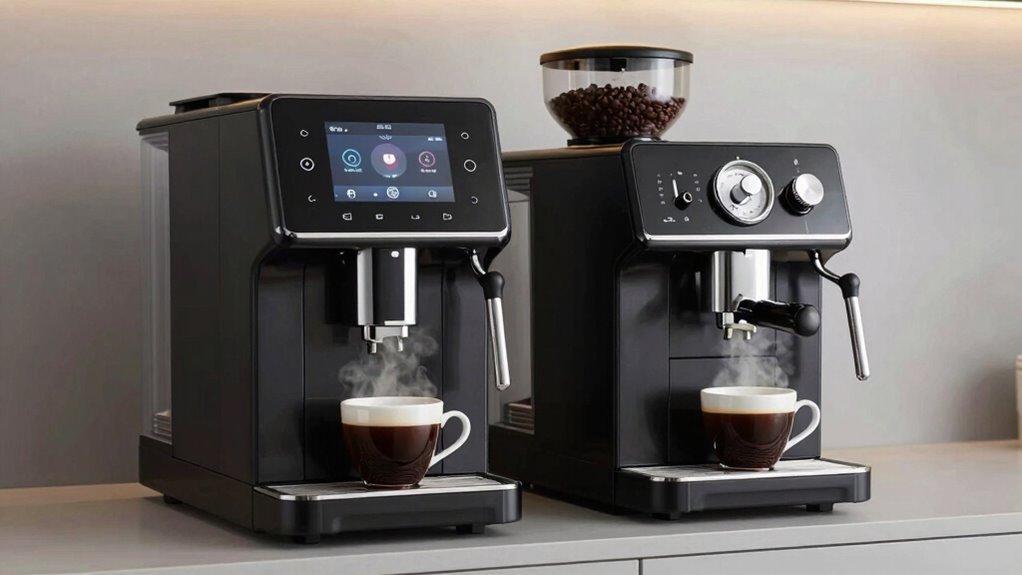
Have you ever wondered how your choice of coffee machine influences your everyday caffeine fix? Your decision impacts coffee freshness and grinder consistency, which directly affect flavor and aroma. With a bean-to-cup machine, you control the grind size, ensuring fresher beans are brewed at peak flavor. A consistent grinder produces uniform grounds, resulting in balanced extraction and better taste. Grind consistency plays a crucial role in the overall quality of your brew, as uneven grounds can lead to under-extraction or over-extraction. Proper maintenance practices help prolong the life of your machine and maintain optimal performance. Regular cleaning and servicing are essential components of good coffee machine care. Conversely, simpler machines may sacrifice these details, leading to stale or uneven brews. Your selection shapes your routine by determining how much effort you put into each cup. Consider these factors:
- Freshness of beans and grind
- Precision in grind consistency
- Speed of brewing process
- Customization options available
- Maintenance and reliability
Understanding safe wiring practices can help ensure your coffee setup is both efficient and secure. Choosing the right machine aligns with your daily preferences and coffee standards, making each cup a personalized experience. Additionally, incorporating quality coffee beans can significantly enhance your brewing results and satisfaction.
Troubleshooting Common Problems With Bean-To-Cup Machines
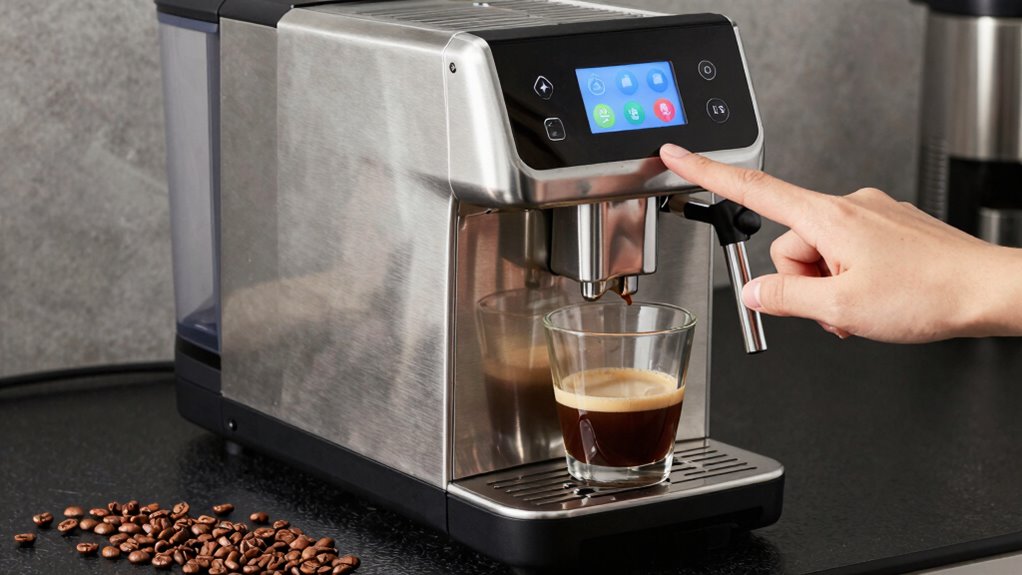
If your coffee machine isn’t working properly, the issue might be caused by common malfunctions or grinding problems. Identifying the root cause can help you fix it quickly and keep your routine on track. For example, understanding how air purifier maintenance dos and don’ts can be used to alleviate various health issues can also shed light on how proper maintenance and troubleshooting are essential for optimal performance. Regularly checking and cleaning filters, following manufacturer guidelines, and avoiding harsh chemicals are key steps in ensuring your machine operates smoothly. Let’s explore how to troubleshoot these typical issues effectively.
Common Malfunction Causes
Many common issues with bean-to-cup machines stem from simple causes like clogged filters, scale buildup, or worn-out parts. You might notice grinding problems or water leaks, which often point to underlying issues. For example, dirty filters can impede water flow, causing leaks or inconsistent grinding. Scale buildup inside the machine can block water pathways, leading to leaks or poor brewing performance. Worn-out seals or gaskets may also cause leaks or water pooling. Additionally, mineral deposits can clog the grinder or brewing unit, affecting grind consistency. Ultimately, malfunctioning sensors or switches can result in improper operation, causing water leaks or grinding issues. Regular maintenance, such as descaling and inspecting seals, can prevent these common causes from disrupting your coffee experience.
Fixing Grinding Issues
Grinding issues are among the most noticeable problems in bean-to-cup machines, often affecting the quality and consistency of your coffee. To fix this, start by checking your grinding adjustments. If your coffee is too weak or over-extracted, you might need to make the grind finer or coarser. Regular burr calibration is essential to guarantee even grinding and prevent clogs or uneven extraction. If your machine allows, calibrate the burrs according to the manufacturer’s instructions, and test different settings until you find the best grind size for your beans. Cleaning the burrs regularly also helps maintain consistent results. Proper grinding adjustments and burr calibration are key to troubleshooting and improving your machine’s performance, giving you better-tasting coffee every time.
Maintenance Tips to Keep Your Coffee Machine Running Smoothly
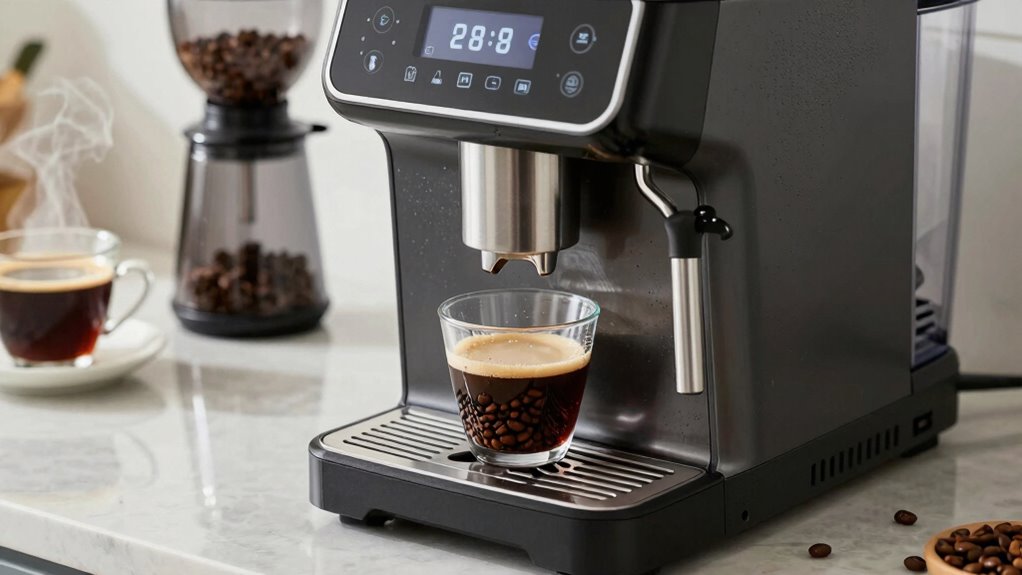
Regular maintenance is essential to keep your bean-to-cup coffee machine functioning at its best. To guarantee consistent quality, focus on regular grinder maintenance to prevent clogs and uneven grinding. Incorporate descaling routines to eliminate mineral buildup, which can impair performance and taste. Additionally, clean the brew group and milk frother regularly to prevent residue buildup. Here are some key tips:
- Schedule weekly grinder cleaning
- Perform monthly descaling routines
- Wipe down external surfaces daily
- Clean water filters periodically
- Check for blockages in the coffee outlet
Sticking to these routines helps prevent breakdowns and prolongs your machine’s lifespan, ensuring you enjoy fresh, great-tasting coffee every time. Proper upkeep keeps your machine running smoothly and maintains ideal brewing conditions.
Choosing the Right Bean-to-Cup Machine: Convenience or Control?
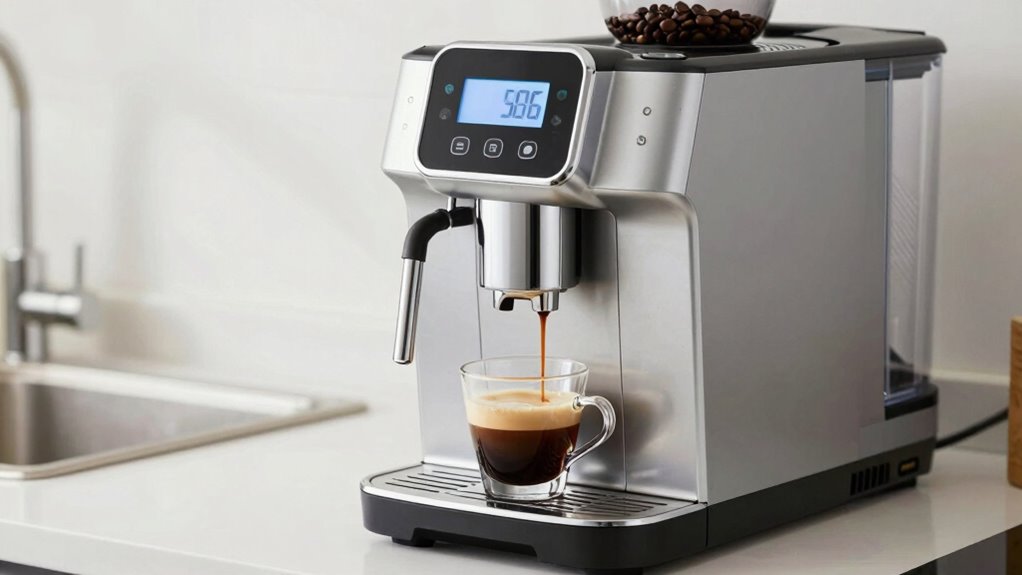
When choosing a bean-to-cup machine, you need to decide whether you prioritize convenience or control over your coffee experience. If you want quick, consistent results, go for machines with preset options. But if you prefer customizing brew strength and grind size, opt for models offering more control. Here’s a quick comparison:
| Convenience | Control |
|---|---|
| Simple one-touch brewing | Adjust brew strength manually |
| Minimal maintenance | Customize grind size for flavor |
| Faster setup and operation | Fine-tune coffee to your taste |
Think about how much involvement you want. Do you value speed, or do you enjoy experimenting with grind size and brew strength for the perfect cup? Your choice depends on your coffee habits.
Frequently Asked Questions
Can Bean-To-Cup Machines Grind Beans Differently for Various Coffee Types?
Yes, bean-to-cup machines can grind beans differently for various coffee types. They adjust grinding consistency to suit each brew, ensuring ideal extraction and flavor. By maintaining bean freshness and customizing grind settings, you get the best taste every time. Whether you prefer a fine espresso or a coarser filter coffee, these machines help you achieve the right grind for each coffee style, enhancing your overall experience.
Do Manual Controls Significantly Improve Coffee Flavor Quality?
Manual controls can considerably improve your coffee’s flavor quality by allowing you to customize each shot with manual precision. When you adjust grind size, tamping pressure, and extraction time, you gain better flavor customization, ensuring your coffee matches your taste preferences. This control lets you experiment and refine your brew, resulting in a richer, more personalized coffee experience compared to automatic settings that may limit flavor options.
How Adjustable Are the Brewing Parameters in Advanced Models?
In advanced bean-to-cup machines, you can usually adjust brewing parameters like grind size and water temperature quite precisely. You get control over the grind size to optimize extraction and can tweak water temperature for ideal flavor. These settings let you personalize your brew, ensuring a richer, more balanced coffee. So, if you’re into fine-tuning your coffee, these machines offer substantial flexibility to match your taste preferences.
Are There Health or Safety Concerns With Fully Automatic Machines?
Fully automatic machines are generally safe when you follow safety precautions, but there are some health hazards to take into account. Hot water and steam can cause burns if mishandled, so always handle with care. Keep the machine clean to prevent mold and bacteria growth, and ensure electrical parts are dry and properly maintained. By following safety guidelines, you minimize risks and enjoy your coffee without worries.
How Long Do Bean-To-Cup Machines Typically Last With Regular Use?
Your bean-to-cup machine can last a decade or more if you’re diligent. On average, with regular maintenance like descaling and cleaning, it’ll have a lifespan of 5-10 years. Neglect maintenance, and it might break down in just a few years. The key is consistent upkeep—descale every few months and replace filters when needed—to guarantee your machine’s longevity and keep your coffee perfect every time.
Conclusion
Ultimately, whether you lean toward the simplicity of a fully automatic bean-to-cup machine or enjoy tweaking every detail, there’s a perfect fit for your coffee journey. Embrace the gentle art of discovery, letting each brew be a small adventure. With the right machine by your side, every morning can start with a warm smile and a cup that feels just right—your personal little moment of coffee bliss.
NFL season / tailgating Picks
team gear
As an affiliate, we earn on qualifying purchases.