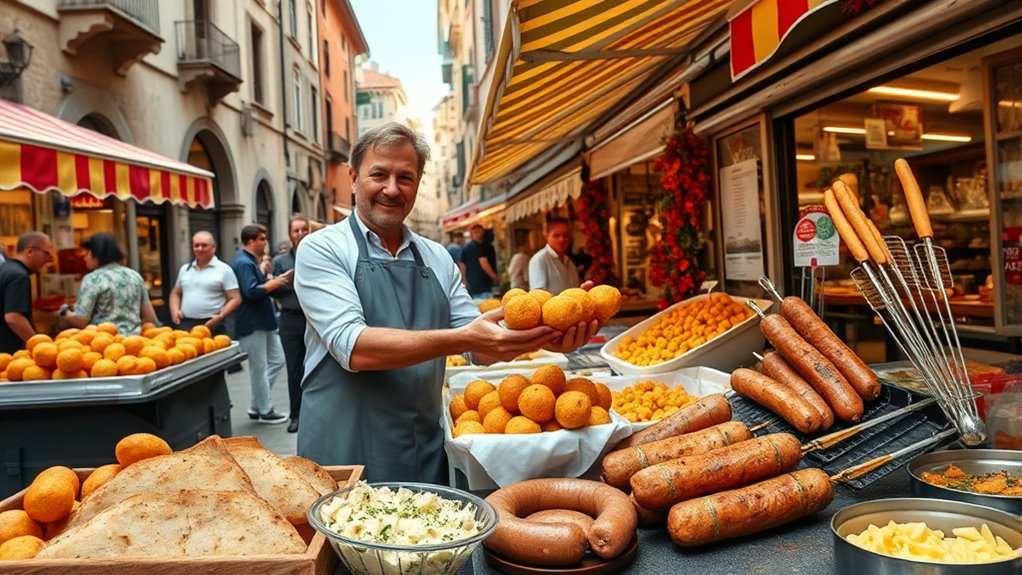

Italy’s regional street food showcases a rich tapestry of cultural origins and local flavors, from hearty northern panini layered with cheeses and cured meats to vibrant southern arancini and street-style pizza influenced by Mediterranean and Arab cuisines. Festivals highlight these unique traditions, blending heritage with innovation through fusion dishes and creative recipes. Each dish tells a story rooted in local history and ingredients. Keep exploring to discover how Italy’s diverse street food scenes celebrate their vibrant culinary heritage.

Get home appliances delivered free with Prime
- Fast, free delivery on millions of items
- Prime Video, Amazon Music and more included
- Member-only deals all year
Key Takeaways
- Italy’s regions feature unique street food traditions reflecting local culture, ingredients, and culinary techniques.
- Northern street foods emphasize hearty, modernized dishes like panini with regional cheeses and cured meats.
- Southern street foods showcase vibrant, Mediterranean influences, including street-style pizza and Arab-inspired flavors.
- Street food festivals highlight regional ingredients, fostering innovation and celebrating culinary heritage through fusion dishes.
- Iconic foods like arancini and focaccia exemplify Italy’s diverse, region-specific street food heritage and cultural pride.
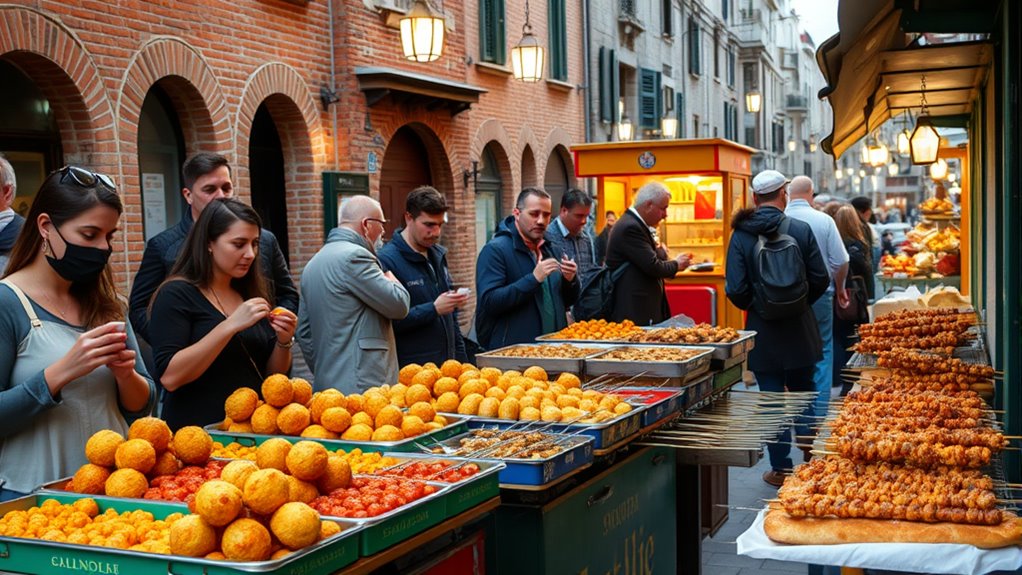
Italy’s diverse regions each boast their own vibrant street food scenes, offering a delicious glimpse into local traditions and flavors. As you explore these culinary landscapes, you’ll notice how each area adapts and innovates traditional recipes, creating exciting fusion recipes that reflect a blend of history and modern influences. Street food festivals are particularly popular, serving as lively showcases where locals and visitors alike gather to celebrate regional ingredients and cooking techniques. These festivals often feature stalls with mouthwatering dishes that highlight the unique character of each region, from the spicy arancini of Sicily to the crispy focaccia of Liguria.
Explore Italy’s vibrant street food festivals showcasing regional flavors and innovative fusion recipes that celebrate local traditions.
In northern Italy, you’ll find street foods that emphasize hearty, comforting flavors. Think of warm panini filled with local cheeses and cured meats, or the popular polenta-based snacks that are fried to crispy perfection. These dishes often draw on centuries-old farming and culinary traditions but also incorporate contemporary twists to appeal to modern tastes. Moving south, the street food scene becomes more vibrant and diverse, with influences from Mediterranean and Arab cuisines. Here, you might indulge in street-style pizza by the slice, topped with fresh, regional ingredients, or savor fragrant arrosticini skewers, which originated in Abruzzo but are now enjoyed across Italy.
Throughout Italy, street food festivals serve as communal celebrations where chefs and home cooks showcase their best fusion recipes, combining traditional ingredients with innovative techniques. These festivals foster a sense of regional pride while encouraging culinary experimentation. You’ll see stands offering creative takes on classic favorites, like stuffed crepes with regional cheeses or fusion sandwiches that blend Italian flavors with international spices. Participating in these festivals, you get to taste how Italy’s culinary heritage evolves, always staying rooted in tradition but embracing new influences. Additionally, exploring Juice Recipes and Mixes at these festivals can offer a refreshing twist to traditional street foods, providing revitalizing beverage options to accompany your culinary journey.
Your journey through Italy’s street food landscape reveals how local culture shapes every bite. Each region’s street food offerings reflect its history, geography, and cultural exchanges, making every dish a story in itself. The lively street food festivals punctuate this narrative, turning ordinary ingredients into extraordinary experiences. Whether you’re sampling crispy arancini in Sicily or biting into a savory panzerotto in Puglia, you’re immersing yourself in Italy’s rich culinary tapestry. These street food scenes and festivals aren’t just about eating—they’re about celebrating Italy’s vibrant, dynamic food culture, where tradition and innovation come together to create unforgettable flavors.
As an affiliate, we earn on qualifying purchases.
Frequently Asked Questions
How Do Regional Ingredients Influence Street Food Variations Across Italy?
Regional ingredients greatly influence street food variations across Italy by shaping local flavor profiles. You’ll notice that each area uses its unique produce, cheeses, and spices, giving dishes authentic regional tastes. Local ingredient influence guarantees that street foods reflect regional culinary traditions, making each city’s offerings distinct. This regional diversity enriches Italy’s street food scene, allowing you to experience a true taste of local culture with every bite.
What Are the Historical Origins of Italy’s Most Famous Street Foods?
You’ll find that Italy’s most famous street foods have rich historical origins shaped by diverse culinary influences. The historical evolution of dishes like pizza and arancini reflects local ingredients and cooking traditions, influenced by centuries of trade, conquest, and cultural exchange. These foods evolved through practical needs and regional tastes, blending Mediterranean flavors with unique local touches, making each street snack a delicious demonstration to Italy’s vibrant history.
How Do Regional Festivals Impact Street Food Popularity and Availability?
Festival influence skyrockets street food popularity and availability, making it feel like every bite is a celebration of local traditions. When regional festivals light up towns, they draw crowds hungry for authentic flavors, turning street vendors into heroes of the moment. These events showcase unique recipes, boost sales, and guarantee local delicacies become unforgettable highlights. You’ll find street food thriving, bursting with cultural pride and irresistible aromas, everywhere the festivals take center stage.
Are There Regional Dietary Restrictions Reflected in Street Food Offerings?
Yes, regional dietary restrictions are reflected in street food offerings. You’ll find vegetarian options and gluten-free choices tailored to local preferences and cultural practices. For example, in regions with vegetarian traditions, vendors often serve plant-based dishes, while gluten-free options are available in areas with wheat sensitivities. By exploring regional street food, you can enjoy diverse, inclusive flavors that respect local dietary customs and needs.
How Has Modern Cuisine Transformed Traditional Italian Street Food?
Modern cuisine has markedly transformed traditional Italian street food through fusion and modernization. You’ll find chefs blending classic ingredients with international flavors, creating innovative dishes that appeal to diverse tastes. This fusion approach updates traditional recipes, making them more accessible and trendy, while modernization introduces new cooking techniques and presentation styles. As a result, Italian street food evolves, offering a fresh, dynamic experience that respects its roots yet embraces contemporary culinary trends.
Conclusion
As you savor Italy’s diverse street foods, you’re truly tasting the heartbeat of each region—a mosaic of history, culture, and passion. Every bite is like a small window into Italy’s soul, where tradition and innovation dance together. These foods aren’t just sustenance; they’re symbols of community, resilience, and identity. By exploring them, you carry a piece of Italy’s vibrant spirit with you—an everlasting reminder that food, like culture, unites us all beneath the same sun.
NFL season / tailgating Picks
team gear
As an affiliate, we earn on qualifying purchases.