
Many people think cold press and masticating juicers are the same, or that faster juicing means better quality. In reality, both use slow, gentle pressing to preserve nutrients and enzymes. Speed isn’t an indicator of efficiency or juice quality—slow juicers actually produce higher yields with less foam and noise. If you want to understand the key differences and why slow methods matter, there’s more to discover about these quiet, nutrient-friendly appliances.
Key Takeaways
- Cold press and masticating juicers are similar but refer to distinct processes; they are not interchangeable terms.
- Slow RPM operation ensures nutrient preservation, not necessarily higher efficiency or faster juicing.
- Quieter operation is a result of low speeds, often mistaken for lower performance.
- Longer processing times are a trade-off for higher juice quality and nutrient retention.
- Speed and noise levels do not directly determine a juicer’s efficiency or quality; focus on extraction method instead.
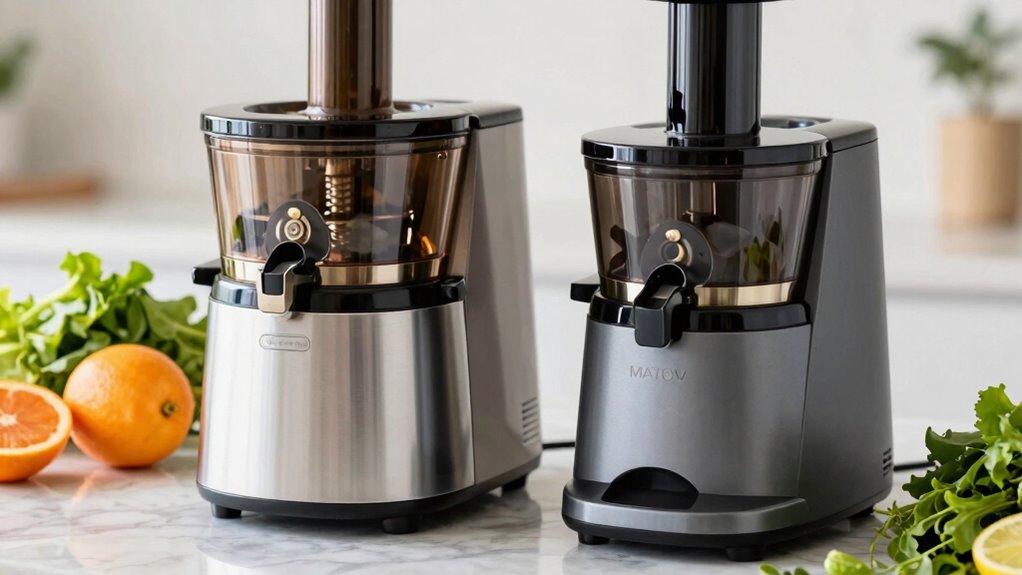
When choosing a juicer, understanding the differences between cold press and masticating models can help you make an informed decision. Many people assume these terms are interchangeable, but they actually refer to distinct processes. Cold press juicers use a slow, gentle pressing method to extract juice, which often leads to better nutrient retention. Masticating juicers, sometimes called slow juicers, operate similarly, grinding and squeezing produce at low speeds. The key difference lies in how they handle juicing speed and noise levels, which considerably impact your daily routine and overall experience.
Cold press and masticating juicers both use slow, gentle extraction methods for better nutrient retention and quieter operation.
Juicing speed is a common misconception. Many believe that slower juicers are necessarily less efficient, but in reality, cold press and masticating models typically operate at a low rpm, around 80-100 rotations per minute. This slow speed prevents heat buildup, preserving enzymes and nutrients better than high-speed centrifugal juicers. However, the term “juicing speed” can mislead you into thinking these juicers are slow or sluggish. While they take a bit more time per batch compared to high-speed juicers, they often produce higher yields and cleaner juice with less foam. If you’re someone who values nutrient quality over quick results, these models are ideal.
Noise levels are another aspect people often overlook. Cold press and masticating juicers are generally quiet, especially compared to centrifugal juicers that spin at thousands of RPM, creating loud noise. When operating at low speeds, these juicers tend to be whisper-quiet, making them suitable for early mornings or shared living spaces. You won’t need to worry about disturbing others during your breakfast routine. This quiet operation also means less vibration, which can extend the lifespan of your appliance. People tend to get caught up in the idea that “slower” means “louder,” but in this case, the opposite is true. Both cold press and masticating models are designed for silent, smooth operation. Additionally, their low operating speeds contribute to less heat generation, further protecting nutrients during the process. This consistent performance ensures you get the most out of your produce every time.
In essence, many misconceptions stem from confusing juicing speed and noise levels with overall efficiency or quality. You might think a faster juicer is better or that noiseless equals less effective. But when you understand that cold press and masticating models focus on slow, gentle extraction, you realize they’re optimized for nutrient preservation and a peaceful juicing experience. It’s not about rushing through the process but about prioritizing quality and comfort. So, don’t let the myths fool you. These juicers might take a bit longer, but they deliver richer, healthier juice without the racket. That’s what truly matters in a good juicing experience.

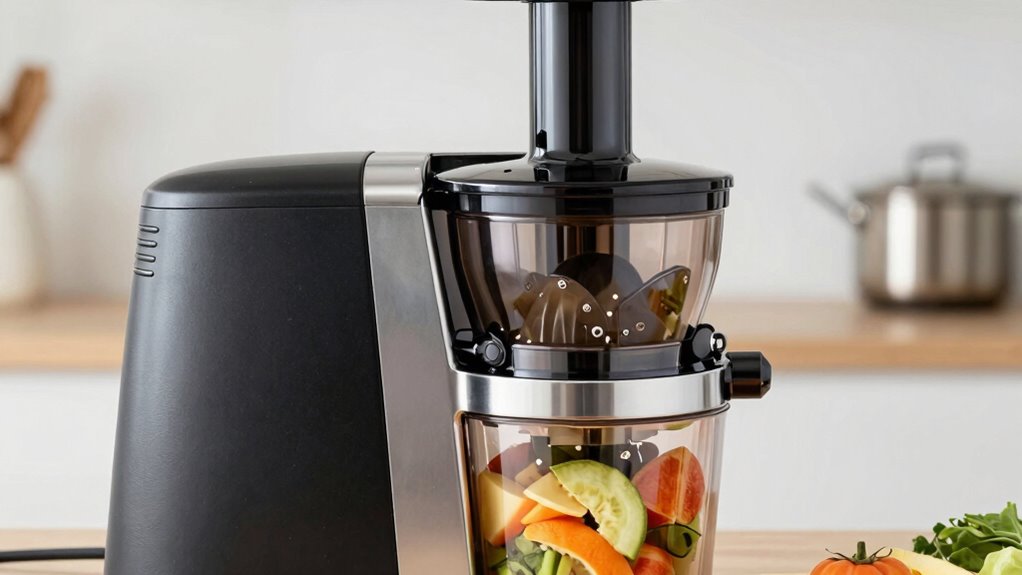
EanOruus Juicer Machines, 3-in-1 Cold Press Juicer with 6.5" Extra Large Chute, 100oz Large Capacity, AC Motor, Makes Juice, Nut Milk & Sorbet, Premium Gray
- Versatile 3-in-1 Functionality: Juice, nut milk, and sorbet making
- Large 6.5-Inch Wide Chute: Accepts whole fruits for easy juicing
- High Capacity Hopper: Holds 100oz for large batches
As an affiliate, we earn on qualifying purchases.
As an affiliate, we earn on qualifying purchases.
Frequently Asked Questions
Which Juicer Is Quieter During Operation?
You’ll find masticating juicers are generally quieter during operation compared to cold press models. Their sound levels produce less noise, making them ideal if you want a quieter kitchen appliance. In noise comparison tests, masticating juicers tend to emit softer sounds, so you won’t be disturbed as much while juicing. If noise level is your priority, go for a masticating juicer, as it offers a more peaceful experience during use.
How Much Juice Loss Occurs With Each Type?
You’ll notice that juice loss varies between cold press and masticating juicers. Cold press models typically give a higher juice yield because they extract more from produce, resulting in less pulp dryness. Masticating juicers might produce slightly drier pulp, meaning a small amount of juice is lost in the process. Overall, cold press juicers usually maximize juice yield, minimizing waste and ensuring you get the most out of your fruits and veggies.
Are Masticating Juicers More Durable Than Cold Press?
You might worry about durability, but masticating juicers are generally more robust, built with sturdy components that withstand frequent use. Their design preserves juice nutrient quality and results in a finer pulp texture, offering a higher-quality juice experience. While cold press models are reliable, masticating juicers often last longer, giving you peace of mind and consistent performance, especially if you juice daily or for a large family.
Can Both Juicer Types Handle Leafy Greens Effectively?
Yes, both cold press and masticating juicers handle leafy greens effectively. Masticating juicers excel with leafy greens because their slow, crushing action maximizes juicing efficiency and nutrient extraction. Cold press juicers also work well, but they might be slightly less efficient with leafy greens due to their pressing method. Overall, both types deliver good juice quality, but for maximum juicing efficiency, masticating juicers are often preferred.
Which Juicer Is Easier to Clean and Maintain?
You’ll find masticating juicers easier to clean and maintain because they have fewer parts and simpler designs, boosting juicing efficiency. While they might cost more upfront, the price comparison shows they’re often more durable and straightforward for daily use. With less prep and cleaning time, you spend more time enjoying fresh juice rather than scrubbing components, making maintenance hassle-free and worth the investment.
Conclusion
So, next time you’re choosing between a cold press and a masticating juicer, remember they’re often the same thing—just different names for the same slow, gentle process. For example, Sarah switched to a masticating juicer and noticed her juice stayed fresher longer, saving her time and money. Don’t get caught up in the labels; focus on what suits your needs best. With the right choice, you’ll enjoy more nutritious, delicious juice every day.