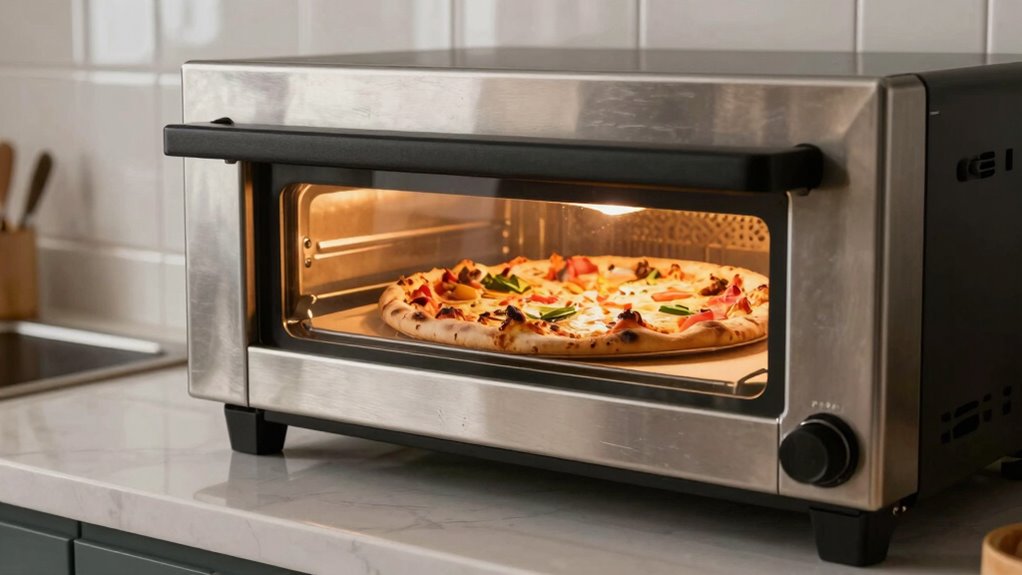

A countertop pizza oven is a quick, convenient way to make restaurant-quality pizza at home. It heats up fast, reaching high temperatures that help you get crispy crusts and evenly cooked toppings. Compact yet powerful, it’s perfect for everyday use. By mastering dough techniques and preheating properly, you’ll see how these ovens can improve your pizza results. Keep going, and you’ll discover tips to maximize your oven’s performance and make even better homemade pizza.

Get home appliances delivered free with Prime
- Fast, free delivery on millions of items
- Prime Video, Amazon Music and more included
- Member-only deals all year
Key Takeaways
- Countertop pizza ovens heat quickly and reach high temperatures, enabling restaurant-quality crusts at home.
- They are compact and user-friendly, making it easy to bake perfect pizzas without professional equipment.
- Specific pizza settings optimize baking time and temperature for consistently better results.
- Preheating and proper baking techniques ensure crispy crusts and evenly cooked toppings.
- Regular maintenance and cleaning extend oven lifespan, maintaining optimal performance for future pizza nights.

If you’re a pizza lover looking to enjoy restaurant-quality pies at home, a countertop pizza oven can be a game-changer. These compact appliances heat up quickly and reach high temperatures, closely mimicking professional pizza ovens. With a little practice, you’ll notice how much easier it is to achieve that perfect, crispy crust and evenly cooked toppings. One key to mastering homemade pizza is refining your pizza dough techniques. Using the right ingredients, letting the dough ferment properly, and kneading it just enough can make a significant difference. A good dough will stretch thin without tearing and hold up well under toppings. When you’re ready to bake, preheat your countertop oven for at least 15-20 minutes to ensure even heat distribution. This step helps create that crisp exterior and tender interior everyone craves.
As you experiment, you’ll find that the right pizza dough techniques are essential for satisfying results. Don’t skip the resting period for your dough; it relaxes the gluten and makes stretching easier. When shaping your pizza, use a light touch to avoid overworking the dough, which can lead to a dense crust. If you like a slightly charred edge, try sliding the pizza onto a preheated pizza stone or the oven’s surface. These ovens often come with a pizza-specific setting, which optimizes temperature and baking time. Keep an eye on your pizza as it cooks, as the high heat can quickly go from perfect to burnt if you’re not attentive. Proper oven maintenance, including consistent cleaning, helps ensure optimal heat circulation and cooking results. Regular cleaning not only maintains the oven’s appearance but also prevents build-up of residues that could impair heat transfer. Additionally, using proper cleaning tools can make this task more efficient and thorough. Maintaining your oven through proper care is influenced by understanding heat transfer principles and how residues can affect performance.
After enjoying your homemade pizza, you’ll want to keep your countertop oven in top shape. Oven cleaning tips are simple but vital—wait until the oven cools down, then wipe off any residue with a damp cloth. For more stubborn spots, use a mild, non-abrasive cleaner. Regular cleaning prevents build-up that could affect heat circulation and pizza quality. Be cautious not to use harsh chemicals that might damage the interior or leave residues. Maintaining your oven ensures consistent heat and extends its lifespan, making future pizza nights just as satisfying as the first. With these tips on pizza dough techniques and oven cleaning, you’ll elevate your homemade pizza game and enjoy delicious, restaurant-quality pies whenever the craving hits.
Products Worth Considering

eufy Security Video Doorbell E340 Kit with Chime

Shark PowerPro Reveal Plus Cordless Stick Vacuum, Charcoal (IZ376H)

Philips Hue Play Gradient Light Tube, Large, Black
As an affiliate, we earn on qualifying purchases.
Frequently Asked Questions
Are Countertop Pizza Ovens Suitable for All Types of Pizza?
Countertop pizza ovens are versatile, but they’re best suited for certain types of pizza. They excel at creating a crispy pizza crust and melting cheese evenly, making them perfect for thin-crust and personal-sized pies. However, for thick or heavily topped pizzas, you might find they struggle to cook everything thoroughly. Overall, these ovens are a great shortcut for quick, delicious homemade pizzas, especially if you prefer a crispy crust and well-melted cheese.
How Long Does It Take to Preheat a Countertop Pizza Oven?
You’ll find that preheating your countertop pizza oven takes about 10 to 15 minutes, like warming up a cozy fire. This short wait guarantees temperature consistency and energy efficiency, so your pizza cooks evenly and quickly. During this time, the oven’s elements reach the perfect heat, ready to turn simple ingredients into a crispy, delicious masterpiece. Patience pays off in perfect pizza, every time.
Can Countertop Pizza Ovens Cook Other Dishes Besides Pizza?
Yes, you can cook more than just pizza in your countertop pizza oven. It’s great for bread baking, giving you that crispy crust and even heat. You can also use it for dessert making, like baking small cakes or cookies. Its versatile heat settings make it ideal for various dishes, so you can expand your cooking beyond pizza and enjoy fresh-baked bread or sweet treats effortlessly.
What Is the Typical Lifespan of a Countertop Pizza Oven?
A countertop pizza oven typically lasts around 3 to 5 years when you follow proper maintenance tips. Think of it as a loyal companion, growing more efficient with each use. To extend its lifespan, clean it regularly and avoid overloading. Its energy efficiency can be maximized with proper care, helping you enjoy delicious homemade pizzas longer. With mindful upkeep, your oven will serve you well through many tasty adventures.
Are There Safety Concerns With Using Countertop Pizza Ovens?
Yes, there are safety concerns when using countertop pizza ovens. You should always follow safety precautions, like keeping the oven on a stable, heat-resistant surface, and avoiding contact with hot surfaces. Pay attention to electrical safety by unplugging the oven when not in use, and regularly inspecting cords for damage. Using the oven properly reduces risks of burns, electrical shocks, and fire hazards, ensuring a safe and enjoyable pizza-making experience.
Conclusion
With a countertop pizza oven, you’re channeling your inner pizza maestro, turning your kitchen into a pizzeria of your own making. Think of it as wielding a secret weapon, much like a knight’s sword or a wizard’s staff—empowering you to craft perfect pies effortlessly. So go ahead, embrace this handy tool and reveal the delicious possibilities that await, transforming simple ingredients into culinary masterpieces, one slice at a time. Your legendary homemade pizza story starts here.