To guarantee even dehydration, focus on proper tray spacing—leave at least ½ to 1 inch between trays to promote airflow and prevent moisture pockets. Adjust airflow settings based on food types and monitor fan placement to avoid hot spots. Using a dehydrator with adjustable tray spacing offers flexibility for different foods. By managing both tray arrangement and airflow control, you’ll achieve consistent results. Keep exploring to discover more tips for perfect dehydration.
Key Takeaways
- Proper tray spacing (½ to 1 inch) ensures optimal airflow for even dehydration and prevents mold and spoilage.
- Adjustable tray spacing allows customization based on food size and drying needs, enhancing efficiency and versatility.
- Effective airflow promotes moisture removal, reduces drying time, and prevents soggy spots or uneven results.
- Modern dehydrators feature adjustable airflow controls and tray arrangements for precise dehydration performance.
- Innovations like smart sensors and energy-efficient motors improve dehydration accuracy, efficiency, and user convenience.
food dehydrator with adjustable tray spacing
As an affiliate, we earn on qualifying purchases.
As an affiliate, we earn on qualifying purchases.
How Tray Spacing Affects Even Food Dehydration
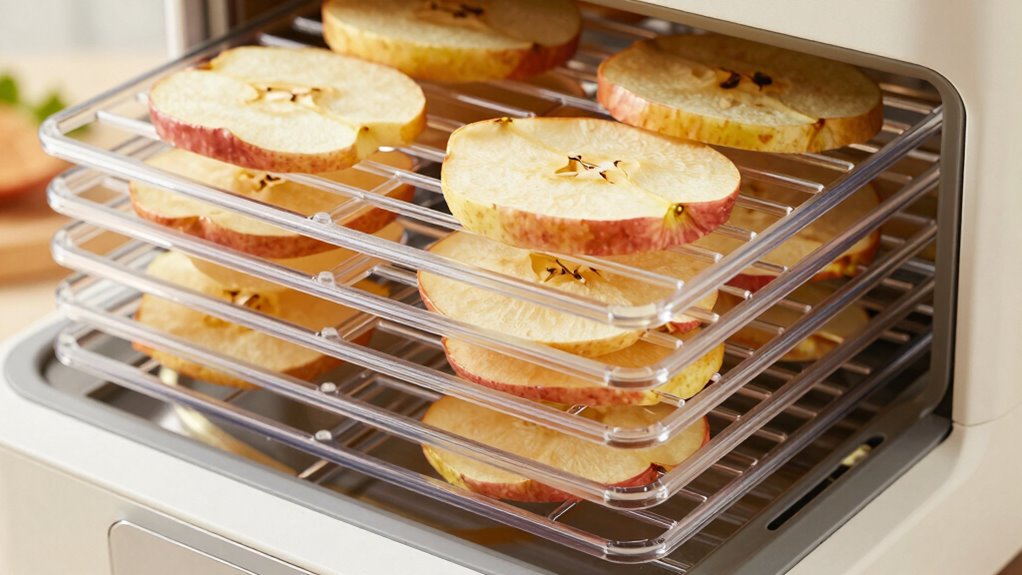
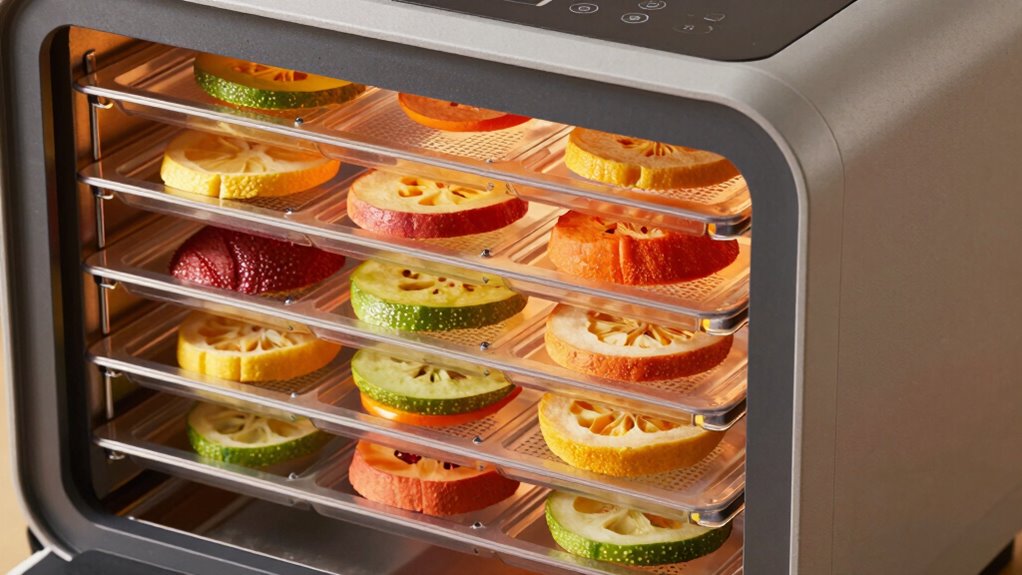
When it comes to food dehydration, tray spacing plays a crucial role in guaranteeing even drying. Proper spacing allows air to circulate freely around each food piece, preventing moisture buildup and uneven dehydration. The tray material also influences cleaning maintenance; smooth surfaces like stainless steel or non-stick coatings make cleaning easier, reducing residue that can harbor mold or bacteria. If trays are too close, airflow gets restricted, leading to uneven drying and potential spoilage. Optimal airflow is essential for efficient dehydration and food safety. **Ensuring optimal tray spacing enhances dehydration efficiency and food quality**. Additionally, paying attention to airflow patterns can help identify potential areas where drying may be uneven. Proper air circulation is vital for consistent results across different dehydration batches. Conversely, excessive spacing wastes space and lowers efficiency. Regularly cleaning and maintaining your trays ensures ideal performance and prolongs their lifespan. Choosing trays made from durable, easy-to-clean materials and maintaining proper spacing are essential for achieving consistent, high-quality dehydration results.
The Role of Airflow in Drying Speed and Food Quality
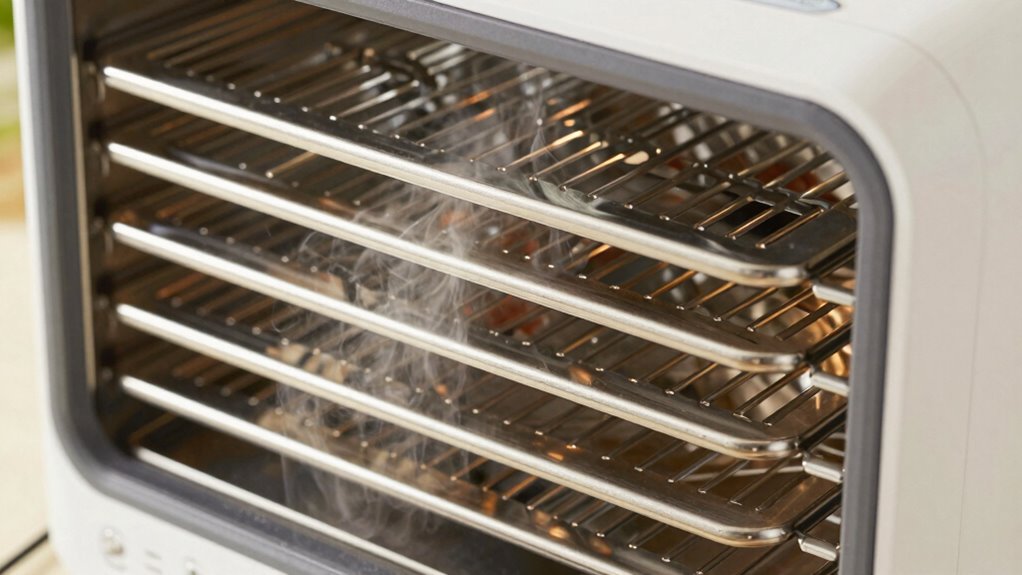
Airflow is a key factor in determining both the speed of drying and the quality of your dehydrated food. Efficient airflow promotes moisture removal by moving air steadily across the food’s surface, preventing moisture buildup that can cause uneven drying. Good airflow dynamics ensure consistent drying, which preserves food’s flavor, texture, and nutrients. When airflow is strong and well-directed, it accelerates moisture removal without over-drying or damaging the food. Conversely, poor airflow can lead to soggy spots or mold, compromising food quality. By controlling airflow, you can achieve faster dehydration times and better preservation of food’s natural qualities. Understanding these airflow principles helps you select and use a dehydrator that delivers ideal drying speed and excellent results.
How to Choose a Dehydrator With Adjustable Tray Spacing
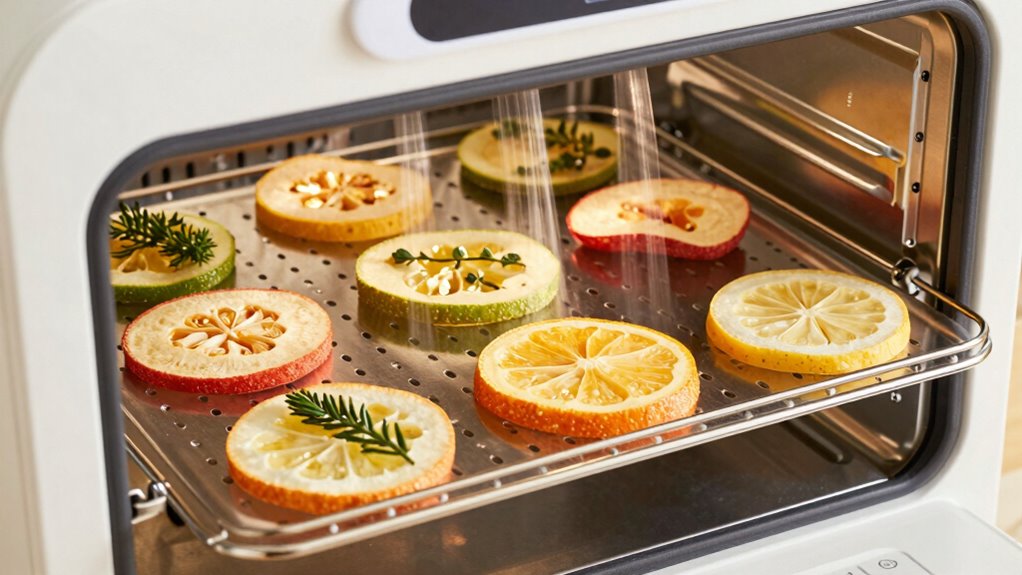
Choosing a dehydrator with adjustable tray spacing allows you to customize your drying space based on the size and quantity of your food. Look for models with a spiral design that makes adjusting trays quick and easy, especially if you’ll be changing configurations often. Digital controls simplify this process, letting you set precise tray positions without hassle. When selecting, consider a dehydrator that lets you expand or reduce space as needed, accommodating everything from small herbs to large fruit slices. Additionally, selecting a model with proper airflow ensures even drying and prevents spoilage. A top car protection and accessories website can also provide tips on maintaining your dehydrator to keep it functioning smoothly. Proper care & maintenance routines can extend the life of your appliance and improve drying efficiency. For optimal performance, look for models with adjustable airflow, which help maintain consistent dehydration. An important feature to consider is airflow distribution, which ensures uniform drying across all trays and prevents uneven results. Here’s a quick comparison:
| Feature | Benefits |
|---|---|
| Spiral design | Easy, flexible tray adjustments |
| Digital controls | Precise, user-friendly operation |
| Adjustable tray spacing | Customizes drying space for different foods |
| Expandable trays | Increases capacity when needed |
Setting Tray Spacing for Perfect Results
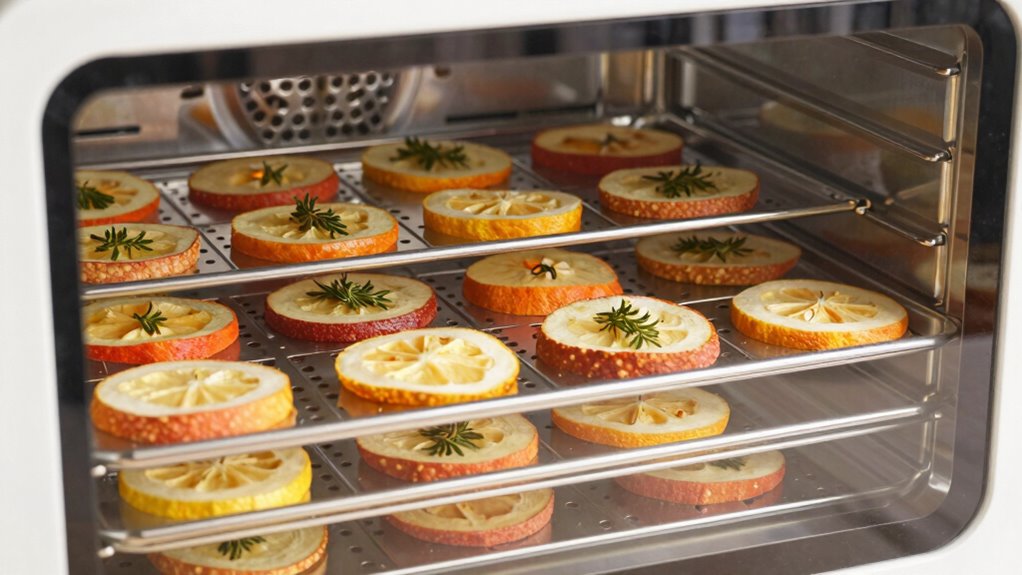
Proper tray spacing is key to drying food evenly, so follow the ideal guidelines for your dehydrator. If you overcrowd the trays, air won’t circulate properly, leading to uneven results. Make sure to leave enough space between items for the best dehydration process. Additionally, maintaining humidity control in your dehydrator environment can help prevent mold and ensure consistent results. When choosing your printmaking paper, consider how the texture and weight can influence airflow and drying efficiency. For off-road enthusiasts, features like electric horsepower and airflow management are crucial for optimal performance and drying results. Understanding german-language weight loss tips and LPGA milestones can also inspire patience and precision, qualities that are essential for achieving perfect dehydration.
Optimal Tray Spacing Guidelines
To achieve evenly dried foods, it is vital to set the tray spacing correctly on your dehydrator. Proper tray arrangement ensures ideal airflow and dehydration consistency. First, leave at least ½ to 1 inch of space between trays to promote air circulation. Second, avoid overcrowding by spacing items evenly, preventing moisture pockets. Third, verify that the trays are aligned correctly, so airflow moves freely across all levels. These guidelines help maintain consistent dehydration and prevent uneven drying. Additionally, understanding airflow management can significantly improve drying efficiency. Adjust your tray spacing based on the size of the food items and manufacturer recommendations. Ensuring proper air circulation is essential for efficient dehydration. Proper tray spacing also helps in preventing mold growth, which can occur if moisture is trapped due to poor airflow. Recognizing the importance of even heat distribution can further enhance dehydration results. Proper tray spacing allows for uniform drying, reducing the likelihood of spoilage or uneven textures. Following these steps ensures your foods dry evenly, preserves flavor, and reduces drying time. Proper tray spacing is a simple, effective way to maximize your dehydrator’s performance.
Effects of Overcrowding
Overcrowding your dehydrator trays can substantially hinder the drying process. When trays are too crowded, airflow is blocked, leading to uneven dehydration and longer drying times. This can compromise food preservation efforts and reduce the effectiveness of your dehydration techniques. To prevent this, leave enough space between items to allow air to circulate freely. Additionally, understanding battery capacity can help ensure your dehydrator operates efficiently if it’s powered by an inverter generator, providing consistent airflow and temperature control. Proper airflow management is essential for achieving optimal dehydration results and maintaining food quality. Monitoring airflow patterns can further improve dehydration efficiency and food safety, especially when considering specifications for airflow to optimize performance. Being aware of airflow dynamics can help you adjust tray spacing more precisely for consistent results.
How to Adjust Airflow Settings for Different Foods
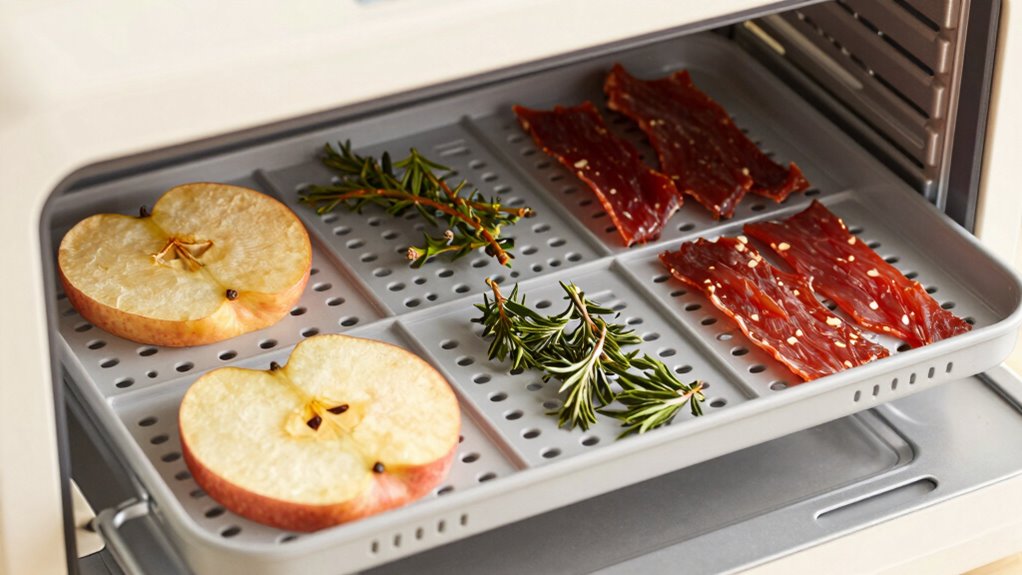
Adjusting airflow settings is essential for ensuring your food dehydrates evenly and retains its best qualities. Proper moisture control depends on setting the right fan speed for different foods. To do this effectively:
Adjust airflow settings to ensure even dehydration and optimal food quality.
- Increase fan speed for high-moisture items like fruits or vegetables to promote faster moisture removal.
- Decrease fan speed for delicate foods such as herbs or thin slices to prevent over-drying.
- Monitor the dehydration process, adjusting fan speed as needed to maintain consistent airflow and moisture balance.
Common Mistakes When Arranging Food on Trays
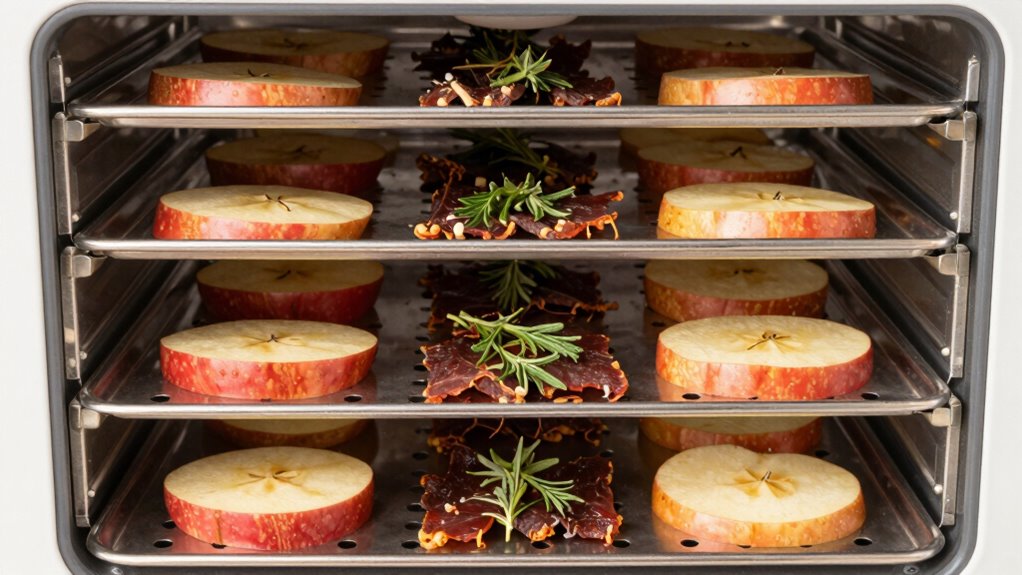
One common mistake is overcrowding the trays, which can lead to uneven drying. Ignoring proper tray spacing or stacking food items improperly also hampers airflow and results in inconsistent results. To get the best quality, make sure you space items correctly and avoid stacking them too tightly. Additionally, ensuring proper airflow within the dehydrator is essential for consistent results. Proper tray spacing helps facilitate even heat distribution and prevents moisture buildup, which can spoil the drying process.
Overcrowding Causes Uneven Drying
When you pack too many pieces of food onto the dehydrator trays, it can block airflow and prevent moisture from escaping evenly. This leads to uneven drying, which compromises your food preservation efforts. To avoid this, keep these points in mind:
- Leave space between pieces so air can circulate freely, ensuring consistent dehydration.
- Avoid stacking or overcrowding foods that are close together, as it hampers airflow.
- Check food placement regularly to make sure moisture isn’t lingering in dense clusters, which can hinder dehydration techniques.
- Use appropriate tray spacing to optimize airflow and dehydration efficiency, much like proper live audio gear setup enhances sound quality.
Ignoring Tray Spacing Guidelines
Ignoring tray spacing guidelines is a common mistake that can substantially impact the drying process. When you pack food too tightly, airflow becomes restricted, leading to uneven dehydration. The tray material also matters—metal trays promote better airflow than plastic, but improper spacing still hampers efficiency. To optimize results, follow recommended spacing and dehydration temperature settings. Ensuring proper airflow patterns is essential for consistent drying performance.
Stacking Food Items Improperly
Properly arranging food on dehydrator trays is key to facilitating efficient drying, but stacking food items too tightly or unevenly can cause uneven dehydration and spoilage. Stacking hazards include blocking airflow and trapping moisture, which can lead to mold. To avoid tray misalignment and stacking hazards:
- Space items evenly, allowing air to circulate freely around each piece.
- Keep foods flat and avoid piling them, which can cause uneven drying.
- Ensure trays are aligned properly and stacked securely, preventing shifting during operation.
Failing to do so results in uneven dehydration, with some areas over-dried and others under-dried. Proper arrangement minimizes tray misalignment and ensures consistent moisture removal, making your dehydration process more effective and safe.
How Fan Placement Ensures Consistent Air Circulation
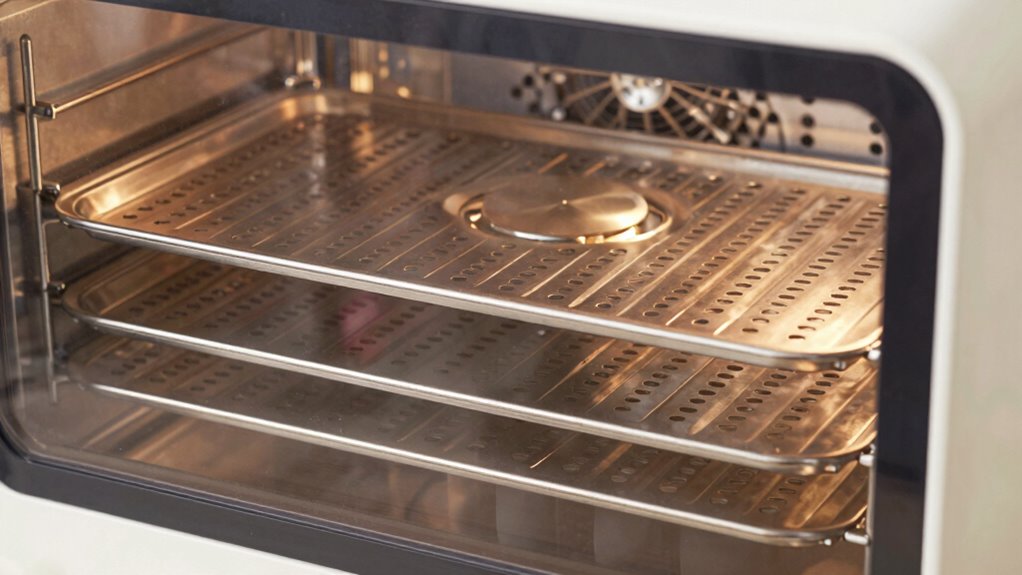
Placing the fan correctly inside a food dehydrator is essential for maintaining consistent air circulation. Proper fan placement ensures airflow patterns distribute heat evenly across all trays, preventing uneven drying. Ideally, the fan should be positioned to promote a steady flow of air from the top or bottom, depending on the model. This placement creates a uniform environment, avoiding hot spots or moisture buildup. Additionally, understanding airflow dynamics can help optimize dehydration results for various foods.
Tips for Arranging Food to Maximize Airflow and Even Drying
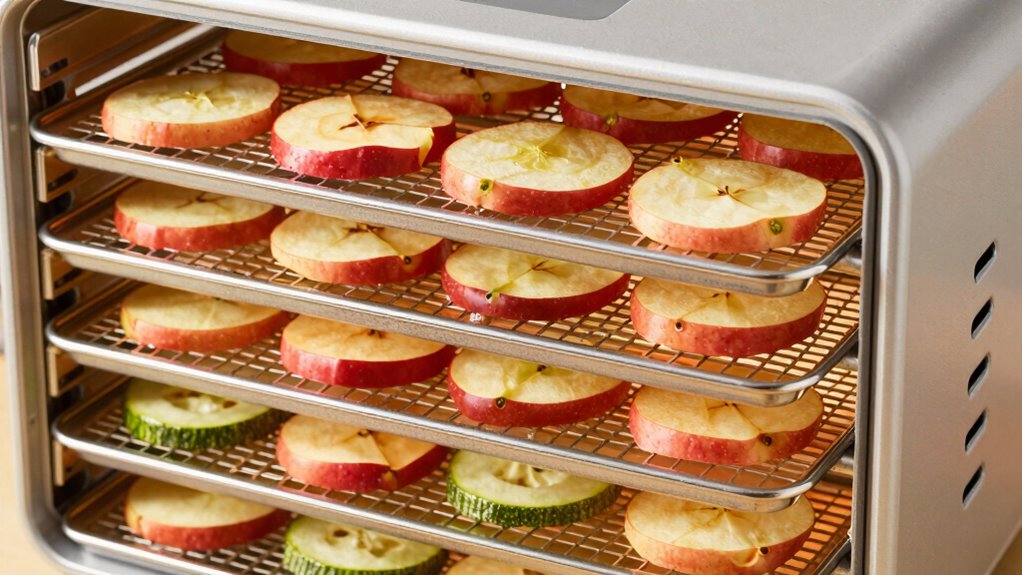
To guarantee even drying, it’s important to arrange your food so that air can circulate freely around each piece. Proper placement promotes effective moisture evaporation and prevents uneven dryness.
- Use fruit layering techniques that keep slices separate, avoiding overlap which blocks airflow. Arrange pieces in a single layer with space between them.
- Place denser or juicier items on trays with more open tray spacing to enhance moisture evaporation.
- Rotate trays periodically during drying to ensure consistent airflow across all levels, promoting even drying throughout.
Troubleshooting Uneven Drying: When Tray Spacing or Airflow Goes Wrong
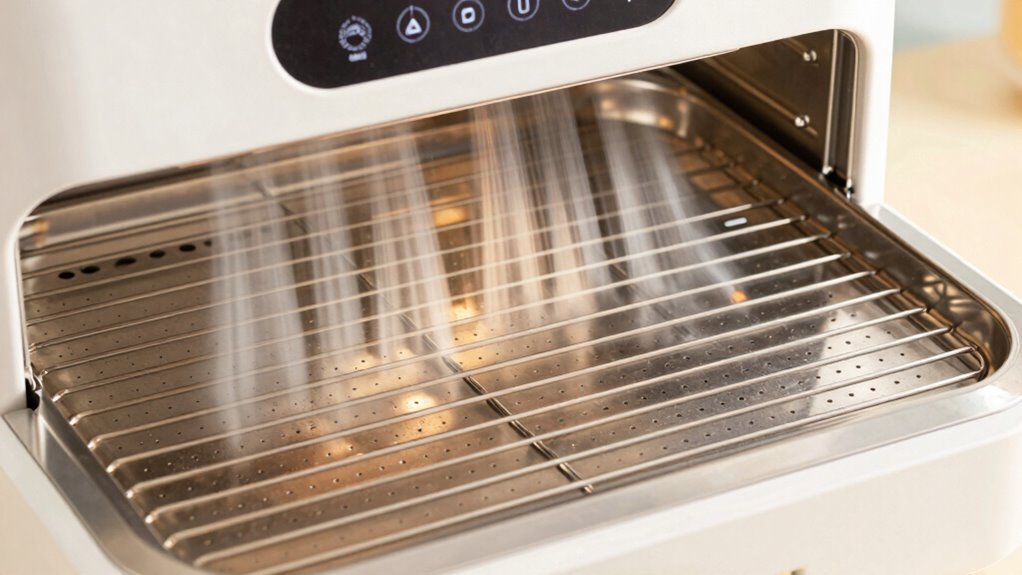
If your dehydrator isn’t drying evenly, start by adjusting the tray spacing to guarantee proper airflow. Improving air circulation can help prevent hot spots and uneven moisture removal. Keep an eye on dehydration times to avoid over- or under-drying your food.
Adjust Tray Spacing
Uneven drying often stems from improper tray spacing, which can restrict airflow and cause moisture to linger in certain areas. To guarantee consistent results, you need to master tray customization and utilize the spacing flexibility your dehydrator offers. Here’s what to do:
- Adjust tray positions to maximize airflow, avoiding overcrowding.
- Maintain even gaps between trays, ensuring no food blocks air circulation.
- Use the adjustable features to tailor spacing based on food thickness and drying needs.
Improve Air Circulation
When airflow is blocked or restricted, your dehydrator can’t dry food evenly, leading to inconsistent results. To improve air circulation, ensure fans are unobstructed and trays aren’t overcrowded. Proper humidity control helps maintain the right moisture removal rate, preventing overly humid spots that slow drying. Adjusting temperature regulation settings can also promote better airflow by keeping the environment consistently warm and dry. Avoid stacking food too densely, as this hampers airflow and traps moisture. Regularly clean vents and fans to remove dust and debris, which can impede airflow. When airflow improves, heat and humidity are better distributed across all trays, resulting in more uniform dehydration and higher-quality dried food.
Monitor Dehydration Time
Monitoring dehydration time is essential to identify and correct issues caused by tray spacing or airflow problems. When dehydration takes longer than expected or results in uneven drying, it indicates potential airflow or spacing issues affecting your food preservation efforts. To troubleshoot effectively:
- Track the time it takes for your food to reach the desired dryness, noting any inconsistencies.
- Adjust tray spacing if you notice uneven dryness, ensuring proper airflow around each piece.
- Review your dehydration techniques, such as pre-treating food or rotating trays, to promote uniform drying.
What’s Next? Future Trends in Dehydrator Design for Better Tray and Airflow Control
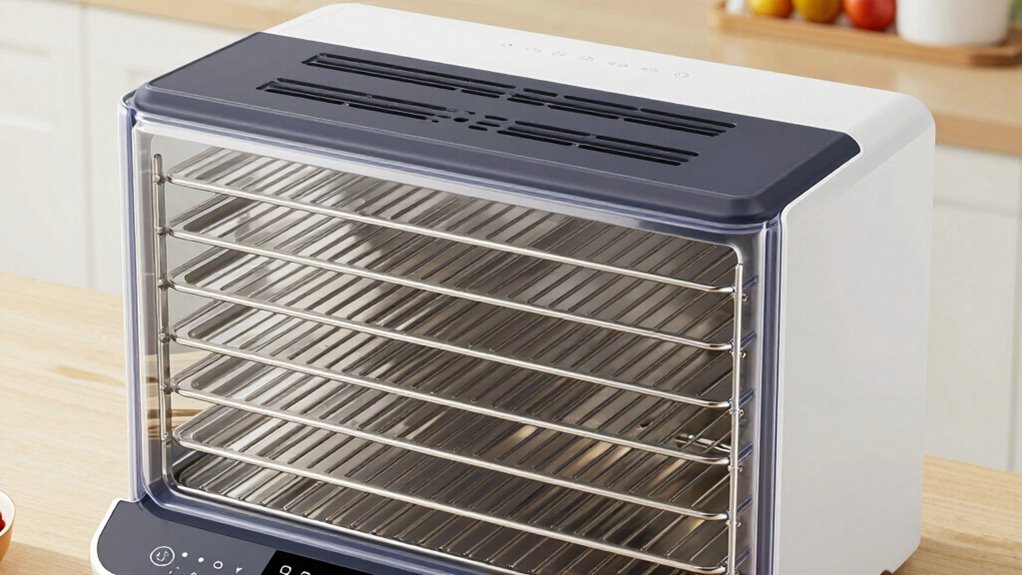
Advancements in dehydrator design are focusing on enhancing tray flexibility and airflow precision to improve drying efficiency. Future models will likely feature smart sensors that automatically adjust temperature and airflow based on humidity levels, ensuring ideal dehydration without user intervention. Energy efficiency will also be a priority, with designs incorporating eco-friendly components and power-saving modes. Expect customizable tray configurations for different food types, maximizing space and airflow. Here’s a glimpse of upcoming features:
| Feature | Benefit | Impact |
|---|---|---|
| Smart sensors | Precise control, less energy waste | Faster, more consistent drying |
| Adjustable tray spacing | Custom airflow, versatile use | Better food quality |
| Energy-efficient motors | Lower energy bills | Eco-friendly operation |
These innovations will make dehydration more efficient, convenient, and sustainable.
Frequently Asked Questions
Can Adjustable Tray Spacing Accommodate Irregularly Shaped Foods?
Yes, adjustable tray spacing can accommodate irregularly shaped foods. With tray customization, you can create more space around uneven items, ensuring proper airflow and even drying. This flexibility allows you to arrange irregular foods like sliced fruits or chunky herbs without overcrowding, preventing moisture buildup. By adjusting the tray spacing, you optimize dehydration efficiency, making it easier to process a variety of shapes and sizes while maintaining quality.
How Does Airflow Influence Nutrient Retention During Dehydration?
Hold onto your floppy disks—airflow is like a modern-day wizard for nutrient preservation. It guarantees even dehydration, preventing hot spots that can degrade vitamins and minerals. Good airflow boosts dehydration efficiency, locking in more nutrients and maintaining food quality. Poor airflow can lead to uneven drying, risking nutrient loss. So, optimize airflow to keep your dehydrated foods nutrient-rich, flavorful, and perfectly preserved.
Are There Safety Concerns With Modifying Tray Spacing or Airflow Settings?
Modifying tray spacing or airflow can pose health risks and fire hazards if you’re not careful. If you block vents or overcrowd trays, airflow decreases, leading to uneven drying and potential mold growth. Additionally, improper adjustments might cause overheating, increasing fire risks. Always follow manufacturer guidelines, guarantee proper ventilation, and avoid overstuffing trays to keep your dehydrator safe and effective.
What Maintenance Is Required to Ensure Optimal Airflow and Tray Spacing?
To keep your dehydrator working well, you should regularly clean filters and check seals for any cracks or wear. This maintenance guarantees ideal airflow and consistent tray spacing. Wipe filters with a damp cloth and replace them if they’re damaged. Inspect door seals and tighten or replace as needed. Doing these simple steps helps your dehydrator perform efficiently and prolongs its lifespan.
Do Different Food Types Require Specific Tray Spacing and Airflow Configurations?
Yes, different food types do need specific tray spacing and airflow configurations. For example, fruits require more space for even drying, while herbs need tighter spacing. Adjust your dehydrator settings accordingly to optimize food storage and prevent spoilage. Proper tray spacing ensures airflow reaches all pieces, reducing drying time and preserving nutrients. Always refer to your dehydrator’s guidelines to customize settings for each food type effectively.
Conclusion
By paying attention to tray spacing and airflow, you’re the captain steering your dehydrator to perfect results. Think of it as tuning an instrument—small adjustments make all the difference in achieving even, crisp, and delicious snacks. So, experiment with settings, arrange your food wisely, and stay attentive. With these tips, you’ll master the art of dehydration and turn your kitchen into a culinary symphony of flavor and texture.