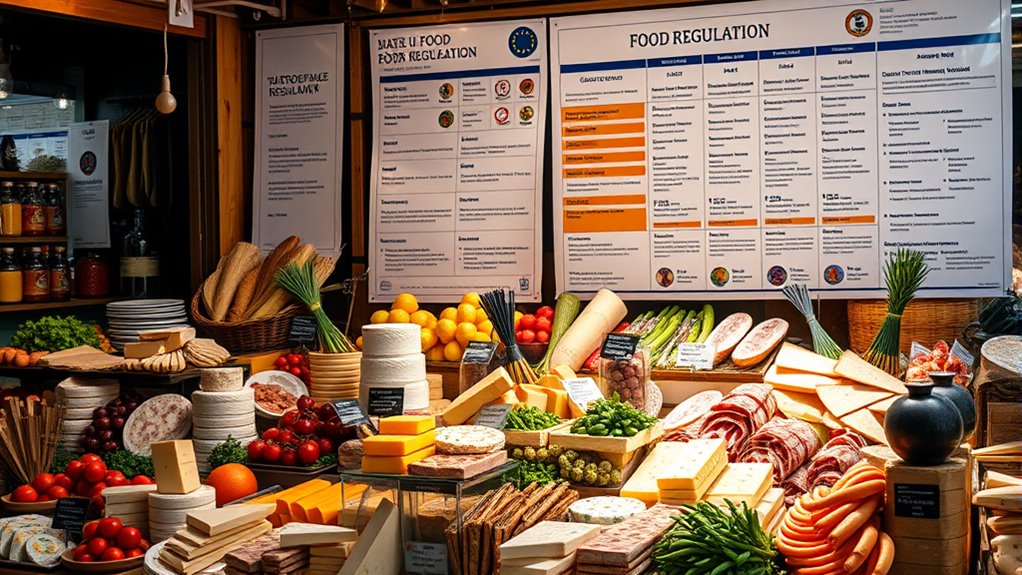

As an Italian producer, EU food policies and regulations shape how you operate, from strict packaging standards to import tariffs. You must use eco-friendly, recyclable materials to conform with sustainability directives, which can impact costs and supply chain choices. Understanding trade tariffs helps manage expenses and optimize logistics. Staying compliant ensures you avoid penalties and gain market access. Continuing will reveal key strategies to navigate these regulations effectively and sustain your business in the EU market.
Key Takeaways
- EU food policies enforce safety, quality, and sustainability standards impacting Italian producers’ operations and packaging choices.
- Sustainable packaging regulations require eco-friendly, recyclable, and biodegradable materials, aligning with EU environmental directives.
- Import tariffs and trade agreements influence costs, supply chain decisions, and market competitiveness for Italian food producers.
- Compliance with EU policies enhances transparency, traceability, and access to the EU market, supporting long-term growth.
- Continuous monitoring and adaptation of regulations are essential for Italian producers to maintain compliance and competitive advantage.

The European Union has established extensive food policies and regulations to guarantee safety, quality, and sustainability across member states. As an Italian producer, you need to be aware of how these policies directly influence your operations, especially concerning sustainable packaging and import tariffs. The EU emphasizes reducing environmental impact, which means you’ll have to adopt sustainable packaging solutions that meet strict standards. This involves choosing eco-friendly materials, minimizing packaging waste, and ensuring your packaging complies with EU directives on recyclability and biodegradability. By aligning with these requirements, you not only demonstrate your commitment to sustainability but also avoid potential penalties or market restrictions that could arise from non-compliance.
Import tariffs also play a significant role in your ability to access and compete within the EU market. While the EU generally promotes free trade among member states, tariffs can still be applied to certain imported goods, especially if they originate from outside the union. Understanding these tariffs helps you plan your supply chain more effectively, as higher tariffs could increase costs for imported ingredients or packaging materials not produced domestically. Conversely, the EU often offers preferential tariffs or trade agreements with specific countries, which you should leverage to reduce costs and improve your competitiveness. Staying informed about tariff changes is vital because shifts can impact your profit margins and pricing strategies.
Moreover, these policies are interconnected. For example, the EU’s emphasis on sustainability extends beyond packaging to include sourcing ingredients locally or from certified sustainable sources. This reduces reliance on imports that might be subject to higher tariffs and aligns with consumer preferences for environmentally responsible products. Additionally, the EU’s regulatory framework encourages transparency and traceability, pushing you to implement systems that can verify sustainable practices and compliance with import regulations. This not only enhances your reputation but also ensures smoother customs clearance and market access.
As an Italian producer, steering these policies requires proactive planning. You’ll need to stay up-to-date with evolving regulations concerning sustainable packaging standards and import tariffs. Participating in industry associations and consulting with legal experts can help you adapt swiftly to policy changes. Investing in sustainable packaging not only satisfies EU directives but also appeals to increasingly eco-conscious consumers, giving you a competitive edge. Meanwhile, understanding and managing import tariffs will help you control costs and optimize your supply chain. Ultimately, aligning your business practices with EU policies will position you better in the European market, guaranteeing compliance, reducing risks, and supporting your long-term growth. Staying informed about best practices in compliance will further solidify your market position and ensure ongoing success.
Frequently Asked Questions
How Do EU Food Policies Impact Small Italian Producers Differently?
EU food policies can challenge small Italian producers by imposing regulations that are harder to meet for small scale farming. You might struggle with compliance costs, which can limit your ability to access local markets. However, these policies also aim to protect your local produce, so staying informed helps you adapt better. Ultimately, steering these regulations requires balancing the benefits of support with the hurdles they create for small-scale farmers like you.
What Are the Upcoming EU Food Regulation Changes for Italian Exports?
You might soon face new EU regulations on trade tariffs and labeling requirements that could considerably affect your Italian exports. These changes aim to enhance transparency and protect consumers, but they might also increase costs or complicate your shipping processes. Stay alert, as upcoming adjustments could reshape your market access, requiring you to adapt quickly. Ignoring these shifts risks missing opportunities or facing penalties—so prepare now to navigate this evolving landscape.
How Can Italian Producers Adapt to New EU Food Safety Standards?
To adapt to new EU food safety standards, you should implement innovative packaging that guarantees product preservation and safety. Additionally, invest in extensive traceability systems to track every step of your supply chain, demonstrating compliance and building consumer trust. Staying updated on regulation changes and collaborating with industry experts can help you seamlessly meet new requirements, assuring your products remain competitive and compliant across EU markets.
Are There Specific EU Policies Targeting Organic Food in Italy?
Yes, EU policies specifically target organic food in Italy. You need to focus on obtaining organic certification and complying with strict labeling requirements. These policies aim to guarantee transparency and authenticity, so don’t overlook the importance of clear, accurate labels. Staying ahead means understanding these regulations thoroughly—because if you don’t, you risk losing trust and market share. The stakes are high; the rules are evolving—are you prepared to meet the challenge?
What Support Programs Are Available for Italian Producers Under EU Regulations?
You can access EU support programs like subsidy programs that help Italian producers expand their market access. These programs offer financial aid, technical assistance, and training to boost your competitiveness. By participating, you can improve product quality, meet EU standards, and explore new markets. Keep an eye on available funding opportunities and apply early to maximize benefits, ensuring your business stays compliant and thrives within the EU framework.
Conclusion
Understanding the EU’s food policies is essential for Italian producers, as they face evolving regulations that impact their competitiveness. Did you know that the EU allocates over €10 billion annually to food safety and quality standards? Staying informed and adaptable helps you navigate these changes, ensuring compliance and growth. Embrace these policies as opportunities to innovate and differentiate your products in a crowded market, securing your place in both European and global arenas.