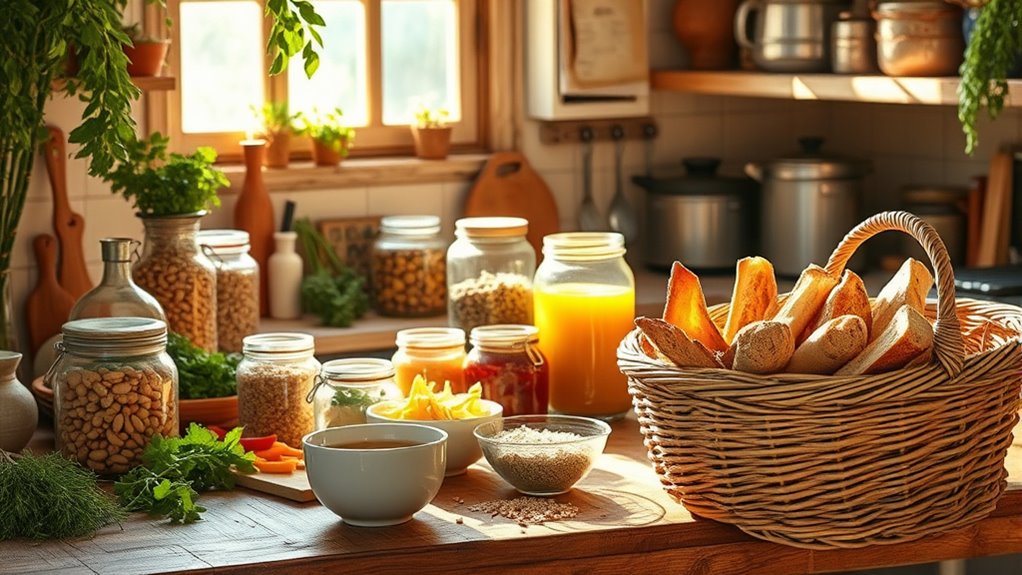

To reduce food waste inspired by traditional Italian kitchens, start preserving herbs through drying, cure meats to extend their shelf life, and pickle seasonal vegetables for year-round enjoyment. Incorporate composting kitchen scraps like peelings and coffee grounds to create nutrient-rich soil. Embracing these techniques saves money, minimizes waste, and deepens your connection to sustainable cooking. Exploring these methods further reveals simple ways to make a meaningful environmental impact in your kitchen.
Key Takeaways
- Preserve herbs and vegetables through drying, curing, and canning to extend their shelf life and reduce waste.
- Implement composting of kitchen scraps like peelings and coffee grounds to recycle organic waste into nutrient-rich soil.
- Use traditional pickling and curing techniques to enjoy seasonal produce year-round, minimizing spoilage.
- Incorporate small-scale preservation methods into routine cooking to decrease reliance on store-bought items and reduce packaging waste.
- Adopt a mindful approach to ingredient use, respecting food origins and embracing waste reduction as part of sustainable living.
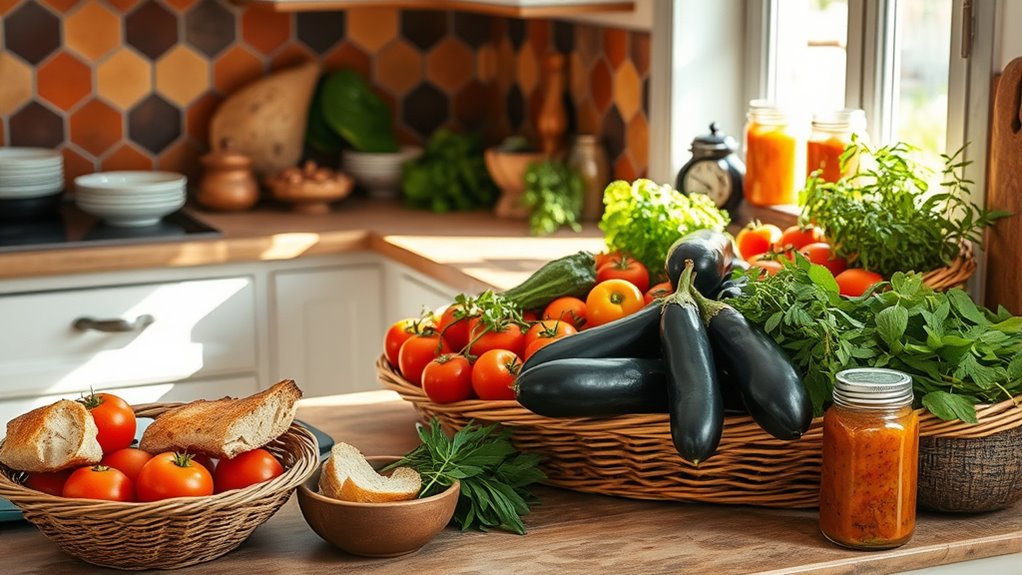
Have you ever wondered how much food gets wasted each year and what you can do to make a difference? It’s a staggering amount, but you don’t have to feel powerless. One effective way to reduce waste is by embracing traditional Italian kitchen practices that focus on smart ingredient preservation and composting techniques. These methods aren’t just about following old recipes; they’re about creating a sustainable kitchen that minimizes waste and maximizes every ingredient’s potential.
Discover how Italian kitchen traditions help reduce food waste through smart preservation and composting.
In Italian cuisine, ingredient preservation is a cornerstone. You might already be familiar with techniques like drying herbs, curing meats, or pickling vegetables. These methods extend the life of your ingredients and allow you to enjoy seasonal produce year-round. For example, drying basil or oregano preserves their flavors without relying on artificial preservatives. Canning or making preserves from excess fruits and vegetables ensures nothing goes to waste when harvests are abundant. By adopting these traditional preservation techniques, you can cut down on unnecessary shopping trips and avoid throwing away spoiled produce.
Complementing ingredient preservation are composting techniques that turn kitchen scraps into valuable soil. Instead of tossing vegetable peelings, coffee grounds, or eggshells into the trash, you can compost them. This natural process reduces landfill waste and creates nutrient-rich compost for your garden or indoor plants. Italian kitchens have long used composting as a way to recycle organic waste, understanding that what might seem like garbage can be transformed into something beneficial. Setting up a simple compost bin in your backyard or using a worm bin indoors makes this process accessible and manageable. Over time, you’ll notice your garden thriving, and you’ll feel good knowing you’re decreasing your environmental footprint. Additionally, advances in energy storage and grid management help optimize the use of renewable energy sources like solar and wind, making sustainable practices even more effective.
Implementing these strategies doesn’t require a complete overhaul of your routine. Start small: preserve excess herbs and vegetables, learn basic canning or drying techniques, and set up a composting bin. As you become more comfortable, these practices will become second nature. Not only will you reduce food waste, but you’ll also develop a deeper appreciation for your ingredients and their journey from farm to table. Plus, you’ll be joining a tradition rooted in sustainability and respect for food, much like the practices that have sustained Italian kitchens for generations.
Ultimately, reducing food waste isn’t just about saving money; it’s about creating a more sustainable lifestyle. By integrating traditional Italian methods of ingredient preservation and composting techniques into your kitchen, you take meaningful steps toward a greener, more efficient way of living. Every small effort counts, and before you know it, these practices will become part of your daily routine, helping you make a real difference for the planet.
Frequently Asked Questions
How Do Traditional Italian Kitchens Minimize Ingredient Waste?
In traditional Italian kitchens, you minimize ingredient waste by using seasonal ingredients, which are freshest and last longer, reducing spoilage. You also rely on family recipes that make the most of every part of an ingredient, avoiding unnecessary waste. By planning meals carefully and repurposing leftovers, you guarantee nothing goes to waste. These practices help you embrace sustainability while preserving authentic flavors passed down through generations.
What Specific Italian Recipes Promote Leftover Reuse?
You can promote leftover reuse with Italian recipes like turning leftover pasta into a frittata or pasta salad, which refreshes flavors and saves waste. Bread soup, or ribollita, is perfect for using day-old bread and vegetables, transforming scraps into a hearty meal. These dishes encourage you to creatively repurpose leftovers, reducing waste while enjoying authentic Italian flavors. Embrace these recipes to make the most of your ingredients.
Are There Cultural Practices in Italy That Reduce Food Waste?
You can find Italy’s cultural preservation and community involvement in practices that reduce food waste. Italians often reuse leftovers creatively, transforming them into new dishes, and share meals with neighbors, fostering a sense of community. Markets encourage buying only what’s needed, and families save scraps for broths or sauces. These customs help minimize waste, honor tradition, and strengthen bonds, making waste reduction a natural part of everyday life.
How Can Italian Cooking Techniques Extend Ingredient Shelf Life?
You can stretch ingredients’ shelf life by applying Italian preservation methods like pickling, drying, and fermenting, which keep food fresh longer. These techniques, rooted in culinary innovation, prevent waste and enhance flavors. Think of it as turning a short-lived ingredient into a treasure; your kitchen becomes more sustainable and resourceful. By embracing these methods, you not only respect tradition but also make every ingredient count, reducing waste effortlessly.
What Role Do Family Traditions Play in Reducing Food Waste?
Family traditions play a essential role in reducing food waste by fostering family bonding and cultural preservation. When you share meals and cooking routines, you naturally value ingredients and learn to use leftovers creatively. These traditions encourage mindful consumption and respect for food, making waste less likely. By passing down recipes and practices, you help preserve cultural heritage while promoting sustainability, ensuring future generations continue these eco-friendly habits.
Conclusion
So, next time you toss out that leftover pasta or overripe tomato, remember Italy’s kitchens—which thrived on clever use of every scrap. Ironically, in a world obsessed with perfect produce, it’s the traditional, humble methods that actually cut waste. Maybe, just maybe, embracing these time-tested strategies could make us a little less wasteful—and a lot more connected to our food. After all, saving the planet starts with appreciating what’s already on our plate.