
BTUs measure heat output, but higher numbers don’t guarantee better grilling. Instead, focus on how the grill distributes heat evenly, with well-placed burners and effective design to prevent hot spots. Materials and construction quality also matter, as they affect heat retention and durability. Ultimately, efficiency and performance come down to overall grill design, not just BTU ratings. Keep exploring to discover what truly influences a grill’s cooking power and how to choose the right one for your needs.
Key Takeaways
- BTUs measure heat output, but higher numbers don’t guarantee better grilling performance.
- Effective heat distribution and grill design are more important than just high BTU ratings.
- A well-constructed grill with lower BTUs can outperform a high-BTU model with poor heat management.
- Proper burner placement and airflow are critical for consistent and even cooking results.
- Focus on build quality, heat zones, and maintenance rather than BTU hype when choosing a grill.
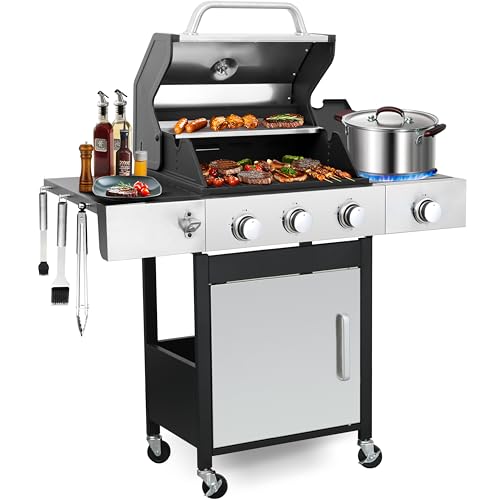
39000 BTU Output Propane Gas Grill with Side Burner and 3 Main Burners – Double-layer Stainless Steel Lid, Cast Iron Grids, Easy-Clean Grease Management & Even Heat Distribution for Perfect BBQs
Ample Grilling Space for Family & Friends – Host unforgettable backyard BBQs with our extra-large cast iron cooking…
As an affiliate, we earn on qualifying purchases.
As an affiliate, we earn on qualifying purchases.
What Are BTUs and Do They Really Matter in Gas Grills?
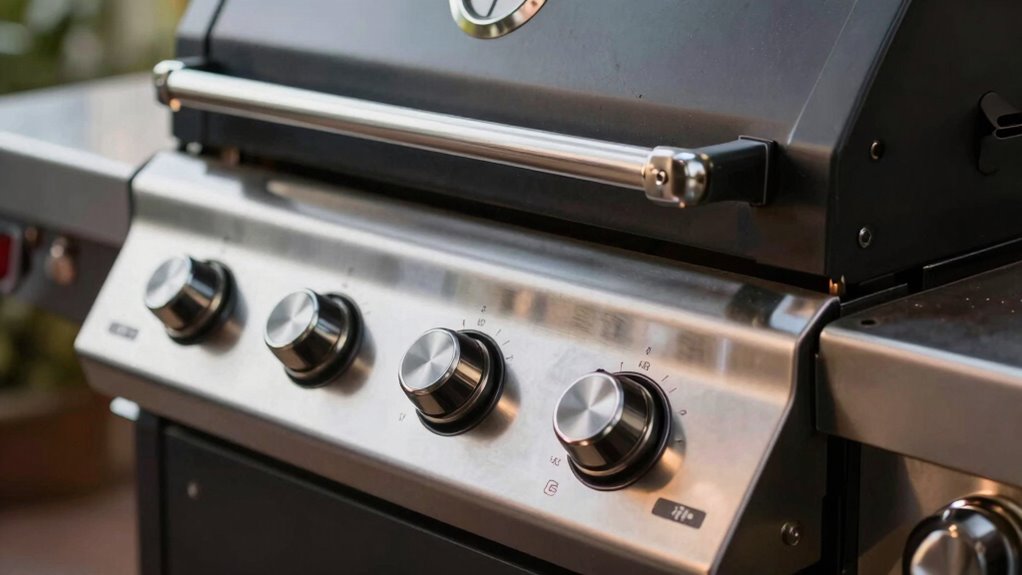
BTUs, or British Thermal Units, measure the amount of heat a gas grill can produce per hour. Many people believe higher BTUs mean better grilling, but that’s a common BTU misconception. More BTUs don’t necessarily translate to better results if the grill isn’t designed well; it might just consume more fuel without improving performance. When considering fuel efficiency, focus on how well the heat is distributed and the grill’s overall design, not just its BTU rating. A lower BTU grill with good heat retention can outperform a high BTU model that wastes fuel. So, don’t get caught up in the hype—understand that BTUs alone don’t determine a grill’s quality or efficiency. It’s about how effectively it uses its heat output. Additionally, heat distribution plays a crucial role in achieving consistent cooking results across the grilling surface. Proper grill design ensures optimal heat use, regardless of BTU rating. Furthermore, understanding how heat retention impacts overall performance can help you select a more efficient and effective grill. Recognizing the significance of energy efficiency can also guide you toward a more sustainable grilling experience. Paying attention to fuel consumption can help in choosing a grill that balances power with efficiency.

Traeger Grills Flatrock, 33 Inch Flat Top Griddle, Outdoor Gas Grill with 3-Zone TruZone Cooking, Even Heat, Fuel Sensor, and EZ-Clean Grease Management, Premium Propane Griddle for Outdoor Cooking
Versatile 3-Zone Cooking: This Traeger flat top grill features TruZone cooking zones that let you griddle bacon, sear…
As an affiliate, we earn on qualifying purchases.
As an affiliate, we earn on qualifying purchases.
How Do Burners and Heat Distribution Affect Your Grill’s Performance?
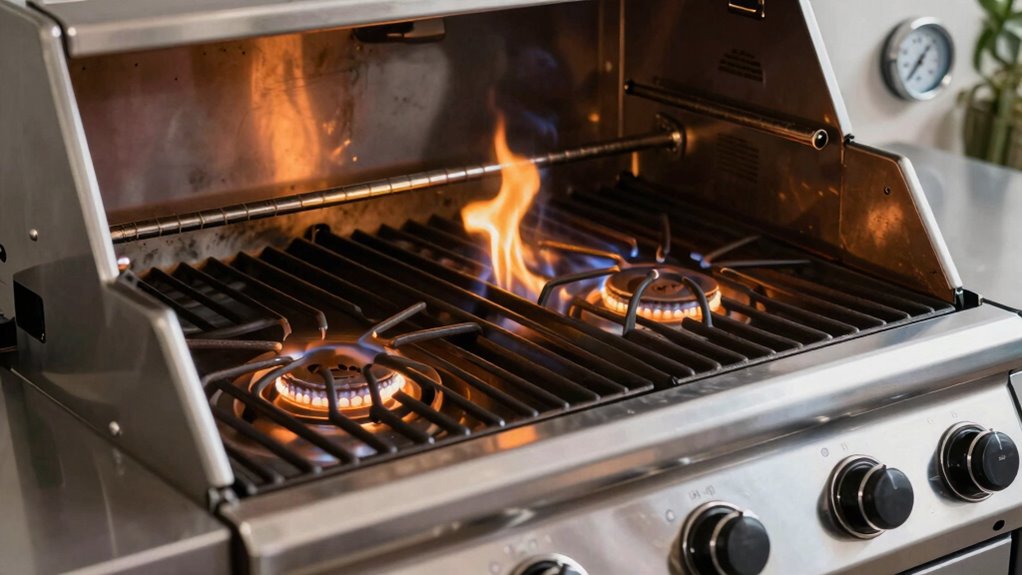
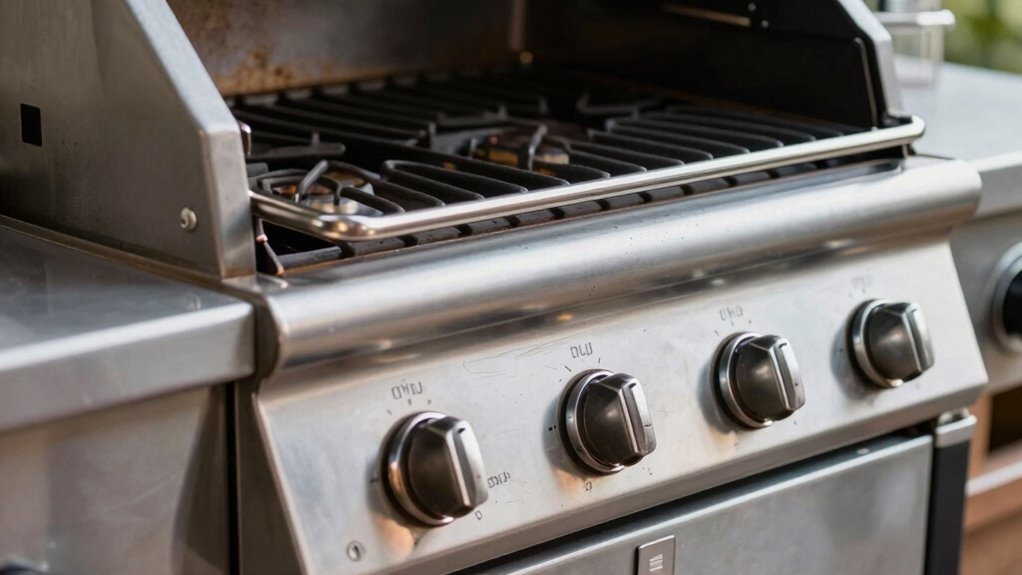
The way your grill’s burners are arranged and how they distribute heat directly impact its cooking performance. Proper heat zone management ensures you can cook different foods at ideal temperatures, making grilling more efficient. Grill flame patterns reveal how evenly heat is spread across the cooking surface; inconsistent flame patterns can lead to hot spots or cold spots. When burners are strategically positioned, they create distinct heat zones, allowing you to sear steaks on high heat and slow-cook vegetables on lower heat without moving them around excessively. Good heat distribution prevents burning and promotes even cooking. Heat zone management is a crucial factor in achieving optimal grilling outcomes. Additionally, understanding burner placement helps you optimize your grill’s heat flow for better results. Proper heat flow ensures consistent cooking, minimizing the need for repositioning food during grilling. Mastering burner layout and heat distribution can significantly improve your grilling experience and results. To maximize these effects, consider how grill design influences overall heat circulation and efficiency.

Unicook Universal Replacement Heavy Duty Adjustable Porcelain Steel Heat Plate Shield, Heat Tent, Flavorizer Bar, Burner Cover, Flame Tamer for Gas Grill, Extends from 11.75" up to 21" L, 4 Pack
Adjustable grill heat plates extend from 11.75” up to 21” long, 3.75” wide, fits most gas grills. If…
As an affiliate, we earn on qualifying purchases.
As an affiliate, we earn on qualifying purchases.
Why Grill Design and Material Quality Impact Cooking Results
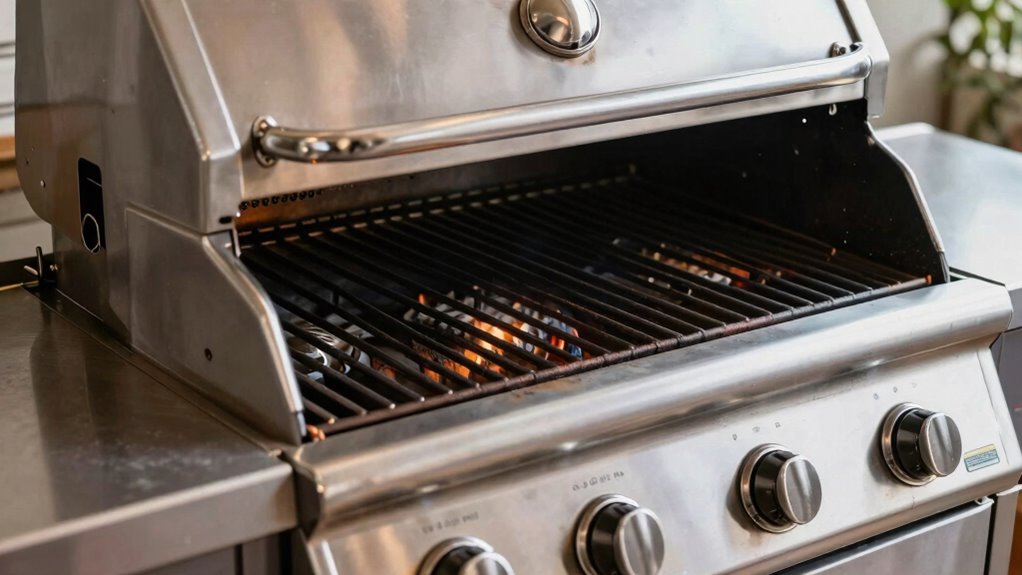
How a grill is designed and the quality of its materials directly influence how evenly and efficiently it cooks your food. A well-designed grill ensures proper heat distribution, preventing hot spots that can burn or undercook. Grill aesthetics also matter—they reflect quality craftsmanship and durability, affecting your confidence in the product. High-quality materials like stainless steel or porcelain-coated parts resist rust and wear, maintaining performance over time. Customer reviews often highlight how design flaws or cheap materials led to uneven cooking or early failure. When your grill combines thoughtful design with premium materials, you get better heat retention, even cooking, and longer-lasting performance. Additionally, construction quality plays a crucial role in ensuring the longevity and consistent performance of your grill over years of use. Recognizing the importance of material composition can help you select a grill that offers both durability and reliable cooking performance. Moreover, paying attention to manufacturing standards can further guarantee that your grill meets safety and quality expectations. Proper ventilation and airflow design also contribute significantly to achieving optimal cooking temperatures and even heat distribution. Furthermore, understanding attention to detail in manufacturing can significantly impact the overall quality and performance of your grill.

34,000 BTU 3-Burner Propane Gas Grill with Side Burner, All Stainless Steel BBQ Grill, Cast Iron Grates & Portable Cart with Wheels,Outdoor Barbecue Grill for Backyard, Patio, Camping (G31 PRO)
3-Burner System with Side Burner:Enjoy versatile cooking with three 8,000 BTU main burners and a dedicated 10,000 BTU…
As an affiliate, we earn on qualifying purchases.
As an affiliate, we earn on qualifying purchases.
What Factors Actually Influence a Gas Grill’s Power and Efficiency?
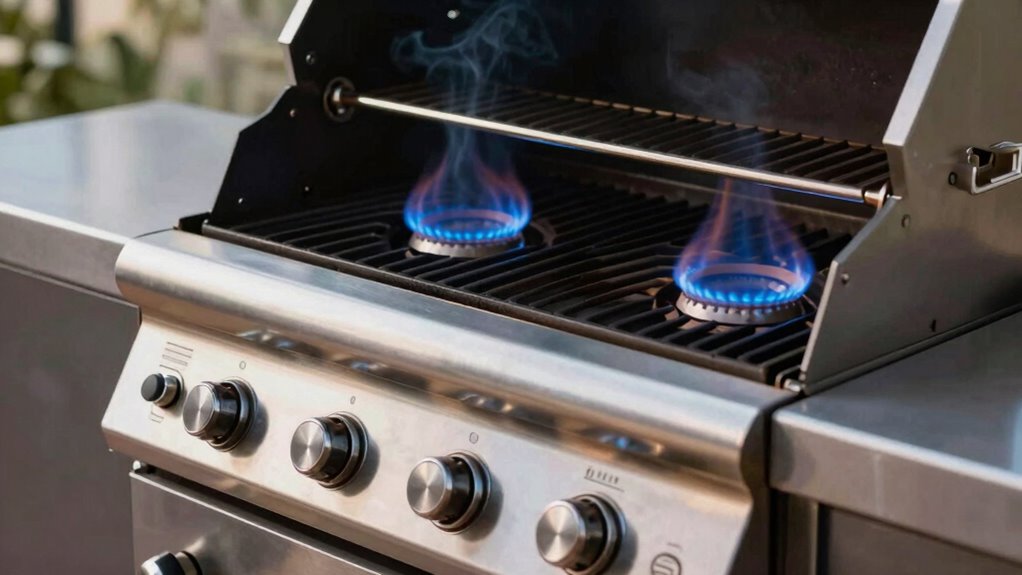
Several key factors determine a gas grill’s power and efficiency beyond just its BTU rating. Proper grill maintenance ensures burners stay clean and work at their best, preventing heat loss and uneven cooking. The design of the grill, including the placement of burners and airflow, affects how heat is distributed and retained. Fuel efficiency also plays a vital role; a well-designed grill uses fuel more effectively, giving you more consistent heat with less waste. Additionally, the quality of the burners impacts how evenly heat is produced, which influences overall performance. Keeping your grill in good condition, paying attention to airflow management, and selecting a model with high-quality components will help you get the most power and efficiency from your grill, regardless of its BTU rating. Properly managing ventilation can further optimize combustion and heat output. Understanding how heat distribution works within your grill can also lead to better cooking results and energy use. Regularly checking and adjusting air vents can also improve combustion efficiency and overall heat consistency.
Tips for Choosing a Gas Grill That Delivers Consistent, Delicious Food
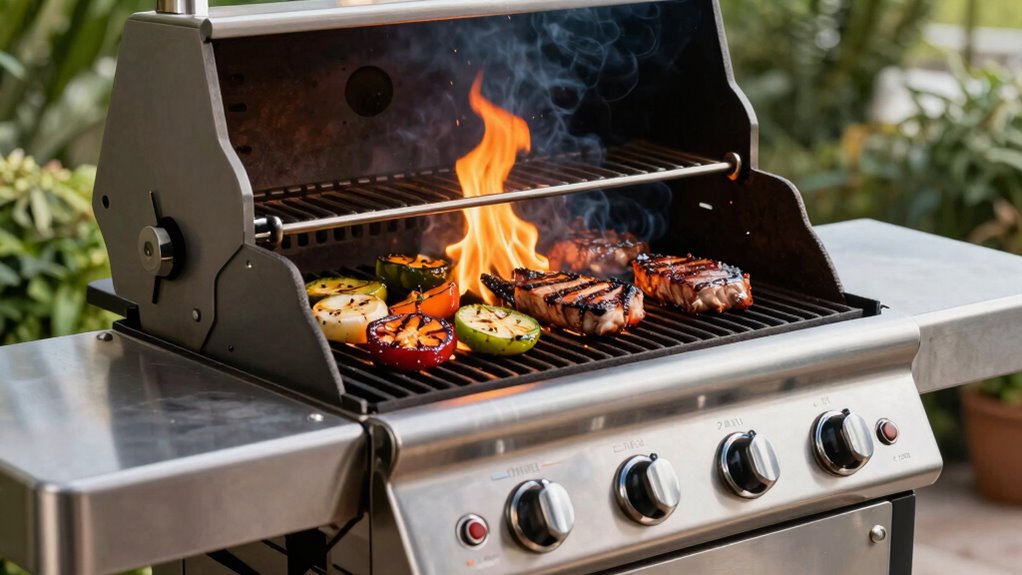
Choosing a gas grill that consistently delivers delicious food starts with paying attention to how well it maintains even heat across the cooking surface. Look for models with good heat distribution, as uneven heat can lead to unpredictable results. Always prioritize grill safety by ensuring proper venting and secure connections. Regular maintenance tips include cleaning burners and grates to prevent flare-ups and ensure consistent performance. Check for sturdy construction and reliable temperature controls. A well-maintained grill not only produces better food but also lasts longer and operates safely. Remember, a grill that stays clean and in good repair minimizes safety hazards and helps you achieve perfectly cooked, flavorful meals every time. Additionally, understanding grill heat control can help you fine-tune your cooking for the best results. Proper venting systems are also essential for safety and efficient operation, especially during extended grilling sessions. Additionally, familiarizing yourself with filtration and suction basics can improve airflow and combustion efficiency, leading to more consistent cooking. Ensuring good airflow and proper ventilation helps prevent dangerous buildup of gases and enhances overall safety during grilling. Being aware of these airflow management techniques can significantly improve your grilling experience and safety.
Frequently Asked Questions
How Does Ambient Temperature Affect a Gas Grill’s BTU Performance?
Ambient temperature can considerably impact your gas grill’s BTU performance. Cooler outdoor conditions cause heat loss, making it harder to reach high temperatures, especially if your grill lacks proper insulation. When temperatures drop, your grill works harder, so make sure good grill insulation and shield it from wind. This helps maintain consistent heat, so your food cooks evenly despite outdoor conditions.
Can a High BTU Rating Compensate for Poor Grill Design?
A high BTU rating can’t fully compensate for poor grill design, as it impacts cooking versatility and grill longevity. While more BTUs can boost heat output, if the grill’s construction lacks proper heat distribution or durable materials, you won’t get consistent results or long-lasting performance. Focus on a well-designed grill with appropriate BTU levels to ensure both versatile cooking options and durability over time.
What Role Does Airflow and Ventilation Play in Grill Efficiency?
Imagine your grill as a well-orchestrated dance, where airflow and ventilation efficiency set the rhythm. Proper grill airflow guarantees the flames burn cleanly, maximizing heat and flavor. Good ventilation lets excess gases escape, preventing flare-ups and uneven cooking. Without it, even a high BTU rating can fall short. So, focus on optimizing airflow and ventilation efficiency for consistent, delicious results every time you fire up your grill.
Are There Safety Concerns Related to High BTU Output?
High BTU output can pose safety hazards if you’re not cautious, especially regarding regulator concerns. Excessive heat can lead to flare-ups or damage your grill components, increasing the risk of accidents. Always make certain your regulator matches your grill’s BTU rating and follow manufacturer guidelines. Proper ventilation is essential, and never leave high-BTU grills unattended to minimize safety hazards. Regular maintenance and safety checks help prevent potential issues.
How Do I Accurately Compare Different Gas Grill Models’ Heating Capabilities?
Imagine comparing two grills: one with high BTUs but poor heat distribution, and another with moderate BTUs but even heat spread. To accurately compare their heating capabilities, look beyond BTU ratings. Consider cooking capacity, heat distribution, and how well each grill maintains consistent temperatures. These factors influence flavor enhancement and cooking efficiency, helping you choose a model that truly meets your grilling needs rather than just chasing higher BTUs.
Conclusion
Remember, while BTUs are often highlighted, they’re just one piece of the puzzle. A grill with 30,000 BTUs can outperform one with 50,000 BTUs if it’s well-designed and made from quality materials. In fact, a study found that grills with better heat distribution and construction produce 20% juicier, more flavorful food. So, focus on overall design and build quality—those factors truly determine your grilling success, not just the BTU number.