
In Italian folklore, herbal remedies play a crucial role, blending culinary traditions with natural healing that’s been passed down through generations. You’ll find herbs like rosemary, sage, and thyme used not only to flavor dishes but also to promote health, such as improving memory or soothing sore throats. Respect for local plants and ancient preparation methods highlights a deep cultural connection. Keep exploring, and you’ll uncover the rich stories behind each herb’s healing power and cultural significance.
Key Takeaways
- Italian herbal remedies blend culinary traditions with medicinal uses, emphasizing regional customs and cultural significance.
- Herbs like rosemary, sage, and fennel are used for flavor and health benefits, such as improving memory or relieving digestion.
- Traditional preparation methods respect land and nature, reflecting sustainable practices passed through generations.
- Herbal remedies serve as cultural symbols, reinforcing community bonds and embodying centuries-old healing rituals.
- These practices highlight Italy’s rich history of integrating herbal knowledge with culinary and health traditions.

Italian folklore is rich with herbal remedies that have been passed down through generations, blending tradition with local wisdom. These remedies form an integral part of the country’s medicinal traditions, reflecting a deep connection between nature and health. When you explore Italian herbal practices, you’ll notice how each plant’s use is intertwined with cultural significance, often rooted in centuries-old beliefs and regional customs. These traditions aren’t just about healing; they embody a way of life that respects nature’s gifts and sustainable practices.
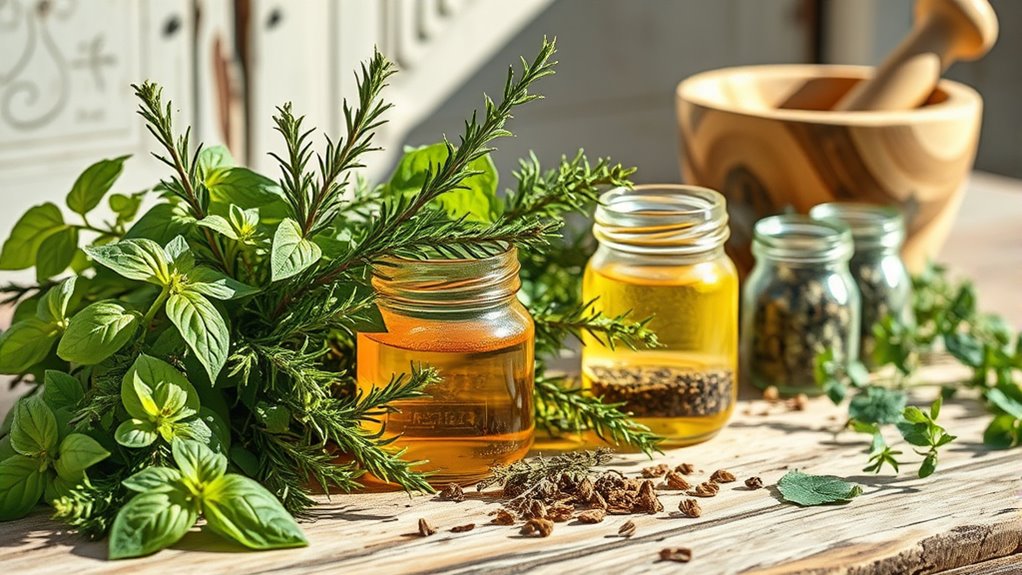
In many Italian communities, herbal remedies serve both culinary and medicinal purposes. You might find yourself using herbs like rosemary, sage, or thyme, not only to flavor your dishes but also to promote health. For example, rosemary isn’t just a seasoning; it’s historically believed to improve memory and circulation. Sage, commonly used in cooking, also has antiseptic properties and has been traditionally used to soothe sore throats and digestive issues. These culinary uses are a natural extension of their medicinal traditions, where eating certain herbs is seen as a way to maintain health or prevent illness. The flavor of these herbs carries cultural significance, as each region has its own recipes and rituals that incorporate them.
The health benefits of Italian herbal remedies go beyond flavor; they are often employed to address specific ailments. For instance, locals might brew a tea with chamomile to calm nerves or use fennel seeds to relieve bloating. What makes these remedies special is the way they’re rooted in cultural significance—many families have their own secret recipes or methods passed down through generations. This sense of continuity reinforces a community’s connection to its heritage, making herbal medicine more than just a health practice; it’s a cultural legacy.
You might also discover that these traditional practices emphasize the importance of local plants, which are carefully harvested and prepared according to age-old techniques. This respect for the land and its resources reflects a broader worldview that values harmony with nature. Whether used in daily cooking or as part of a dedicated herbal remedy, these plants symbolize a cultural identity that celebrates natural healing. By embracing these herbal traditions, you gain insight into Italy’s rich history of medicinal practices, where health and culture coexist seamlessly. Additionally, many of these herbs are used in simple homemade recipes, like garlic herb butter, to enhance both flavor and well-being.
Ultimately, Italian herbal remedies embody a timeless appreciation for nature’s healing power, blending culinary traditions with health benefits rooted in cultural significance. When you tap into these practices, you’re not just using herbs—you’re participating in a centuries-old tradition that honors the land, the community, and the enduring wisdom of Italian herbal medicine.

LeafLea 40 Premium Rosemary Tea Bags from 100% Natural Rosemary Leaves, Herbal Tea for Gentle Digestive Comfort, Te De Romero Earthy Taste & Light Aroma, Caffeine-Free, Sugar-Free, Non-GMO
Pure Herbal Tea Infusion: These rosemary herbal tea bags are made from 100% pure rosemary leaves. No added…
As an affiliate, we earn on qualifying purchases.
As an affiliate, we earn on qualifying purchases.
Frequently Asked Questions
Which Italian Herbs Are Most Effective for Digestive Health?
You should try herbs like fennel, peppermint, and chamomile for digestive health, as they often work together through herbal synergy. Incorporate them into your culinary traditions—add fennel seeds to salads, sip peppermint tea after meals, or enjoy chamomile infusions. These herbs are known to soothe digestion, reduce bloating, and ease discomfort, making them effective natural remedies rooted in Italian culinary practices.
Are There Any Risks or Side Effects From Traditional Italian Herbal Remedies?
You should be aware that traditional Italian herbal remedies can pose risks like herbal toxicity if used improperly, and allergic reactions are possible, especially if you’re sensitive to certain plants. Always consult with a healthcare professional before starting any herbal treatment, particularly if you have allergies or underlying health conditions. Using herbs responsibly minimizes risks and guarantees you enjoy their benefits safely.
How Are Herbal Remedies Traditionally Prepared in Italian Households?
You typically prepare herbal remedies in Italian households using traditional preparation methods like boiling, steeping, or infusing herbs in warm water or alcohol. You might create herbal infusions by steeping fresh or dried herbs in hot water for tea, or use alcohol-based tinctures for concentrated remedies. These techniques allow you to extract the herbs’ properties effectively, maintaining the natural flavor and health benefits passed down through generations.
Can Italian Herbal Remedies Be Used Alongside Modern Medicines?
Think of herbal remedies as delicate dancers on a stage—beautiful but needing careful choreography. You can use Italian herbal remedies alongside modern medicines, but only if you follow herbal safety guidelines. Be mindful of potential herbal interactions, which are like unexpected twirls that can throw off the routine. Always check with your healthcare provider to guarantee safety and harmony, so your treatment stays graceful and effective.
What Are Some Regional Variations in Herbal Folklore Across Italy?
You’ll find that regional plant varieties and cultural herbal traditions vary widely across Italy. In the north, people favor mountain herbs like juniper and thyme, while the south relies on Mediterranean plants such as oregano and myrtle. These regional differences shape folk remedies and culinary uses, reflecting local flora and cultural practices. Embracing these traditions lets you appreciate Italy’s rich herbal diversity and its unique contributions to health and cuisine.

Vocal Eze Voice Saver Kit, Includes Vocal Herbal Throat Spray (1) and (12) Manuka Honey Drops | Relieve Sore, Hoarse, Fatigue, Dryness of Throat | Immune Support, Natural Ingredients (Aniseed)
✅ VOCAL HEALTH REMEDY: Great For Overused and Strained Vocals, Hoarse, Sore and Dry Throats
As an affiliate, we earn on qualifying purchases.
As an affiliate, we earn on qualifying purchases.
Conclusion
Imagine strolling through an Italian village, where each herb whispers centuries of healing secrets. Just like Grandma’s basil pesto, these traditional remedies blend flavor and wellness seamlessly. Embracing Italian folklore, you tap into nature’s ancient pharmacy, nurturing your health with time-tested herbs. It’s as if every leaf holds a story, waiting to nourish your body as it did for generations before. By honoring these traditions, you connect with a vibrant tapestry of culinary and healing wisdom.

Simply Organic Italian Seasoning, 0.95 Ounce, Organic Herbs, Oregano, Majoram, Thyme, Rosemary, Basil, Sage, Kosher, NonGMO
Italian Seasoning – This premium organic blend of herbs like basil, oregano, and thyme brings a rich, aromatic…
As an affiliate, we earn on qualifying purchases.
As an affiliate, we earn on qualifying purchases.

BRAVO TEAS&HERBS Blood Circulation Herbal Tea, Caffeine Free, 20 Count
Ingredients: Eo Hand Sanitizer Lvndr
As an affiliate, we earn on qualifying purchases.
As an affiliate, we earn on qualifying purchases.