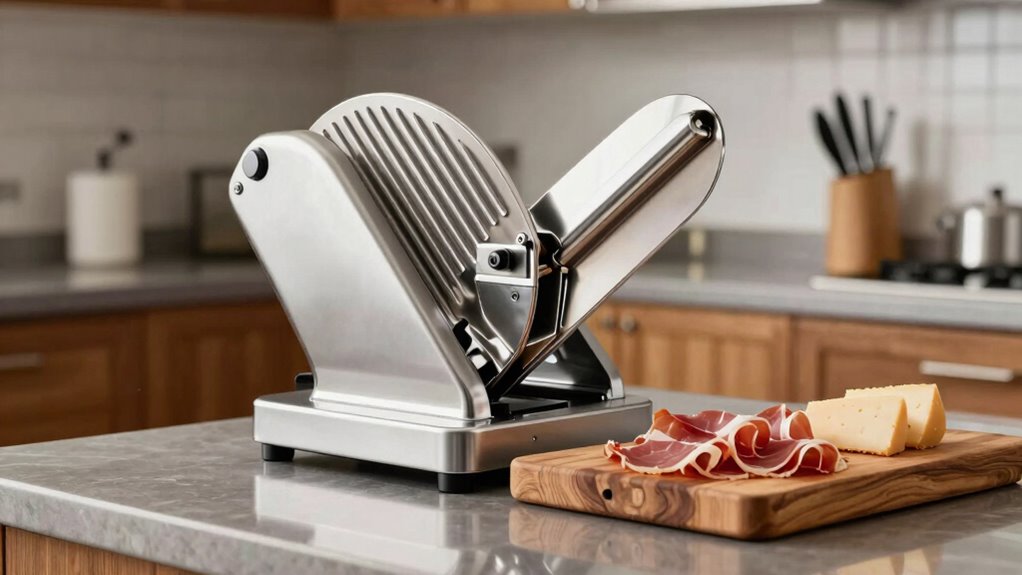

A meat slicer can be a handy tool for home cooks, offering uniform slices, precision, and faster prep, especially if you often process large amounts of meat. It’s compact, easy to use, and can elevate your kitchen results. However, safety features and proper handling are essential to avoid accidents. Whether it’s worth it depends on your needs and space, but exploring further will help you decide if it’s a smart addition to your kitchen.
Key Takeaways
- Home meat slicers enhance presentation, precision, and efficiency for frequent meat preparation.
- Compact models are suitable for occasional use; commercial ones may be oversized and unnecessary.
- Safety features like blade guards and proper handling are crucial to prevent injuries.
- Budget and space constraints influence whether a home slicer is a practical investment.
- Proper maintenance and safety knowledge ensure effective and safe operation at home.
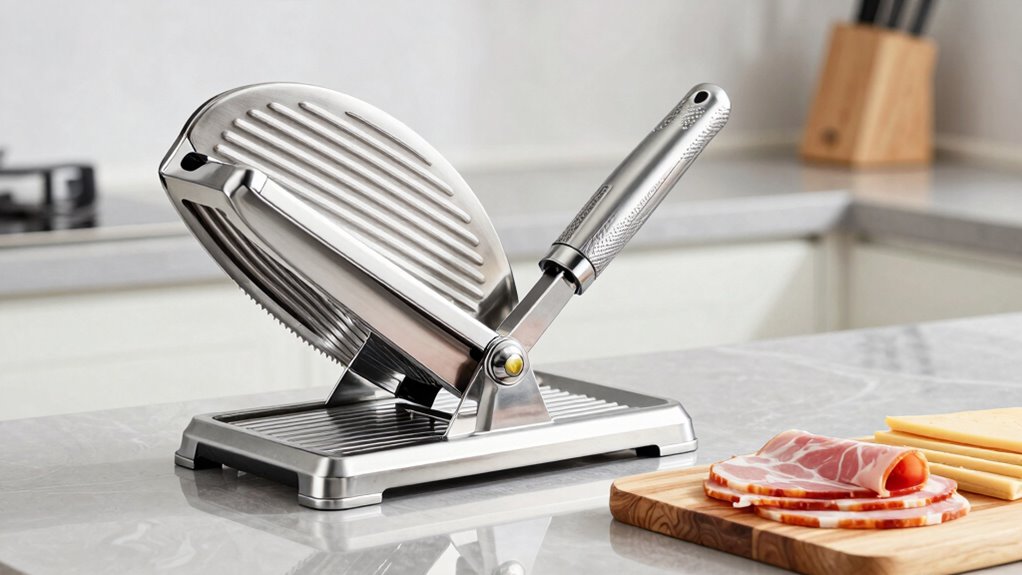
If you’re a home cook who loves preparing meats with precision, investing in a meat slicer can make a significant difference. A good slicer allows you to achieve uniform slices, which can improve the presentation and texture of your dishes. But before jumping in, it’s worth considering whether a home-use meat slicer suits your needs or if you should explore commercial alternatives, especially if you plan to use it frequently or for larger quantities. Commercial slicers are built for durability and high-volume use, often featuring more powerful motors and larger blades. While they offer robust performance, they tend to be bulkier, more expensive, and require more space, which might be overkill for casual home cooks. If you’re looking for something compact and easy to store, a dedicated home model might be better—though it may not handle heavy-duty tasks as well.
Choosing between home and commercial meat slicers depends on your cooking needs, space, and safety considerations.
Safety considerations are integral when operating any meat slicer. These machines have sharp blades and moving parts that can cause serious injuries if not used carefully. Always read the manual thoroughly, and make certain you use the provided safety features, such as blade guards and pushers. Never bypass safety mechanisms, and always keep your fingers away from the blade during operation. Properly securing the meat and ensuring the slicer is on a stable, flat surface reduces the risk of slips and accidents. Cleaning is another safety aspect; always unplug the slicer before disassembling or cleaning to avoid accidental activation. Regular maintenance, including blade sharpening and checking for wear, keeps the machine operating safely and efficiently. Additionally, understanding the safety features of your slicer can help prevent common injuries and ensure a safer slicing experience. It’s also helpful to be aware of the power of the blades and how it influences both safety and slicing effectiveness. To further enhance safety, some models include emergency stop buttons that can quickly shut down the machine if needed. Moreover, choosing a model with safety certification from recognized authorities can provide added peace of mind regarding its safety standards.
While some home models are designed with safety features to make operation easier, they still require respect and caution. Be mindful of the power of the blades—what might seem like a simple task can quickly turn dangerous if mishandled. If you frequently slice large quantities of meat or want the convenience of a commercial alternative, investing in a commercial slicer could be worthwhile, but it’s essential to weigh the safety considerations. These machines demand careful handling and proper training, which isn’t always feasible in a home setting. Additionally, understanding the safety protocols for each machine can help prevent accidents and ensure a safer experience.
In the end, whether a meat slicer is a useful tool or an oversized regret depends on your cooking habits, space, and comfort with safety protocols. For occasional use, a compact, user-friendly model might suffice. For regular, high-volume slicing, a commercial alternative could be justified—just remember to prioritize safety at all times.
home meat slicer with safety features
As an affiliate, we earn on qualifying purchases.
As an affiliate, we earn on qualifying purchases.
Frequently Asked Questions
Are Meat Slicers Safe for Children to Use?
Meat slicers aren’t safe for children to use without proper child safety measures. You should never let kids operate a slicer unless they have thorough slicer training and understand the risks. Always supervise closely, keep the slicer unplugged when not in use, and make sure blades are covered. Prioritize child safety by teaching your kids about the dangers, but avoid letting them handle the slicer alone to prevent accidents.
How Loud Are Home Meat Slicers During Operation?
You might worry about noise levels, but most home meat slicers operate quietly enough not to disturb your household. Their operating sounds are generally comparable to a blender or food processor, producing moderate noise during use. While they aren’t silent, their noise levels are manageable, allowing you to slice meats efficiently without causing a disturbance. So, you won’t have to worry about loud, disruptive sounds when using your slicer.
Can Meat Slicers Handle Frozen or Partially Frozen Meat?
You shouldn’t try slicing frozen or partially frozen meat with a home meat slicer, as it can damage the machine and compromise slicer safety. Frozen meat is too hard and may cause the blade to slip or break, risking injury. Always thaw meat completely before slicing to guarantee smooth operation, protect your slicer, and keep yourself safe. Properly prepared meat makes slicing easier and safer for you.
What Is the Typical Maintenance Required for a Meat Slicer?
Did you know that regular maintenance extends your meat slicer’s lifespan by up to 30%? You should frequently clean the blade, ensuring it stays sharp for precise cuts. Always unplug the slicer before cleaning and dry all parts thoroughly. Check and maintain blade sharpness, and store the slicer in a dry, safe place to prevent rust. Proper maintenance keeps your slicer safe, effective, and ready whenever you need it.
Are There Specific Cleaning Precautions for Different Slicer Models?
Yes, you should follow specific cleaning precautions for different slicer models. Always use cleaning brushes designed for your slicer to thoroughly clean hard-to-reach areas, and make certain blade guards are removed and cleaned carefully. Avoid harsh abrasives that can damage surfaces. Regularly sanitize all parts, especially blades and guards, to prevent bacteria buildup. Always consult your slicer’s manual for model-specific instructions to keep it safe and functioning properly.
Conclusion
A meat slicer can transform your kitchen, making prep faster and more precise. But think twice—what’s easier now might become a cluttered, forgotten gadget later. It’s like buying a fancy knife that promises perfection but ends up dull and unused. So, before you decide, weigh convenience against storage. Sometimes, the biggest tool isn’t the best one. Sometimes, simplicity remains the true secret to a happy, efficient kitchen.