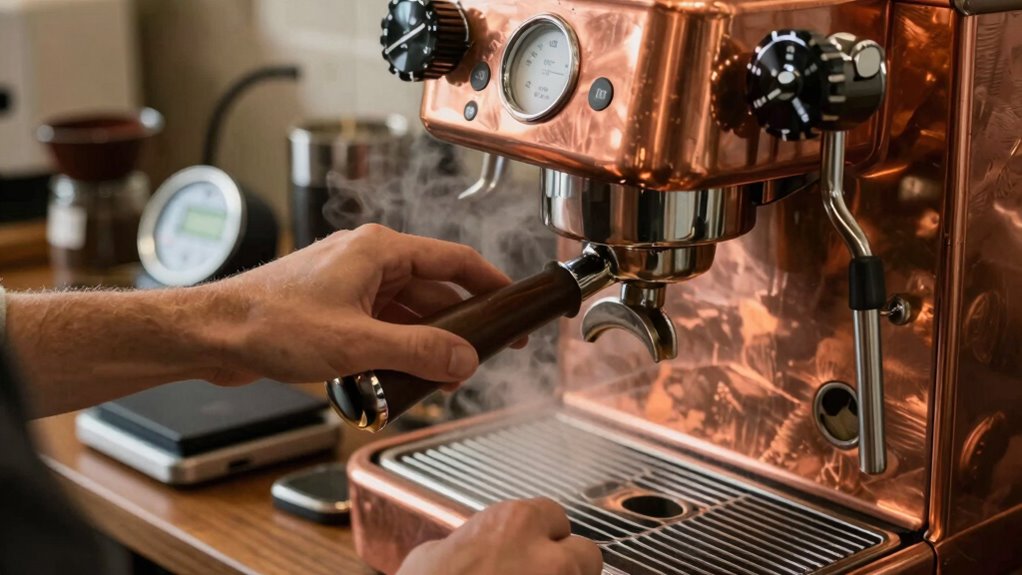

To dial in the perfect espresso, focus on five key variables over brand choice: your grind size and dose must be consistent for even extraction; make sure your machine is clean, calibrated, and at the right temperature; apply about 30 pounds of tamp pressure for uniformity; fine-tune extraction time and water chemistry for clarity and balance; and constantly observe, taste, and adjust based on crema, flavor, and aroma. Mastering these will open a truly exceptional shot—if you keep refining each step, you’ll get closer every time.
Key Takeaways
- Achieve uniform grind size and correct dose for optimal extraction and balanced flavor.
- Regularly clean and calibrate your machine and grinder to maintain consistent performance.
- Tamp with about 30 pounds of pressure and control water temperature for even extraction.
- Monitor extraction time and water chemistry to prevent under- or over-extraction.
- Taste and observe crema to fine-tune grind, temperature, and other variables for best results.

Avid Armor Chamber Vacuum Sealer Machine USV20 Ultra Series for Wet Foods, Meat Vacuum Packing Machine, Compact with 11.5-Inch Vaccum Sealer Bar
Ensures Leak-Free Sealing - Keep your liquid-rich foods fresh for longer with the Avid Armor food vacuum sealer...
As an affiliate, we earn on qualifying purchases.
What Makes a Great Espresso?
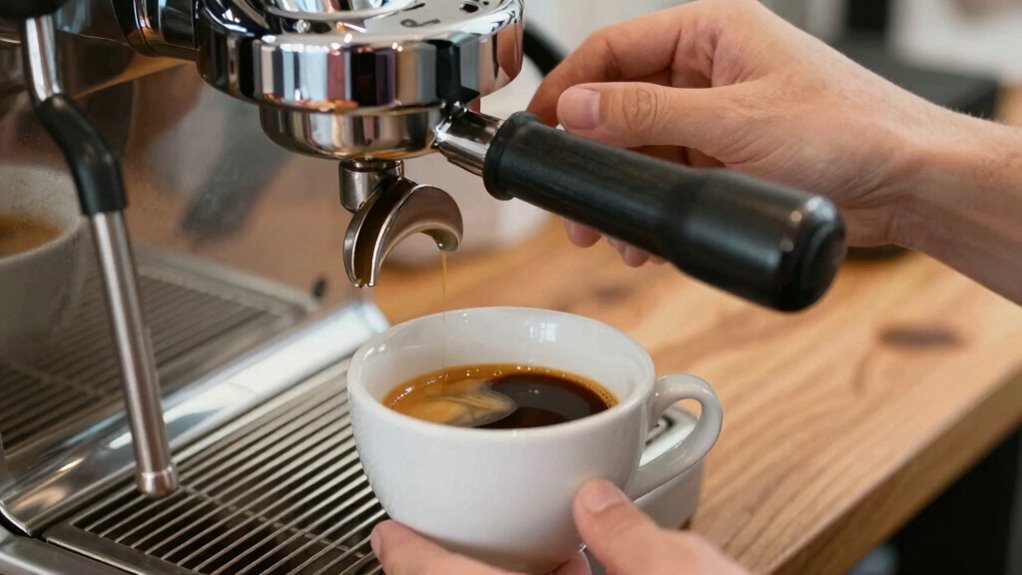
What exactly makes a great espresso? It begins with grind consistency. You need a uniform grind size to guarantee even extraction, which directly impacts flavor and crema. Inconsistent grinds can cause over- or under-extraction, ruining your shot. Equally important is machine maintenance; a clean, well-maintained machine performs reliably and produces better espresso. Regularly descaling, cleaning filters, and checking for worn parts prevent buildup and ensure ideal pressure and temperature. When your machine operates smoothly, it’s easier to control variables and achieve that perfect shot. Keep your grinder calibrated and your machine in top condition, and you’ll notice a marked difference in your espresso’s quality. Proper temperature control is also crucial for extracting the best flavors from your beans, ensuring a rich and balanced espresso experience. Additionally, paying attention to the quality of water used can significantly influence the final taste, as pure, mineral-balanced water enhances extraction. Maintaining consistent brew pressure is another key factor in achieving a great espresso, as it affects extraction and flavor. Regularly monitoring and adjusting brew variables can help dial in your shot more precisely. Using appropriate brewing techniques can further refine your espresso, making it more enjoyable. These foundational steps set the stage for a rich, balanced, and consistently excellent espresso experience.

VEVOR Chamber Vacuum Sealer, 320W Sealing Power, Vacuum Packing Machine for Wet Foods, Meats, Marinades and More, Compact Size with 12.6 in Sealing Length, Applied in Home Kitchen and Commercial Use
-100KPa Vacuum Power: This vacuum sealer nearly removes all air to block oxidation and slow spoilage. Meat and...
As an affiliate, we earn on qualifying purchases.
How Grind Size and Dose Affect Espresso Extraction

The grind size and dose you use are crucial factors that directly influence how well your espresso extracts. If your grind isn’t consistent, water flows unevenly, leading to over- or under-extraction. A fine grind increases resistance, slowing extraction and enhancing flavor, while a coarser grind speeds it up. Equally important is dose accuracy; too much coffee can cause over-extraction, making your espresso bitter, while too little results in under-extraction and weak flavor. Maintaining grind consistency** ensures uniform extraction from shot to shot. Regular calibration of your grinder helps sustain consistent grind size, which is vital for reliable results. Adjusting the dose carefully allows you to fine-tune extraction time and flavor balance. Properly calibrated dosing can help maintain desired extraction parameters, leading to more predictable results. By controlling these variables, you optimize your espresso’s clarity, richness, and overall quality, setting a solid foundation for a perfect brew. Additionally, vetted** brewing techniques can further improve your espresso results.

Avid Armor Ultra Series USV32: Premium Chamber Vacuum Sealer Machine High-Performance Vacuum Chamber Sealer for Professional and Home Use, Ideal Commercial Vacuum Sealer Machine for Food Preservation
Ensures Leak-Free Sealing - Keep your liquid-rich foods fresh for longer with the Avid Armor vacuum sealer machine....
As an affiliate, we earn on qualifying purchases.
Getting Tamp Pressure and Water Temperature Right
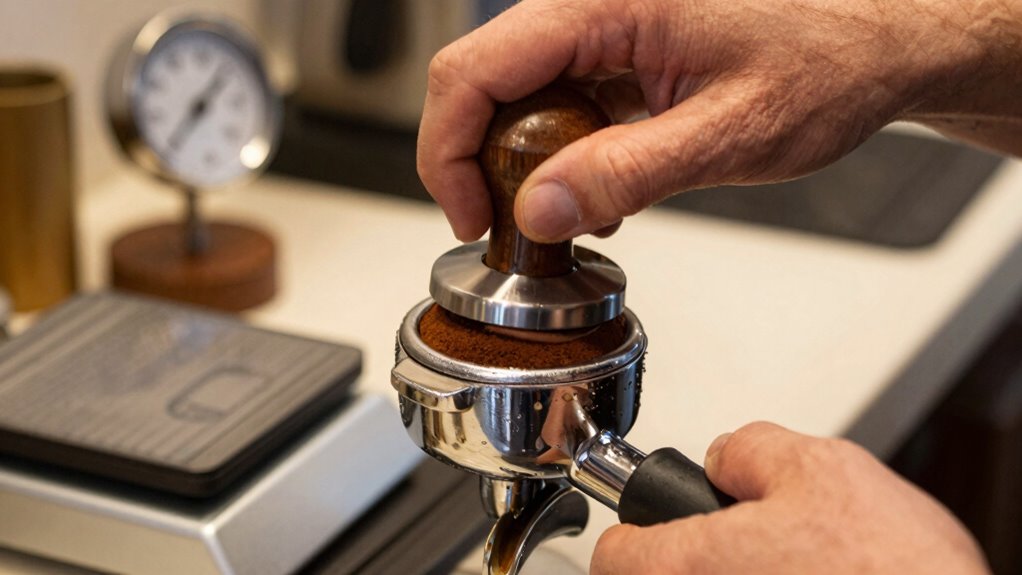
Achieving the right tamp pressure and water temperature is essential for extracting a balanced and flavorful espresso. Consistent pressure ensures uniform extraction, while stable temperature prevents over- or under-extraction. To master these variables:
- Apply about 30 pounds of tamp pressure for pressure consistency.
- Use a scale or tamper with a pressure gauge to maintain uniform tamping.
- Set your machine’s water temperature between 195°F and 205°F for temperature stability.
- Regularly calibrate your machine to keep temperature and pressure consistent over time.
- Incorporate European cloud solutions to monitor and optimize your espresso brewing process remotely for consistent results.
- Understanding how extraction variables interact can help you make more precise adjustments and improve your overall coffee quality. Being aware of brew ratio can also influence how you fine-tune your extraction process.
Focusing on these details will help you control extraction variables, leading to better flavor and aroma in every shot. Proper tamp pressure and water temperature are key to dialing in a perfect espresso.

Vacmaster VP230 Chamber Vacuum Sealer
Easy To Use Control Panel and Pressure Indicator - Perfect vacuum and seal with minimal effort with one-touch...
As an affiliate, we earn on qualifying purchases.
Refining Extraction Time for the Perfect Espresso
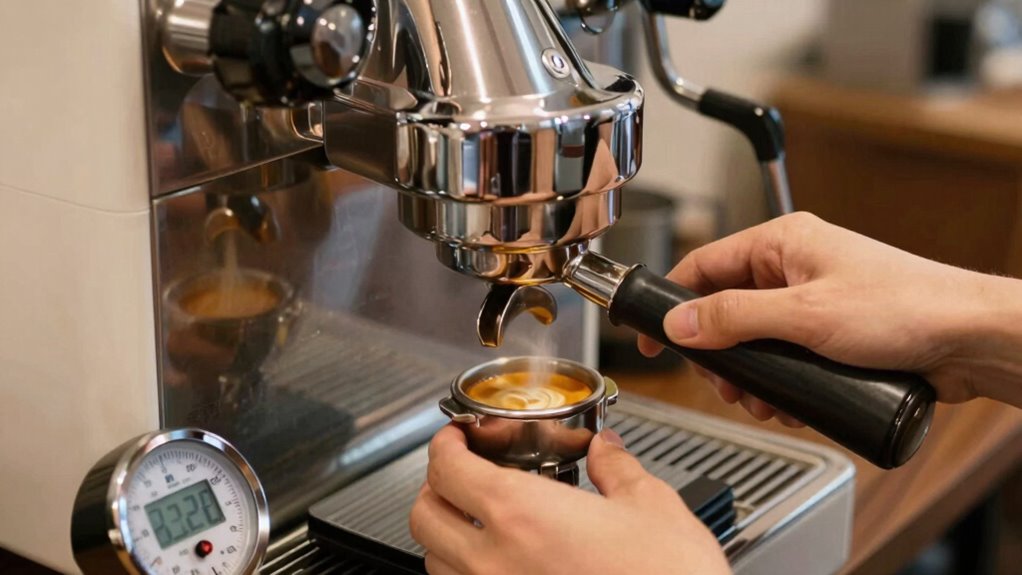
Refining extraction time is essential to pulling the full flavor from your coffee. Proper water chemistry guarantees your espresso extracts evenly, avoiding over- or under-extraction. Hard or mineral-rich water can clog your machine and affect flow rate, so using filtered water helps maintain consistency. Machine calibration plays a crucial role; if your grinder or espresso machine isn’t calibrated correctly, extraction times will be off, leading to weak or bitter shots. Adjust your grind size to control extraction time—finer for longer, coarser for shorter. Regularly calibrate your machine to guarantee water temperature and pressure stay consistent. Ensuring your water pH balance is optimal can also improve extraction and flavor clarity. Additionally, monitoring water mineral content helps prevent buildup and ensures consistent flow rate. Using proper water treatment methods can further enhance your espresso quality by reducing mineral deposits and maintaining ideal water chemistry. Being aware of water quality allows you to troubleshoot issues more effectively and achieve a balanced extraction. Understanding water flow rate and how it interacts with grind size can help optimize your shot. By paying attention to water quality and machine calibration, you’ll fine-tune your extraction time, revealing optimal flavors and achieving that perfect espresso shot.
Using Taste and Observation to Fine-Tune Your Brew
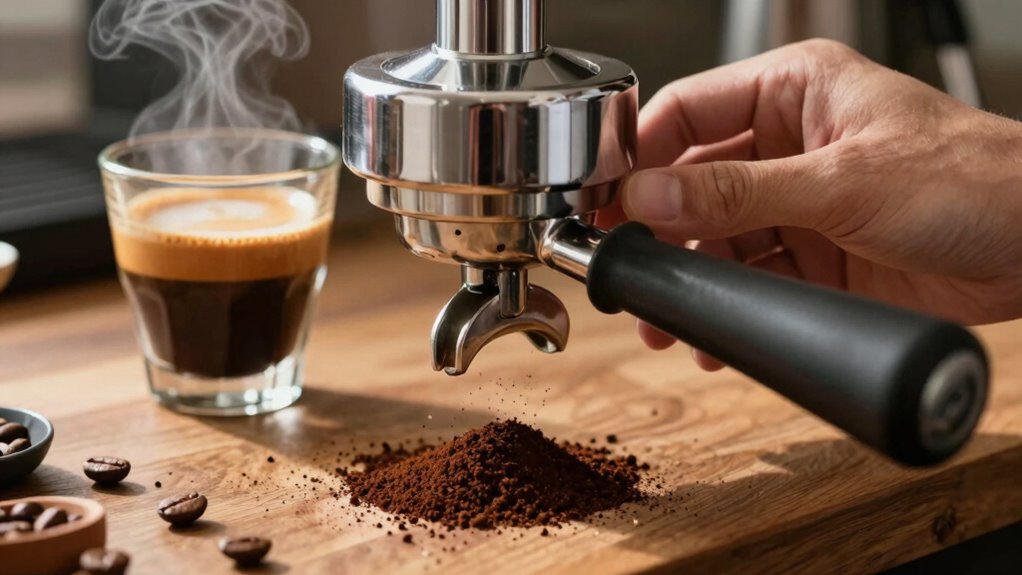
Tasting and observing your espresso closely allows you to make precise adjustments that improve its overall quality. Pay attention to flavor, aroma, and crema, as these reveal key insights. For example, a sour taste may indicate under-extraction or water with low mineral content, while bitterness suggests over-extraction or machine calibration issues. Observe the crema’s color and texture to gauge extraction quality. Adjust your grind size, tamping pressure, or water temperature accordingly. Consider water chemistry—pH and mineral levels—that influence extraction. Also, guarantee your machine is properly calibrated for consistent temperature and pressure. Use these observations to fine-tune your process: regular maintenance and calibration are essential for optimal extraction and flavor consistency.
Frequently Asked Questions
How Does Altitude Affect Espresso Brewing Variables?
Altitude effects your espresso brewing variables by increasing pressure and reducing boiling point, which can lead to under-extraction. You should adjust your grind size to be finer, increase brew time, or modify tamping pressure to counteract these effects. By understanding how altitude influences brewing variables, you guarantee consistent extraction and flavor, regardless of your location. Always experiment and tweak your process to achieve the perfect shot at higher or lower altitudes.
What Role Does Water Quality Play in Espresso Flavor?
Water quality considerably impacts your espresso’s flavor. Proper mineralization enhances extraction, balancing acidity and sweetness, while too little minerals can cause flat taste. Keep an eye on water pH; ideally, it should be slightly acidic (around 6.5 to 7) to optimize flavor. Using water with consistent mineral content and pH helps you dial in your espresso, ensuring a rich, balanced shot every time.
Can Different Coffee Bean Origins Change Optimal Brewing Settings?
Ever wonder if your coffee’s origin changes everything? It does. Different bean origins have unique flavor profiles that demand tailored brewing settings. You might need to tweak the grind size, extraction time, or temperature to discover the best flavors. So, yes—each origin challenges you to adjust your technique, revealing the true character of the beans and ensuring every shot is perfectly suited to its unique story.
How Does Ambient Temperature Impact Espresso Extraction?
Ambient temperature affects your espresso extraction by influencing brew temperature and consistency. Warmer environments can cause your machine’s temperature to rise, leading to over-extraction and bitter flavors. Conversely, cooler settings may result in under-extraction. Keep an eye on ambient humidity, as it impacts grind size and tamping. Adjust your brew temperature accordingly, ensuring you maintain stable extraction and ideal flavor regardless of changes in your environment.
What Are Common Mistakes When Troubleshooting Espresso Issues?
Troubleshooting espresso troubles trips you up if you ignore common mistakes. You might overlook grind consistency, which affects extraction, or apply uneven tamping pressure, leading to inconsistent shots. Don’t dismiss the importance of cleaning equipment regularly or rushing through the process. Recognize that small missteps, like misjudging tamping or neglecting grind adjustments, sabotage your shot. Stay attentive, test thoroughly, and tweak carefully to turn your espresso experience from errors into excellence.
Conclusion
Now that you’ve seen how these five variables shape your espresso, imagine the perfect shot just beyond your reach. With each tweak, you inch closer, revealing flavors and aromas waiting to surprise you. The true magic happens when you trust your senses and get hands-on. Are you ready to master the art? Because once you open this secret, every cup could become your masterpiece—waiting silently for you to discover it.