

Mastering milk microfoam is the key to creating smooth, glossy latte art that impresses every time. You need to carefully heat your milk to about 140°F and position the steam wand just below the surface for the perfect velvety texture. Avoid common mistakes like overheating or large bubbles by maintaining proper technique and equipment. With these tips, you’ll craft barista-quality microfoam and reveal the secret to stunning latte art—keep exploring to learn more.
Key Takeaways
- Microfoam is a velvety, uniform layer of steamed milk crucial for creating detailed latte art designs.
- Achieving microfoam involves precise steaming techniques, milk temperature control, and proper pitcher positioning.
- Using fresh milk, maintaining cleanliness, and monitoring temperature are essential for perfect microfoam.
- Controlling milk chemistry factors like protein structure and fat content enhances foam stability and shine.
- Proper microfoam transforms coffee into an artful, flavorful experience, serving as the perfect canvas for latte art.
milk frothing pitcher for microfoam
As an affiliate, we earn on qualifying purchases.
As an affiliate, we earn on qualifying purchases.
What Is Milk Microfoam and Why Is It Key to Great Latte Art?

Milk microfoam is the velvety, smooth layer of steamed milk that forms when air is carefully introduced during the frothing process. It’s essential for creating the intricate designs in latte art. Whether you’re using dairy alternatives like oat, almond, or soy milk, achieving the right microfoam depends on controlling milk temperature. Too hot, and the milk loses its silky texture; too cold, and it won’t foam properly. Properly textured microfoam has tiny, uniform bubbles that give it that glossy, paint-like surface. This consistency allows you to pour precise patterns and designs in your coffee. Understanding how dairy alternatives behave and maintaining the ideal milk temperature are key steps in mastering microfoam and elevating your latte art skills. Additionally, color accuracy in steaming techniques ensures the microfoam blends seamlessly with the espresso for the perfect visual and taste experience.
espresso machine with steam wand
As an affiliate, we earn on qualifying purchases.
As an affiliate, we earn on qualifying purchases.
How to Froth Milk for Microfoam: Easy Steps at Home
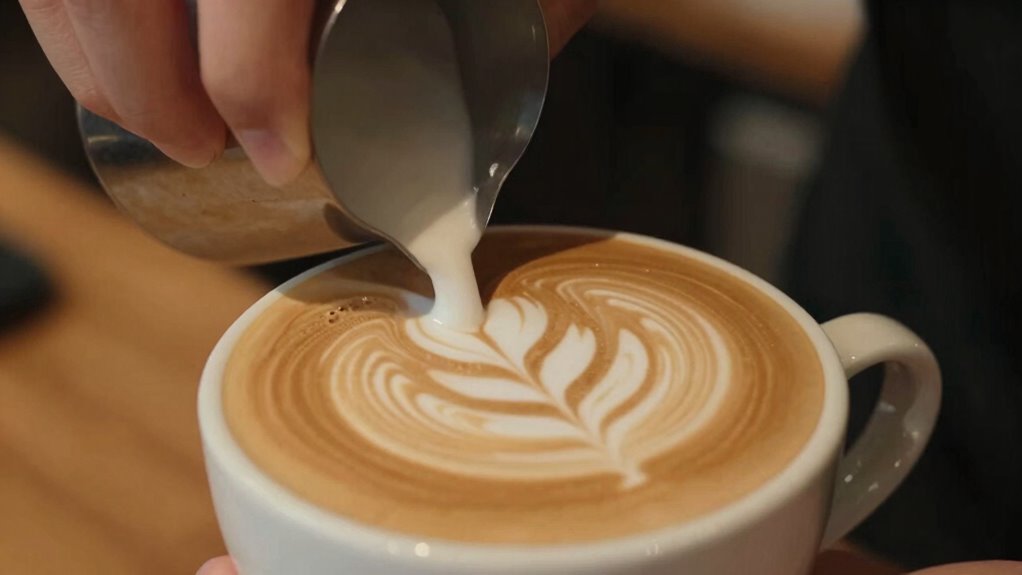
Frothing milk for microfoam at home is straightforward when you follow a few simple steps. First, heat your milk to about 140°F (60°C); this temperature helps create the ideal milk texture without scorching. Use steaming techniques that involve positioning the steam wand just below the surface of the milk to introduce air gradually, creating tiny bubbles. Keep the pitcher at a slight angle and immerse the tip just beneath the surface, then lower it as the milk expands. Once the milk reaches the right temperature and develops a velvety texture, turn off the steam and gently tap the pitcher to remove large bubbles. Swirl the milk to integrate the foam and achieve a smooth, glossy microfoam perfect for latte art.
milk temperature thermometer for frothing
As an affiliate, we earn on qualifying purchases.
As an affiliate, we earn on qualifying purchases.
Common Mistakes When Frothing Milk: and How to Fix Them

One common mistake is overheating the milk, which can cause a burnt taste and ruin the microfoam’s smooth texture. Keep an eye on milk temperature to prevent this. Using improper frothing equipment or not monitoring the temperature during frothing often leads to inconsistent results. To fix this, use a thermometer to stay within the ideal 140-150°F range. Also, guarantee your frothing pitcher is clean and appropriate for your equipment, as dirty or incompatible tools can hinder proper microfoam formation. Proper microfoam technique is essential for baristas aiming for perfect latte art. Here’s a quick comparison:
| Issue | Solution |
|---|---|
| Overheating milk | Use a thermometer, stop at 150°F |
| Improper frothing equipment | Use compatible, clean tools |
| Inconsistent milk temperature | Monitor constantly during frothing |
| Poor microfoam texture | Adjust technique, ensure correct equipment |
Maintaining consistent temperature control and equipment maintenance is crucial for achieving the ideal microfoam quality. Regular cleaning of your steam wand and proper frothing tools also play a significant role in producing the perfect microfoam. This keeps your milk perfect for latte art. Additionally, practicing the correct frothed milk handling techniques can significantly improve your results.
latte art microfoam steaming wand
As an affiliate, we earn on qualifying purchases.
As an affiliate, we earn on qualifying purchases.
Tips and Tricks for Achieving Velvety, Glossy Microfoam
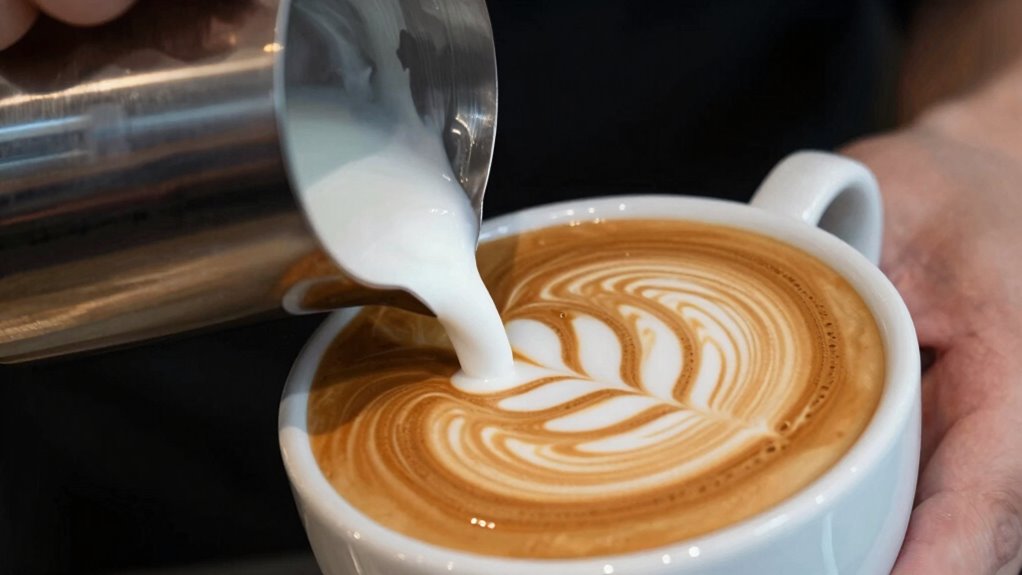
Achieving velvety, glossy microfoam requires attention to technique and a few key tricks. First, use fresh, cold milk or milk alternatives, as they create better foam stability. For plant-based options, choose barista-specific versions designed for frothing, which help achieve smoother, more stable microfoam. When steaming, position the steam wand just below the surface of the milk and keep the tip near the center to introduce air effectively. Maintain a steady, gentle motion to avoid large bubbles, and keep the pitcher at a slight angle. Consistently monitor temperature, aiming for around 140°F (60°C). Incorporating proper technique is essential to developing foam that’s silky, shiny, and stable—perfect for latte art and professional-quality drinks. Additionally, understanding milk chemistry can help troubleshoot common issues like unwanted bubbles or flat foam. Being aware of protein structure in the milk can also influence how well the foam holds and its overall texture. Paying attention to milk fat content can further improve the richness and stability of your microfoam. Moreover, controlling steaming pressure can significantly impact the quality and consistency of your microfoam, making it easier to achieve that perfect velvety finish.
How Microfoam Elevates Your Coffee and Unlocks Barista-Quality Latte Art
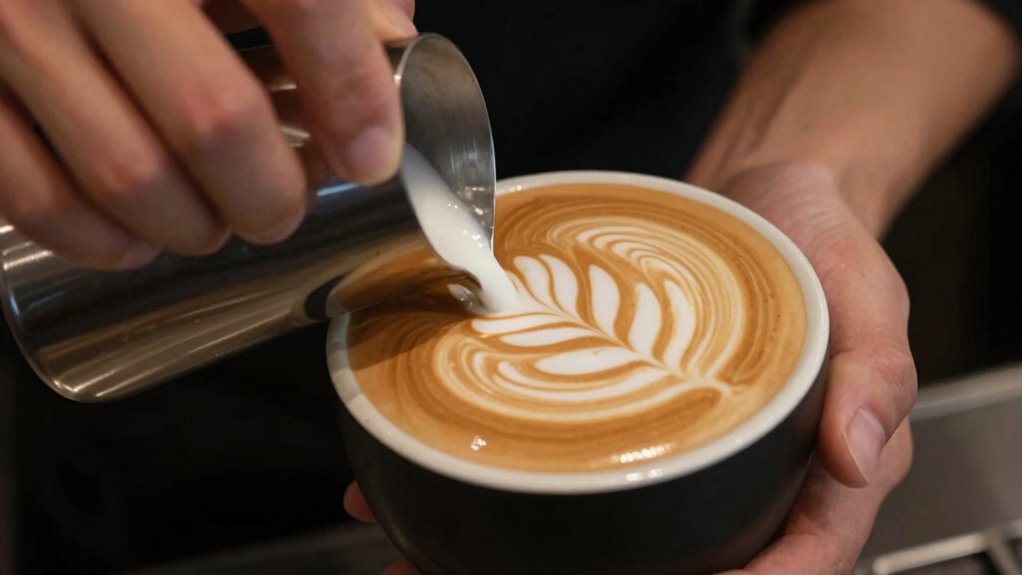
Microfoam transforms your coffee from a simple beverage into a visually stunning and texturally rich experience. It creates the perfect canvas for barista-quality latte art while enhancing flavor complexity through milk fermentation. When microfoam is smooth and glossy, it blends seamlessly with your coffee, revealing new flavor dimensions and elevating your overall experience. Properly textured microfoam also improves coffee pairing by balancing bitterness and sweetness, making each sip more satisfying.
| Microfoam Benefits | Impact on Coffee Experience |
|---|---|
| Milk fermentation | Adds depth and flavor |
| Visual appeal | Enhances latte art |
| Coffee pairing | Creates harmonious taste |
| Texture richness | Elevates mouthfeel |
Frequently Asked Questions
Can Plant-Based Milks Be Used for Microfoam?
Yes, you can definitely use plant-based alternatives for microfoam. They have different foaming properties compared to dairy milk, but with the right technique, you can achieve a good foam. Almond, soy, oat, and cashew milks often foam well, especially if you choose versions with higher protein content. Experimenting with different brands and adjusting steaming techniques will help you get the best microfoam for your latte art.
What Tools Are Best for Frothing Microfoam at Home?
Think of your tools as your magic wand in creating perfect microfoam. You’ll want a stainless steel milk pitcher, ideally with a narrow spout for control. For frothing techniques, an electric frother or steam wand attached to your espresso machine works wonders. These tools help you master the silky texture needed for latte art. Practice with different milk pitcher types and control your frothing speed for smooth, glossy microfoam that pours beautifully.
Does Milk Temperature Affect Microfoam Quality?
Yes, milk temperature considerably affects microfoam quality. When your milk is too hot or too cold, it impacts foam stability, making it harder to create smooth, glossy microfoam. Ideally, keep your milk around 140-150°F to guarantee ideal foam stability and a velvety texture. Proper temperature balances the proteins and fats, helping you craft beautiful latte art and achieve a creamy, consistent microfoam every time.
How Long Can Microfoam Be Kept Before It Loses Texture?
You can keep microfoam fresh for about 15-20 minutes before it starts to lose its velvety texture, like a delicate cloud dissolving in the sky. To preserve its freshness, cover it tightly and store it in the fridge, but remember, the longer the storage duration, the more it will break down. For the best latte art, enjoy the microfoam promptly—its texture fades as time passes.
Can I Reheat Milk With Microfoam Without Losing Quality?
You can reheat milk with microfoam, but it may affect foam stability and overall quality. Use gentle reheating techniques like steaming over low heat or microwaving in short bursts to prevent breaking down the foam. Avoid overheating, as high temperatures can cause the microfoam to deflate and lose its silky texture. For best results, reheat slowly and carefully to preserve the microfoam’s delicate structure.
Conclusion
Now that you know the secrets behind perfect microfoam, aren’t you excited to try it yourself? With practice, you’ll create velvety froth that makes your latte art pop and transforms your coffee experience. Remember, mastering microfoam isn’t just about technique—it’s about elevating every cup you make. So why settle for ordinary when you can impress yourself and others with barista-quality drinks? Start frothing today and see where your coffee journey takes you!