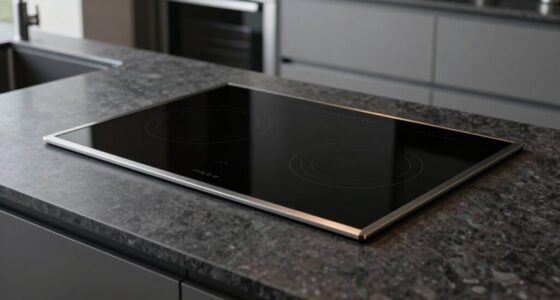
Induction cooking heats cookware directly through electromagnetic fields, making it the fastest way to prepare meals. Using magnetic, flat-bottomed pots and pans ensures ideal contact and rapid, efficient heat transfer. This method offers precise temperature control and responds instantly to adjustments, saving time and energy. To get the most out of induction, set up properly and use compatible cookware. Keep exploring to discover how to maximize your induction experience and cook even smarter.

Get home appliances delivered free — and shop member deals
- Fast, free delivery on millions of items
- Access to Prime Big Deal Days deals on October 6–7
- Prime Video, Amazon Music and more included
Key Takeaways
- Induction cooking heats cookware directly through magnetic fields, enabling faster and more efficient heating than traditional methods.
- Using flat-bottomed, compatible cookware made from ferromagnetic materials ensures optimal heat transfer and cooking speed.
- Proper sizing of cookware to the induction burner prevents uneven heating and maximizes energy efficiency.
- Instant temperature adjustments and precise control allow for faster cooking and better results.
- Regular maintenance and correct cookware selection are essential to achieve the fastest, safest, and most efficient induction cooking.
induction compatible cookware set
As an affiliate, we earn on qualifying purchases.
As an affiliate, we earn on qualifying purchases.
What Is Induction Cooking and How Does It Work?
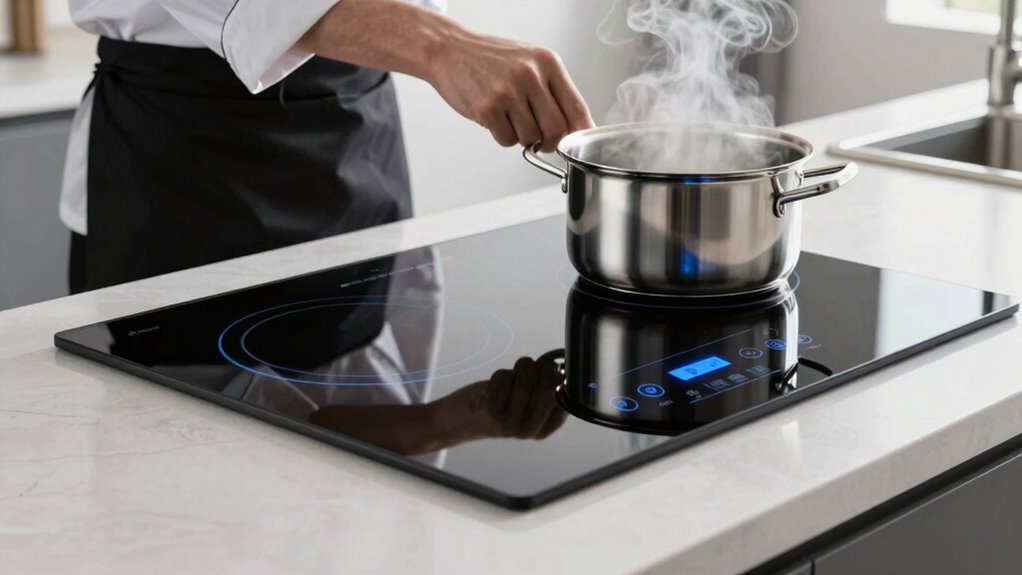
Ever wondered how induction cooking heats your food so quickly and efficiently? It all comes down to magnetic fields generated by the cooktop. When you turn on an induction stove, electricity flows through coils beneath the surface, creating a magnetic field. This field interacts with ferromagnetic cookware, producing heat directly in the pan through electromagnetic induction. Because heat is generated directly in the cookware, induction cooking heats faster and uses less energy. High efficiency is one of the main advantages that make induction cooking popular among busy households. Additionally, understanding the magnetic field interactions helps in selecting the right cookware for optimal performance. Proper cookware compatibility ensures safe and effective operation—only pots and pans made of magnetic materials like cast iron or some stainless steels work effectively. Non-magnetic cookware, such as aluminum or glass, won’t heat up on an induction stove. Recognizing the magnetic properties of cookware is essential for making the most of induction technology. Knowing how magnetic fields work also helps prevent cookware damage and ensures longevity of your induction cooktop. Understanding magnetic properties and cookware compatibility helps you optimize your cooking experience.
How Do You Choose the Right Cookware for Your Induction Stove?
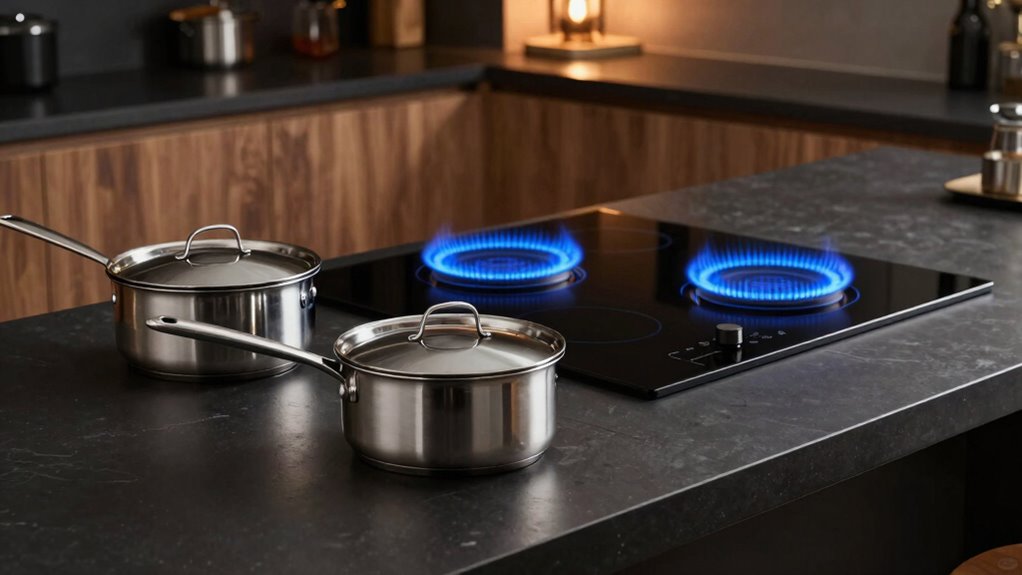
To get the best results from your induction stove, you need cookware made from compatible materials like magnetic stainless steel or cast iron. Make sure the bottom is flat for even contact and efficient heating. Also, check that the size and heat capacity match your stove’s specifications for safe and effective cooking. Using cookware with proper heat conduction can significantly improve cooking performance and energy efficiency. Additionally, selecting cookware with induction-compatible bases ensures optimal magnetic response and faster heat transfer.
Compatible Material Types
Choosing the right cookware for your induction stove depends largely on its material. To guarantee cookware compatibility, look for pots and pans made from ferromagnetic materials like cast iron or stainless steel. These materials have high material conductance, allowing the magnetic field to generate heat efficiently. Avoid non-magnetic options like aluminum or copper unless they have an induction-compatible base, as they won’t heat properly. Testing your cookware with a simple magnet can help determine compatibility—if the magnet sticks firmly, it’s suitable for induction cooking. Using incompatible materials can lead to uneven heating or no heat at all, wasting time and energy. Selecting cookware with the right material conductance ensures you get the fastest, most efficient cooking experience on your induction stove. Properly maintaining cookware also helps preserve its performance and longevity, ensuring consistent heating over time. Additionally, understanding material conductance can help you choose cookware that heats quickly and evenly, making your cooking process more efficient. For optimal results, consider induction cookware that is designed specifically for such stoves, which can significantly improve cooking speed and performance. Knowing the Indian numbering system can also assist in understanding large quantity measurements related to cookware and ingredients, especially in regions where this system is prevalent. Being aware of induction-compatible bases is essential for selecting cookware that guarantees efficient heat transfer and energy savings.
Flat Bottom Design
A flat bottom design is key to guaranteeing your cookware works efficiently on an induction stove. It provides ideal pan support and promotes even heat distribution. When choosing cookware, focus on these factors:
- Flatness: Guarantee the bottom is perfectly flat for maximum contact with the cooktop, enhancing heat transfer.
- Material Compatibility: Combine a flat bottom with compatible materials like cast iron or magnetic stainless steel for better performance.
- Heat Distribution: A sturdy, flat surface helps distribute heat evenly, preventing hot spots and ensuring consistent cooking.
- Pan Support: The flat bottom offers stable support, reducing wobbling and improving safety.
- Reputation and Certification: Opt for cookware from reputable brands with trusted reputations and proper compatibility certifications for induction stoves.
Size and Heat Compatibility
How do you guarantee your cookware is compatible with your induction stove? First, check the cookware size; it should match your stove’s heating element for maximum heat transfer. Most induction-compatible cookware has a flat bottom, ensuring good contact. Heat compatibility is essential—only ferromagnetic materials like cast iron or certain stainless steels work with induction. To test, see if a magnet sticks firmly to the bottom of your pot or pan. If it does, you’re set. Avoid cookware that’s too small or too large for the burner, as this can lead to uneven heating or energy waste. Additionally, verifying the magnetic properties of your cookware ensures it will work effectively with induction technology. For optimal performance, also consider the thickness of the cookware, as thicker materials tend to distribute heat more evenly. Choosing the right size and ensuring heat compatibility helps your induction cooktop perform efficiently and safely.
Why Is Induction Cooking Faster and More Precise Than Traditional Methods?

Induction cooking heats your pots and pans directly through electromagnetic energy, making it much faster than traditional methods. It also allows for precise temperature control, so you can cook with greater accuracy. Plus, it uses energy more efficiently, saving you time and power.
Rapid Heat Transfer
Have you ever wondered why induction cooking heats up so quickly compared to traditional methods? The secret lies in rapid heat transfer, which makes induction highly efficient. Here’s how it works:
- The magnetic field directly energizes the cookware, creating instant energy transfer.
- Since heat is generated inside the pan, there’s minimal energy loss to the surroundings.
- The cookware heats up faster because heat efficiency is maximized at the contact point.
- This direct transfer guarantees quicker response times for temperature adjustments.
- The natural light in your kitchen can enhance your cooking environment, making the process even more pleasant.
- Additionally, energy efficiency in induction cooking contributes to reduced power consumption and a more sustainable kitchen environment.
Precise Temperature Control
The rapid heat transfer in induction cooking not only heats food quickly but also allows for incredibly precise temperature adjustments. This means you can maintain excellent temperature stability, preventing overheating or undercooking. With precise temperature control, you can set exact heat levels, giving you better cooking precision. Unlike traditional methods that rely on residual heat or fluctuating flame, induction responds instantly to your settings. This immediate control helps you fine-tune your cooking process, whether simmering delicate sauces or searing meats at high heat. As a result, you experience consistent results and improved accuracy, making your cooking more efficient and reliable. The ability to precisely regulate temperature is a key advantage that sets induction apart from conventional stovetops.
Energy Efficiency Gains
Why does induction cooking heat food faster and more efficiently than traditional methods? It directly transfers energy to the cookware through electromagnetic fields, reducing heat loss. This results in quicker heating and better energy savings. Plus, induction stoves stay cooler, enhancing cooking safety. Here are four key energy efficiency gains:
- Rapid Heating: Food heats up faster, saving you time.
- Precise Control: Limits energy use by adjusting heat instantly.
- Reduced Waste: Minimal heat escapes, lowering energy costs.
- Safer Cooking Environment: Cooler surfaces reduce fire hazards and accidents.
These benefits make induction cooking not only faster but also safer and more energy-efficient, helping you cut down on utility bills while ensuring your kitchen remains safe during use.
How to Set Up and Start Cooking on Your Induction Cooktop?
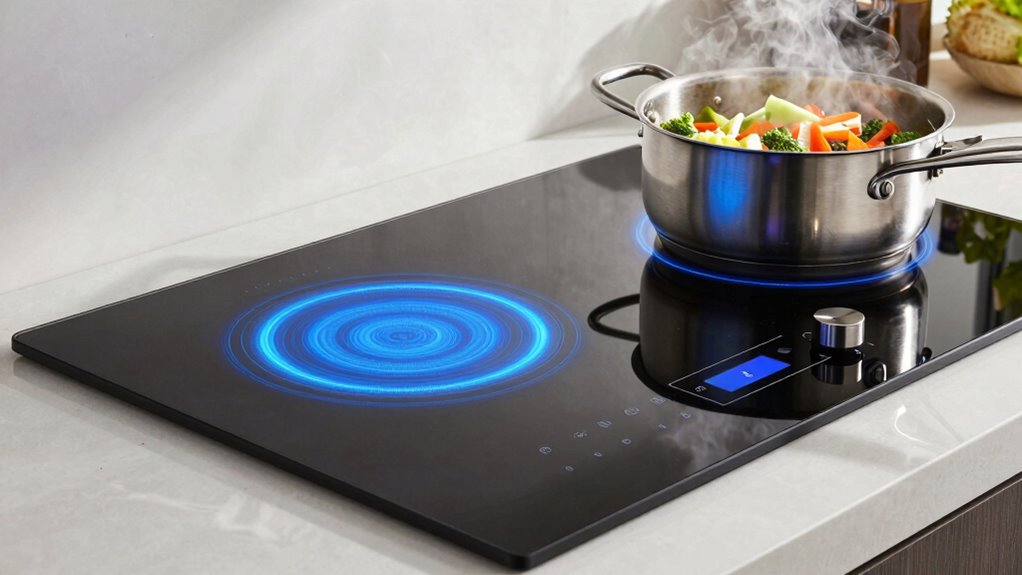
Getting started with your induction cooktop is straightforward once you understand the basic setup. First, verify you select cookware made from compatible materials like stainless steel or cast iron, as these work best with induction. Place your cookware centered on the burner. Before turning it on, check safety precautions: keep the area clear of flammable items and avoid metal objects near the cooktop when not in use. To start cooking, simply press the power button, select your heat level, and wait for the surface to heat. Use this table to visualize the setup:
| Step | Action |
|---|---|
| 1 | Choose compatible cookware |
| 2 | Place cookware on the burner |
| 3 | Turn on, select heat level |
This quick process gets you cooking safely and efficiently. Additionally, it’s important to be aware of power consumption insights, especially when using multiple appliances or smart home features to optimize energy use. Being cautious about energy efficiency tips can help prolong the lifespan of your cooktop and reduce electricity bills. Incorporating proper ventilation can also improve cooking safety and comfort. Regularly cleaning your cooktop and ensuring proper maintenance routines can further enhance performance and safety. For optimal operation, understanding how cooking techniques influence heat distribution can lead to better results and energy savings.
Top Tips for Safe, Efficient Cooking With Induction Technology
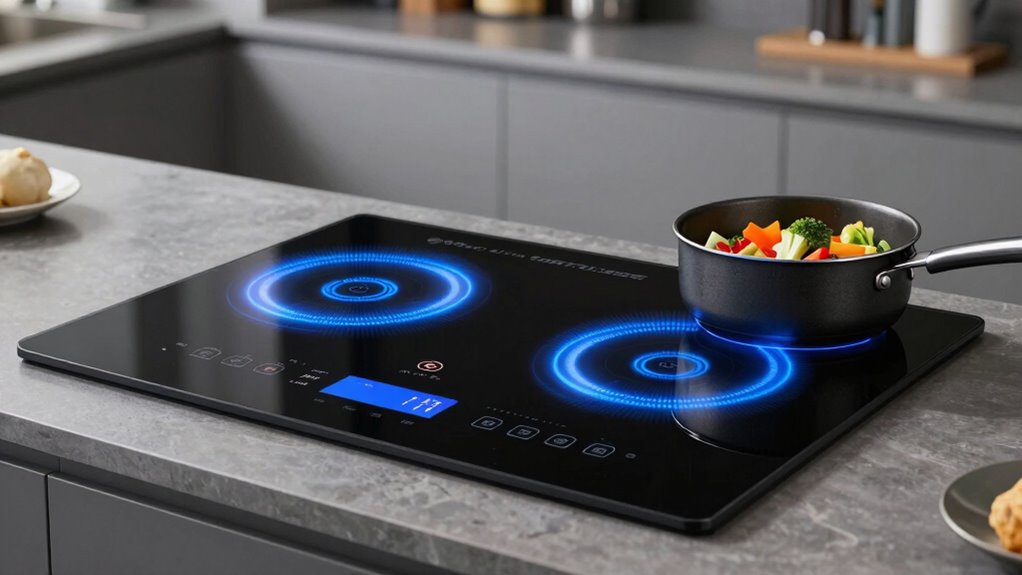
To guarantee safe and efficient cooking on your induction cooktop, adopting some key tips can make a significant difference. Always follow safety precautions by keeping flammable items away and not leaving the stove unattended. Use compatible cookware with flat bottoms for ideal heat transfer and safety. Regularly maintain your cookware, checking for warping or damage that can affect performance. Clean your cooktop and cookware after each use to prevent residue buildup, which can impact efficiency and safety. Additionally, maintaining proper cookware care can extend the lifespan of your pots and pans, ensuring consistent performance. Incorporating landscaping elements around your outdoor cooking area can also enhance safety by creating clear boundaries and reducing trip hazards.
Common Mistakes to Avoid When Using an Induction Cooktop?

Many users make simple mistakes that can hinder their induction cooktop’s performance or pose safety risks. One common error is choosing the wrong cookware selection; not all pots and pans work with induction, so verify your cookware has a magnetic base. Using incompatible cookware can lead to uneven heating or no heat at all. Additionally, neglecting safety precautions can cause accidents, like spills or burns. Always keep the cooktop clean and avoid placing empty cookware on it, as it can overheat quickly. Remember to use flat-bottomed pots for better contact and efficient heating. Being aware of emerging trends in digital publishing can also help you stay updated on innovative tools and methods to improve your cooking experience. Incorporating safety guidelines and proper kitchen safety practices is essential to prevent accidents and ensure a smooth cooking process. Paying attention to cookware compatibility and following safety precautions can maximize your induction cooktop’s performance while minimizing risks.
Is Induction Really Faster Than Gas or Electric Ranges? A Clear Comparison
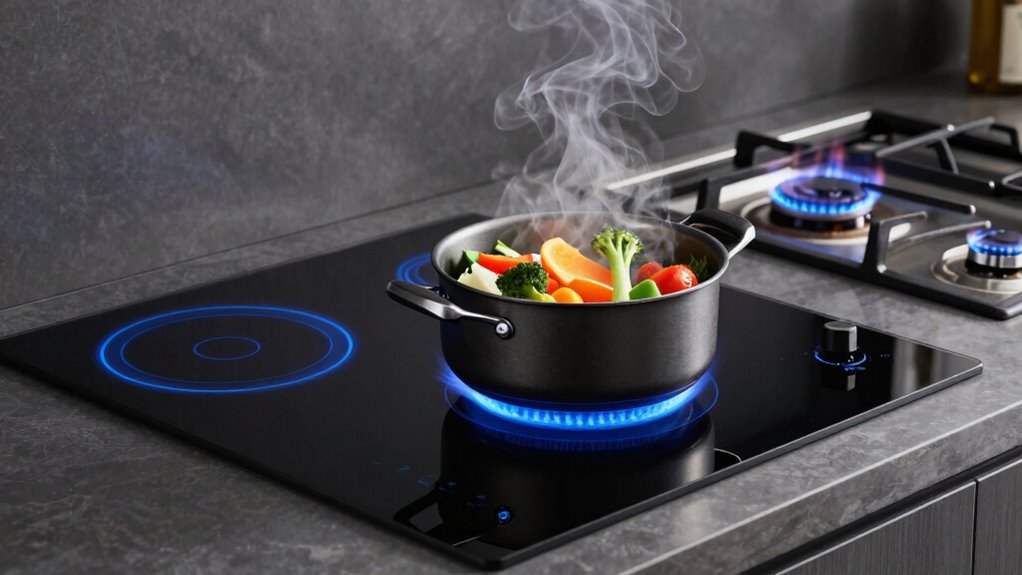
Induction cooking is often touted as the fastest way to heat food, but how does it really compare to gas and electric ranges? Here’s a quick breakdown:
- Cooking efficiency: Induction directly heats cookware, making it more efficient than gas or electric, which lose heat to the surroundings. This efficiency not only saves energy but also shortens cooking times significantly.
- Speed: Induction can boil water and cook meals up to 50% faster than electric and gas options. This speed is especially beneficial for busy households or professional kitchens seeking rapid results.
- Energy comparison: While induction uses less energy overall, it requires compatible cookware, which might add upfront costs. Cookware compatibility is a crucial consideration for optimal performance and safety.
- Heat control: Induction offers precise, instant temperature adjustments, reducing cooking time and energy waste. Proper understanding of digital safety is essential when using induction appliances to ensure safe operation and optimal performance.
- Additional benefits: Induction stoves also tend to stay cooler to the touch, reducing the risk of burns and making the kitchen environment safer and more comfortable.
In short, induction is generally faster and more energy-efficient, making it a top choice for quick, effective cooking.
Troubleshooting Your Induction Cooktop and Getting the Most Out of It
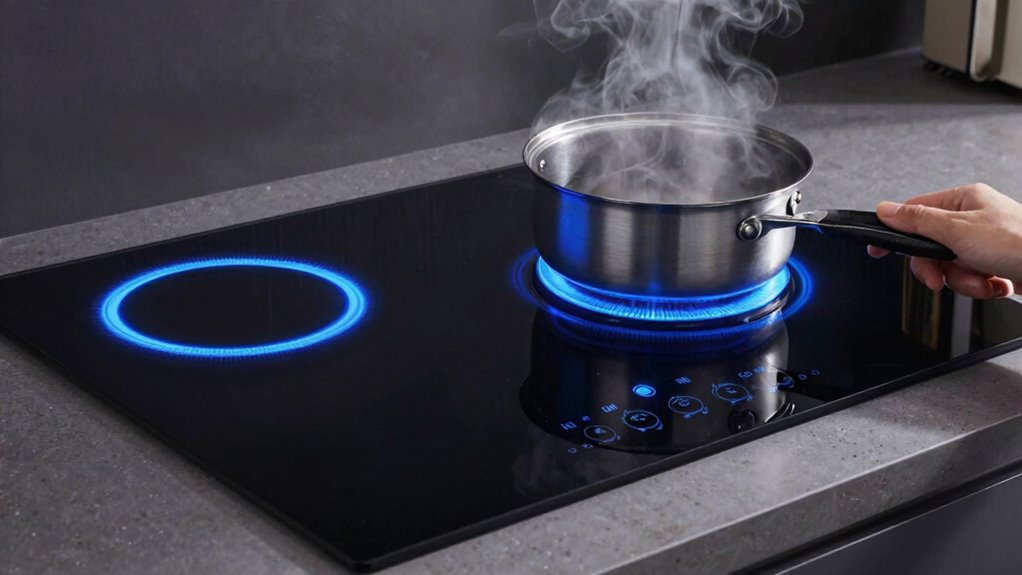
While induction cooktops are known for their speed and efficiency, they can sometimes present challenges that disrupt your cooking experience. Power fluctuations can cause uneven heating or sudden shutdowns, so guarantee your power supply is stable. If your cooktop isn’t responding or displays error messages, check your cookware compatibility—only ferromagnetic pots and pans work effectively. Sometimes, cookware that’s warped or too thin may not perform well. Keep the surface clean and free of debris, which can interfere with sensor accuracy. If issues persist, reset the unit or consult the manufacturer’s troubleshooting guide. Properly matching the cookware, stabilizing power sources, and routine maintenance can help you maximize your cooktop’s performance and enjoy consistent, fast cooking.
Frequently Asked Questions
Can Induction Cooktops Be Used With All Types of Kitchen Countertops?
You can’t use induction cooktops with all types of kitchen countertops due to countertop compatibility and installation requirements. They work best on flat, non-metallic surfaces like granite, quartz, or solid surface countertops. Avoid placing them on uneven or metal countertops, as this can interfere with the magnetic field. Make sure your surface provides proper support and clearance for safe installation. Check the manufacturer’s guidelines to guarantee your countertop meets induction cooktop installation requirements.
What Are the Energy Consumption Differences Between Induction and Traditional Stoves?
You’ll find that induction cooktops are more energy-efficient than traditional stoves, using less power consumption to heat your cookware quickly. This efficiency comes from direct heat transfer, reducing wasted energy. While traditional stoves lose heat to the surroundings, induction models focus power precisely where it’s needed. As a result, you save on energy costs and cook faster, making induction cooking a smarter, more efficient choice overall.
How Do I Clean and Maintain My Induction Cooktop Properly?
Did you know that keeping your induction cooktop clean can prolong its lifespan by up to 30%? To maintain it properly, follow simple cleaning routines like wiping with a soft cloth and mild soap after each use. Avoid abrasive cleaners, and regularly check the surface for cracks. Maintenance tips include avoiding dragging heavy pots and using compatible cookware. These steps make certain your cooktop stays efficient and looks great for years.
Are There Any Health Concerns Associated With Induction Cooking?
You don’t need to worry much about health safety with induction cooking, as it’s generally safe. However, you should be aware of electromagnetic exposure, especially if you have pacemakers or other medical devices. Keep the cooktop properly maintained, and avoid prolonged close contact if you’re sensitive to electromagnetic fields. Overall, when used correctly, induction cooking is a safe, efficient option with minimal health risks.
Can Induction Cooktops Be Used for Outdoor Cooking or Camping?
Yes, you can use induction cooktops for outdoor cooking or camping, especially portable options designed for that purpose. Look for models with outdoor durability features, like rugged surfaces and weather-resistant components. These portable options make outdoor cooking convenient, but guarantee they’re compatible with your power source and used on stable surfaces. Properly choosing a durable, portable induction cooktop enhances your camping experience and keeps your cooking safe and efficient outdoors.
Conclusion
Think of induction cooking as mastering a swift river’s flow—you harness its energy with precision and care. When you understand how it works and choose your tools wisely, you become the skilled captain steering your culinary vessel. By avoiding common pitfalls and optimizing your setup, you’ll navigate this powerful current with confidence, cooking faster and more accurately than ever before. Embrace the flow, and let your kitchen become a place where innovation meets mastery.
Evergreen bestsellers Picks
bestsellers
As an affiliate, we earn on qualifying purchases.