Before buying cookware for your induction stove, make certain it’s compatible to avoid frustration and delays. Use a magnet to test current pots and pans—if it sticks, they’re likely induction-ready. Look for materials like magnetic stainless steel or cast iron, and check for labels. Avoid assumptions based on appearance or material alone. Staying informed helps you choose the right cookware from the start—continue exploring to ensure you make the best choices for efficient, safe cooking.

Get home appliances delivered free — and shop member deals
- Fast, free delivery on millions of items
- Access to Prime Big Deal Days deals on October 6–7
- Prime Video, Amazon Music and more included
Key Takeaways
- Always perform a magnet test to verify if your cookware is induction-compatible before purchasing or using.
- Look for labels or markings indicating induction compatibility on cookware packaging or bottoms.
- Use cookware with flat, smooth bases to ensure proper contact and efficient heating on induction stoves.
- Avoid relying solely on materials; check if the cookware’s base is magnetic and suitable for induction.
- Proper storage and maintenance prevent warping or damage that can hinder induction performance.
induction compatible cookware set
As an affiliate, we earn on qualifying purchases.
As an affiliate, we earn on qualifying purchases.
Why You Need Induction-Compatible Cookware

If you want your induction cooktop to work efficiently, you need cookware that’s compatible with its technology. Using incompatible pots and pans can lead to poor heating, uneven cooking, and longer meal prep times. Plus, it may require recipe modifications, like adjusting cooking times or temperatures, which can be frustrating. Proper cookware storage becomes essential—keeping induction-ready pieces organized ensures you don’t accidentally use the wrong cookware. Induction-compatible cookware heats quickly and responds precisely to temperature changes, saving you energy and time. Investing in the right pots and pans means you won’t have to compromise on recipes or cooking performance. It also helps keep your kitchen tidy and efficient, making your cooking experience smoother and more enjoyable.
How to Check If Your Pots and Pans Are Induction-Ready

To determine if your pots and pans are induction-ready, start by checking for a magnetized base. If a magnet sticks firmly, your cookware likely supports induction safety standards. This simple test saves you time and prevents using incompatible pots that won’t heat properly. Be sure to store your induction-compatible cookware properly, stacking with protective layers to avoid warping or scratches. Proper cookware storage guarantees your pots and pans stay in good condition, maintaining their induction safety features. If the magnet doesn’t stick, your cookware isn’t suitable for induction cooking. Investing in compatible pieces guarantees efficient heating and energy savings. Knowing how to verify your existing cookware can help you avoid surprises at checkout and ensure your kitchen setup is fully optimized for induction cooking. Additionally, understanding cookware compatibility can help you select the best options for your needs and maximize your appliance’s performance. Incorporating energy-efficient cookware can further enhance your cooking experience and reduce electricity consumption.
Which Materials Make for Good Induction Cookware

When choosing induction cookware, you need materials that respond to magnetic fields, like those with a magnetic base. Some non-magnetic options work with special adapters, but they may not heat as efficiently. Look for heat-conductive metals like cast iron or stainless steel to guarantee even cooking.
Magnetic Base Materials
Magnetic base materials are essential for cookware to work effectively with induction stoves. They need ferromagnetic properties to generate heat through magnetic induction. Without a suitable magnetic base, your cookware won’t heat properly, making it vital to check for compatibility. Good magnetic bases are usually made from materials with strong ferromagnetic properties, ensuring efficient heat transfer. When shopping, look for cookware with a magnetic base that can attract a magnet easily. This guarantees your pots and pans will work seamlessly on induction cooktops. Visualize a magnetic base as the core that interacts with the stove’s electromagnetic field, transforming electrical energy into heat. Common materials include:
- Cast iron
- Magnetic stainless steel
- Enamel-coated steel
- Some ferromagnetic alloys
Additionally, understanding the importance of rendering lard and its role in self-sufficiency can inspire alternative ways to prepare and sustain your kitchen needs. Recognizing the magnetic properties of materials can help you identify suitable cookware more efficiently. Moreover, being aware of the ferromagnetic characteristics of different metals can aid in selecting the best options for your induction cooking needs. Exploring the durability and maintenance of these materials can further ensure long-lasting cookware that performs well over time.
Non-Magnetic Alternatives
While ferromagnetic materials are ideal for induction cooking, some cookware can work without magnetic bases thanks to alternative technologies. Ceramic alternatives are a popular choice, often made with induction-compatible ceramic composites that can sense heat without magnetic properties. Glass cookware, such as tempered or borosilicate glass, also works on induction stoves if it has an induction-compatible base or an added ferromagnetic layer. These options provide a non-metallic, aesthetic, and easy-to-clean solution for induction cooking. However, they typically require specific bases or coatings to guarantee proper heat transfer and compatibility. Keep in mind that while these non-magnetic options work on induction, they might not heat as evenly or quickly as magnetic metal cookware.
Heat Conductive Metals
To guarantee efficient heat transfer on an induction stove, you need cookware made from highly conductive metals. Metals like copper, aluminum, and certain metal alloys excel at heat transfer, ensuring your food heats evenly and quickly. Copper cookware, often alloyed with other metals, provides superior heat conduction but can be costly. Aluminum, lightweight and affordable, heats rapidly and distributes heat uniformly. Some steel alloys, like those used in high-quality stainless steel, contain magnetic layers that improve heat transfer. When choosing cookware, look for these metals or alloys that optimize heat conduction, preventing hot spots and uneven cooking.
- Copper pans with metal alloy bases
- Aluminum pots with an induction-compatible layer
- Magnetic stainless steel cookware
- Multi-layered metal alloys for even heat transfer
Common Mistakes When Choosing Induction Cookware (And How to Avoid Them)

One common mistake when choosing induction cookware is assuming all pots and pans are compatible without checking for a magnetic base. This oversight can lead to frustration and wasted money. To avoid this, always verify if your cookware has a magnetic bottom, or consider alternative cookware options specifically designed for induction. Some materials, like cast iron and certain stainless steels, work well, but others, like aluminum or glass, won’t. Additionally, be aware of maintenance tips to keep your cookware in top shape and ensure consistent performance. Proper care includes avoiding abrasive cleaners and inspecting for warping or damage. Being diligent in your selection and maintenance helps you maximize your investment and enjoy efficient, reliable cooking on your induction stove. Cookware compatibility is essential for optimal performance and avoiding common pitfalls.
How to Test Your Existing Cookware for Induction Compatibility

Checking if your existing cookware works with induction is simple and essential before cooking. First, perform the magnet test: place a magnet on the bottom—if it sticks firmly, your cookware is likely compatible. Be aware of induction cooking myths that suggest only specific materials work; many ferromagnetic metals qualify. Also, inspect your cookware for any signs of damage or warping, which can affect performance and safety. Remember, proper cookware maintenance tips, like keeping the bottom clean and smooth, help maintain efficiency. To test:
- Use a magnet to check for magnetic properties
- Look for any labels or markings indicating induction compatibility
- Examine the base for warping or damage
- Avoid relying solely on induction cooking myths—verify with simple tests for peace of mind
How to Choose Induction-Compatible Cookware for Future Upgrades

When selecting induction-compatible cookware for future upgrades, it’s important to focus on materials and features that guarantee efficient performance and durability. Look for magnetic bases, such as stainless steel or cast iron, which support induction safety. Consider cookware with flat, smooth bottoms for peak contact and consistent heating. To keep your collection organized, follow cookware storage tips like stacking with protective liners to prevent scratches. Here’s a quick overview:
| Material | Features | Storage Tips |
|---|---|---|
| Stainless Steel | Induction-safe, durable | Stack with padding |
| Cast Iron | Excellent heat retention | Store upright to avoid damage |
| Enameled Steel | Easy to clean, induction safe | Use racks or separators |
Choosing the right cookware now simplifies future upgrades and maximizes your induction stove’s efficiency.
Troubleshooting When Your Cookware Won’t Heat on Induction
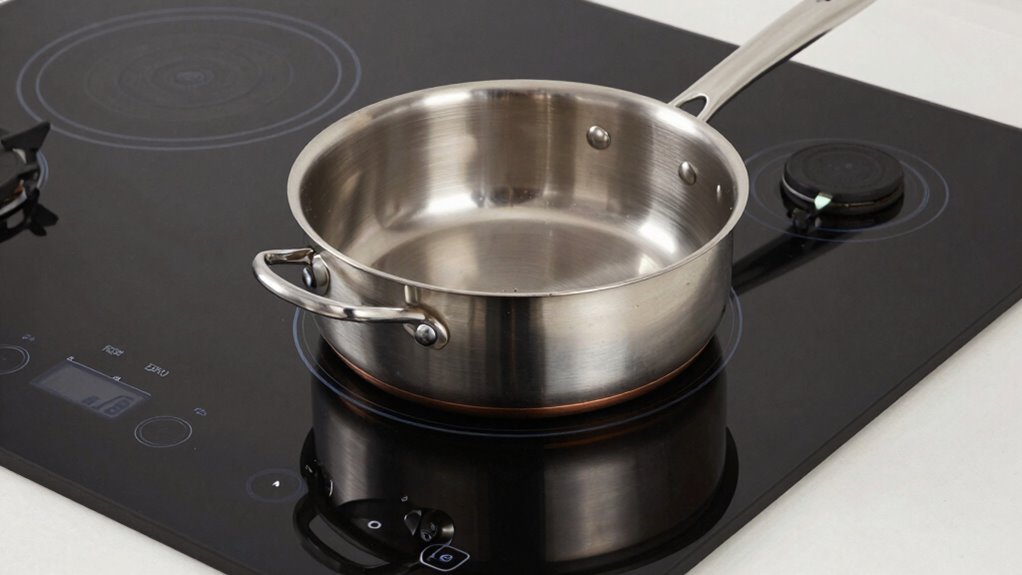
If your cookware isn’t heating on your induction stove, it’s likely due to a compatibility or contact issue. First, check if the cookware has a flat, smooth bottom that makes good contact with the induction surface. Poor contact can prevent induction safety features from activating. Also, verify the cookware is compatible—magnetic materials are essential. Sometimes, cookware stored improperly can warp or develop dents, affecting performance.
- Confirm the cookware is made of ferromagnetic material.
- Clean the bottom thoroughly to remove any dirt or residue.
- Ensure the cookware sits flat on the surface, avoiding warped bases.
- Double-check that you’re using compatible cookware for your induction stove.
Addressing these points helps guarantee proper heating and safe use, preventing frustration and potential damage.
Frequently Asked Questions
Can Non-Metallic Cookware Work on Induction Stoves?
Non-metallic cookware doesn’t work on induction stoves because it lacks the magnetic properties needed for cookware testing. Induction stoves rely on magnetic fields to heat pots and pans, so if your cookware isn’t ferromagnetic, it won’t heat up. To check, use a magnet—if it sticks, it’s compatible. Always test your cookware before cooking to avoid surprises and verify your cookware works efficiently on your induction stove.
Does Cookware Thickness Affect Induction Heating Efficiency?
Think of cookware thickness like a bridge; thicker material can sometimes slow heat transfer, but it guarantees durability. Thicker cookware generally improves heat conduction and stability, making induction cooking more efficient. However, very thick pots may take longer to heat initially. Material composition plays a vital role—magnetic metals like cast iron or stainless steel work best. So, choose a balance: enough thickness for durability, but not so much it hampers heat conduction.
Are There Safety Concerns With Incompatible Cookware?
Yes, using incompatible cookware can pose safety risks with induction stoves. If your cookware isn’t induction-compatible, the stove may not detect it properly, leading to potential malfunction or overheating. This can cause burns or fires. To verify induction safety, always check if your cookware has a magnetic base. Avoid using non-compatible pots and pans to prevent these risks and keep your cooking environment safe.
How Do I Identify if Cookware Is Magnetic?
If you want to instantly know if your cookware is magnetic, do a simple magnetic test—hold a magnet to the bottom. If it sticks firmly, it’s magnetic, proving cookware magnetism. This quick trick saves you from the nightmare of incompatible cookware lurking in your kitchen. Always check for magnetic properties before cooking on induction; otherwise, you might end up with a stove that refuses to heat.
Can I Use My Existing Ceramic or Glass Cookware on Induction?
You can’t use your ceramic or glass cookware on induction stoves unless they have a magnetic base, which means material restrictions apply. To verify cookware adaptation, check if the bottom is magnetic by testing with a magnet. If it sticks, you’re good to go. Otherwise, you’ll need to switch to compatible cookware or consider a magnetic induction disc to make your existing ceramic or glass pieces work with your induction cooktop.
Conclusion
Think of induction cookware as the key to unlock your stove’s true potential. When you choose the right pots and pans, they dance seamlessly on the surface like a well-rehearsed orchestra. Avoid the pitfalls of mismatched tools, and you’ll enjoy a symphony of quick, efficient cooking. With the right knowledge, your kitchen transforms into a culinary stage where every meal takes center spotlight—bright, flawless, and perfectly in tune.
NFL season / tailgating Picks
team gear
As an affiliate, we earn on qualifying purchases.