Italian medicinal liqueurs have a long history rooted in regional herbal traditions used to support digestion and health. They’re made by infusing herbs, roots, and spices in high-quality alcohol using techniques passed down through generations. These infusions often balance bitter and sweet flavors, making them pleasant and beneficial for settling digestion after heavy meals. Exploring their history reveals a blend of herbal wisdom and cultural heritage—continue to discover more about these time-honored remedies.
Key Takeaways
- Italian medicinal liqueurs originate from centuries-old herbal infusion traditions aimed at promoting health.
- They are made by steeping herbs, roots, and spices in high-quality alcohol using regional techniques.
- These liqueurs often contain bitter herbs to aid digestion and soothe stomach discomfort.
- Infusion methods and herbal blends influence both flavor and digestive benefits.
- They hold cultural significance as traditional remedies and flavorful health-promoting beverages.
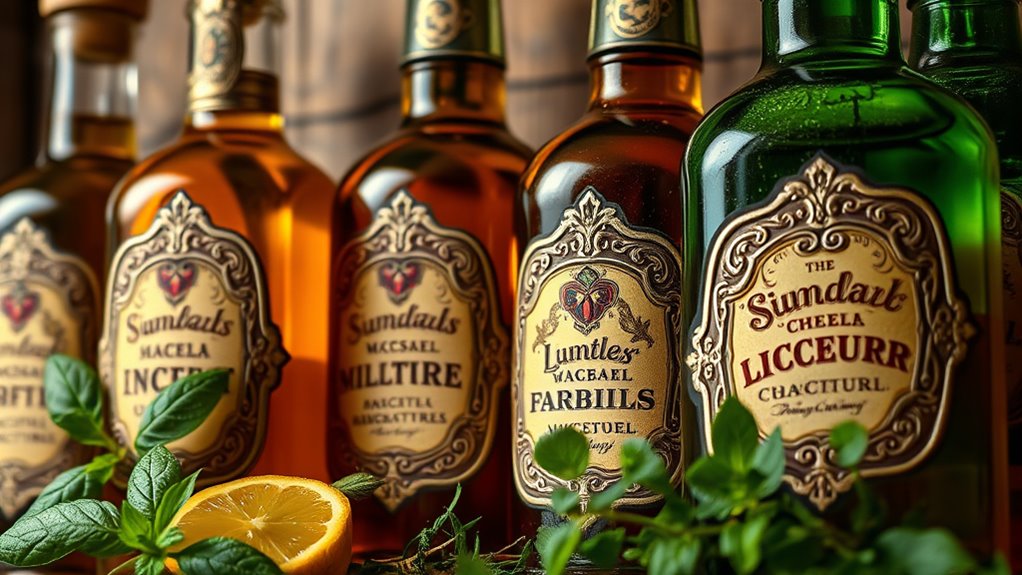
Have you ever wondered how Italy’s centuries-old tradition of herbal remedies evolved into the flavorful medicinal liqueurs we enjoy today? It all begins with the careful art of herbal infusion techniques, a craft passed down through generations. When making these liqueurs, you start by selecting a blend of herbs, roots, and spices known for their digestive and healing properties. These ingredients are then steeped in high-quality alcohol, often grain or grape-based, to extract their essential oils and active compounds. The process requires patience and precision, as steeping times and temperatures influence the final flavor and potency. You might find that traditional recipe variations vary regionally, reflecting local herbs and cultural preferences. For example, some regions favor bitter herbs to enhance digestive aid, while others incorporate sweet botanicals for a more palatable tonic.
Throughout history, each family or producer may have their own twist on the classic recipes, adding unique herbs or adjusting infusion methods to achieve specific effects. This diversity is part of what makes Italian medicinal liqueurs so fascinating. You’ll notice that some recipes call for maceration, where herbs are soaked directly in spirits for several weeks, while others use percolation or reflux techniques to expedite extraction. The choice of herbs, the quality of alcohol, and the infusion duration all influence the flavor profile and medicinal benefits. Many traditional recipes also include a sweetening step, often with honey or sugar, to balance the herbal bitterness and make the tonic more enjoyable to consume regularly. Additionally, understanding herbal infusion techniques can help enthusiasts craft their own personalized remedies at home.
The resulting liqueurs aren’t just flavorful; they’ve long been valued for their digestive properties. Whether taken before or after meals, these herbal infusions can stimulate digestion, soothe stomach discomfort, and promote overall gut health. You might find that a small glass of an aromatic herbal liqueur helps settle your stomach after a heavy meal. Additionally, these recipes often carry cultural significance, with family secrets and regional variations passed down through generations. The combination of herbal infusion techniques and traditional recipe variations creates a rich tapestry of medicinal liqueurs, each with its own story and purpose. By understanding these methods, you gain a deeper appreciation for how Italy’s herbal wisdom transformed into a delightful, healthful tradition that continues to be enjoyed today.
Italian herbal digestive liqueur
As an affiliate, we earn on qualifying purchases.
As an affiliate, we earn on qualifying purchases.
Frequently Asked Questions
How Do Italian Medicinal Liqueurs Differ From Regular Aperitifs?
You’ll notice that Italian medicinal liqueurs differ from regular aperitifs because they focus on medicinal benefits through herbal infusions, which aid digestion and overall health. Unlike typical aperitifs, these liqueurs are crafted with specific herbs and botanicals meant to promote wellness. You can enjoy them not just for flavor but also for their traditional health benefits, making them a unique blend of taste and natural healing properties.
Are There Specific Regional Varieties of Medicinal Liqueurs in Italy?
You might think medicinal liqueurs are uniform across Italy, but regional herbs and local traditions create distinct varieties. For example, in Tuscany, you find herbal blends with sage and rosemary, while Sicily features citrus-based infusions. These regional differences are rooted in local flora and cultural practices, making each variety unique. Exploring these liqueurs offers a deeper understanding of Italy’s diverse regional heritage and its long-standing herbal traditions.
What Are the Traditional Methods of Preparing These Liqueurs at Home?
You prepare traditional medicinal liqueurs at home by starting with a home infusion, soaking herbs, roots, or spices in high-proof alcohol for several weeks, allowing flavors and medicinal properties to develop. Some recipes also involve traditional distillation methods, where you carefully heat the mixture to extract pure essence. Strain the solids, add sugar or honey, and let the liqueur age. This hands-on process creates authentic, flavorful remedies rooted in Italian tradition.
Can Medicinal Liqueurs Be Beneficial for Specific Digestive Issues?
Medicinal liqueurs can be beneficial for specific digestive issues when used as herbal remedies. You might find that sipping small amounts after meals helps soothe indigestion, bloating, or stomach discomfort. The herbal ingredients in these liqueurs, like herbs and roots, support digestive health by stimulating bile production and easing gastrointestinal tension. However, use them in moderation and consult a healthcare professional if you have persistent or severe digestive problems.
Are There Any Modern Innovations in the Production of Italian Medicinal Liqueurs?
Imagine you’re in a future where modern distillation techniques revolutionize Italian medicinal liqueurs. Today, producers incorporate advanced herbal infusion methods, ensuring purer, more potent extracts. Innovations include microdistillation and the use of sustainable, organic ingredients, enhancing both flavor and health benefits. These modern methods preserve traditional recipes while elevating quality, allowing you to enjoy time-honored medicinal benefits with a contemporary twist that respects both history and innovation.
Conclusion
So, next time you sip on an Italian medicinal liqueur, remember you’re not just indulging in sweet comfort but also embracing centuries of herbal wisdom—probably more effective than that overpriced detox tea. Cheers to ancient recipes that promise health while tempting your palate! Who knew that a tiny glass could hold the secret to good digestion, centuries of tradition, and a pretty good excuse for a little spirited rebellion? Salud!