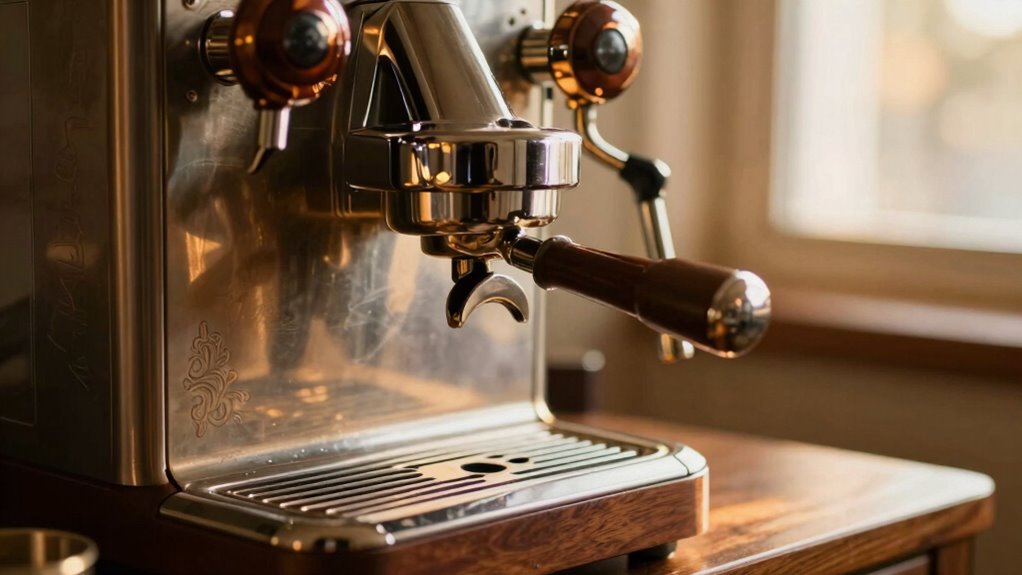

Manual lever espresso machines look romantic and give you full control over the brewing process, appealing to those who enjoy craftsmanship and a tactile experience. However, they demand skill, time, and regular maintenance, making them less practical for busy mornings. You’ll need patience to master the technique and care for the machine long-term. If you want to discover more about whether this artisanal style suits your lifestyle, keep exploring—there’s much to ponder.

Get home appliances delivered free — and shop member deals
- Fast, free delivery on millions of items
- Access to Prime Big Deal Days deals on October 6–7
- Prime Video, Amazon Music and more included
Key Takeaways
- They offer artistic control and a tactile brewing experience, appealing to enthusiasts who value craftsmanship.
- Require skill, attention, and maintenance, making them less convenient for quick or everyday use.
- Mechanical simplicity reduces electronic failures but demands regular cleaning and mechanical upkeep.
- Less practical for busy lifestyles due to a steep learning curve and variable consistency.
- Their vintage, artisanal aesthetic enhances romantic appeal but may compromise convenience and reliability.
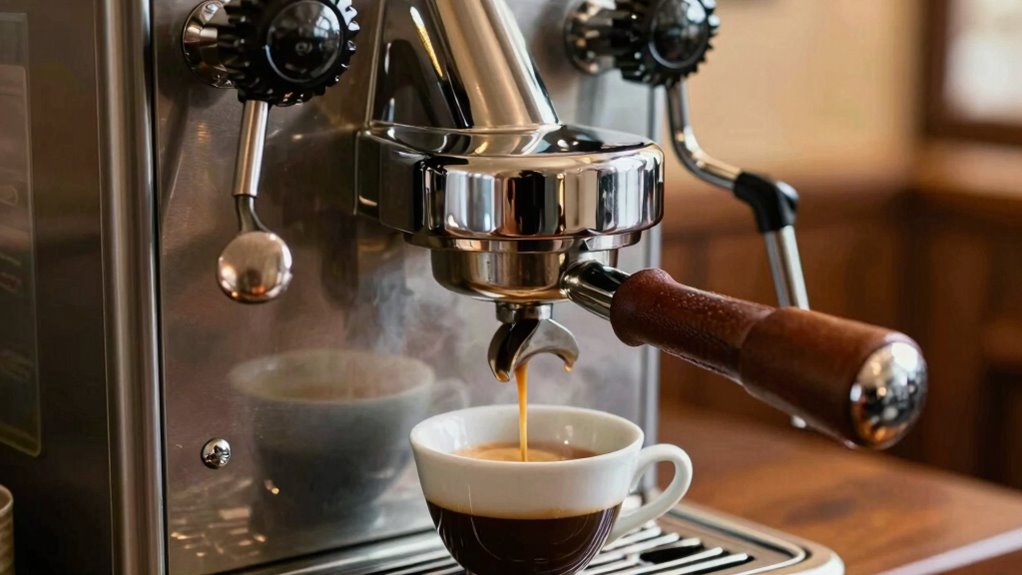
Manual lever espresso machines offer a timeless approach to brewing espresso, giving you full control over the extraction process. With these machines, you’re directly involved in each step, from pulling the lever to controlling pressure and timing. This hands-on method appeals to enthusiasts who appreciate the craft and artistry behind a perfect shot. Unlike automatic brewing machines that handle most processes with the press of a button, manual levers demand skill and attention, making the experience both satisfying and challenging.
Manual lever espresso machines put you in control, blending craftsmanship with a satisfying, hands-on brewing experience.
While manual levers can produce rich, nuanced espresso, they also come with their own set of practical considerations. If you’re used to the convenience of automatic brewing, switching to a manual lever might feel cumbersome at first. Automatic machines take care of temperature stability, pressure profiling, and timing, ensuring consistency with minimal effort. In contrast, manual lever machines require you to monitor temperature, pressure, and extraction time manually. This means you’ll need to develop a good feel for the machine and spend time honing your technique, which isn’t ideal if you’re pressed for time or prefer quick, reliable results.
Maintenance challenges are another factor to consider. Manual lever espresso machines often have fewer electronic components, but they tend to be more labor-intensive to clean and maintain. The mechanical parts, such as the lever mechanism and boiler, need regular attention to stay in optimal condition. You’ll need to descale the boiler, clean the group head, and ensure all moving parts are well-lubricated. If neglected, these components can develop buildup or wear, impacting performance and longevity. This ongoing maintenance can be a deterrent for busy users or those unfamiliar with mechanical upkeep. Additionally, manual lever machines often rely on mechanical parts, which require a good understanding of their function and care. Developing this understanding may involve learning about buildup prevention and proper lubrication techniques, which further emphasizes the need for mechanical knowledge. Having a solid grasp of maintenance routines can help extend the life of your machine and ensure consistent results over time.
Furthermore, the aesthetic appeal of manual lever machines can be a significant factor for those who appreciate vintage or artisanal designs. Practicality is where manual lever machines might fall short for everyday use. Their learning curve can be steep, and consistency may vary unless you become skilled at controlling every aspect of the brew. If you’re someone who values speed, convenience, and minimal fuss, an automatic or semi-automatic machine could better suit your lifestyle. However, if you’re passionate about espresso and enjoy the ritual of brewing, the romance of manual levers might outweigh their drawbacks. They offer a deeper connection to the process, but you should be prepared for the time, effort, and learning involved to keep them functioning at their best.
In the end, whether manual lever espresso machines are practical depends on your priorities. Do you crave control, craftsmanship, and the aesthetic appeal? Or do you prefer quick, consistent results with less maintenance? Both are valid choices, but understanding the realities of manual levers helps you decide if their romantic charm suits your daily routine.
As an affiliate, we earn on qualifying purchases.
Frequently Asked Questions
How Long Does It Take to Learn to Operate a Manual Lever Espresso Machine?
It typically takes a few weeks to a couple of months to master the techniques of a manual lever espresso machine, depending on your dedication. The learning curve can be steep at first, but with consistent practice, you’ll improve your technique mastery. You’ll need patience to understand the right pressure, timing, and tamping. Once you get the hang of it, making high-quality espresso becomes more intuitive and rewarding.
Are Manual Lever Machines Suitable for High-Volume Coffee Shops?
Think of a manual lever espresso machine as the heartbeat of a cozy café, not suited for high-volume demands. Its historical appeal and aesthetic design captivate customers, but the manual operation limits speed and efficiency. If you aim for quick service and consistency, these machines might not be your best choice. Instead, they serve best in boutique settings where artistry and tradition are more important than rapid throughput.
What Maintenance Is Required for Manual Lever Espresso Machines?
You need to regularly clean the group head, steam wand, and water reservoir to keep your manual lever espresso machine in top shape. Descale it periodically to prevent mineral buildup, especially if you use hard water. Check the pressure and gasket seals often. Unlike automatic brewing machines, manual levers require more hands-on maintenance, and ensuring the steam wand functions properly is key to making great milk-based drinks. Consistent upkeep preserves performance and flavor.
Can Beginners Easily Make Café-Quality Espresso With These Machines?
Imagine you’re a barista in a vintage movie—manual lever espresso machines demand skill, so beginners can find it tricky to achieve café-quality espresso quickly. While automatic brewing offers convenience, manual machines let you explore coffee artistry and control every shot. With patience and practice, you can master the process, but it’s a rewarding journey. Expect a learning curve, and don’t be discouraged if your first attempts aren’t perfect.
How Do Manual Lever Machines Compare in Price to Automatic Options?
Manual lever machines generally have a higher price range compared to automatic options, often costing between $1,000 and $3,000, due to their craftsmanship and craftsmanship. In contrast, automatic machines typically range from $300 to $1,500, making them more budget-friendly. The cost comparison shows that manual levers are an investment, offering a traditional experience, but if you’re looking for affordability and convenience, automatic machines provide a more practical choice.
Conclusion
A manual lever espresso machine is like holding a delicate key to your morning ritual—romantic, personal, and full of history. While it demands effort and skill, it also grants you control and connection in every cup. Think of it as a symbol of craftsmanship, reminding you that great coffee isn’t just brewed—it’s crafted with intention. Embrace the journey, and let each pull be a demonstration to your passion and patience.
NFL season / tailgating Picks
team gear
As an affiliate, we earn on qualifying purchases.