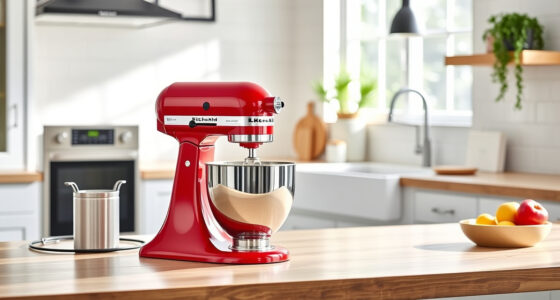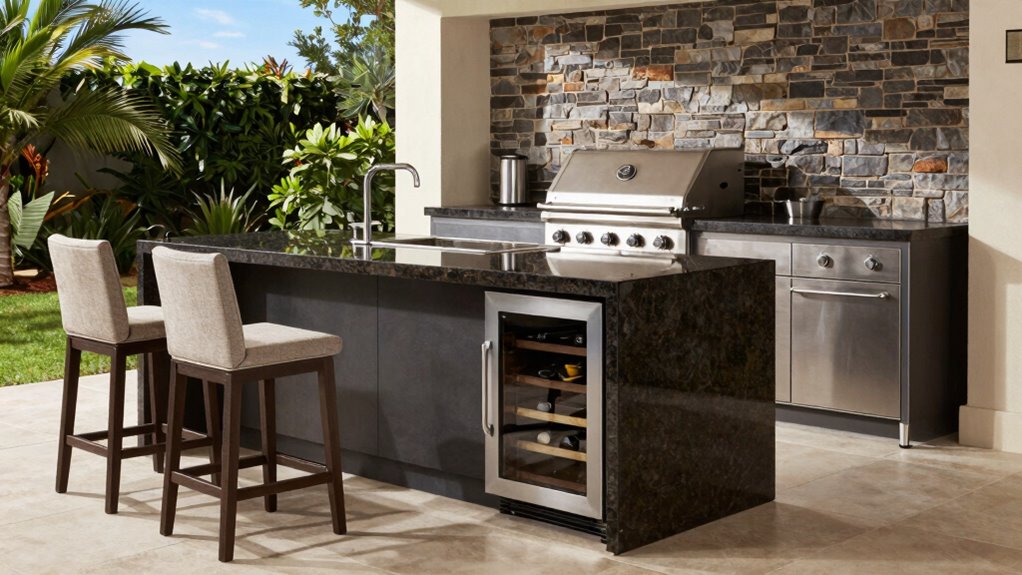

Outdoor kitchen islands look stunning, but the practical side requires planning. You need portable appliances for flexibility, weather-resistant materials to withstand rain and sun, and smart design features like drainage and ventilation for durability. Storage must resist the elements, and electrical systems should be outdoor-safe. Keep these factors in mind to enjoy both beauty and reliability. Want to discover how to balance style with practicality? Keep going for all you need to know.

Get home appliances delivered free with Prime
- Fast, free delivery on millions of items
- Prime Video, Amazon Music and more included
- Member-only deals all year
Key Takeaways
- Portable appliances add flexibility but require careful handling to maintain their appearance and functionality outdoors.
- Weather-resistant materials prolong the island’s lifespan but may increase initial costs and require proper installation.
- Designing with proper drainage and ventilation is essential to prevent water damage, mold, and ensure safety.
- Durable, weatherproof storage keeps utensils and ingredients protected, reducing clutter and maintenance needs.
- Outdoor electrical systems must be safely installed and maintained to ensure reliable power and prevent hazards.
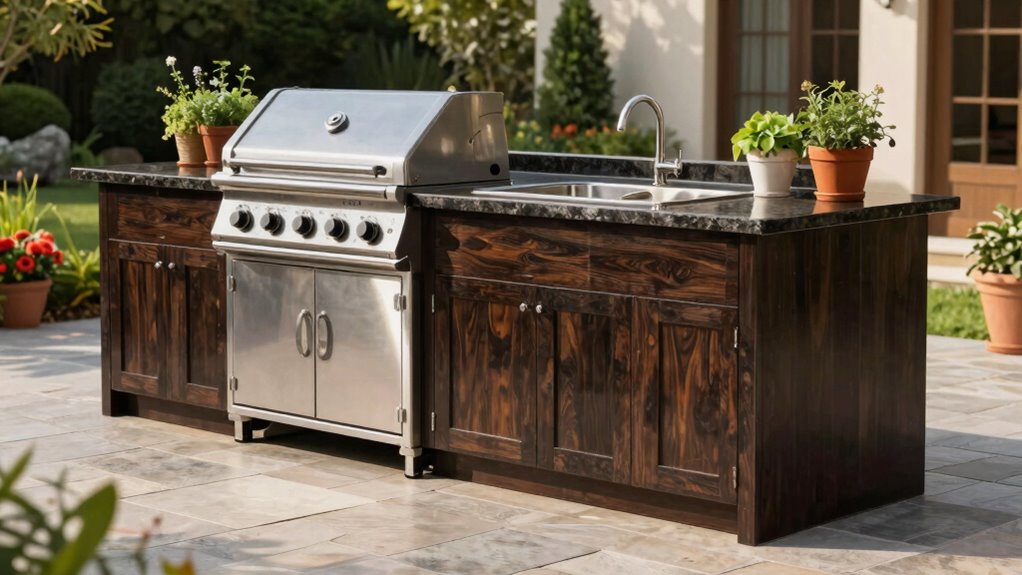
Creating an outdoor kitchen island transforms your backyard into a functional and stylish space for entertaining and cooking. But beyond its sleek appearance, you need to contemplate the practical aspects that keep it running smoothly. One of those is choosing the right portable appliances. These are essential for flexibility—you can move a portable fridge or mini-grill around as needed, making your outdoor cooking experience more versatile. Portable appliances allow you to adapt your setup for different occasions, whether you’re hosting a small family dinner or a large gathering. They’re convenient and often easier to maintain, saving you time and effort in the long run. Additionally, selecting weather resistant materials is vital to withstand the outdoor environment and ensure longevity.
Portable appliances add flexibility, making outdoor cooking versatile and easier to maintain for any occasion.
Another critical factor is selecting weather resistant materials for your outdoor kitchen island. Since it will be exposed to the elements, you want surfaces that stand up to rain, sun, and humidity without deteriorating. Materials like stainless steel, concrete, or weatherproofed stone are popular choices because they resist rust, corrosion, and fading. Using weather resistant materials not only prolongs the life of your outdoor kitchen but also reduces maintenance costs. You won’t need to worry about constant repairs or replacements—your island will look great and function well for years.
While the visual appeal of an outdoor kitchen island is undeniable, the practical realities can sometimes surprise you. For example, the design should account for proper drainage and ventilation. Rain can easily pool on flat surfaces, leading to damage or mold if not managed properly. Installing drainage systems or choosing sloped surfaces helps prevent these issues. Ventilation is equally important, especially if you plan to cook with gas or charcoal. Good airflow ensures safety and reduces smoke buildup.
You should also think about storage options that are both functional and durable. Weather resistant cabinetry and countertops help keep utensils, ingredients, and cleaning supplies protected from the elements. Without proper storage, your outdoor kitchen could quickly become cluttered or damaged, which detracts from its aesthetic and usability.
Finally, don’t forget about electrical needs. Outdoor outlets and wiring must be weatherproof and compliant with safety standards. This ensures your portable appliances, lighting, and other electronic devices operate safely in an outdoor environment. Proper wiring also protects against short circuits and other electrical hazards.
In the end, an outdoor kitchen island can look stunning, but understanding and preparing for these practical realities will ensure it remains a reliable, enjoyable part of your backyard for years to come.
As an affiliate, we earn on qualifying purchases.
Frequently Asked Questions
How Much Does a Custom Outdoor Kitchen Island Typically Cost?
A custom outdoor kitchen island usually costs between $8,000 and $20,000, depending on size, materials, and features. You’ll find a wide cost comparison based on choices like stone, stainless steel, or concrete, which affect the overall price. With design flexibility, you can personalize your island to fit your style and needs, but keep in mind that premium finishes and added appliances can increase costs considerably.
What Are the Best Materials for Durability Outdoors?
You should choose durable materials like granite, concrete, or stainless steel for your outdoor kitchen island. These options resist weathering, stains, and heat, guaranteeing longevity and maintaining your design aesthetics. Material selection is essential; for example, granite offers a sophisticated look, while stainless steel provides a sleek, modern vibe. By prioritizing these materials, you make certain your outdoor kitchen remains functional and beautiful through all seasons.
How Long Does It Take to Build an Outdoor Kitchen Island?
You can expect your outdoor kitchen island to take about two to four weeks to build, depending on complexity. Picture yourself watching the project take shape, with landscape integration blending seamlessly into your yard and lighting considerations illuminating your space at dusk. The process involves planning, material selection, and construction, but the result is a stunning, functional centerpiece that enhances your outdoor experience and complements your landscape beautifully.
Are There Portable Options for Outdoor Kitchen Islands?
Yes, there are portable options for outdoor kitchen islands that enhance island mobility. You can find wheeled carts, foldable islands, or modular units designed for easy movement and setup. These options let you customize your outdoor space without a permanent fixture. They’re perfect if you want flexibility, whether for entertaining, storage, or simply changing your layout. Just make certain the portable island is sturdy and weather-resistant for long-lasting outdoor use.
What Maintenance Is Required for Outdoor Kitchen Islands?
Think of your outdoor kitchen island as a trusted friend—requiring care to stay vibrant. You’ll need a regular cleaning schedule to remove dirt and prevent stains, much like tending a garden. Keep an eye on material repairs, fixing chips or cracks promptly to prevent further damage. Using appropriate sealants and covers can extend its life. With consistent maintenance, your island remains a beautiful, functional centerpiece for years to come.
Conclusion
Outdoor kitchen islands may look stunning, but remember they demand planning, maintenance, and ongoing care. They require durability, functionality, and aesthetic appeal—balancing beauty with practicality. You’ll need to take into account weather, storage, and your own lifestyle to make them work for you. Embrace their charm, but stay mindful of their needs. Because in the end, a beautiful outdoor kitchen isn’t just about looks—it’s about the effort, the upkeep, and the joy of enjoying your space year-round.
Halloween Picks
halloween
As an affiliate, we earn on qualifying purchases.