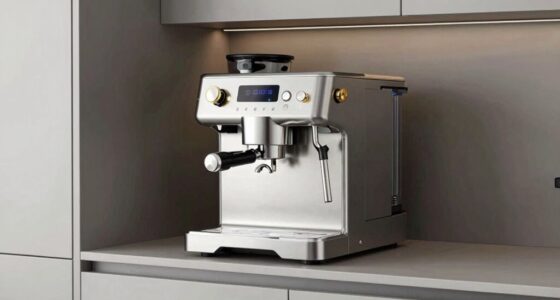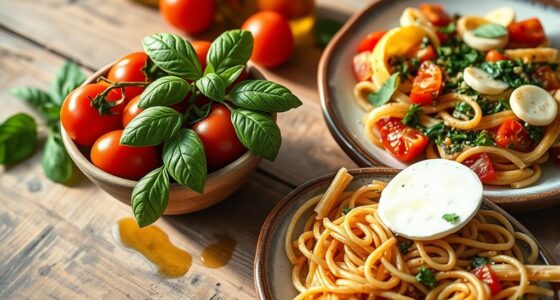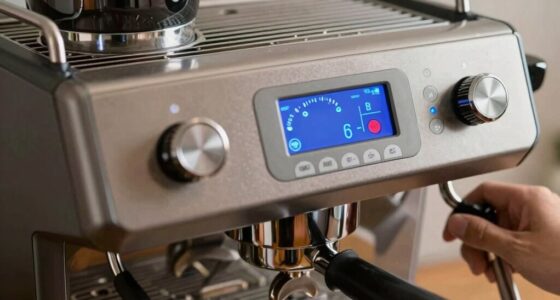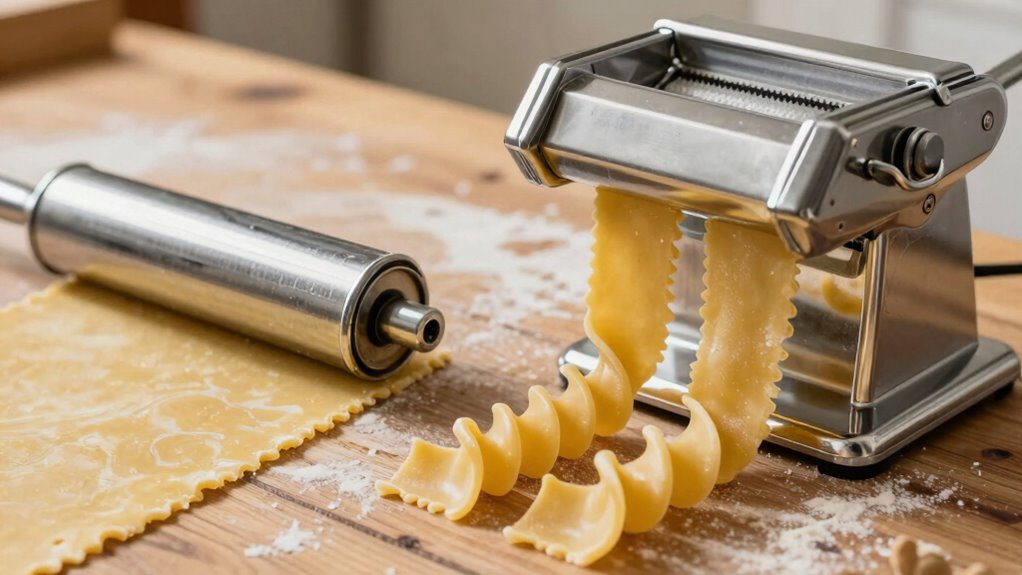

Choosing between a roller or extruder pasta machine depends on your preferences and kitchen space. Rollers help you make traditional, textured sheets ideal for numerous recipes, while extruders produce uniform-shaped pasta quickly and with more variety. If you love authentic textures, go for a roller; if variety and speed matter more, an extruder fits better. Keep exploring options to find the perfect match for your style and setup.
Key Takeaways
- Rollers produce thin, even sheets ideal for traditional, textured pasta, while extruders shape various pasta types quickly with molds.
- Choose a roller machine for versatility and easy maintenance; select an extruder for shaping diverse pasta faster.
- Consider your cooking frequency, preferred pasta styles, and available space when selecting between roller and extruder machines.
- Rollers are better for artisan textures and control, whereas extruders excel in uniform shapes and faster production.
- Match your pasta-making needs with machine features, cleaning requirements, and storage options for optimal home use.

Sailnovo Pasta Maker Machine, 180 Roller Pasta Maker, 9 Adjustable Thickness Settings 2-in-1 Noodles Maker with Rollers and Cutter, Perfect for Spaghetti, Fettuccini, Lasagna or Dumpling Skin Silver
【FOODS GRADE MATERIAL & CLEANING METHOD】 Tired of those pasta machines that smell of metal or plastic? Sailnovo…
As an affiliate, we earn on qualifying purchases.
As an affiliate, we earn on qualifying purchases.
What Are the Main Differences Between Roller and Extruder Pasta Machines?
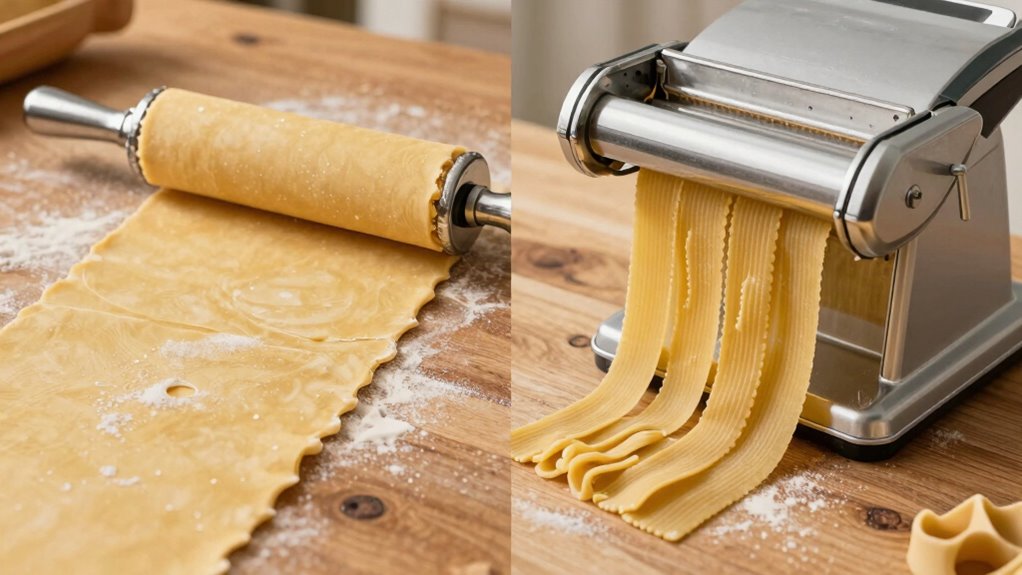
When choosing between roller and extruder pasta machines, understanding their main differences can help you decide which is best for your needs. Rollers are ideal for creating thin, even sheets of dough, giving you control over dough consistency. They’re simple to operate and require minimal cleaning maintenance, mainly just flouring the plates after use. Extruder machines, on the other hand, shape dough through various molds, producing shaped pasta like penne or fusilli. They handle thicker dough well but may need more frequent cleaning to prevent dough buildup around the extrusion mechanism. Overall, rollers excel at producing uniform sheets with less fuss, while extruders offer variety but demand a bit more care to keep functions smooth. Your choice depends on your pasta preferences and willingness to maintain the equipment. Understanding the differences in pasta machine types] can help you make a more informed decision.

Philips 7000 Series Pasta Maker, ProExtrude Technology 150W, 8 discs, Perfect Mixing Technology, Prepare up to 8 Portions, HomeID App, White, (HR2660/03)
PASTA UNDER 10 MINUTES: Enjoy fresh homemade pasta effortlessly in under 10 minutes¹.
As an affiliate, we earn on qualifying purchases.
As an affiliate, we earn on qualifying purchases.
How Do You Choose the Best Pasta Machine for Your Home Kitchen?
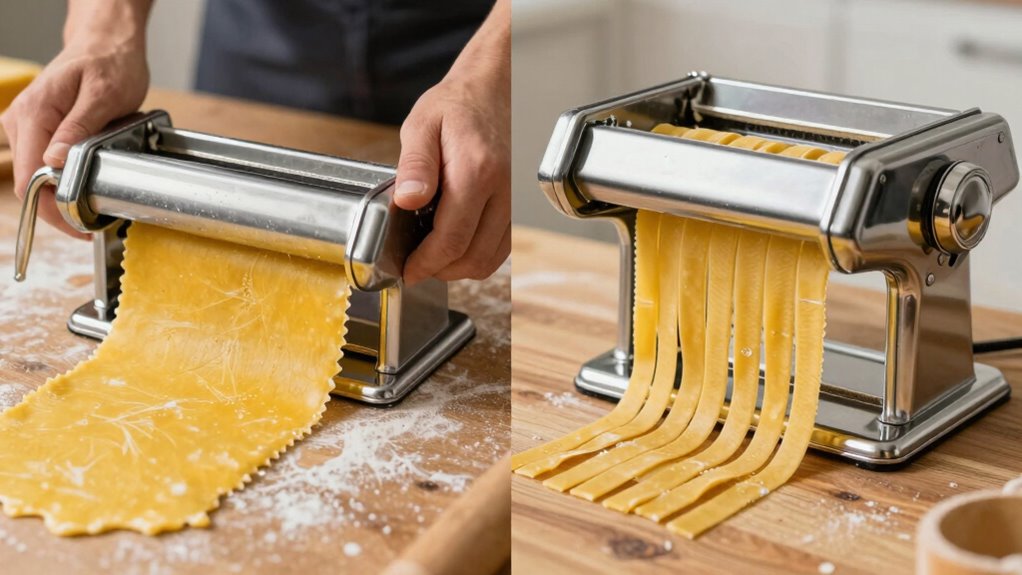
Choosing the best pasta machine for your home kitchen depends on your cooking habits, pasta preferences, and available space. Consider how often you’ll make pasta and the types you prefer, as this impacts the machine’s features. Look for options that help you achieve the right dough consistency easily, whether through adjustable rollers or extruder settings. Also, think about storage options—compact models save space, while larger ones might offer added versatility. To decide, evaluate:
- Ease of use and cleaning
- Compatibility with your pasta recipes
- Size and storage convenience
- Features that ensure consistent dough texture
Understanding the different craftsmanship techniques involved can also guide you in selecting a machine that aligns with your skill level and desired outcomes.

MARCATO Made in Italy Atlas 150 Classic Manual Pasta Maker Machine, Chrome Steel with Black Hand Crank. Makes Lasagna, Fettuccine & Tagliolini.
Material Type: Nickel-Plated Steel, Chrome-Plated Steel, ABS
As an affiliate, we earn on qualifying purchases.
As an affiliate, we earn on qualifying purchases.
How Do Roller Machines Make Traditional, Textured Pasta?
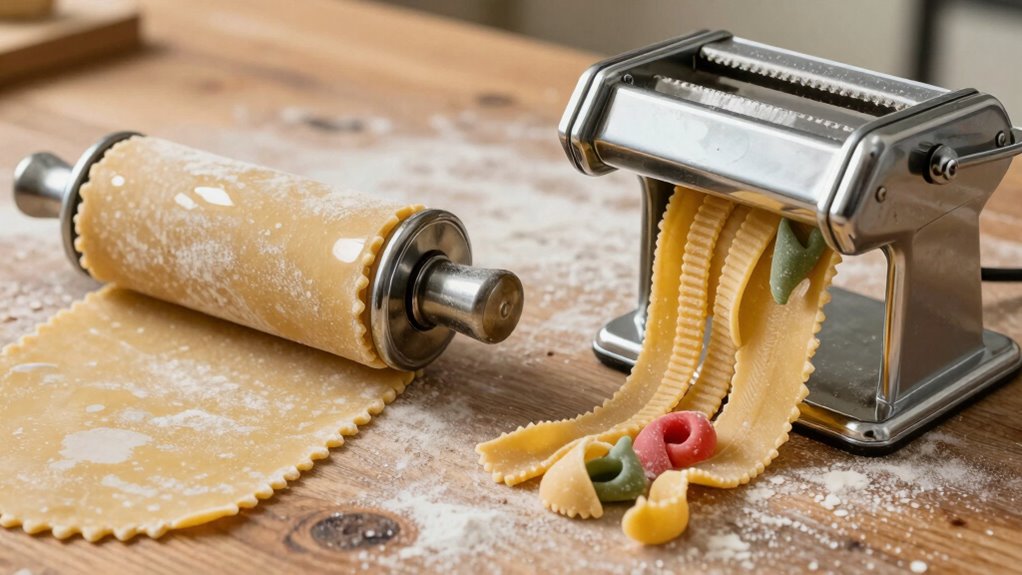
Roller machines create traditional, textured pasta by flattening dough into thin sheets and then cutting or shaping it into various forms. You control the dough thickness by adjusting the rollers, which influences the final texture and bite. As you pass the dough through the rollers multiple times, you can achieve the desired thinness and consistency. The process naturally produces texture variation, giving your pasta a rustic, homemade feel. Thicker sheets are ideal for hearty dishes like lasagna, while thinner sheets work well for delicate pasta types. Rolling also helps develop gluten structure, enhancing the pasta’s firmness and chewiness. By manually controlling dough thickness and pressure, you craft authentic, textured pasta with a pleasing, artisan quality. Additionally, understanding media literacy can help you better appreciate the traditional techniques and craftsmanship involved in pasta making. Developing technique mastery allows for more precise control over texture and shape, elevating your homemade pasta skills.

Pasta Noodle Cutter, Stainless Steel Noodle Lattice Roller, Handheld Pasta Spaghetti Maker, Dough Cutter with Comfort Handle, Kitchen Cooking Tools, 1Pack
Package & Size: 1pcs noodle cutter; Size: 220 x 70 mm/ 8.66 x 2.75 inch
As an affiliate, we earn on qualifying purchases.
As an affiliate, we earn on qualifying purchases.
What Shapes and Features Can Extruder Machines Offer?
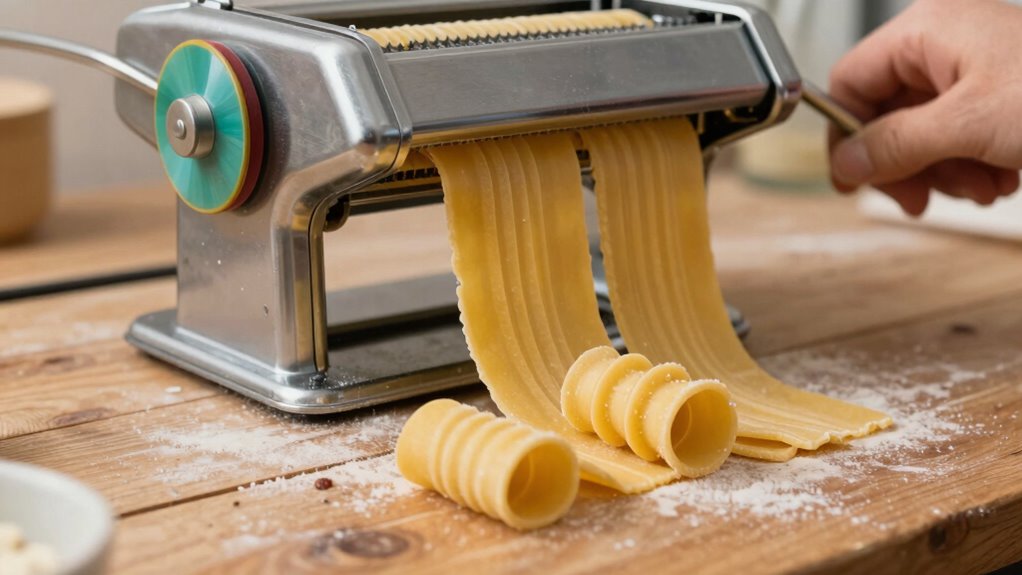
Extruder machines open up a world of pasta shapes and features that can elevate your homemade dishes. They allow you to create diverse forms, from classic spaghetti to unique shapes like rigatoni or fusilli, by changing molds. The key to successful extrusion is maintaining the right pasta dough consistency, ensuring it flows smoothly without clogging. Many extruders include adjustable settings for pressure and speed, giving you more control over the final shape. Additionally, extruder cleanliness is essential; regular cleaning prevents dough buildup that can affect shape quality and machine performance. Some models also have multiple attachments for different pasta types, making them versatile tools for experimentation. Overall, extruders offer a wide range of shapes and features to enhance your pasta-making experience.
What Are the Pros and Cons of Roller vs. Extruder Pasta Makers?
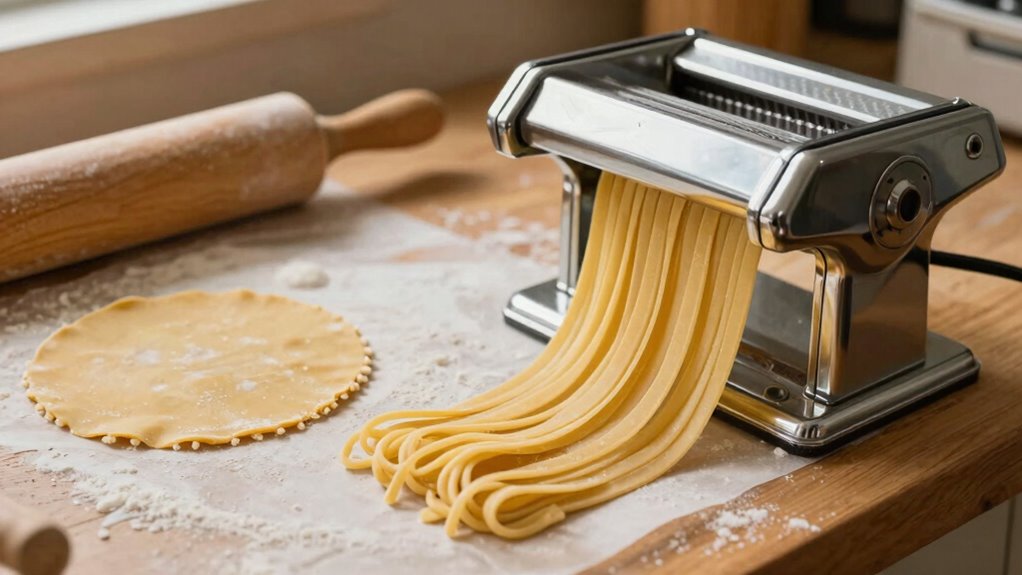
While both roller and extruder pasta makers have their strengths, understanding their advantages and drawbacks can help you decide which suits your needs best. Rollers excel in culinary versatility, allowing you to create a variety of thicknesses and shapes with ease, and they’re generally easier to maintain. However, they may require more manual effort and take longer to produce pasta. Extruders, on the other hand, are excellent for making uniform shapes quickly, ideal for creating specialty pasta like ravioli or tubular forms. They tend to have more complex maintenance requirements due to their mechanical parts, and less flexibility in shaping. Your choice depends on whether you prioritize versatility and simplicity or speed and uniformity, considering how much effort you’re willing to invest in maintenance.
Which Pasta Machine Is Right for Your Cooking Style and Space?

Choosing the right pasta machine depends heavily on your cooking style and available space. If you make pasta frequently, a larger, more durable machine might suit your needs, but it requires ample storage. For occasional use, a compact, hand-held model saves space and is easier to clean and maintain. Consider how you’ll store your pasta and machine:
Choose a pasta machine that matches your cooking habits and available storage space for easy, efficient pasta making.
- Space for pasta storage and machine setup
- Ease of cleaning and ongoing maintenance
- Frequency of use and desired pasta types
- Compatibility with your kitchen layout
A roller machine often takes up more space but offers versatility, while an extruder can be more compact and produce unique shapes. Think about your storage options and how much effort cleaning and maintaining the machine will require. This will help you choose the best fit for your cooking style and space.
Frequently Asked Questions
Can I Make Gluten-Free Pasta With Both Machines?
Yes, you can make gluten-free pasta with both machines. Just verify you choose gluten-free options like rice, corn, or chickpea flour, and adjust your dough consistency with extra water or binding agents. Both a roller and extruder work well if your dough is smooth and pliable. Keep in mind, gluten-free dough may require a bit more kneading and patience to get the right texture for easy shaping and cooking.
How Easy Is Cleaning and Maintaining Each Type of Pasta Machine?
Cleaning and maintaining each pasta machine is straightforward but varies by type. Rollers are generally easier to clean, with fewer parts and simple wiping down, though they require regular oiling for durability. Extruders can be more complex to clean due to their multiple components, but they offer excellent machine durability with proper maintenance. Regular cleaning and proper lubrication keep both machines functioning smoothly and extend their lifespan.
Are There Any Safety Concerns When Using These Machines at Home?
You should always prioritize electrical safety when using pasta machines, ensuring cords are in good condition and kept away from water. Additionally, pay attention to machine stability by securing your machine firmly on a flat surface to prevent accidents. Never insert your fingers into moving parts, and follow the manufacturer’s safety instructions. These precautions help keep your pasta-making experience safe and enjoyable at home.
What Is the Typical Price Range for Roller and Extruder Machines?
Imagine browsing through a price spectrum, wondering how much you’ll spend on a pasta machine. You’ll find roller machines typically fall within an affordability range of $30 to $150, offering great value for beginners. Extruders can be a bit pricier, ranging from $50 to $300 or more, depending on features and quality. With this in mind, you can choose a machine that fits your budget and pasta-making ambitions.
How Long Does It Take to Learn to Use Each Machine Effectively?
You can expect a short learning curve with a roller, usually a few sessions to develop smooth skills and consistent pasta. An extruder might take a bit longer, around a week, as you learn to manage the machine and perfect the texture. With practice, your skill development improves quickly, and you’ll be making perfect pasta in no time. Consistent use helps you master each machine’s unique techniques efficiently.
Conclusion
Ultimately, choosing between a roller and an extruder machine is like selecting your own culinary canvas—each offers unique textures and shapes to bring your pasta visions to life. Whether you prefer the artistry of hand-rolled noodles or the versatility of an extruder’s creations, your decision shapes your pasta journey. Like a maestro conducting a symphony, pick the machine that best complements your style and space, and let your kitchen become the stage for delicious, homemade pasta masterpieces.