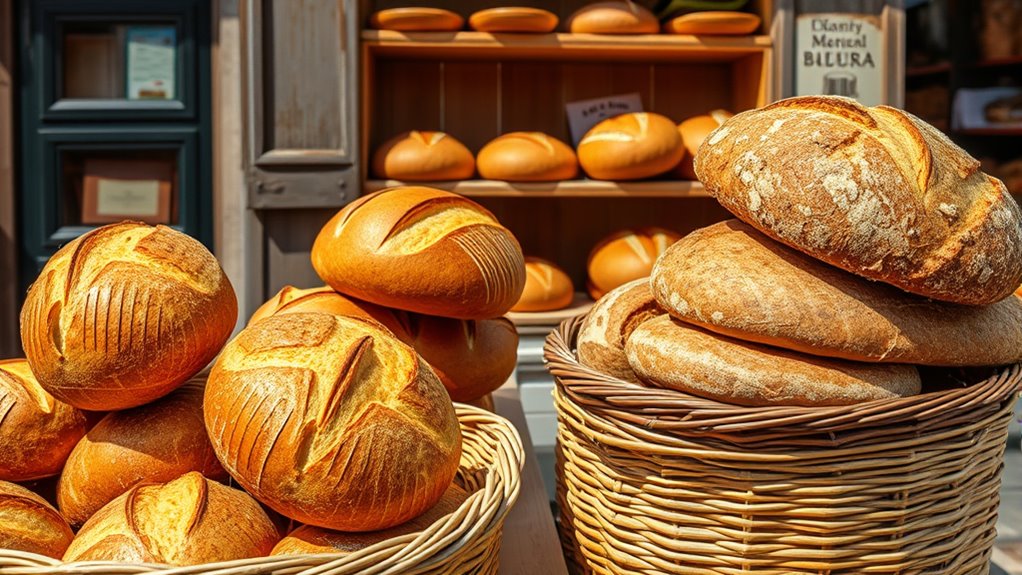

Italy’s bread traditions vary widely by region. In the south, like Altamura and Sicily, breads use durum wheat and long fermentation for a hearty, rustic flavor. The north favors softer, lighter loaves like ciabatta, made with soft wheat and shorter fermentation. Sardinian breads incorporate native grains such as barley, resulting in dense, robust loaves with a deep sour taste. To uncover how these regional styles develop unique flavors, you’ll find fascinating details as you explore further.

Get home appliances delivered free with Prime
- Fast, free delivery on millions of items
- Prime Video, Amazon Music and more included
- Member-only deals all year
Key Takeaways
- Southern Italy’s bread features durum wheat, sourdough fermentation, and rustic styles like focaccia and pane di Matera.
- Northern Italy favors softer wheat breads like ciabatta and grissini, with shorter or multi-day fermentation.
- Sardinian bread, such as civraxiu, uses local grains like barley and soft wheat, with dense, hearty textures.
- Sourdough fermentation is crucial across regions, shaping flavor, texture, and digestibility of Italian breads.
- Regional grain choices and fermentation techniques create distinct bread profiles from Altamura to Sardinia.
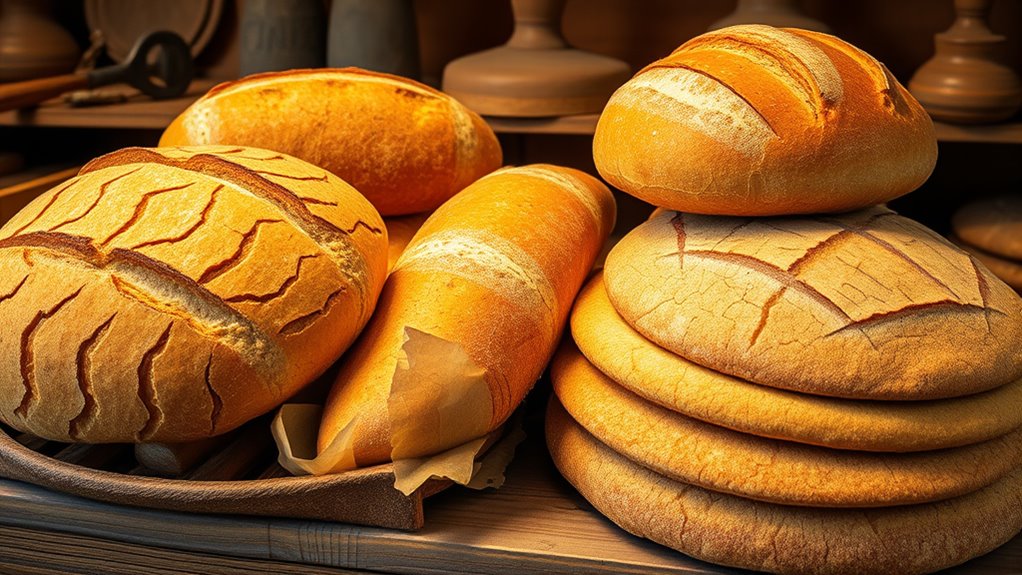
Italy’s rich culinary heritage is reflected in its diverse bread traditions, which vary markedly from region to region. Each area has developed its own methods, ingredients, and flavors, making Italian bread a true reflection of local history and culture. As you explore Italy’s bread, you’ll notice that regional differences are often rooted in specific grain varieties and fermentation techniques, especially sourdough fermentation, which plays a essential role in shaping the texture and taste of many traditional loaves.
Italy’s diverse bread reflects regional history and sourdough fermentation’s vital role in flavor and texture.
In southern Italy, particularly in regions like Puglia and Sicily, bread often features durum wheat and other hardy grain varieties suited to the Mediterranean climate. Here, sourdough fermentation is a common practice, giving the bread a distinctive tang and chewy crust. You might find yourself enjoying focaccia or pane di Matera, both of which rely on long fermentation processes to develop complex flavors. Durum wheat’s high protein content lends a unique elasticity, helping the bread maintain a hearty structure while remaining airy inside. These breads often have a rustic appearance, with thick, crispy crusts and soft interiors, reflecting centuries of tradition.
Moving northward, the bread traditions shift towards softer, lighter loaves made from wheat flour varieties like soft wheat, which are ideal for creating more delicate textures. In regions like Lombardy and Veneto, you’ll encounter bread such as grissini or ciabatta, where sourdough fermentation still plays a essential role. The natural fermentation process not only enhances flavor but also improves digestibility. In these areas, bakers often use local grain varieties that are specific to their terroir, imparting subtle regional nuances to the bread. The fermentation process can last several hours or even days, allowing wild yeasts to develop the bread’s characteristic tang and airy crumb.
Furthermore, grain varieties used in different regions influence not only flavor but also the nutritional profile of the bread, showcasing Italy’s diverse agricultural landscape. In Sardinia, you’ll discover a different approach entirely. The island’s bread traditions often incorporate locally grown grains like barley and soft wheat, reflecting the agricultural landscape. Sardinian bread, such as civraxiu, uses sourdough fermentation to achieve a robust flavor profile. The process involves nurturing wild yeasts and bacteria, which transform simple ingredients into a bread with a deep, slightly sour taste and a dense, hearty texture. This method has been passed down through generations, ensuring that Sardinian bread remains a symbol of local identity and resilience.
Whether in the south’s rustic loaves, the north’s airy ciabatta, or Sardinia’s dense civraxiu, Italy’s bread traditions showcase a mastery of sourdough fermentation and grain selection. These elements are essential in creating the distinctive flavors and textures that make Italian bread a truly regional craft.
Italian sourdough bread starter kit
As an affiliate, we earn on qualifying purchases.
As an affiliate, we earn on qualifying purchases.
Frequently Asked Questions
What Are the Main Ingredients Unique to Each Regional Bread?
You’ll find that each regional bread uses unique ingredients like local grain varieties, giving them distinct flavors. For example, Altamura bread features durum wheat, while Sardinian pane carasau uses specific local grains. Additionally, unique fermentation methods, such as long leavening or natural starters, set each apart. These ingredients and techniques reflect regional traditions, making every bread a special taste of its local culture.
How Do Regional Climates Influence Bread-Making Techniques?
Regional climate effects greatly influence your bread-making techniques. In warmer, humid climates, you’ll notice faster fermentation, so you need to adjust proofing times accordingly. Cooler regions require longer fermentation for flavor development. You should adapt your techniques to the climate, using local ingredients and methods to optimize dough rising and texture. Understanding how climate impacts fermentation helps you create authentic, region-specific breads with the right crust, crumb, and flavor.
Are There Specific Bread Festivals Celebrated Across Italy?
Did you know Italy hosts over 200 bread festivals annually? These regional celebrations highlight unique traditions, like the Festa del Pane in Tuscany or the Sagra del Pane in Sicily. You can experience local flavors and techniques, gaining insight into each area’s history and culture. Participating in these bread festivals allows you to immerse yourself in Italy’s rich culinary heritage, connecting you with communities through shared passion for bread-making.
How Have Modern Baking Methods Impacted Traditional Recipes?
Modern baking methods have profoundly impacted traditional recipes by blending artisan techniques with new technology. You can now preserve key ingredients more effectively, ensuring authentic flavors remain intact. While some bakers embrace automation, others focus on ingredient preservation and craftsmanship, maintaining the essence of traditional Italian bread. This balance allows you to enjoy both innovation and heritage, ensuring timeless recipes adapt without losing their cultural roots.
What Are the Historical Origins of Italy’s Regional Bread Varieties?
Your curiosity about Italy’s regional bread origins is like uncovering a treasure chest. These breads stem from ancient trade routes and cultural influences that shaped local flavors and techniques. For example, Altamura’s bread reflects Greek and Roman legacies, while Sardinian varieties show Spanish and Mediterranean echoes. Each loaf tells a story of historical exchanges, blending traditions and ingredients, making Italy’s bread more than food—it’s a delicious history lesson baked into every bite.
Conclusion
As you explore Italy’s bread traditions, you’re invited to taste a mosaic of flavors that weave through each region like a vibrant tapestry. From the crusty Altamura to the rustic Sardinian loaves, every bite tells a story of history, culture, and passion. So, let these breads be your passport, and may each crumb inspire you to see Italy not just as a land of sights, but as a symphony of flavors waiting to be discovered.
Fall Picks
fall essentials
As an affiliate, we earn on qualifying purchases.