The resurgence of ancient wine amphorae is reshaping sustainable winemaking by combining traditional craftsmanship with eco-friendly practices. These vessels are gaining popularity because they reflect terroir, support climate adaptability, and reduce environmental impact compared to modern tanks. Crafted by artisans from natural clay, amphorae promote authentic winemaking and natural aging processes. If you explore further, you’ll discover how this trend blends history with modern sustainability to create distinctive, eco-conscious wines.
Key Takeaways
- Amphorae are experiencing a revival due to their natural, sustainable materials and eco-friendly reuse potential.
- Their porous clay allows gentle oxygen exchange, enhancing wine complexity without chemical additives.
- Artisanal craftsmanship and traditional production methods align with consumer demand for authenticity.
- Amphorae adapt well to diverse climates, supporting climate-resilient and sustainable winemaking practices.
- Their resurgence fosters unique, terroir-expressive wines, blending ancient techniques with modern environmental consciousness.
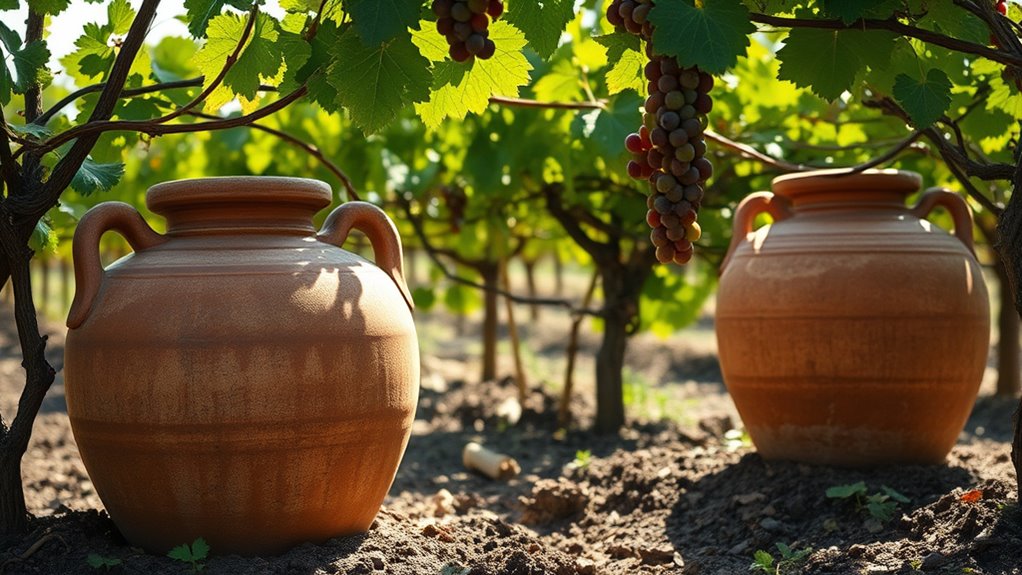
In recent years, ancient wine amphorae have made a surprising comeback, capturing the attention of historians, collectors, and wine enthusiasts alike. You might wonder why these clay vessels, used thousands of years ago, are suddenly gaining popularity in modern winemaking. The answer resides in their remarkable ability to adapt to various climates and the artisanal craftsmanship involved in their production. As the wine industry faces increasing challenges from climate change, many are turning to amphorae because they offer a natural, sustainable alternative to conventional barrels and tanks. Amphorae are highly adaptable; they can be used in diverse environments, whether you’re cultivating grapes in a hot, dry climate or a cooler, more temperate zone. Their porous nature allows for gentle oxygen exchange, which can help stabilize the wine and develop complex flavors without the need for intervention. This climate adaptability makes them an ideal vessel for artisanal winemakers seeking to produce wines with a true sense of place, reflecting the terroir and climate conditions of their vineyards.
The artisanal craftsmanship involved in making amphorae is another aspect that appeals to modern winemakers and collectors. Each amphora is handcrafted from natural clay, often by skilled artisans who have perfected their techniques over generations. This process involves shaping the clay by hand or with traditional tools, followed by careful firing to guarantee durability and porosity. The craftsmanship isn’t just about functionality; it also adds a layer of artistry to each vessel, making every amphora unique. By choosing amphorae, you’re embracing a slow, deliberate approach that values tradition, patience, and quality. This artisanal aspect resonates strongly with a growing movement toward sustainability and authenticity in winemaking, as it often involves minimal intervention and fewer synthetic additives compared to modern equipment.
Using amphorae also aligns with environmentally conscious practices. Since they’re made from natural materials and can be reused for many years, they reduce reliance on plastic or metal tanks, decreasing the environmental footprint of winemaking. Their ability to adapt to different climates means you don’t need to heavily modify your vineyard or cellar conditions to accommodate them. Instead, you benefit from a vessel that naturally supports the wine’s development, all while honoring traditional methods. As more winemakers seek sustainable, climate-resilient solutions, the resurgence of ancient amphorae offers a compelling path forward—blending climate adaptability with artisanal craftsmanship to produce distinctive, eco-friendly wines.
Frequently Asked Questions
What Are the Primary Environmental Benefits of Using Amphorae?
Using amphorae offers significant environmental benefits, such as utilizing biodegradable materials that break down naturally, reducing plastic waste. They also help cut down on energy consumption since they don’t require extensive processing or manufacturing like modern containers. By choosing amphorae, you’re supporting sustainable practices that minimize pollution and resource use, making your winemaking more eco-friendly and aligned with environmental conservation efforts.
How Do Amphorae Influence Wine Flavor Compared to Modern Containers?
Think of amphorae as a whispering gallery where wine’s true voice shines. They allow you to experience a richer terroir expression, revealing nuanced flavors that modern containers might mute. Unlike stainless steel, amphorae gently influence oxidation effects, creating a balanced, complex profile. This vessel’s natural clay breathes with the wine, enhancing its character and depth, making each sip feel like a conversation with the vineyard itself.
Are There Specific Grape Varieties Best Suited for Amphora Fermentation?
You should choose grape varieties with thick skins and high tannin levels, like Syrah, Sangiovese, or Nebbiolo, as they’re more compatible with amphora grape compatibility. These varieties benefit from amphora fermentation techniques because the natural clay environment enhances their mineral and tannic qualities. By selecting suitable grapes and employing proper fermentation methods, you’ll develop unique, expressive wines that highlight the amphora’s influence.
What Is the Typical Cost Difference Between Amphorae and Stainless Steel Tanks?
You’ll find that amphorae typically cost 50-70% more than stainless steel tanks, especially on an industrial scale. This cost comparison reflects the handcrafted nature and historical craftsmanship involved in making amphorae. While stainless steel offers affordability and efficiency, amphorae provide unique aging qualities. If you’re considering large-scale production, weigh the higher initial investment of amphorae against their potential to differentiate your wines in the market.
How Do Wineries Ensure the Hygiene and Safety of Ancient-Style Amphorae?
You guarantee the hygiene and safety of ancient-style amphorae by performing thorough amphora cleaning and amphora sterilization before use. You scrub the interior to remove residues, then sterilize with natural agents like hot water or steam. Regular inspections and proper drying prevent mold and bacteria growth. By maintaining strict hygiene protocols, you assure the amphorae’s safety, preserving wine quality while respecting traditional winemaking methods.
Conclusion
As you explore this sustainable winemaking trend, you’ll find that over 60% of modern wineries now incorporate ancient amphorae, embracing their eco-friendly and authentic qualities. This resurgence not only honors tradition but also reduces reliance on energy-intensive barrels. By choosing amphorae, you join a movement that’s reshaping the future of wine production—more sustainable, innovative, and deeply rooted in history. It’s an exciting time to witness tradition and sustainability blend in every sip.