To avoid stale coffee with single-dose grinding, focus on minimizing air exposure by using airtight, opaque containers for storage and only grind what you need for each brew. Keep your grinder well-maintained and calibrated to guarantee consistent grind size, which improves flavor and extraction. Measure your coffee precisely with a scale or scoop to maintain freshness and balance. If you’re ready to optimize your process further, there’s more helpful advice ahead.
Key Takeaways
- Grind only the amount needed for each brew to minimize exposure to air and preserve freshness.
- Store beans in airtight, opaque containers away from light, heat, and humidity to prevent staling.
- Regularly clean your grinder to remove old residues that can cause stale flavors.
- Use consistent grind settings and precise measurements to ensure optimal extraction and flavor.
- Avoid refrigerating beans; keep them in a cool, dark place to maintain aroma and freshness longer.
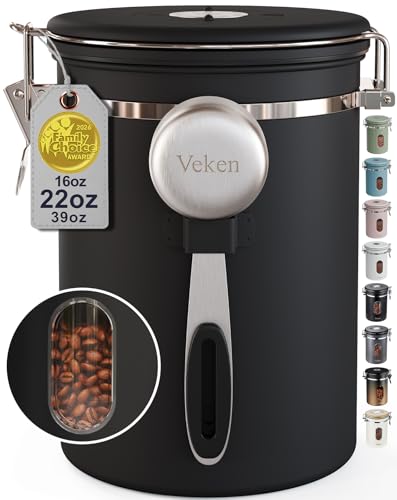
Veken Coffee Canister with Window, Airtight Stainless Steel Container, 22OZ
- Perfect Gift for Coffee Lovers: Stylish jar for holiday gifting and organization
- Date Tracker and Viewing Window: Track expiry dates and see contents easily
- Includes Free Stainless Steel Scoop: Convenient scoop attaches with a hook
As an affiliate, we earn on qualifying purchases.
As an affiliate, we earn on qualifying purchases.
Why Single-Dose Grinding Keeps Your Coffee Fresh
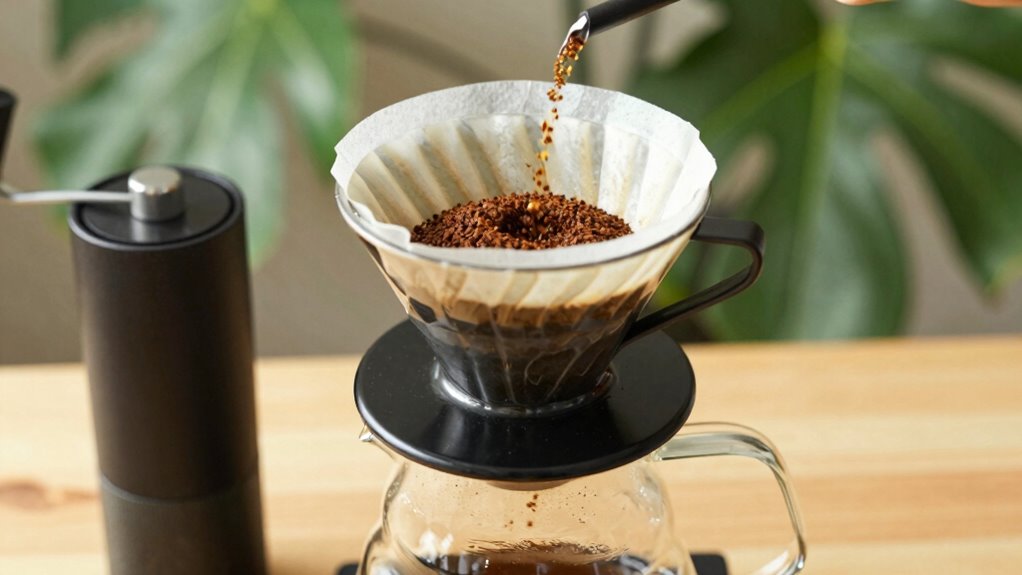
Single-dose grinding helps keep your coffee fresh because it minimizes the exposure of the beans to air, which is the main factor in flavor deterioration. When you grind only what you need, the coffee maintains its ideal freshness longer. This method also improves grind consistency, ensuring each brew extracts evenly and delivers a better flavor profile. Freshly ground coffee retains more of its aromatic oils, enhancing aroma and taste. By avoiding pre-ground coffee or grinding in bulk, you reduce oxidation and staleness. Single-dose grinding also prevents accidental contamination from moisture or contaminants in storage containers. Additionally, it supports flavor preservation by limiting exposure to elements that cause degradation. Using proper storage techniques further helps maintain your coffee’s freshness over time. Incorporating airtight containers for storage can significantly extend the shelf life of your coffee beans. Moreover, moisture control is essential to prevent mold and preserve quality. Ensuring consistent grinding size also plays a vital role in maintaining optimal extraction and flavor. Overall, this approach helps you preserve the delicate flavors and aromatic qualities that make each cup enjoyable, giving you better control over your coffee’s quality with every brew.
How to Store Coffee Beans for Maximum Freshness
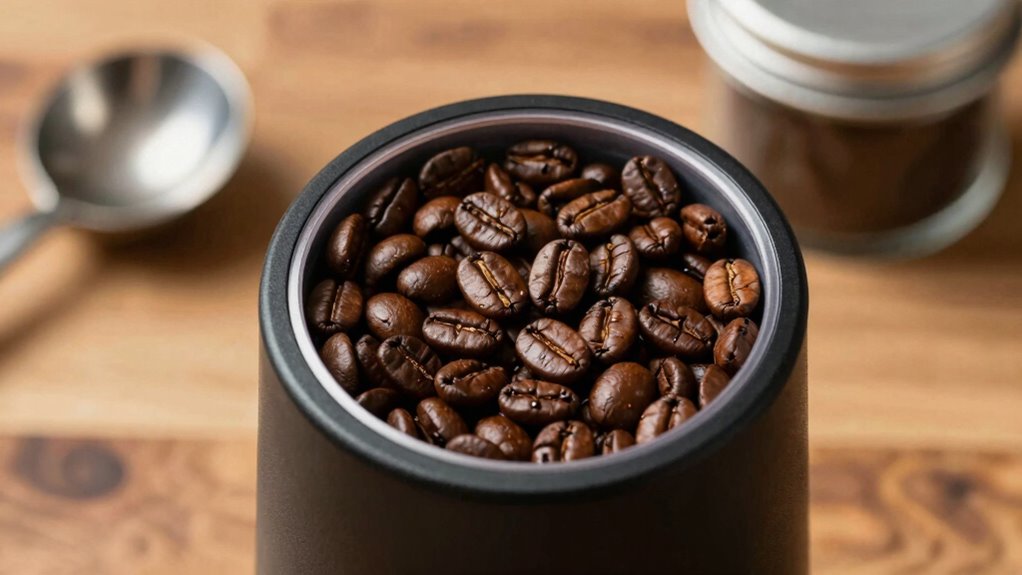
To keep your coffee beans at their peak freshness, proper storage is key. Store your beans in airtight containers to prevent exposure to air, which accelerates staling. Avoid clear containers that let in light; instead, opt for opaque, airtight ones. For even better preservation, consider vacuum sealing your beans, removing all excess air and locking in freshness. Keep the containers in a cool, dark place away from heat and humidity, which can degrade quality. Don’t refrigerate or freeze beans unless you buy in bulk and plan to store them long-term—if you do, ensure they’re vacuum sealed first. Proper storage helps maintain the beans’ flavor and aroma, so each brew tastes just as fresh as the first. Proper storage techniques are essential to prevent flavor loss and preserve quality over time.
Choosing the Best Grinder Settings for Single-Dose Coffee
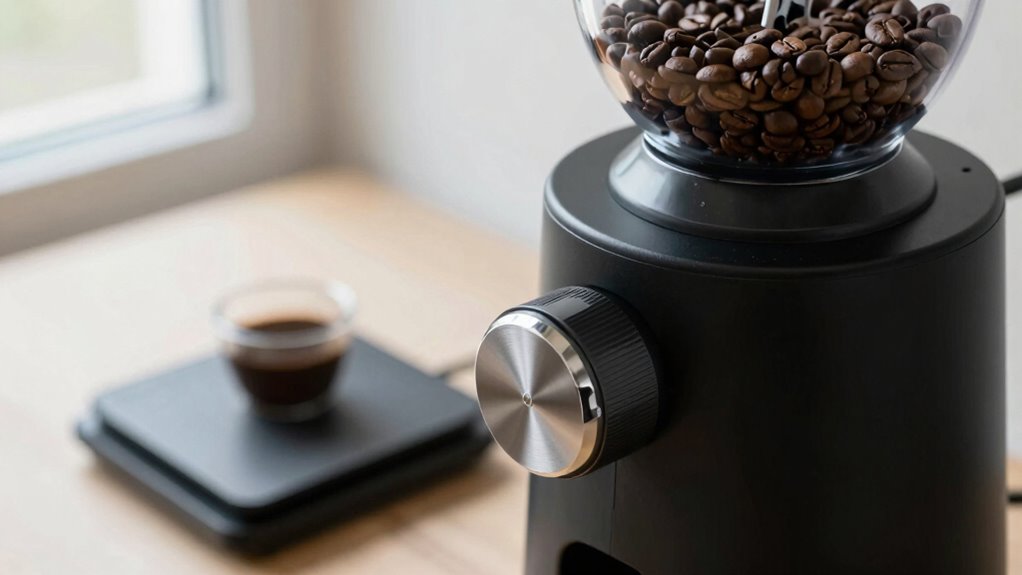
Choosing the right grinder settings is key to making great single-dose coffee. You need consistent grind size, proper dialing-in, and adjustments based on your brew method. Getting these right guarantees your coffee is flavorful and balanced every time. Additionally, understanding knife skills and how to maintain your grinder can help you achieve more precise results. Recognizing the importance of device calibration ensures your grinder remains accurate over time, contributing to better extraction and flavor. Regularly checking your grinder’s settings accuracy can prevent discrepancies that lead to uneven extraction. Knowing how to calibrate your grinder properly can help maintain consistent results as your equipment ages.
Grind Size Consistency
Achieving consistent grind size is essential for optimizing extraction and flavor in single-dose coffee brewing. When your grind size varies, it’s harder to control extraction, leading to uneven flavors or under-extraction. To maintain grind consistency, start by selecting a high-quality grinder with precise adjustment capabilities. Always use the same setting for your specific coffee beans, and avoid frequent changes unless intentionally dialing in. Regularly check the grind size with a visual or tactile test—your grounds should be uniform in particle size. Clean your grinder regularly to prevent buildup that can affect grind consistency. Consistency in grind size ensures each brew is balanced and predictable, allowing you to enjoy fresh, flavorful coffee without overthinking the process.
Dialing In Properly
Dialing in the right grinder settings is essential for extracting the best flavor from your single-dose coffee. Proper grinder calibration ensures your grind size is accurate, allowing you to optimize extraction. Fresh beans can affect the ideal setting, so consider bean freshness when adjusting. To find the perfect grind:
- Start with a consistent baseline, calibrate your grinder regularly.
- Adjust grind size gradually, tasting after each change.
- Keep track of settings to replicate your ideal dose.
- Remember that grinder calibration plays a crucial role in maintaining optimal extraction and flavor consistency.
Adjusting for Brew Method
Since different brewing methods require specific grind sizes to extract ideal flavor, it’s important to modify your grinder settings accordingly. Brew method adjustments involve fine-tuning your grind size to match the brewing process, whether you’re making espresso, pour-over, or French press. For espresso, opt for a fine grind to increase surface area and extraction speed; for pour-over, a medium grind balances flow rate and extraction. French press needs a coarser grind to prevent over-extraction and sediment. Grind size tuning is essential to avoid under- or over-extraction, which can lead to sour or bitter flavors. Take time to experiment with small adjustments, noting how each affects flavor and flow rate. Proper adjustment ensures your single-dose coffee is fresh, flavorful, and perfectly suited to your chosen brew method.
How to Measure and Dose Coffee Precisely
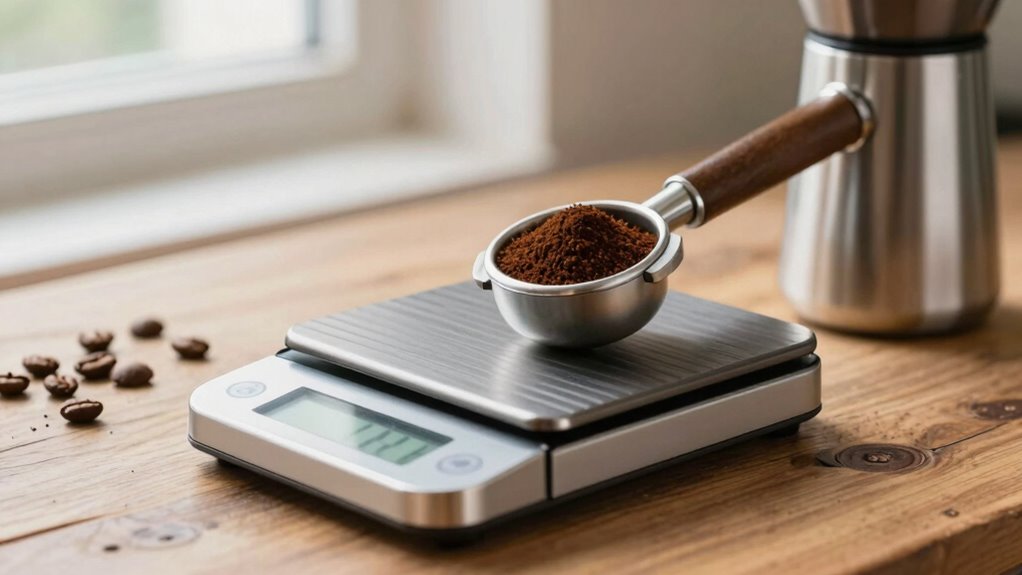
To get the perfect brew, you need to measure your coffee accurately. Using a scale guarantees precision, while a consistent scoop size helps maintain the right amount every time. Pre-measuring your ground coffee saves time and keeps your dosing consistent.
Use a Scale
Using a scale is the most accurate way to measure and dose your coffee, ensuring consistency in every brew. Precise measurement helps you control coffee flavor and preserve bean freshness, so each cup tastes as intended. With a scale, you can:
- Achieve the ideal coffee-to-water ratio every time
- Track your dosing for consistency day after day
- Adjust based on bean freshness and roast level
This method removes guesswork, making it easier to refine your grind and brewing process. Accurate dosing enhances flavor extraction and prevents stale-tasting coffee caused by over- or under-measuring. Plus, it helps you maintain the perfect balance, especially when working with different beans or roast profiles. A scale is your best tool for single-dose grinding, helping you brew better coffee with less effort. Incorporating knowledge about projector technology can also inspire creative ways to visualize your brewing process for better results. Regularly cleaning your coffee equipment with best coffee brush cleaners ensures optimal flavor and hygiene. Understanding large number conversions can help you better grasp the quantities involved in coffee production and consumption, leading to more informed choices. Additionally, using a calibrated scale ensures your measurements stay accurate over time, maintaining the quality of your brews. Keeping your scale properly calibrated can prevent measurement drift and ensure ongoing precision.
Consistent Scoop Size
A consistent scoop size is essential for precise coffee measurement and reliable results. When you use the same amount each time, your brew temperature remains stable, ensuring ideal extraction. To achieve this, select a scoop that matches your desired coffee dose and use it consistently. Keep in mind that water quality can influence extraction, so measuring your coffee accurately helps maintain the right balance. Avoid guessing or eyeballing portions, as inconsistency can lead to over- or under-extraction, affecting flavor. Investing in a standard scoop or scoop measure ensures uniformity across brews. This simple step helps you dial in brewing variables like brew temperature and water quality, making your coffee routine more predictable and your coffee consistently better. Detecting passive voice can further improve clarity and engagement in your writing.
Pre-Measure Ground Coffee
Pre-measuring ground coffee guarantees you achieve consistent doses for every brew, which is vital to reliable flavor and extraction. To do this effectively, use precise measuring techniques like a calibrated scale or a measuring scoop designed for coffee. Keep in mind that grind tampering can affect your measurements, so avoid shaking or tamping the grounds after measuring. Consistency is essential—small variations can lead to uneven extraction. Using standardized measurements helps maintain uniformity across brews. Incorporating a measuring tool ensures accuracy and helps you replicate your ideal coffee every time. Proper measurement techniques are key to achieving a balanced brew and consistent flavor profile. Store pre-measured grounds in airtight containers to prevent stale coffee from affecting freshness. Following these tips ensures your coffee’s flavor stays consistent and fresh.
Common Single-Dose Grinding Problems and How to Fix Them
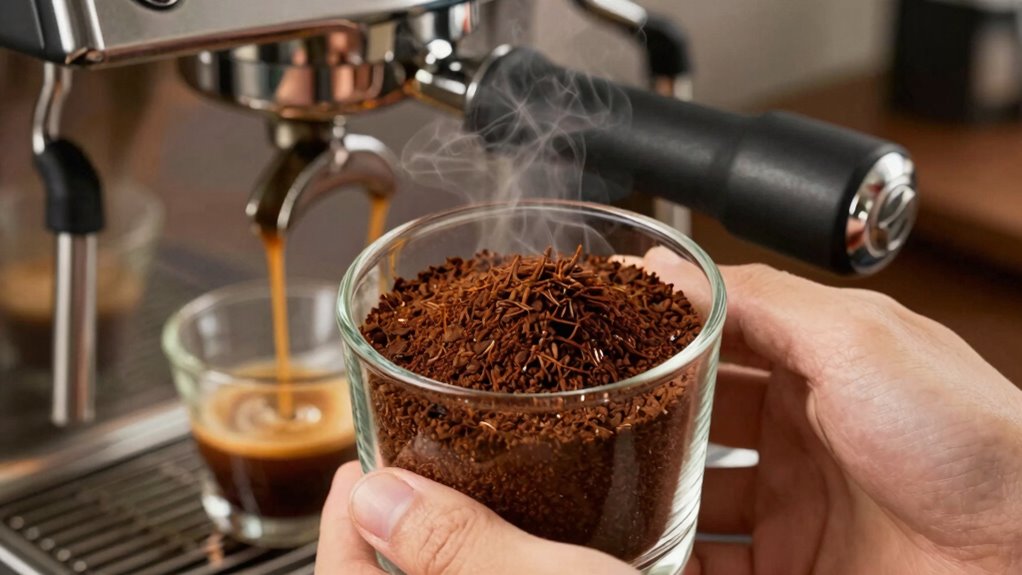
Single-dose grinding can present several common problems that affect the consistency and quality of your results. One issue is burr misalignment, which causes uneven grounds and inconsistent extraction. Regularly check and adjust the burrs to guarantee they’re properly aligned, giving you a uniform grind size. Another problem is grind retention, where coffee particles get stuck inside the grinder, leading to stale flavors mixing with fresh beans. To fix this, clean your grinder regularly and consider dosing smaller amounts to minimize leftover grounds. Additionally, inconsistent grind size can occur from worn burrs or improper settings. Keep your burrs sharp and calibrated, and experiment with your grind settings to find the ideal size for your brewing method. Paying attention to regional flavors and coffee flavor profiles can help you tailor your grind size to enhance specific taste notes. Addressing these problems improves flavor clarity and brewing consistency.
Simple Tips to Keep Your Coffee Fresh Every Day
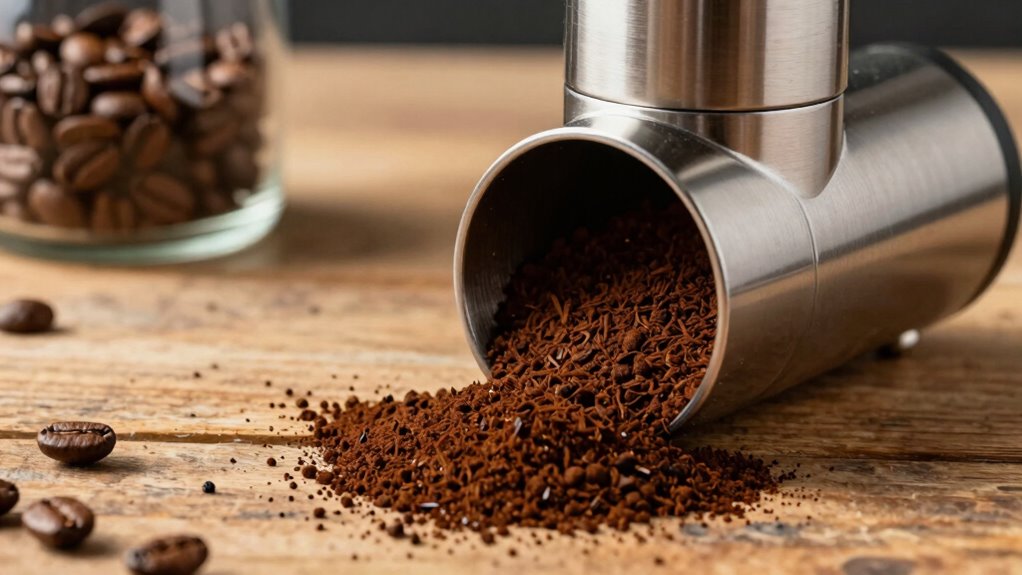
Maintaining the freshness of your coffee is key to enjoying its full flavor and aroma each day. To keep coffee freshness high, store beans in an airtight container away from light, heat, and moisture. Avoid keeping coffee in the fridge, which can introduce humidity and cause staling. Regular grinder maintenance is essential—clean your grinder’s burrs and blades to prevent old coffee residue from affecting new beans. Additionally, consider grinding only what you need for each brew to preserve flavor and aroma. Using airtight containers for storage helps maintain freshness, and cleaning your grinder regularly prevents stale residues from affecting new grinds. Incorporating proper storage practices can significantly extend the shelf life of your coffee beans. Also, be mindful of how affiliate marketing influences product recommendations and storage options, ensuring you choose the best tools for your coffee routine. To further enhance freshness, avoid exposing your beans to excessive air which can accelerate staling. Here are simple tips to stay on top of your coffee game:
- Use airtight containers for storage
- Clean your grinder regularly
- Grind fresh beans daily for ideal freshness
Frequently Asked Questions
What Grinders Are Best Suited for Single-Dose Brewing?
You should choose a grinder with precise burr adjustment and easy maintenance, like a conical or flat burr grinder. These models allow you to fine-tune grind size for ideal flavor and keep your beans fresh. Regular grinder maintenance ensures consistent results, while burr adjustment helps you dial in the perfect grind for single-dose brewing. Look for user-friendly designs that make cleaning simple to keep your coffee tasting fresh every time.
How Does Grind Size Affect Extraction Quality?
You’ll notice that grind size directly impacts extraction quality by controlling particle size. Finer grinds increase surface area, leading to faster extraction, while coarser grinds slow it down. When you adjust grind size, you improve extraction consistency, ensuring your coffee isn’t under or over-extracted. Experimenting with particle size helps you find the sweet spot, resulting in a balanced, flavorful brew without overthinking the process.
Can I Use Pre-Ground Coffee for Single-Dose Brewing?
You can use pre-ground coffee for single-dose brewing, but it’s not ideal for maintaining coffee freshness. Pre-ground coffee tends to lose its flavor faster, so you should prioritize fresh beans whenever possible. Also, guarantee the grind consistency is appropriate for your brewing method, as uneven grind size can lead to over- or under-extraction. For the best results, grind your beans just before brewing to preserve flavor and optimize extraction.
How Often Should I Calibrate My Grinder?
You should calibrate your grinder regularly to maintain ideal coffee quality. Aim for a calibration schedule based on usage—typically every 2 to 4 weeks or after changing beans, cleaning, or if you notice inconsistent grind size. Regular grinder maintenance and calibration help guarantee consistent extraction, flavor, and freshness. By sticking to this schedule, you keep your grinder performing at its best, avoiding stale coffee and enhancing your brewing experience.
Is It Better to Grind All Beans at Once or Daily?
You should grind your beans daily for maximum freshness preservation and flavor consistency. Grinding all at once exposes beans to air longer, which can lead to stale coffee and diminished flavor. By grinding just what you need each day, you keep the coffee fresher longer and enjoy consistent taste with every brew. This simple habit ensures your coffee remains vibrant and flavorful, making each cup as good as the first.
Conclusion
Now that you know how to grind your coffee single-dose style, isn’t it worth the effort to enjoy fresher, richer brews every day? By storing your beans properly, choosing the right grind, and measuring precisely, you’ll avoid that stale taste and overthinking. So, why settle for dull mornings? Use these simple tips to keep your coffee fresh and flavorful—your taste buds will thank you! Ready to elevate your coffee game?