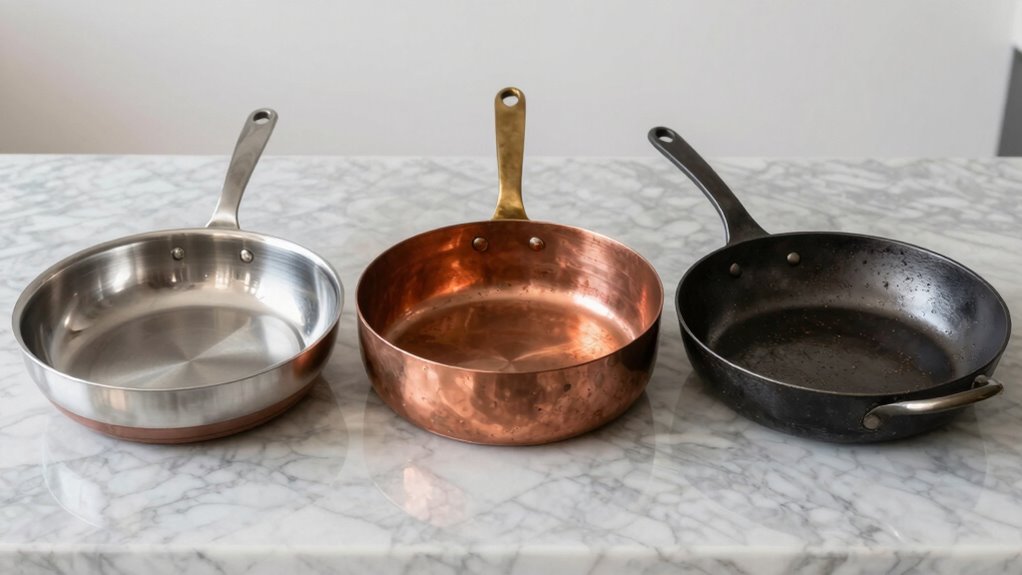

Choosing between stainless steel, copper, and carbon steel depends on your cooking style. If you want durability and low maintenance, stainless steel is a solid choice. For precise heat control and quick responsiveness, go for copper. If versatility and high-heat capacity matter most, carbon steel fits well. Each material suits different techniques and dishes, so consider your cooking habits. Keep exploring to find out which pan aligns best with your culinary needs.

Get home appliances delivered free — and shop member deals
- Fast, free delivery on millions of items
- Access to Prime Big Deal Days deals on October 6–7
- Prime Video, Amazon Music and more included
Key Takeaways
- Choose copper for precise, delicate cooking like sauces, due to its superior heat responsiveness and quick temperature adjustments.
- Opt for stainless steel for durable, low-maintenance everyday use suitable for searing, sautéing, and general cooking.
- Select carbon steel for versatile, high-heat techniques such as searing, stir-frying, and baking, with good responsiveness and durability.
- Consider your budget and maintenance willingness; stainless steel is affordable and low-maintenance, while copper and carbon steel are long-lasting but require more care.
- Match pan material to your cooking style and preferred dishes to maximize control, efficiency, and cookware longevity.
As an affiliate, we earn on qualifying purchases.
What Are the Main Differences Between Stainless Steel, Copper, and Carbon Steel?
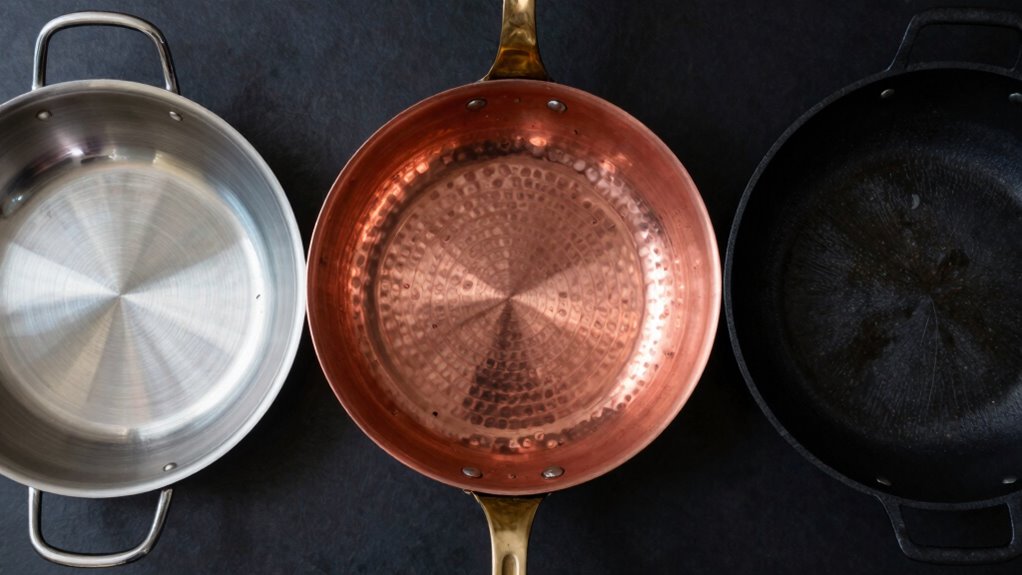
The main differences between stainless steel, copper, and carbon steel pans lie in their material properties and how they perform in the kitchen. Stainless steel is highly durable and resistant to scratches and corrosion, making it a long-lasting choice. Its sleek, shiny appearance adds a modern aesthetic appeal that stays attractive over time. Copper pans, on the other hand, boast excellent heat conductivity, allowing precise temperature control, but they require more maintenance to prevent tarnishing and scratches. Copper’s heat responsiveness is particularly appreciated by chefs aiming for meticulous cooking. Carbon steel pans are durable and develop a beautiful patina with use, giving them a rustic, attractive look. While they may require seasoning, they are prized for their ability to handle high heat. Each material offers distinct advantages, influenced by durability and visual appeal, suited to different cooking styles. The choice of cookware material also impacts heat distribution and overall cooking performance, making it an important consideration for both amateur and professional chefs.
Why Is Stainless Steel a Durable and Low-Maintenance Choice?
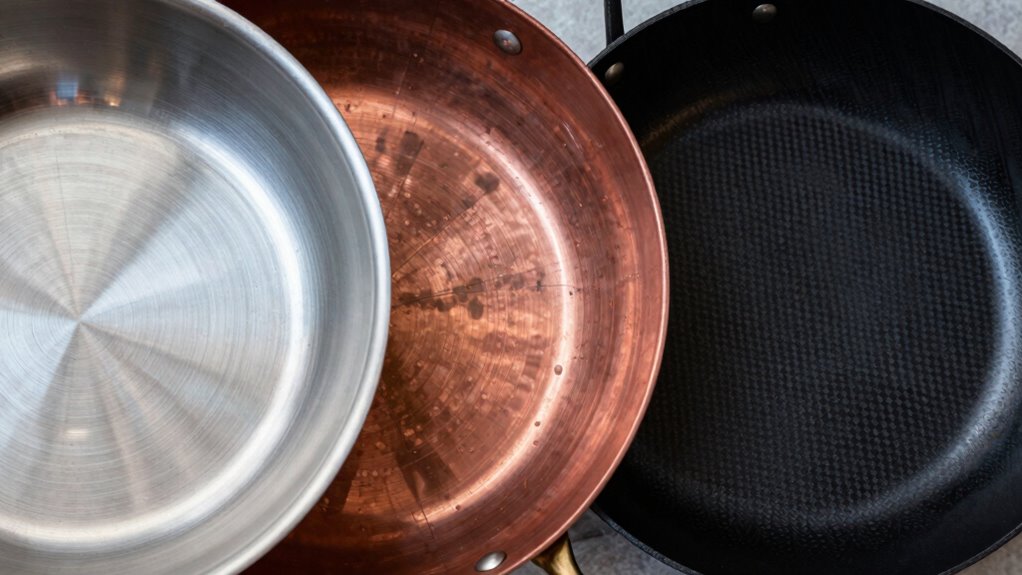
Stainless steel is a popular choice because it resists corrosion, so your pans stay looking new longer. They’re easy to clean and require minimal upkeep, saving you time and effort. This combination of durability and low-maintenance makes stainless steel a practical option for everyday cooking. Additionally, fire-starting kits demonstrate how reliable and efficient tools can support preparedness and self-sufficiency in various situations. Understanding personality assessments like the 16PF can also help improve communication and teamwork in the kitchen environment. Moreover, the best gelato in Laguna Beach showcases how quality ingredients and craftsmanship can elevate a simple treat, similar to how choosing the right cookware enhances your cooking experience. Proper maintenance practices ensure your stainless steel cookware remains in top condition over the years.
Corrosion Resistance Advantage
Because stainless steel forms a protective chromium oxide layer on its surface, it resists corrosion and rust over time. This durability means your pan stays looking new longer and requires less maintenance. Plus, stainless steel offers a variety of pan color options, allowing you to choose one that matches your kitchen decor. Its corrosion resistance also ensures the pan retains its appearance despite exposure to moisture or acidic foods. An ergonomic handle design adds to its low-maintenance appeal, providing a comfortable grip that stays cool and secure. This combination of resistance and thoughtful design makes stainless steel a reliable choice for everyday cooking. Additionally, stainless steel body jewelry is often used in piercing jewelry due to its durability and low reactivity, highlighting its resistance to corrosion. The corrosion-resistant properties of stainless steel make it an ideal material for cookware that endures frequent use and cleaning, further reducing the need for replacement or special care. Incorporating the principles of the Law of Attraction, maintaining a positive mindset about your cookware can also enhance your cooking experience. You won’t need to worry about rust or discoloration, making it a durable, low-maintenance addition to your cookware collection.
Easy Maintenance Benefits
Thanks to its smooth, non-porous surface, stainless steel pans are incredibly easy to clean and maintain. You don’t have to worry about food sticking, thanks to their resistance to residue buildup. Additionally, stainless steel pans require minimal maintenance, saving you time and effort. Unlike non-stick coatings that can chip or peel, stainless steel is durable and long-lasting. Plus, modern designs often feature handle safety improvements, ensuring secure handling during cooking and cleaning.
- Easy to clean without special tools or chemicals
- Resistant to staining and rust
- Handles are sturdy and safe, reducing accidents
These benefits make stainless steel a practical choice for everyday cooking, offering durability and low-maintenance convenience you can count on.
How Do Copper Pans Offer Superior Heat Conductivity?
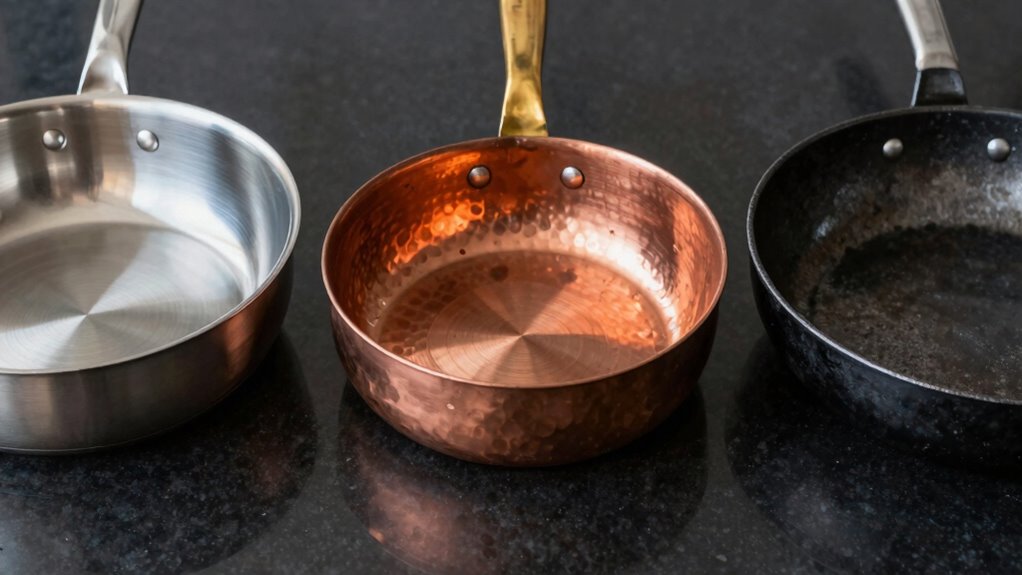
Copper pans are renowned for their exceptional ability to conduct heat quickly and evenly across their surface. This superior heat conduction guarantees ideal heat distribution, allowing you to cook with greater precision and control. Because copper responds rapidly to temperature changes, you can adjust your heat levels more accurately, preventing hot spots and ensuring consistent results. Copper’s excellent thermal conductivity is largely due to its material properties, making it highly compatible with a variety of cooking techniques. Additionally, efficient heat transfer in copper cookware helps reduce energy consumption during cooking. Copper cookware often features rapid temperature response, which enhances cooking precision and helps prevent overcooking or burning. Its ability to respond swiftly to temperature adjustments also minimizes energy waste, making it an energy-efficient choice. Because copper reacts with certain foods and is often lined with other metals like tin or stainless steel for better material compatibility, this lining also helps to prevent metal leaching, ensuring safe and durable cookware.
Is Carbon Steel a Versatile Cookware Material? Uses and Care Tips
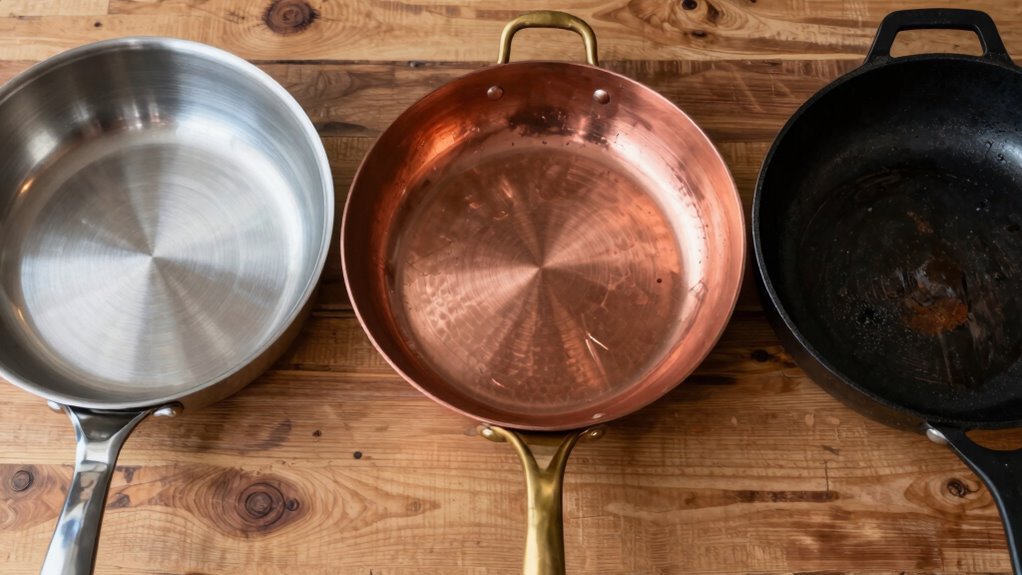
Is carbon steel a truly versatile cookware material? Absolutely. It heats quickly and evenly, making it perfect for a variety of dishes. Here are three reasons why it’s a go-to choice:
- Multi-Use Cooking: Great for searing, frying, sautéing, and even baking since it’s oven safe. Its versatility in the kitchen allows for seamless transition between cooking methods. The heat retention capabilities contribute to consistent cooking results across different recipes. Additionally, its adaptability to different cuisines makes it suitable for a wide range of culinary traditions.
- Natural Non-Stick Surface: With proper seasoning, it develops a non stick coating that improves over time, eliminating the need for synthetic non stick coatings.
- Durability: It withstands high temperatures and lasts for decades with minimal maintenance. Additionally, essential DIY tools can be useful for maintaining and repairing your cookware.
To keep your pan in top shape, hand wash and dry thoroughly. Season it regularly to maintain its non stick surface, and always check oven safety limits before baking.
Which Cookware Material Fits Your Cooking Style? Fast and Responsive or Heavy-Duty?
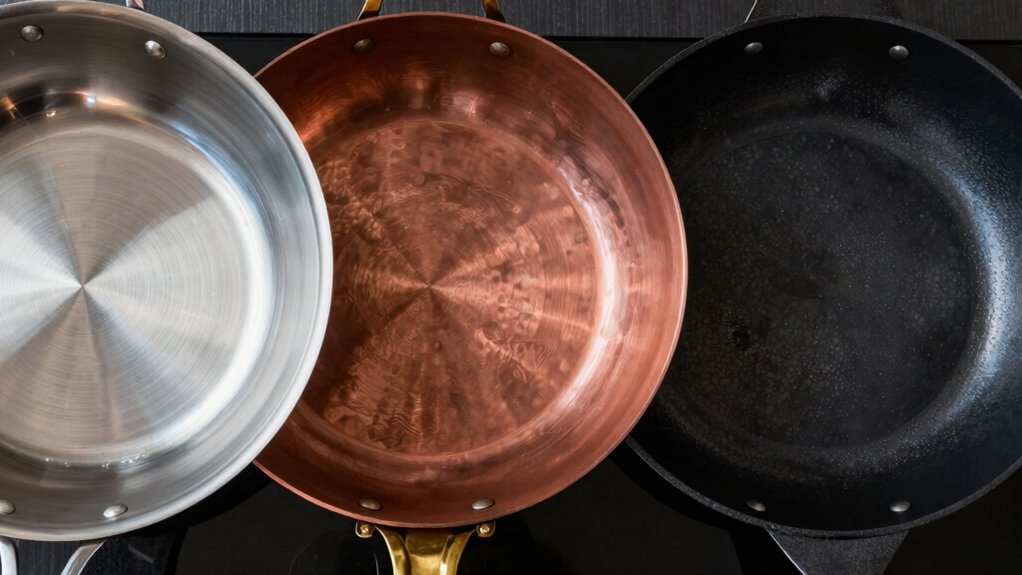
Choosing the right cookware depends on your cooking style, especially when weighing speed and responsiveness against durability. If you prioritize quick cooking and precise heat control, materials with high heat responsiveness, like copper or carbon steel, are ideal. These pans heat up rapidly and respond instantly to temperature changes, giving you better control over delicate tasks. Conversely, if you need cookware that withstands heavy use and lasts for years, stainless steel offers durability but with less immediate heat responsiveness. Consider your typical cooking pace—if you often cook dishes requiring quick adjustments, go for responsive materials. For slow, steady cooking or heavy-duty tasks, a more robust, less responsive pan might be your best fit. Matching cookware to your style ensures better results and a more enjoyable cooking experience.
How Does Maintenance Impact the Longevity of Different Cookware Types?
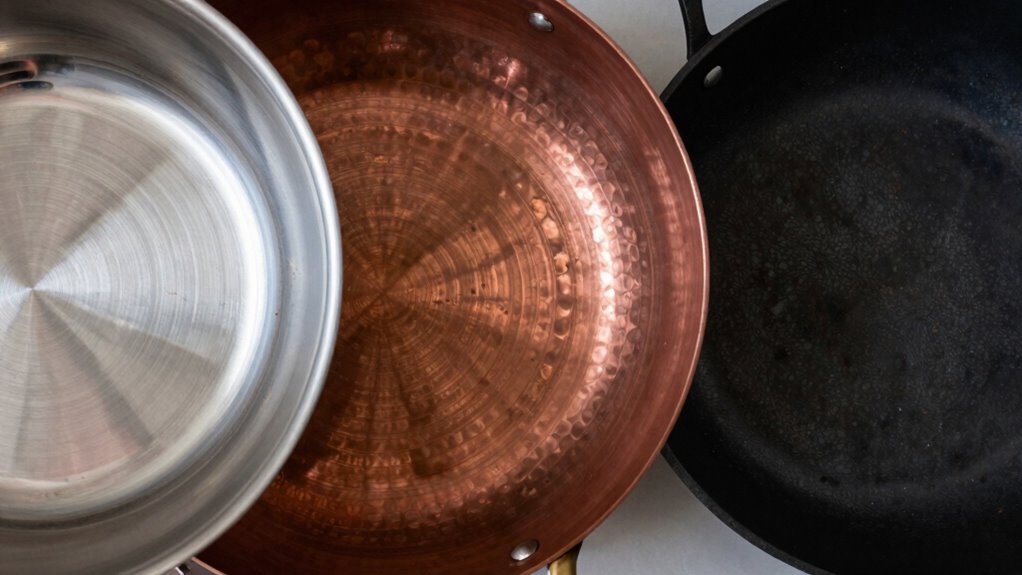
Proper cleaning and care routines are essential to keeping your cookware in top shape and extending its lifespan. Neglecting maintenance can lead to damage that requires repairs or early replacement. How you care for each type of pan directly impacts how long it will serve you well. For example, understanding regional flavors and chicory/coffee insights can inspire you to choose cookware that enhances specific brewing methods or flavor profiles, ultimately affecting maintenance needs and longevity. Additionally, selecting appropriate cleaning techniques tailored to each material can prevent corrosion and preserve cooking performance over time. Using protective coatings when necessary can create a barrier against moisture and prevent deterioration, further extending its durability. Regularly inspecting your cookware for signs of wear and using protective coatings when necessary can further extend its durability. Incorporating proper maintenance schedules can significantly improve the longevity of your cookware by ensuring consistent care and timely interventions.
Cleaning and Care Routines
Regular cleaning and proper maintenance play an essential role in extending the lifespan of your cookware. To keep your pans in top shape, incorporate these routines:
- Perform seasonal cleaning to remove buildup and restore surface quality, especially for copper and carbon steel pans.
- Follow storage tips, like stacking with protective layers or hanging, to prevent scratches and dents.
- Use appropriate cleaning methods: stainless steel can handle more aggressive scrubbing, while copper and carbon steel benefit from gentle care to preserve coatings and seasoning.
Consistent care prevents corrosion and maintains performance. For example, avoiding soap on seasoned carbon steel retains its non-stick layer, while regular polishing of copper keeps its shine. Investing time in proper routines ensures your pans last longer and perform better over time.
Repair and Replacement Needs
Maintenance directly influences how long your cookware lasts and how often it needs repairs or replacement. Proper care can markedly extend the pan longevity of stainless steel, copper, and carbon steel pans. For instance, stainless steel pans are durable and often require minimal repair options, making them a long-lasting choice with routine cleaning. Copper pans may develop tarnish or dents, but they’re generally repairable through professional polishing or re-tinning. Copper pans also benefit from understanding cloud-based services, which can help track maintenance schedules and care instructions to prolong their lifespan. Additionally, being aware of cooking techniques can help prevent damage caused by improper use, further extending the life of your cookware. Regularly checking for signs of wear through proper inspection can catch issues early before they become serious problems, saving you money and effort. Recognizing maintenance schedules and adhering to recommended care routines ensures your pans stay in optimal condition longer. Carbon steel pans can warp or chip if mishandled, yet minor damage is often fixable with seasoning or reconditioning. The key is consistent maintenance; neglecting routine care shortens lifespan and increases the need for repairs. Regular inspection and proper handling ensure you get the most out of your cookware, maximizing its durability and utility over time. Additionally, understanding Floating on Water concepts can help in cleaning and maintaining pans, especially those with delicate finishes or materials.
Are These Cookware Options Budget-Friendly or Investment Pieces?
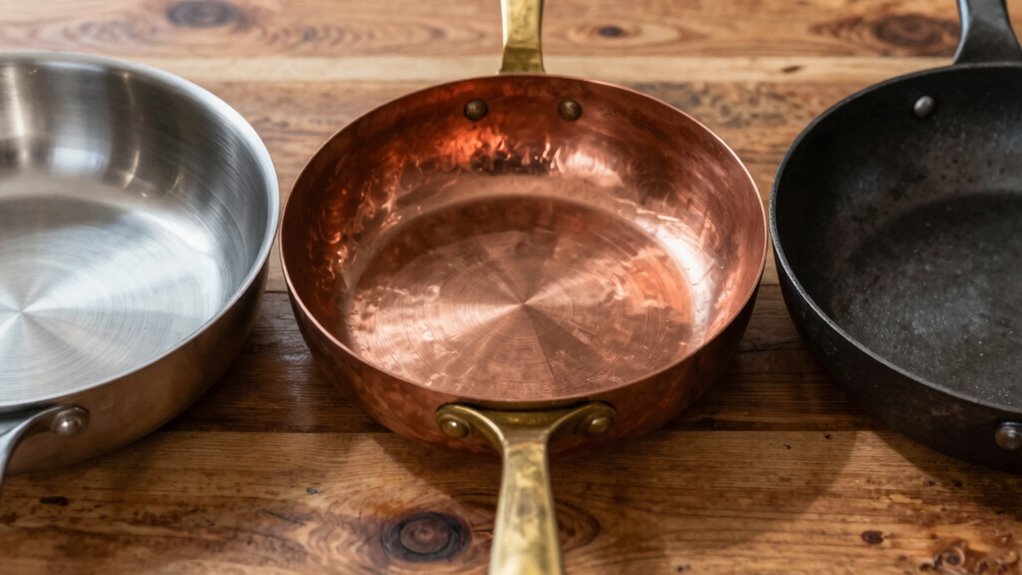
When choosing between stainless steel, copper, and carbon steel pans, it’s important to contemplate whether they fit your budget or serve as long-term investments. Your budget considerations will influence your choice, especially since some options offer higher investment value. Additionally, understanding the accessory maintenance required for each type can help prevent unexpected costs and prolong the lifespan of your cookware. Here are three points to consider: 1. Initial cost: Copper pans tend to be the most expensive, while stainless steel options are more affordable. 2. Durability and lifespan: Copper and carbon steel pans often last decades with proper care, making them good investment pieces. 3. Maintenance costs: Stainless steel requires less upkeep, saving you money over time. Balancing upfront costs with long-term benefits helps you choose cookware that matches your financial comfort and cooking needs.
What Are the Best Cooking Techniques for Stainless Steel, Copper, and Carbon Steel?
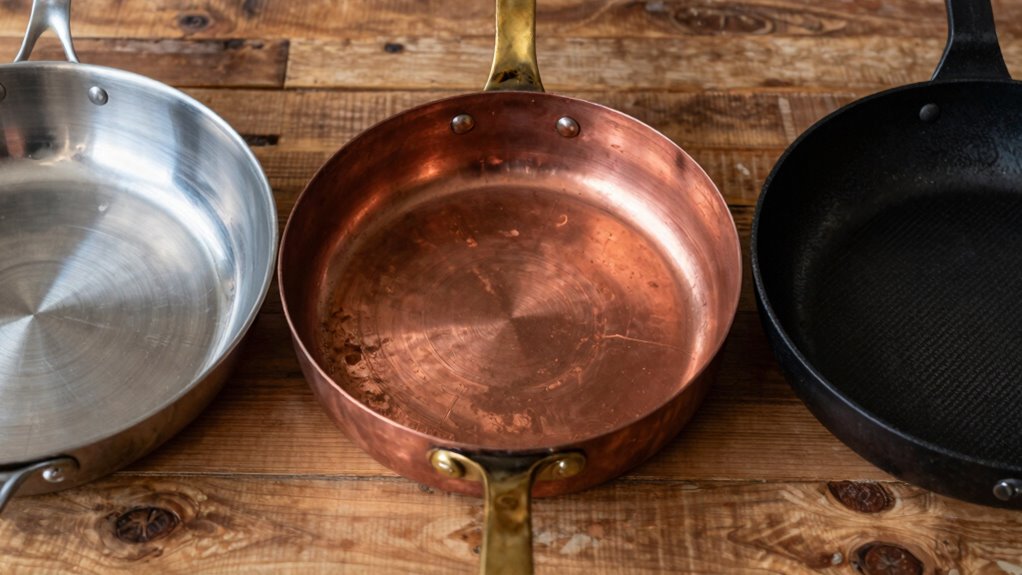
Choosing the right cookware isn’t just about budget—it also depends on mastering the best techniques for each material. Stainless steel excels with searing, browning, and deglazing because of its excellent heat distribution, which allows you to achieve even cooking and flavorful results. Copper pans are ideal for delicate sauces or precise simmering, thanks to their superior heat responsiveness. They heat up quickly and respond instantly to temperature changes, making them perfect for techniques requiring control. Carbon steel is versatile for high-heat searing, stir-frying, and sautéing. It evenly distributes heat but also develops a non-stick patina over time. Understanding these cooking techniques and how heat moves through each material helps you maximize their strengths and improve your overall cooking results.
Which Pan Material Is Best for Specific Dishes and Recipes?
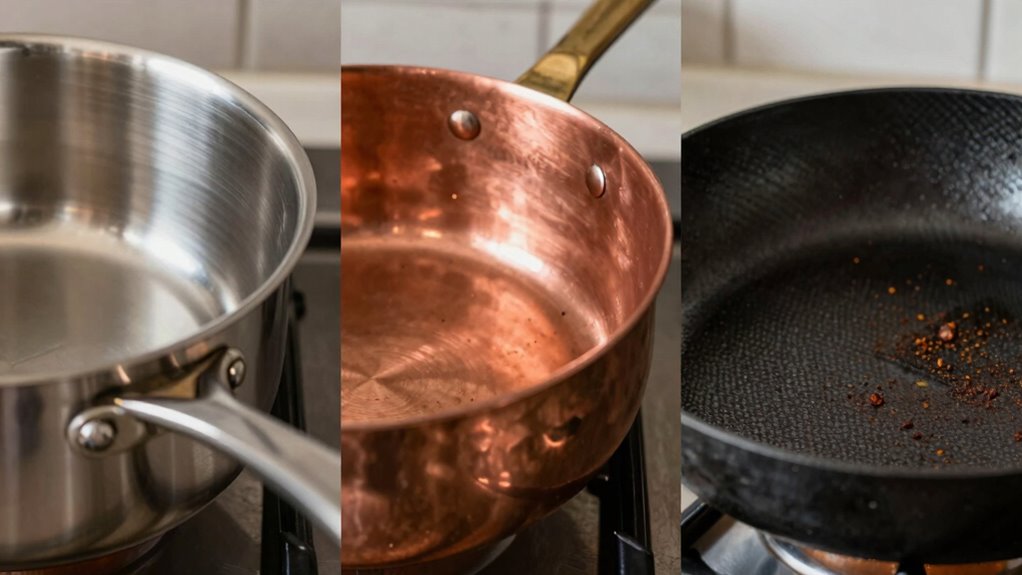
Different dishes benefit from specific pan materials because each one interacts uniquely with ingredients and cooking techniques. For example, you might choose:
Choosing the right pan material enhances cooking results and simplifies your kitchen experience.
- A non-stick coating pan for delicate eggs or pancakes, where easy release is key.
- Copper pans for quick, precise sauces that require excellent heat responsiveness.
- Carbon steel pans for stir-fries or searing steaks, especially when oven compatibility is needed for finishing dishes.
Choosing the right material ensures ideal results and simplifies cooking. Copper offers excellent temperature control, while stainless steel excels with oven-safe versatility. Carbon steel combines durability with a natural non-stick quality when seasoned properly. Consider your dish types and cooking style to select the best pan material for each recipe.
How to Choose the Perfect Cookware for Your Kitchen Needs
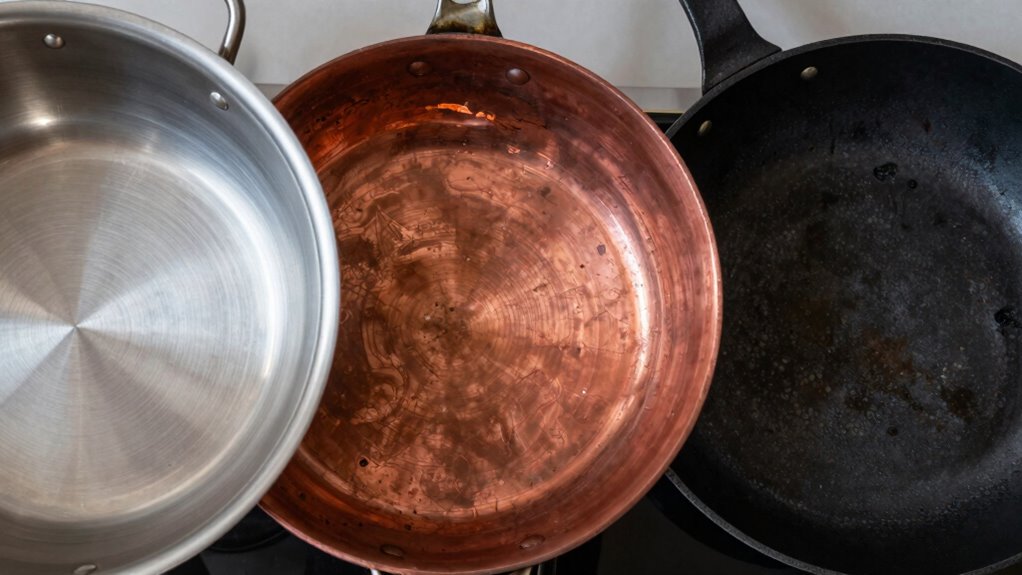
Selecting the right cookware for your kitchen starts with evaluating your cooking habits, available space, and budget. Consider the material durability of each option; stainless steel offers long-lasting strength, copper provides excellent heat conduction, and carbon steel balances durability with affordability. Think about cooking versatility—if you prepare a variety of dishes, versatile pans like carbon steel or stainless steel can handle everything from searing to sautéing. If you frequently cook delicate sauces, copper’s precise heat control is ideal. Also, assess how much storage space you have, as some materials are heavier or bulkier. By matching your cooking style with the material’s durability and versatility, you’ll choose cookware that enhances your kitchen efficiency and lasts through years of use.
Frequently Asked Questions
How Do Cleaning Methods Differ Among Stainless Steel, Copper, and Carbon Steel Pans?
You’ll find cleaning techniques vary for each pan type. For stainless steel, use warm water and mild dish soap, then scrub with a non-abrasive sponge, and occasionally use a baking soda paste for stubborn stains. Copper pans need gentle hand washing with soap and a soft cloth, avoiding abrasives to prevent tarnishing. Carbon steel pans require wiping or rinsing, then drying thoroughly and applying a thin oil layer for maintenance tips to prevent rust.
Which Cookware Material Is Best for Induction Cooktops?
If you want a pan that actually works on induction cooktops, go for stainless steel or cast iron. Copper’s non-magnetic nature makes it useless here, no matter how shiny it is. Induction compatibility relies on magnetic properties, so avoid copper unless it’s combined with a magnetic base. Stainless steel pans with ferromagnetic layers are your best bet for quick heat, durability, and seamless induction cooking.
Can Copper or Carbon Steel Pans Be Used in the Oven Safely?
Yes, copper and carbon steel pans can be used in the oven safely if they have oven-safe handles and proper construction. Copper pans are generally durable but may require a protective lining, while carbon steel pans are highly oven-safe due to their material durability. Always check the manufacturer’s guidelines for oven safety to prevent damage and guarantee safe use. Properly maintained, these pans can handle high temperatures and versatile cooking needs.
How Does Weight Affect Handling and Maneuverability During Cooking?
Weight substantially impacts handling ease and maneuverability during cooking. Heavier pans, like cast iron or thick copper, can be more challenging to lift and control, especially when full. If you prefer easier handling, opt for lighter options like stainless steel or thinner copper pans. Consider your strength and comfort level, as well as the type of cooking you do, to choose a pan that offers the best maneuverability for your skills and needs.
Are There Health Considerations When Using Different Types of Cookware?
When choosing cookware, health considerations matter. Look for pans with non-toxic coatings to avoid harmful chemicals leaching into your food. Copper and stainless steel can sometimes leach heavy metals if damaged or poorly made, so guarantee quality. Carbon steel is generally safe, but avoid cheap options. Prioritize high-quality, well-maintained cookware to minimize health risks like heavy metal leaching, keeping your cooking safe and healthy.
Conclusion
Choosing the right cookware is like finding the perfect dance partner—each has its own rhythm and flair. Whether you crave the durability of stainless steel, the swift heat response of copper, or the versatile strength of carbon steel, pick what matches your style. With the right pan in hand, you’ll turn your kitchen into a stage where every dish shines like a star. So, trust your instincts and let your cookware lead the way!
Fall yard work Picks
leaf blowers
As an affiliate, we earn on qualifying purchases.