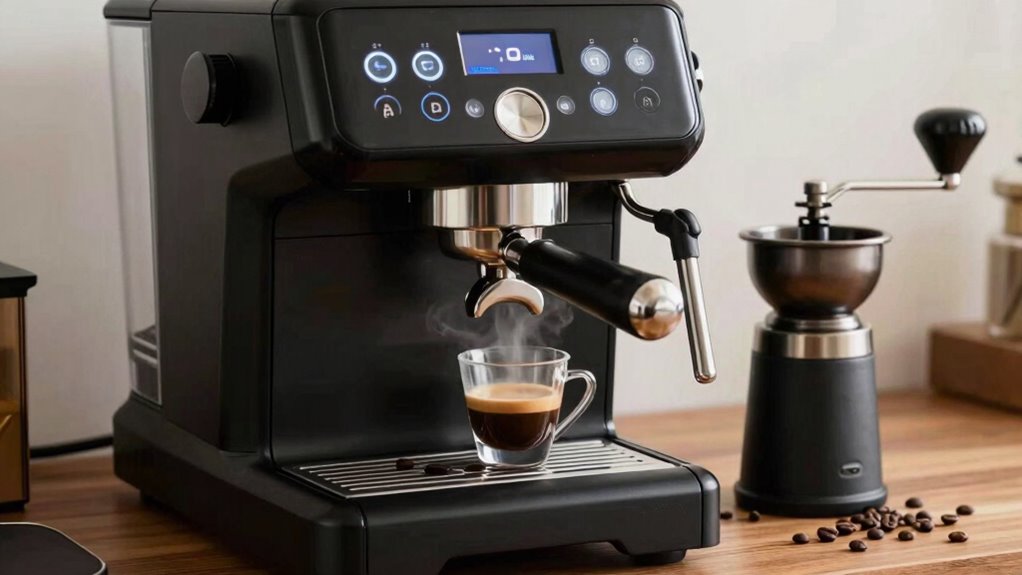
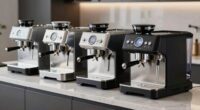
Super-automatic machines handle everything from grinding to milk frothing at the push of a button, making them perfect for quick, hassle-free coffee. Semi-automatics give you more control over grind size, shot timing, and frothing, appealing to enthusiasts who enjoy customizing each cup. Your choice depends on how much you want to automate versus personalize your brew. Want to discover which suits your lifestyle best? Keep exploring for more details.
Key Takeaways
- Super-automatic machines offer quick, convenient brewing with minimal user effort, while semi-automatics provide greater control and customization.
- Semi-automatics are ideal for coffee enthusiasts who enjoy manual adjustments; super-automatics suit busy users needing fast results.
- Maintenance complexity varies; super-automatics handle more processes automatically, but semi-automatics require frequent calibration and skill.
- Customization options are limited in super-automatics, whereas semi-automatics allow extensive control over grind, temperature, and brewing parameters.
- Overall, choose super-automatic for simplicity and speed, semi-automatic for flexibility and a personalized brewing experience.
What’s the Difference Between Super-Automatic and Semi-Automatic Espresso Machines?

Understanding the difference between super-automatic and semi-automatic espresso machines helps you choose the right one for your needs. Super-automatic machines handle everything at the touch of a button, including grinding consistency, tamping, brewing, and milk frothing, making them ideal for quick, convenient coffee. They often feature integrated grinders and milk frothing systems that produce smooth, creamy foam effortlessly. Additionally, energy efficiency can vary between models, impacting long-term operating costs. Semi-automatic machines give you more control, allowing you to manually adjust grind size and pressure, which can improve your espresso’s flavor and consistency. However, milk frothing requires more skill, and achieving perfect foam takes practice. If you prefer convenience and consistency, a super-automatic machine is a great choice. If you enjoy customizing your brew and perfecting milk frothing, a semi-automatic might suit you better. Portability is also an important factor to consider when selecting your machine, especially if you plan to move or use it in different locations.
Which Espresso Machine Is Best for Beginners and Casual Drinkers?
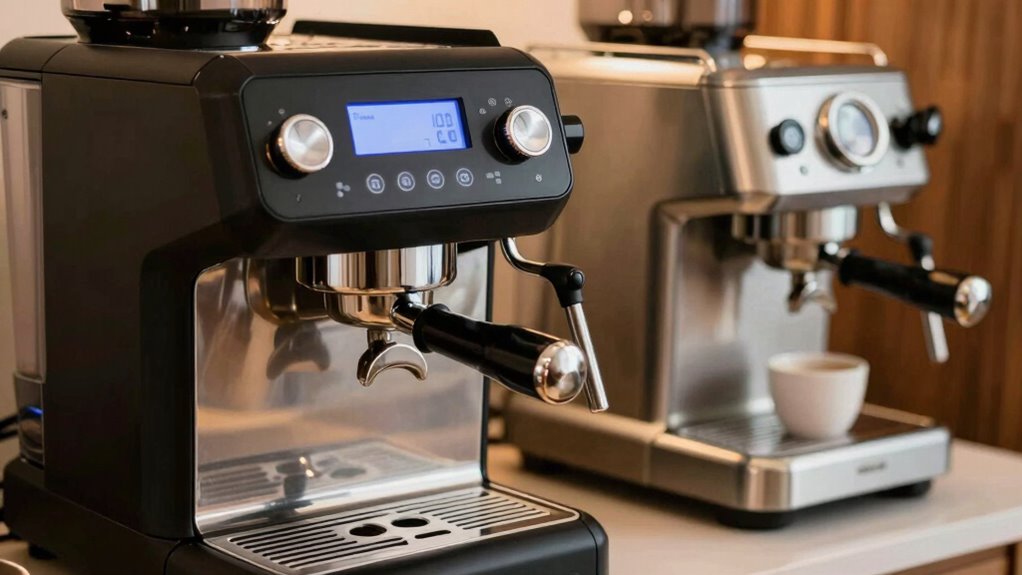
If you’re new to making espresso or just want a simple way to enjoy your favorite coffee at home, choosing the right machine can make all the difference. For beginners and casual drinkers, a super-automatic machine is ideal because it handles grind size, coffee bean varieties, and espresso shot timing with minimal effort. These machines streamline the process, so you get consistent results without needing barista skills. If you prefer more control, a semi-automatic offers customization for coffee bean varieties and shot timing but requires some practice. Overall, for ease and convenience, a super-automatic machine is your best bet. It allows you to enjoy quality espresso with little fuss, making your coffee routine smooth and enjoyable. Plus, understanding machine features can help you choose the optimal setup for your needs, including options for automatic maintenance that keep your machine in top condition. Additionally, selecting a machine with user-friendly controls can further simplify your brewing experience.
How Do Control and Customization Features Differ Between Machine Types?

Control and customization features vary considerably between super-automatic and semi-automatic espresso machines. With semi-automatic machines, you have direct control over key factors like brew temperature and grind size, allowing you to tailor each shot to your preferences. You can manually adjust the grind size for ideal extraction and set the brew temperature to ensure the coffee’s flavor is perfect. In contrast, super-automatic machines handle these settings automatically, offering limited options for customization. They often come with preset brew temperatures and grind settings, making it easier for beginners but reducing control for experienced users. If you value precision and personal tweaks, semi-automatic machines give you that flexibility. Conversely, super-automatics prioritize convenience, often at the expense of detailed control. Additionally, many modern machines incorporate local automation features that enable integration with smart home systems for a more connected brewing experience. These automation features can significantly enhance user convenience and consistency across brewing sessions. Some models also include app connectivity, allowing remote adjustments and monitoring for an even more streamlined experience. Moreover, advancements in user interfaces have made it easier for users of all skill levels to operate high-end machines with minimal effort.
Pros and Cons of Super-Automatic Espresso Machines

Super-automatic espresso machines offer a high level of convenience by simplifying the brewing process with just the push of a button. This ease means you can enjoy a quick, consistent cup without needing much skill or effort. However, this convenience can come at a cost to coffee flavor; some users find that super-automatics produce a less nuanced taste compared to manual methods. Additionally, these machines tend to have complex components, which can impact machine durability over time. Repairs or replacements may be more costly, and frequent use can wear down parts faster. While perfect for busy mornings, you might sacrifice some control over the brewing process and flavor customization. Overall, super-automatics balance simplicity and speed but may compromise on flavor depth and long-term durability.
Benefits and Drawbacks of Semi-Automatic Espresso Machines

Semi-automatic espresso machines give you precise control over brewing, so you can customize each shot to your taste. You’ll stay more engaged in the process, which can be rewarding but requires some effort. Keep in mind, they also need regular maintenance and adjustments to keep performing at their best. Additionally, integrating smart home technology can help monitor and optimize machine performance for consistent results. Proper maintenance schedules are essential to ensure your machine remains reliable and produces high-quality espresso over time.
Precise Coffee Control
While semi-automatic espresso machines give you the ability to fine-tune your brewing process, they also demand a certain level of skill and attention to detail. You control grind consistency, dosing, and extraction time, which allows for precise coffee flavor. This control helps you craft a perfect shot tailored to your taste. However, it also means mastering milk frothing techniques to achieve the ideal microfoam. If you’re willing to invest time and effort, you gain the satisfaction of customizing each espresso. Yet, inconsistent grind size or improper milk frothing can lead to subpar results. Overall, semi-automatics offer excellent coffee control, but they require skill to consistently produce high-quality drinks. This balance of precision and effort is a key aspect of their appeal. Additionally, understanding the materials and fuel Primer can help you optimize your machine’s performance and longevity.
Greater User Engagement
Have you ever enjoyed the hands-on experience of making your own espresso? Semi-automatic machines boost user engagement by allowing you to control grinding, tamping, and extraction. This involvement makes brewing more satisfying and personal, but it also means you’re more responsible for the results. Your skill influences the flavor and quality, creating a deeper connection with your machine. However, this engagement can be a drawback if you prefer simplicity or consistency. When choosing a semi-automatic, consider the brand reputation and machine durability, as these factors impact long-term performance. A well-built machine from a trusted brand offers greater reliability, making your brewing experience more enjoyable and less frustrating.
| Benefit | Drawback |
|---|---|
| Personal control over brew | Steeper learning curve |
| Enhanced enjoyment | Inconsistent results possible |
| Connection with the process | Requires more effort |
Maintenance and Adjustments
Maintaining and adjusting semi-automatic espresso machines requires some hands-on effort, but it offers significant control over your brewing process. You’ll need to perform calibration procedures regularly to guarantee consistent extraction and ideal flavor. This involves fine-tuning grind size, tamping pressure, and water temperature. Filter maintenance is also essential; you should clean or replace filters to prevent buildup and ensure clear water flow. Adjusting grind size and tamping pressure helps you refine your shot quality, but it requires attention and patience. While these tasks might seem demanding, they give you the flexibility to customize your espresso exactly how you like it. However, this level of involvement can be time-consuming and may require some learning to master proper maintenance techniques.
Choosing the Right Espresso Machine for Your Lifestyle and Coffee Preferences
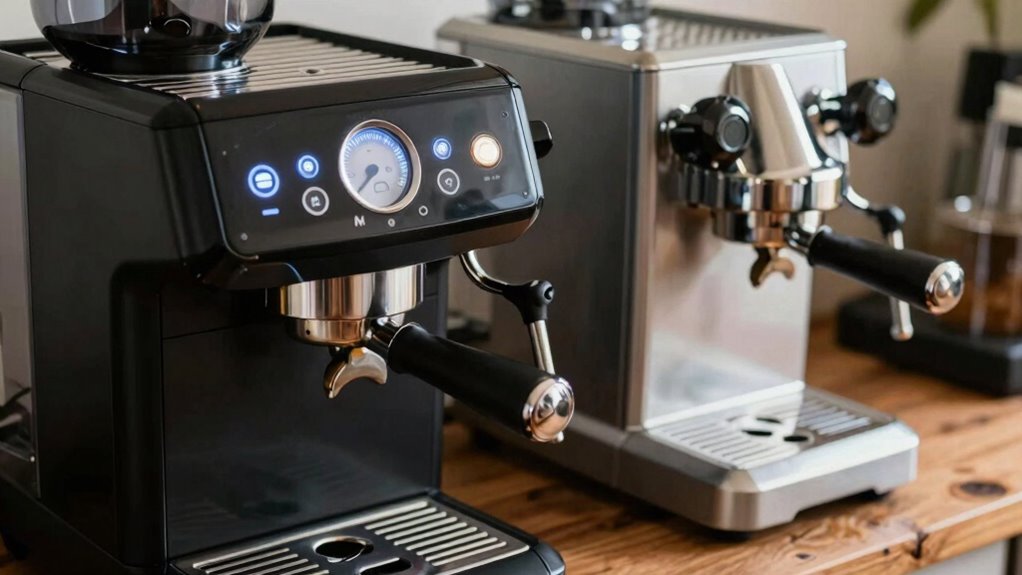
When selecting an espresso machine, consider how easy it is to operate and how much control you want over your coffee. If you prefer convenience, a super-automatic machine might be ideal, but if you enjoy customizing your brew, a semi-automatic offers more options. Think about your daily routine and coffee preferences to find the best fit for your lifestyle. Additionally, understanding digital safety and how to identify trustworthy sources can help you make informed decisions about your equipment choices.
Ease of Use
Choosing the right espresso machine largely depends on how much effort you’re willing to invest in making your perfect cup. Super-automatic machines excel in ease of use, often requiring just the push of a button, which is great if you prefer convenience. They handle everything from grinding to steaming, so you can enjoy a fresh, flavorful shot quickly. Semi-automatic machines demand more involvement, giving you control over grind size, tamping, and extraction, but they’re still manageable for most users. To guarantee your coffee tastes its best, start with fresh coffee beans and a water filtration system that maintains water quality. This way, whether you choose super-automatic or semi-automatic, you’ll enjoy a consistently good cup with minimal effort. Modern kitchen technology also offers innovative accessories that can enhance your brewing experience.
Customization Options
While super-automatic machines make brewing effortless, they often come with limited options for personalization. If you love customizing your coffee, a semi-automatic machine gives you more control over grind size, allowing you to adjust for different beans and flavors. You can fine-tune the grind to influence extraction and strength. Additionally, semi-automatics typically offer manual milk frothing, so you can create creamy, textured milk exactly how you like it. This level of control lets you craft your perfect espresso or cappuccino, tailored to your taste. If personalization matters to you—whether adjusting grind size or milk frothing technique—a semi-automatic machine is the better choice. It’s ideal for coffee enthusiasts who enjoy experimenting and refining their brew.
Frequently Asked Questions
How Long Does It Take to Brew a Shot With Each Machine Type?
With a super-automatic machine, your brew time for a shot is usually around 25-30 seconds, offering quick shot speed and consistency. On a semi-automatic, it takes about 20-30 seconds, but you control the grind and tamping, which can influence the brew time. Both types aim for that ideal shot speed, but your involvement with semi-automatics means more customization and slightly variable brew times.
What Maintenance Is Required for Super-Automatic Versus Semi-Automatic Machines?
You’ll find that super-automatic machines require more frequent cleaning routines, often daily, with descaling recommended every 2-3 months. Semi-automatic machines need less regular maintenance—mainly descaling every 3-6 months and occasional cleaning of brew groups. Curiously, 80% of users report that neglecting these routines leads to flavor issues and machine breakdowns. Staying consistent keeps your espresso tasting great and extends your machine’s lifespan.
Can These Machines Make Specialty Coffee Drinks Like Lattes and Cappuccinos?
Yes, both machines can make specialty drinks like lattes and cappuccinos, but their approaches differ. Super-automatic machines handle milk frothing and beverage customization at the push of a button, making it quick and easy. Semi-automatic machines require you to manually froth milk and control the process, giving you more control over your beverage. Your choice depends on how much involvement you want in creating those specialty drinks.
Are There Significant Cost Differences Between the Two Types?
You’ll find that super-automatic machines usually cost more upfront because they’re more advanced and include features like grinders and milk frothers integrated into one device. Semi-automatic machines tend to be more affordable initially, but they might require extra accessories or manual effort, affecting overall investment implications. The cost comparison shows that if you want convenience, expect to pay a premium, while semi-automatics offer more budget-friendly options with greater customization.
Which Machine Offers Better Durability and Long-Term Performance?
You’ll find that semi-automatic machines often offer better durability and long-term performance because of their superior machine build quality and focus on high-quality components. They typically use more robust parts designed for longevity, making them ideal for consistent use over the years. Super-automatic models may have more complex electronics that can wear out sooner, but with proper maintenance, both can last. Prioritize build quality for lasting performance.
Conclusion
Ultimately, choosing between super-automatic and semi-automatic machines is like selecting a trusted partner—one guides you effortlessly, while the other invites your craftsmanship. Think of the super-automatic as a smooth river, flowing seamlessly, and the semi-automatic as a hands-on boat, steering your own adventure. Whichever you pick, let it reflect your passion for coffee and your desire for control or convenience. Your perfect brew is just a decision away—like finding the right path through your personal coffee landscape.