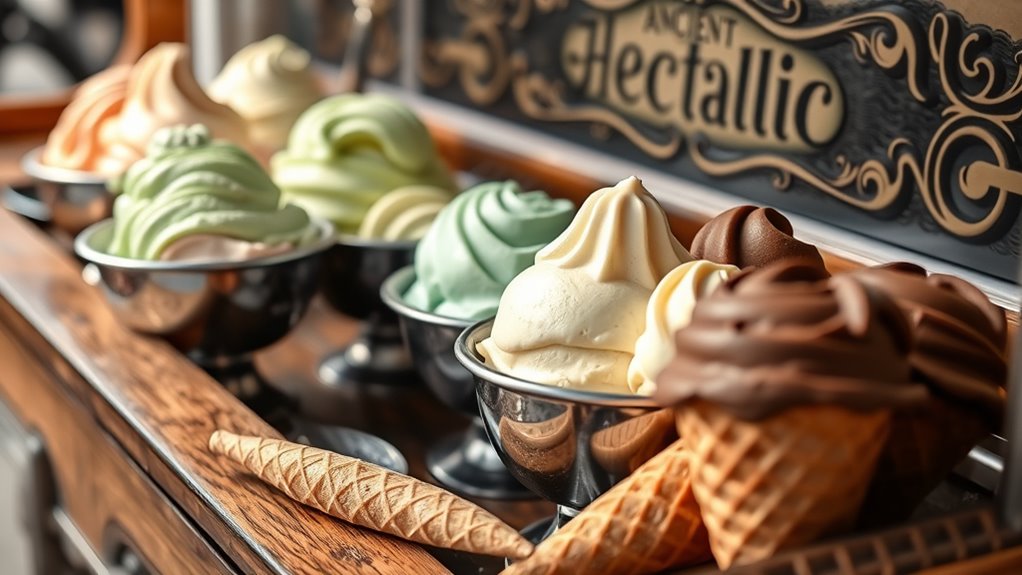

Italian gelato has origins that date back centuries, blending influences from Roman flavored ice treats and Arab additions like citrus and exotic flavors. Regional differences across Italy shaped its textures and tastes, from creamy northern styles to citrusy southern varieties. Renaissance artisans refined techniques, making gelato a refined craft. Over time, it evolved from simple street food into a celebrated culinary art reflecting Italy’s rich cultural history. Explore further to discover how tradition and innovation continue to shape this beloved treat.
Key Takeaways
- Gelato’s origins date back centuries, influenced by Roman flavored ice and Arab sugar and citrus techniques.
- Regional variations across Italy, such as richer northern and exotic southern flavors, reflect local ingredients and cultures.
- Renaissance artisans refined gelato-making with improved ingredients and techniques, elevating its texture and flavor.
- Transitioned from street food to a celebrated culinary art emphasizing smooth, velvety textures through craftsmanship.
- Today, gelato embodies Italy’s rich history, regional pride, and ongoing innovation, inspiring global appreciation.

Italian gelato has a rich history that dates back centuries, embodying a blend of regional traditions and innovative techniques. You’ll find that its origins are shaped by a variety of historical influences, from ancient civilizations to the Renaissance, which all contributed to its development. The Romans, for example, enjoyed flavored ice and snow-based treats, laying early groundwork for gelato’s evolution. During the Middle Ages, Arab influences introduced new ingredients like sugar and citrus, broadening the flavor profiles available. These early influences merged over time, creating a product that became uniquely Italian, blending local ingredients with foreign techniques.
Italian gelato’s history blends ancient flavors with Renaissance innovations, shaping a uniquely Italian frozen delight.
As you explore Italy, you’ll notice notable regional variations that have helped define gelato’s character across the country. In the north, especially in cities like Milan and Turin, gelato often took on a richer, creamier texture, thanks to the region’s access to fresh dairy and butter. Meanwhile, in southern Italy, particularly Sicily, influences from Arab traders introduced exotic flavors like pistachio and citrus, which remain popular today. The regional variations aren’t just about flavors but also about techniques; in some areas, gelato was traditionally made with more eggs and butter, making it denser, while others favored a lighter, fruit-based approach.
Throughout the Renaissance, Italian artisans refined their craft, experimenting with new methods to improve texture and taste. The introduction of fresh, high-quality ingredients and a focus on slow churning helped develop the smooth, velvety consistency we associate with modern gelato. These innovations spread across regions, with each area adding its own twist, whether it’s a signature flavor or a unique preparation style. You’ll find that many traditional recipes have been passed down through generations, often closely guarded by local families or small shops. Additionally, the development of professional training and guilds in Italy helped standardize quality and techniques, elevating gelato from simple street food to a celebrated culinary art.
Today, the rich tapestry of Italy’s regional variations and its deep-rooted historical influences continues to inspire gelato makers worldwide. You might notice how each scoop reflects centuries of cultural exchange and local pride. From the snow-capped Alps to the sun-drenched coasts of Sicily, gelato’s evolution is a story of blending tradition with innovation. Whether you’re savoring a classic stracciatella or a regional specialty, you’re tasting centuries of history, regional pride, and creative mastery in every bite.

Sailnovo Pasta Maker Machine, 180 Roller Pasta Maker, 9 Adjustable Thickness Settings 2-in-1 Noodles Maker with Rollers and Cutter, Perfect for Spaghetti, Fettuccini, Lasagna or Dumpling Skin Silver
【FOODS GRADE MATERIAL & CLEANING METHOD】 Tired of those pasta machines that smell of metal or plastic? Sailnovo...
As an affiliate, we earn on qualifying purchases.
Frequently Asked Questions
What Distinguishes Gelato From Other Frozen Desserts Globally?
You’ll notice gelato’s distinct texture differentiation from other frozen desserts, as it’s denser and smoother thanks to less air incorporated during churning. Its flavor profiles are more intense and authentic because of its lower fat content and careful ingredient selection. Unlike ice cream, gelato is served slightly warmer, enhancing its rich flavors and creamy consistency, making it a unique and delightful treat you won’t find elsewhere.
How Did Regional Italian Ingredients Influence Gelato Flavors Historically?
Regional ingredients shaped gelato flavors by inspiring unique combinations, enriching each variety with local tastes. You’ll find citrus from Sicily, pistachios from Bronte, and chestnuts from Tuscany, each contributing distinct notes. These ingredients fueled flavor development, reflecting Italy’s diverse terroirs. As a result, gelato became a reflection of local culture, history, and agriculture, allowing you to savor authentic, regionally inspired flavors in every scoop, making each experience uniquely Italian.
Were There Any Notable Historical Figures Associated With Gelato’s Development?
Famous inventors and chefs played key roles in shaping gelato’s development, often experimenting with historical recipes. You might not know that Giuseppe Procopio, a renowned chef, popularized gelato in the 19th century, or that historical figures like Francesco Procopio dei Coltelli advanced its techniques. These figures helped refine flavors and methods, turning simple ingredients into the rich, creamy gelato we enjoy today.
How Did Trade Routes Impact the Spread of Gelato Recipes?
You might not realize it, but the medieval spice trade and Silk Road influences secretly shaped gelato recipes. These bustling trade routes introduced exotic ingredients and culinary techniques, sparking curiosity and innovation in Italian kitchens. As merchants exchanged goods and ideas, they carried flavor combinations that would transform into gelato’s rich textures. Without these routes, the delectable evolution of gelato might have taken a very different, much less flavorful path.
What Ancient Techniques Are Still Used in Modern Gelato Making?
You still use traditional churning techniques to make modern gelato, which helps achieve its smooth, airy texture. Natural flavoring remains essential, as it enhances authentic taste without artificial additives. By combining these methods, you preserve the essence of traditional Italian gelato, ensuring each batch is rich, creamy, and bursting with genuine flavors. This blend of old and new keeps the craft alive and your gelato exceptional.

Nuvantee Pasta Maker with 7 Adjustable Thickness Settings - 2 in 1 Noodle Maker with Rollers and Cutter, Make Spaghetti, Fettuccini, Lasagna, & More
PREMIUM GRADE STAINLESS STEEL: Say goodbye to pasta machines with unpleasant metal or plastic odors. The Nuvantee pasta...
As an affiliate, we earn on qualifying purchases.
Conclusion
As you savor each spoonful of gelato, remember you’re tasting centuries of history blending like a delicate symphony. From humble beginnings to a global delight, this icy treasure has journeyed through time, whispering stories of Italian passion, innovation, and artistry. So next time you indulge, let yourself be transported to a sun-drenched piazza, where centuries of tradition melt seamlessly into every bite, leaving you enchanted by the timeless magic of Italian gelato.

Philips 7000 Series Pasta Maker, ProExtrude Technology 150W, 8 discs, Perfect Mixing Technology, Prepare up to 8 Portions, HomeID App, White, (HR2660/03)
PASTA UNDER 10 MINUTES: Enjoy fresh homemade pasta effortlessly in under 10 minutes¹.
As an affiliate, we earn on qualifying purchases.

ISILER Pasta Maker, 9 Adjustable Thickness Settings 2-in-1 Pasta Machine with Rollers and Cutter, Noodle Maker for Pasta, Dumpling Skin, Spaghetti, Fettuccini, Lasagna
AUTHENTIC AND TASTY: A smooth roller gives pasta a consistent texture every time, delivering a chewy consistency; no...
As an affiliate, we earn on qualifying purchases.