
To understand Italian coffee culture, you should know that quick, strong espresso is central. Italians typically enjoy their coffee at specific times: cappuccino in the morning and espresso or macchiato later. Respect traditional customs, like not drinking cappuccino after breakfast, and appreciate the artistry of precise brewing methods using iconic machines. Cafés are social hubs with elegant designs, where every cup reflects centuries of craftsmanship. If you explore further, you’ll discover how these customs shape Italy’s vibrant coffee scene.
Key Takeaways
- Italian coffee culture emphasizes quick, strong espresso served at the bar, reflecting social customs and brewing precision.
- Proper coffee etiquette varies by time of day; cappuccino is reserved for mornings, while espresso and macchiato are enjoyed later.
- Traditional cafés feature elegant architecture with marble counters and ornate mirrors, creating a timeless ambiance.
- Brewing methods focus on craftsmanship and consistency, with baristas skillfully preparing each shot using Italian espresso machines.
- Coffee serves as a social ritual, fostering connection and personal reflection within Italy’s rich cultural heritage.
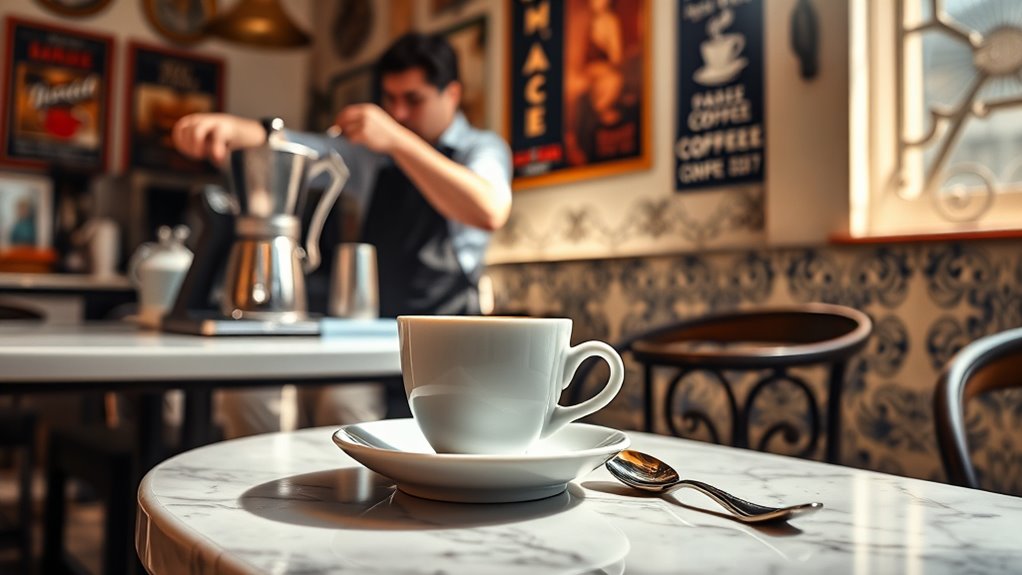
Italian coffee culture is a vibrant and integral part of daily life that reflects the country’s deep appreciation for quality and tradition. When you step into an Italian café, you’re immersing yourself in a space shaped not only by the aroma of freshly brewed espresso but also by the distinctive coffee shop architecture that defines many historic venues. These cafés often feature elegant, timeless interiors—marble counters, ornate mirrors, and cozy seating areas—that invite you to linger and enjoy your drink. This architecture isn’t just about aesthetics; it’s a reflection of Italian coffee history, which dates back centuries. From the bustling piazzas of Rome to the quiet corners of Florence, cafés became social hubs, blending function with style. Today, they preserve that legacy, with many establishments still boasting the same classic designs that have stood the test of time.
Understanding Italian coffee culture means recognizing that the way coffee is served and enjoyed is steeped in tradition. You’ll find that locals typically prefer their espresso quick and strong, often standing at the bar rather than sitting down. This practice harks back to the early days of Italian coffee history when cafés were communal spaces meant for rapid social interactions. The espresso machine itself, a marvel of Italian invention, revolutionized how coffee was brewed, allowing for a rich, concentrated shot that’s now iconic worldwide. Brewing methods in Italy often emphasize precision; baristas are trained to craft each cup with care, ensuring consistent quality. You’ll notice that the process is as much an art as it is a routine, with every shot representing a centuries-old tradition. Additionally, understanding the types of coffee commonly enjoyed in Italy, such as espresso, macchiato, and cappuccino, is essential to appreciating the full cultural context.
Moreover, Italian coffee etiquette plays a significant role in how you enjoy your drink. For instance, ordering a cappuccino after breakfast is considered a no-go—it’s reserved for the morning, and many Italians believe it shouldn’t be consumed later in the day. Instead, they savor their espresso or macchiato at different times, often accompanied by a quick chat or a moment of personal reflection. The culture encourages appreciating coffee not just as a beverage but as a ritual, a way to connect with others, and a reflection of Italy’s rich heritage. So, as you explore Italian coffee culture, remember that it’s about more than just taste; it’s about embracing a way of life shaped by history, artistry, and tradition.
Frequently Asked Questions
What Are the Regional Differences in Italian Coffee Preferences?
In Italy, regional brewing styles influence your coffee experience. In the North, you’ll find a preference for milder, creamier coffees, emphasizing local coffee flavors. In contrast, the South favors bold, strong espresso shots that reflect their vibrant culture. Your choices are shaped by these regional differences, so exploring local coffee flavors helps you appreciate each area’s unique taste and brewing style. Enjoy discovering the diverse Italian coffee landscape!
How Has Italian Coffee Culture Evolved Over the Last Century?
Imagine Italian coffee culture as a river that has flowed and evolved over the last century. You’ve seen coffee shop architecture transform from modest cafes to stylish, modern spaces, reflecting Italy’s changing tastes. Sourcing coffee beans has become more diverse, embracing global flavors while honoring local traditions. Today, you experience a blend of history and innovation, as Italians continue to celebrate their rich coffee heritage while embracing new brewing methods and social spaces.
Are There Specific Times When Coffee Is Traditionally Consumed?
You’ll find that coffee timing is quite traditional in Italy, with specific moments for enjoying your espresso. Typically, Italians drink their morning coffee, like an espresso, soon after waking up, fitting into their daily caffeine schedule. Mid-morning and after meals are also common times for coffee, especially a quick shot of espresso. Avoid drinking cappuccino after breakfast, as it’s seen as a morning-only treat, maintaining the cultural coffee timing etiquette.
What Are Common Coffee-Related Customs During Italian Social Gatherings?
During Italian social gatherings, you’ll find that coffee etiquette emphasizes quick, polite sips rather than lingering. For example, at a café with friends, it’s common to share a quick espresso while chatting, respecting social coffee rituals. You should avoid adding sugar or milk unless invited, and always finish your drink promptly. These customs foster friendly, efficient interactions, highlighting Italy’s appreciation for lively yet courteous coffee-related social customs.
How Do Italian Coffee Brands Differ From International Ones?
Italian coffee brands differ from international ones mainly through brand authenticity and flavor profiles. You’ll notice that Italian brands emphasize tradition, maintaining high-quality standards that reflect local coffee culture. Their flavor profiles often highlight bold, rich, and balanced tastes, showcasing regional coffee nuances. When choosing Italian brands, you sense a deep connection to craft and history, giving you an authentic experience that international brands may not fully replicate.
Conclusion
As you continue to explore Italian coffee culture, you’ll find that the true essence lies in savoring each moment and respecting its cherished traditions. Embrace the subtle nuances and quiet rituals that elevate a simple cup to an experience beyond taste. With patience and appreciation, you’ll discover that every sip offers a gentle invitation to connect with Italy’s rich heritage, gently inviting you into a world where coffee becomes more than just a beverage—it’s a heartfelt gesture.