
Understanding Italian wine terroir involves recognizing how soil and climate shape each vintage’s unique character. You’ll learn that soil types like limestone or volcanic influence minerals and acidity, while climate zones—from cool northern Alps to warm southern regions—affect ripeness and flavor. These environmental factors create diverse textures and profiles in Italian wines, making each one special. Keep exploring, and you’ll discover how these elements define the true essence of Italy’s wines.
Key Takeaways
- Terroir encompasses soil type, climate, and environment, shaping the unique flavors and character of Italian wines.
- Soil composition, such as limestone, clay, or volcanic, influences nutrient availability, drainage, and mineral content.
- Climate zones—from cool northern Alps to warm southern regions—determine grape ripeness, acidity, and fruit profile.
- Vintage variations and environmental conditions affect wine quality, flavor intensity, and alcohol levels each year.
- Recognizing terroir helps appreciate regional differences and the natural environment’s role in wine complexity.
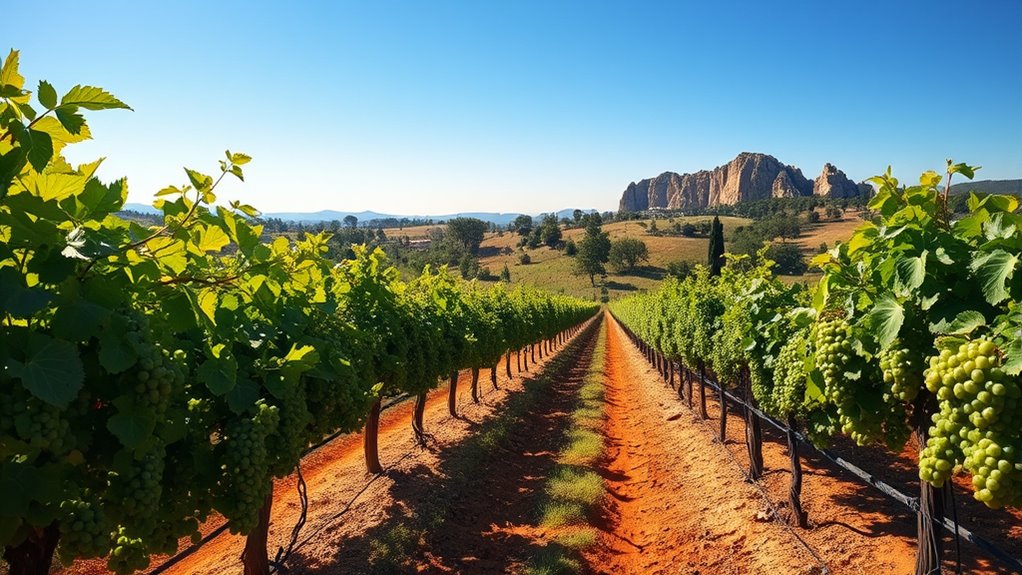
Have you ever wondered what makes a glass of wine taste unique? It all comes down to the concept of terroir, the environment where grapes grow, shaping their flavor and character. When you sip Italian wine, you’re tasting not just grapes but a complex interplay of natural factors that influence the final product. Two essential elements in this puzzle are soil composition and climate impact. These factors directly affect how vines grow, how grapes develop, and ultimately, how the wine tastes.
Terroir shapes Italian wines through soil and climate, creating unique flavors and character.
Soil composition is fundamental to a vineyard’s identity. Different soils—whether limestone, clay, volcanic, or sandy—offer distinct nutrients and drainage qualities. For example, volcanic soils, common in regions like Mount Etna, add mineral complexity and acidity to the grapes, resulting in wines with vibrant flavors and a sense of minerality. Clay soils retain water well, encouraging steady growth, but they can also lead to denser, more full-bodied wines. Limestone-rich soils, prevalent in Tuscany, contribute to high acidity and elegance. When you taste Italian wines, you’re experiencing these subtle nuances that soil provides, which influence the grape’s development and flavor profile.
Climate impact is equally essential. Italy’s diverse climate zones—from the Alpine cold in the north to the Mediterranean warmth in the south—shape grape ripening and sugar levels. Cooler climates often produce wines with higher acidity, bright fruit flavors, and more structured tannins. Conversely, warmer regions tend to yield riper grapes, resulting in richer, more robust wines with higher alcohol content. For example, the northern regions like Piedmont experience shorter growing seasons with cooler temperatures, perfect for Nebbiolo, which develops complex aromas and delicate tannins. Meanwhile, the sunny, warmer southern areas like Sicily produce bold, full-bodied reds and whites with intense flavor concentrations. Climate impact also influences the vintage quality; a particularly hot year can intensify flavors, while a cooler year might produce more restrained, nuanced wines.
Understanding these environmental influences helps you appreciate Italian wines on a deeper level. Each sip reflects a unique combination of soil and climate, making every bottle a representation of its terroir. When you explore different regions, you notice how the landscape and weather conditions forge distinct tastes and textures. This connection between environment and wine is what makes Italian wines so diverse and special. Recognizing the importance of soil composition and climate impact allows you to see beyond the glass and appreciate the natural artistry behind each wine’s character. It’s a reminder that great wine isn’t just about the grape variety; it’s about the land that nurtures it.
As an affiliate, we earn on qualifying purchases.
Frequently Asked Questions
How Do Microclimates Affect Italian Wine Flavors?
Microclimate variations markedly influence Italian wine flavors by creating unique vineyard microclimates. You’ll notice that these small-scale climate differences affect temperature, humidity, and sunlight exposure, which in turn shape grape ripening and flavor development. As a result, wines from different vineyard microclimates can vary greatly, even within the same region. By understanding these microclimate effects, you can better appreciate the diversity and complexity of Italian wines.
What Role Do Soil Microorganisms Play in Terroir?
Soil microorganisms are key players in microbial terroir, influencing the flavor profile of Italian wines. Your soil biodiversity affects nutrient availability and plant health, which directly impacts grape quality. Healthy, diverse microbial communities enhance vine resilience and modulate flavor compounds. By supporting robust soil biodiversity, you help create a unique microbial terroir that gives each Italian wine its distinct character and sense of place.
How Does Altitude Influence Wine Acidity and Sugar Levels?
Elevation effects notably influence your wine’s acidity balance and sugar levels. Higher altitudes tend to produce grapes with higher acidity because cooler temperatures slow ripening, preserving natural acids. You’ll notice lower sugar content in these grapes, leading to wines that are more invigorating and crisp. Conversely, lower elevations allow for faster ripening, increasing sugar levels and resulting in richer, more full-bodied wines. So, altitude directly shapes your wine’s taste profile.
Can Terroir Changes Impact Wine Aging Potential?
Think of terroir changes as a story’s twist that can rewrite a wine’s aging potential. Climate change prompts terroir adaptation, which can alter acidity, tannins, and sugar levels. These shifts might accelerate aging or extend it, depending on the new environmental conditions. When you understand how terroir adapts, you can better predict how a wine will evolve over time, embracing the dynamic relationship between nature and winemaking.
How Do Vineyard Practices Modify Terroir Expression?
Vineyard practices substantially modify terroir expression through careful vineyard management and winemaking techniques. You can control soil health, canopy management, and irrigation to enhance specific terroir traits, emphasizing unique mineralities or fruit qualities. Techniques like precise pruning or organic practices help preserve soil integrity, while fermentation methods influence flavor development. By consciously applying these practices, you shape how terroir’s environmental influences translate into your wine’s character, making each vintage distinctive.
Conclusion
As you explore Italian wines, remember that terroir is like a painter’s palette, blending soil, climate, and landscape into a unique masterpiece. Each sip tells a story of its environment, shaping flavors and character. When you understand these factors, you’ll appreciate wine’s complexity even more. Just as a vineyard’s terroir shapes its grapes, your knowledge deepens your connection to every glass, making wine tasting a truly immersive experience.