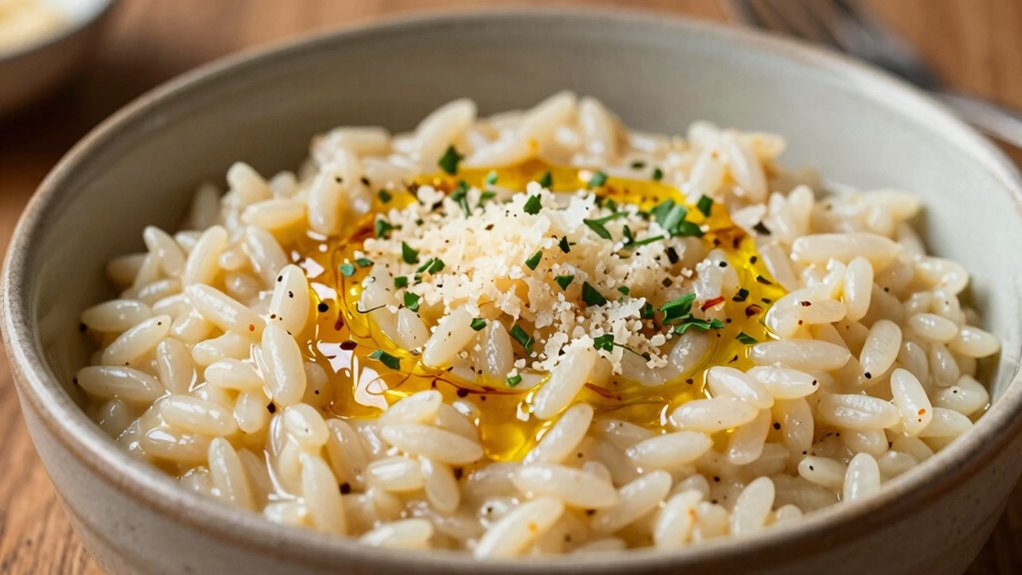

You can’t easily fake traditional risotto because it relies on precise technique, high-quality ingredients, and patience. Achieving its creamy texture requires gradually adding broth and constant stirring to release the right amount of starch from authentic rice like Arborio or Carnaroli. Shortcuts like pre-cooked rice or mixes won’t deliver the same richness or delicate consistency. Mastering these details takes skill and time, but once you understand the process, you’ll see why it’s so hard to fake. Keep going to discover more.
Key Takeaways
- Achieving the perfect creamy yet al dente texture relies on precise heat control and gradual broth addition.
- Authentic rice varieties like Arborio and Carnaroli release starch slowly, essential for genuine risotto creaminess.
- The process of constant stirring and patience develops the dish’s signature velvety consistency.
- High-quality, fresh ingredients contribute to complex flavors that artificial or pre-made substitutes cannot replicate.
- The craftsmanship and technique involved are difficult to mimic with shortcuts like pre-cooked rice or instant mixes.

Have you ever wondered what makes traditional risotto so comforting and flavorful? It all comes down to the perfect balance of technique, ingredient authenticity, and the unique textures that define this classic dish. Risotto textures are essential; they should be creamy yet slightly al dente, with each grain tender enough to melt in your mouth but still holding its shape. Achieving this isn’t just about stirring constantly—it’s about controlling the heat and the cooking process to guarantee the rice absorbs just the right amount of broth. This careful process creates a silky, cohesive consistency that’s hard to replicate with shortcuts or pre-made mixes. When you taste a well-made risotto, you notice how each grain is coated in a luscious, velvety sauce, a result of the starch released from the rice during cooking. That starchy creaminess is what makes risotto stand apart from other rice dishes, and it’s a texture that’s tough to imitate without genuine technique. The starch release from authentic rice varieties is a key factor in achieving that signature creaminess. Ingredient authenticity plays a key role in making traditional risotto difficult to fake. High-quality ingredients—like Arborio or Carnaroli rice—are fundamental because they contain the right amount of starch and have the ideal shape and size to absorb liquids slowly, releasing just enough starch to create that signature creaminess. Using inferior rice or cheap broth results in a dish that falls flat on flavor and texture. Fresh, seasonal ingredients such as onions, garlic, and herbs also elevate the dish, adding depth and complexity that store-bought or artificial flavorings can’t match. When you start with authentic ingredients, each element integrates seamlessly, creating layers of flavor that are hard to mimic with substitutions. The quality of ingredients directly influences the final outcome, making it nearly impossible to produce an authentic risotto with subpar components. Moreover, the tradition behind risotto involves a specific cooking rhythm—adding broth gradually and stirring constantly. This process encourages the rice to release its starch slowly, developing a rich, creamy texture that’s unique to well-prepared risotto. It’s a labor of patience that few shortcuts can replicate. When you try to fake it with canned or pre-cooked rice, the result is often a dish that’s either too mushy or too dry, lacking the delicate balance of textures you get from the real method. Ultimately, the combination of precise technique, ingredient authenticity, and attention to detail makes traditional risotto a dish that’s genuinely hard to fake. It’s a culinary craft that demands respect, patience, and quality ingredients—traits that no shortcut can truly replace.
As an affiliate, we earn on qualifying purchases.
Frequently Asked Questions
What Are the Subtle Differences Between Authentic and Fake Risotto?
Authentic risotto has a creamy, al dente texture with a glossy appearance, achieved through proper presentation techniques like gradual stirring and precise cheese addition. Fake risotto often lacks this creaminess and may be overly soft or uneven. Cultural variations influence ingredients, such as regional rice types or broths, subtly impacting flavor and texture. Recognizing these differences helps you distinguish genuine risotto from imitations.
How Does the Texture of Real Risotto Compare to Imitation Versions?
Imagine a velvety, spoonful of risotto that gently coats your palate—this is the authentic texture, creamy yet each grain distinct. Real risotto offers a luscious, slightly al dente bite, perfect for elegant Risotto presentation and versatile Risotto pairings. Imitation versions often feel overly sticky or too smooth, lacking that nuanced bite. The genuine texture elevates the dish, making every mouthful a sophisticated experience worth savoring.
Can You Replicate the Depth of Flavor in Traditional Risotto?
You can replicate the depth of flavor in traditional risotto by focusing on ingredient authenticity and layering flavors. Use high-quality Arborio rice, real broth, and fresh ingredients, then cook slowly, stirring constantly. Incorporate umami-rich elements like Parmesan and properly caramelized onions. This process builds flavor complexity, making your risotto rich and satisfying. While it may not perfectly match traditional methods, these steps bring you close to authentic, deep-tasting risotto.
What Specific Techniques Are Essential for Making Authentic Risotto?
Think of making authentic risotto as weaving a culinary tapestry; every thread counts. You must master risotto techniques like gradually adding warm broth, stirring constantly, and toasting the rice properly. Using authentic ingredients like Arborio or Carnaroli rice and quality broth is essential. Patience and attention to detail guarantee the creamy, tender texture that defines true risotto. Skip these steps, and it’s just rice—miss the soul of the dish.
How Does the Choice of Rice Affect Risotto Authenticity?
Your choice of rice varieties directly impacts risotto authenticity because varieties like Arborio, Carnaroli, and Vialone Nano have high starch content, which creates its signature creamy texture. Using the right rice with traditional cooking methods—such as gradually adding broth and stirring continuously—ensures the rice releases enough starch and cooks evenly. Skipping these steps or choosing the wrong rice can result in a less authentic, less creamy risotto.
Conclusion
You realize that mastering traditional risotto is like taming a wild stallion — it demands patience, attention, and a gentle touch. I once watched a chef coax a perfect, creamy consistency from simple ingredients, proving that authenticity can’t be rushed. Just as you can’t fake genuine craftsmanship, risotto’s soul lies in its slow, deliberate process. Stick to the tradition, and you’ll create a dish that’s as honest and rich as a story told by candlelight.