When selecting a wine fridge, focus on the real bottle capacity, which often differs from what’s advertised due to internal layout and airflow. Noise levels typically stay between 40-50 decibels, but quality models run quieter and vibrate less. Placement is key—keep it in a cool, ventilated spot, away from heat and sunlight, guaranteeing stable conditions. To ensure your wine stays in top shape, learn how to optimize storage, noise, and placement for long-term preservation.
Key Takeaways
- Always prioritize real-world bottle capacity over advertised size, considering internal layout and airflow for optimal storage.
- Choose a size and placement that suit current and future collection needs, ensuring proper ventilation and stability.
- Opt for models with noise reduction features and place them away from living areas for quieter operation.
- Position the fridge in a cool, shaded spot with good ventilation, away from heat sources and direct sunlight.
- Regularly calibrate temperature and humidity, and maintain the unit to ensure long-term wine preservation.

EUHOMY 45 Bottle Wine Cooler Refrigerator, Small Wine Fridge for Red, White and Champagne, 4.5 Cu.ft Mini Fridge with Adjust Temperature, Black
【Compact Size & Huge Capacity】EUHOMY wine refrigerator can store up to 45 bottles. Equipped with removable shelves, you…
As an affiliate, we earn on qualifying purchases.
As an affiliate, we earn on qualifying purchases.
What Is the True Bottle Capacity of a Wine Fridge?

The true bottle capacity of a wine fridge often differs from its advertised size. This discrepancy happens because factors like shelf design, bottle shape, and internal layout influence how many bottles you can actually store. It’s vital to consider temperature stability and humidity control when evaluating capacity. A fridge with better temperature stability ensures your wine ages properly, even if it’s packed tight. Adequate humidity control prevents corks from drying out, which could compromise your collection. Overloading a fridge might seem tempting, but it can hinder airflow and temperature regulation. Always check the real-world bottle count, not just the advertised number, to ensure your wine stays properly stored. Proper airflow management within the fridge is essential for maintaining consistent temperature and humidity levels, which are crucial for wine preservation. Ensuring proper internal layout helps maximize capacity without sacrificing the optimal conditions for your wine. Additionally, understanding how internal airflow affects temperature distribution can help you optimize the placement of bottles and improve overall storage conditions. Being aware of bottle shape and size can also help you better plan your storage space for efficiency and accessibility. Moreover, considering storage configuration can assist in arranging your bottles more efficiently and prevent unnecessary clutter, ensuring your wine ages gracefully. This way, you’ll know exactly how much your fridge can hold while maintaining ideal conditions.

Electactic Wine Cooler 37 Bottle Freestanding Fridge with Stainless Steel Reversible Glass Door, 145 Can Beverage Refrigerator Quiet Compressor for Home Kitchen Bar, 4.5 Cu.ft Silver
[Ensure A Satisfying Wine Tasting Experience]: This 37 bottle wine refrigerator is designed for ultimate performance! The precise…
As an affiliate, we earn on qualifying purchases.
As an affiliate, we earn on qualifying purchases.
How Do I Choose the Right Size for My Wine Collection?
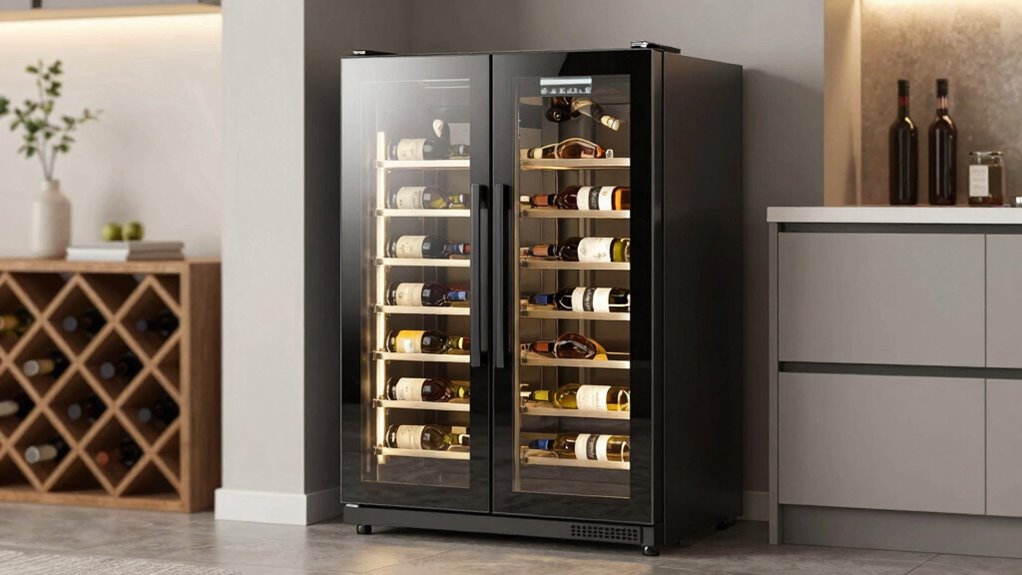
Choosing the right size for your wine collection depends on both your current needs and future plans. Think about how many bottles you want to store now and if you plan to expand later. A larger fridge offers more room for wine preservation and flexibility, especially if you enjoy collecting different varieties. Consider your space and whether you’ll need a built-in or freestanding unit. Proper temperature control is essential, so pick a size that allows consistent cooling across all bottles. Avoid underestimating your future collection growth, as overcrowding can compromise wine quality. Additionally, understanding the bottle count of a wine fridge helps ensure you select a unit that accommodates your collection without overcrowding. It’s also helpful to consider the space requirements for installation to ensure your chosen unit fits comfortably in your designated area. Being aware of storage capacity helps you plan for long-term needs and avoid the inconvenience of upgrading too soon. Keep in mind that expansion potential may influence your decision, especially if you anticipate increasing your collection over time. By selecting a size aligned with your current and future needs, you guarantee ideal temperature control and preserve your wine’s flavor and aroma over time. Remember that choosing an appropriately sized fridge can also impact the energy efficiency, potentially saving you money on electricity bills over the long term.

BODEGA 24 Inch Wine Cooler, 154 Bottle Refrigerator, Freestanding Wine Fridge with Intelligent Temperature Memory & Humidity Control, Upgraded Compressor, Quiet Operation
🍷【154 Bottles Large Capacity Wine Fridge】BODEGA 24 inch Wine cooler offers spacious storage for wine collectors. Featuring 14…
As an affiliate, we earn on qualifying purchases.
As an affiliate, we earn on qualifying purchases.
Myths About Wine Fridge Bottle Counts Debunked

Many people assume that the number of bottles a wine fridge can hold directly determines its quality or suitability for their needs, but this isn’t always true. This is a common wine bottle myth that leads to fridge capacity misconceptions. A larger capacity doesn’t guarantee better temperature stability or ideal storage conditions. Sometimes, smaller fridges with better insulation or cooling systems outperform bigger units. Bottle count isn’t the only measure of a wine fridge’s effectiveness; layout, shelf design, and airflow matter more. Proper airflow management is crucial for maintaining consistent temperatures throughout the fridge. Effective airflow, not just capacity, helps ensure your wines are stored properly. Additionally, the internal layout can significantly influence how well your wine collection is preserved. Ensuring the shelf design accommodates different bottle sizes can also improve overall storage conditions. It’s also important to recognize that temperature zones within the fridge contribute greatly to optimal wine aging. Don’t get caught up in the idea that more bottles mean better value. Instead, focus on features that ensure your wines are stored properly. Remember, a well-chosen fridge with accurate capacity can serve your collection better than simply chasing the highest bottle count.

Kalamera 24 inch Wine Cooler, 37 Bottle – Dual Zone Built-in or Freestanding Fridge with Stainless Steel Reversible Glass Door, for Home, Kitchen or Office
ECO-FRIENDLY WOODEN FRAME:This wine cooler adopts a sturdy wooden frame, which can reduce the vibration and friction of…
As an affiliate, we earn on qualifying purchases.
As an affiliate, we earn on qualifying purchases.
How Quiet Are Wine Fridges? What Noise Levels Are Typical?

Wine fridges generally operate quietly, but their noise levels can vary depending on the model and design. Most produce sound within the range of 40-50 decibels, similar to a quiet conversation. High-quality units feature better sound insulation and vibration reduction, minimizing noise transmission. Cheaper models may be louder due to poorer insulation and vibration control. Here’s a quick comparison:
| Model Type | Typical Noise Level | Key Features |
|---|---|---|
| Premium Wine Fridge | 40-45 dB | Superior sound insulation, vibration reduction |
| Mid-Range | 45-50 dB | Moderate sound insulation, some vibration control |
| Budget Models | 50+ dB | Minimal sound insulation, higher vibration |
Choosing a model with good sound insulation and vibration reduction will ensure your wine stays undisturbed. Considering proper placement and noise levels when placing your wine fridge can help maintain a peaceful environment in your space. Additionally, proper placement can help mitigate any residual vibrations that might affect wine quality. Placement considerations, such as positioning on a level surface and away from sources of vibration, can further enhance your wine storage experience. For optimal performance, selecting a location away from appliances and direct sunlight is recommended. Proper ventilation is also important to prevent overheating and ensure efficient operation.
Where Should You Place Your Wine Fridge for Best Performance?
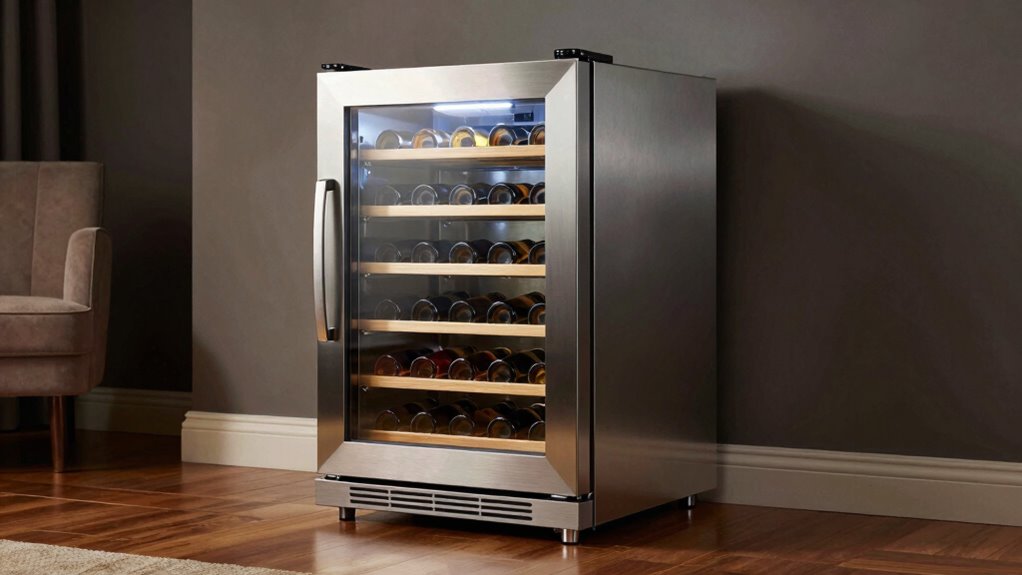
To make certain your wine fridge performs its best, place it in a cool, well-ventilated spot away from heat sources. Keep it out of direct sunlight to prevent temperature fluctuations that can spoil your wine. Proper placement helps maintain consistent cooling and preserves the quality of your collection. Additionally, ensuring good ventilation around the fridge can prevent overheating and improve energy efficiency. Adequate air circulation around the appliance is essential for optimal operation and longevity. Regularly monitoring your investment and understanding the environment can also contribute to better performance and durability, especially considering sustainable textile care practices that promote energy-efficient appliance use and responsible placement. Proper cabinet ventilation can further enhance the efficiency and lifespan of your wine fridge.
Optimal Placement for Cooling
The placement of your wine fridge is essential for peak cooling performance. To guarantee optimal operation, keep it in a spot where the ambient temperature remains steady, ideally between 55°F and 72°F. Avoid areas with fluctuating temperatures or high humidity, as these can strain the compressor and compromise your wine’s quality. Consider placement considerations like avoiding spots near heat sources such as ovens, radiators, or direct sunlight, which can cause temperature spikes. Also, choose a location with good ventilation to prevent overheating. Proper airflow management ensures your wine fridge runs efficiently and preserves your collection perfectly. Additionally, selecting a supportive surface can help prevent vibrations that might disturb wine sediment. Ensuring your wine fridge is placed away from electrical appliances that generate heat will further enhance its performance. Being mindful of ambient temperature and avoiding temperature fluctuations will help your wine stay at the ideal condition. By selecting an area with stable ambient temperature and mindful placement, you’ll help your wine fridge run efficiently and preserve your collection perfectly.
Avoid Heat and Sunlight
Placing your wine fridge away from heat sources and direct sunlight is crucial for maintaining a stable temperature. Exposure to heat and UV rays can compromise your wine’s quality by causing temperature fluctuations and damaging labels. For maximum UV protection and temperature stability, pick a spot shielded from sunlight and away from appliances or vents that emit heat. Consider the following:
| Location Tip | Reason |
|---|---|
| Near a shaded wall | Blocks UV rays and direct sunlight |
| Away from heat sources | Maintains consistent temperature |
| Inside a cabinet or niche | Provides additional UV protection |
| Avoiding windows | Prevents temperature swings |
Choosing the right placement helps preserve your wine’s integrity and ensures consistent storage conditions.
What Factors Affect Wine Fridge Noise and How to Keep It Quiet?

Your wine fridge’s noise level depends on factors like compressor noise, placement, and vibration. Proper placement and insulation can considerably reduce sound, while regular maintenance helps keep vibrations in check. Understanding these points lets you enjoy a quieter wine storage experience.
Compressor Noise Levels
While compressor noise is an inevitable part of most wine fridges, several factors influence how loud it sounds and how noticeable it becomes in your space. The compressor itself produces the noise, but its level can vary based on the model’s design and quality. Noise levels are affected by vibration; if the compressor vibrates excessively, it can amplify noise. To reduce this, look for units with vibration mitigation features like rubber grommets or anti-vibration pads. Additionally, a well-designed compressor with sound insulation can keep noise levels low. The placement of your fridge also impacts perceived noise, but focusing on vibration mitigation is key to ensuring a quieter operation. Choosing a model with quiet compressor technology helps create a more peaceful environment.
Placement and Insulation
The location of your wine fridge plays a crucial role in how loud it sounds during operation. Placing it on a level, stable surface helps minimize vibrations and noise. Avoid spots near appliances that generate heat or vibrations, as these can increase noise levels and affect temperature stability. Good insulation quality is essential; it keeps the fridge’s internal temperature consistent and prevents noise from escaping. An insulated door or walls reduce sound transmission, making the unit quieter. Additionally, placing the fridge in an area with minimal foot traffic or background noise helps keep it discreet. Proper placement not only enhances your wine storage environment but also ensures the fridge operates quietly and maintains ideal temperature stability.
Maintenance and Vibration
Vibration is one of the main factors that can increase noise from a wine fridge, so understanding how to minimize it is essential for quiet operation. Proper vibration control helps prevent unwanted rattling and reduces wear on internal components, ensuring smoother temperature regulation. To keep your fridge quiet, place it on a flat, sturdy surface and avoid uneven flooring. Regular maintenance, such as checking door seals and cleaning vents, helps maintain optimal temperature regulation and limits excessive motor activity. Also, consider anti-vibration pads or mats under the fridge to absorb any vibrations. By managing vibration effectively, you’ll enjoy a quieter wine fridge while maintaining consistent temperature control, protecting your wine collection from disruptions caused by noise and instability.
Top Tips for Buying and Installing Your Wine Fridge

Choosing the right wine fridge starts with understanding your space and storage needs. Measure your available area carefully, and think about how many bottles you want to store. Look for a model with precise wine temperature and humidity control to keep your collection ideal. Position your fridge away from direct sunlight, heat sources, and areas with fluctuating temperatures, like kitchens or garages. Make sure it’s level to prevent vibrations that could disturb your wine. If installing under a counter, check dimensions and ventilation requirements. It’s also wise to weigh noise levels, especially if you’ll place it in a living space. Proper placement and selecting a fridge with reliable climate control ensure your wine ages beautifully and stays fresh.
How to Maintain Your Wine Fridge for Optimal Storage

Maintaining your wine fridge properly is essential to preserve your collection’s quality and guarantee ideal storage conditions. Regularly check and calibrate the temperature to assure it stays within the recommended range for your wines, usually between 45-65°F. Proper temperature calibration prevents fluctuations that can spoil your bottles. Additionally, monitor humidity levels, aiming for around 60-70%, to keep corks moist and prevent spoilage. Use a hygrometer to measure humidity accurately and adjust as needed with a humidifier or dehumidifier. Keep the door seals clean and ensure the door closes tightly to maintain consistent conditions. Regular maintenance also involves cleaning the interior and defrosting if necessary, which helps sustain superior temperature and humidity control, protecting your wine collection for the long term.
Frequently Asked Questions
How Energy-Efficient Are Different Wine Fridge Models?
You’ll find that energy-efficient wine fridge models vary in energy consumption, but many are designed to be eco-friendly options with low power draw. Look for units with high Energy Star ratings, as they consume less electricity and help you save on utility bills. Choosing an eco-friendly option not only benefits the environment but also guarantees your wine stays perfectly cooled without wasting energy, making it a smart investment in the long run.
What Are the Best Brands for Quiet Wine Fridges?
Think of quiet wine fridge brands like whispering friends—reliable and discreet. Brands like Vinotemp, EdgeStar, and Kalamera have earned stellar reputations for low noise levels and quality craftsmanship. I once installed an EdgeStar in my kitchen, and barely noticed it running. When choosing, prioritize brand reputation and customer reviews, ensuring your fridge runs silently, so your wine stays perfect without disruptive noise.
Can a Wine Fridge Double as a Regular Refrigerator?
A wine fridge can’t really double as a regular refrigerator because it’s designed with specific temperature zones and humidity control for wine storage. Regular fridges have different cooling systems suited for perishable food, which can harm wine. If you try, you risk affecting the wine’s quality and the fridge’s efficiency. For ideal results, use a dedicated wine fridge for storing bottles and a regular fridge for food.
How Long Do Wine Fridges Typically Last?
Your wine fridge typically lasts around 5 to 10 years, depending on usage and maintenance. It helps with wine preservation by maintaining consistent temperature stability, which is vital for aging and flavor. To extend its lifespan, keep it clean, guarantee proper ventilation, and avoid overloading. Regularly check the temperature and listen for unusual noises to catch issues early, making sure your wine stays perfectly preserved for years to come.
Are There Specific Features to Look for in a Wine Fridge?
Think of a wine fridge like a careful guardian for your collection. Look for features like multiple temperature zones, so each wine gets the perfect environment, and UV protection, which shields your bottles from harmful rays like a shielded fortress. These features help maintain quality and flavor. Guarantee the fridge has adjustable shelves and reliable cooling. Prioritize energy efficiency and quiet operation to keep your space serene.
Conclusion
Ultimately, understanding bottle basics, balancing noise levels, and choosing the perfect placement will have your wine fridge functioning flawlessly. By busting myths, bypassing blunders, and embracing best practices, you’ll boost your collection’s condition and charm. Remember, a well-placed, peaceful wine fridge not only preserves precious pours but also provides pleasure and peace of mind. So, stay savvy, select sensibly, and savor superb sips for years to come. Cheers to confident wine storage!