
TL;DR
House Beautiful published a report in which an 11-year-old evaluates furniture and decor for a bedroom aimed at Gen Alpha. The child favors comfortable shapes, flexible colors, smaller accents and furnishings that combine storage with decoration; the report is a design feature, not a survey of children’s preferences.
House Beautiful has published a bedroom-design report in which an 11-year-old gives opinions on furnishings and decor intended for a Gen Alpha room, favoring comfortable forms, adaptable lighting and useful storage. The report offers one child’s perspective, not a representative account of what all children in the generation want.

Get home appliances delivered free with Prime
- Fast, free delivery on millions of items
- Prime Video, Amazon Music and more included
- Member-only deals all year
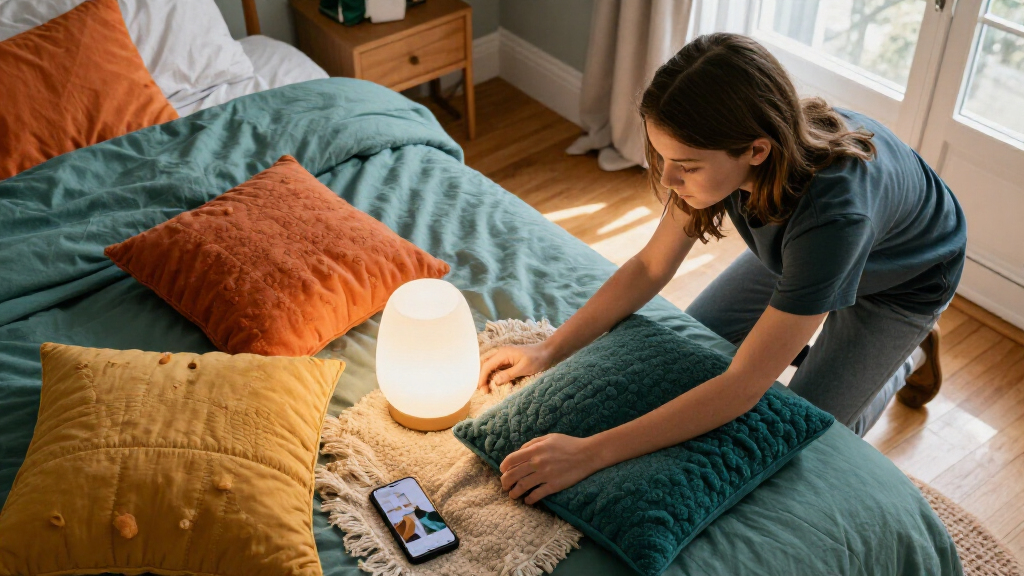
The child responds to a series of room items, commenting on their look and how they might work in everyday use. For a rounded seat or similar piece, the child says it should look “round and plump” and comfortable without seeming cartoonish. A smaller rug earns approval because it can sit beside a bed or under a chair without making the entire room revolve around one pattern.
Practicality and visual flexibility recur in the responses. The child prefers a nightstand with ample surface area for personal belongings and likes its white finish, describing it as cleaner and neater. A cream-colored item is praised because it could be styled in different ways, while color-changing wall lighting appeals as an alternative to a fixed orange glow.
Storage is also judged by whether it can contribute to the room’s appearance. The child likes a pink jewelry organizer with space and decorative dot details, and describes a combined decor-and-storage item as more appealing than a pen holder that simply sits in a corner. A shoe organizer is praised for flexibility: the child suggests it could also hold towels or school supplies. The report contrasts a compact bookshelf with a taller display unit, preferring the former’s more ordinary shelf-like feel.
Comfort and Storage Shape the Picks
The comments suggest a useful design principle for families furnishing a child’s room: evaluate objects not just as decorative products, but by how they fit daily routines. The child repeatedly values usable surfaces, adaptable storage and flexible placement, alongside colors and shapes that feel appealing without dominating the space.
That perspective can help parents and designers ask more specific questions before buying: Will a piece hold the items a child actually uses? Can it be rearranged or repurposed? Does it add visual interest without overwhelming the room? The report does not establish that these preferences are shared across Gen Alpha, but it illustrates how asking a young occupant directly can reveal practical priorities adults might overlook.
Products Worth Considering

Philips Hue Smart Light Starter Kit with Bridge and 4 White and Color A19 Bulbs

Philips Hue Festavia Permanent Outdoor String Lights, 80 Lights, 150 ft

Sony BRAVIA 5 85-Inch Mini LED 4K HDR Smart Google TV (K-85XR50)
As an affiliate, we earn on qualifying purchases.
A Child’s View, Not a Survey
The article’s framing presents an 11-year-old as a guide to designing a room that a Gen Alpha child might like. Its evidence, as supplied here, consists of the child’s reactions to specific furnishings and decor. It does not report a poll, interviews with multiple children, sales data or a research study.
That distinction matters because the comments are individual opinions, shaped by the particular products shown. The report is best read as a set of design observations rather than a definitive checklist for an age group. Its most consistent thread is the balance between comfort, personal expression and everyday function.
““The shape should be round and plump. It doesn’t look too much like a marshmallow. I want it to look comfy, but not like a cartoon.””
— The 11-year-old quoted in House Beautiful
How Far One Opinion Travels
The source material does not identify the child beyond their age, explain how the products were selected, or say whether the child’s views were compared with those of other children. It also does not provide survey results or evidence that the preferences apply broadly to Gen Alpha. The article records reactions to particular items; it does not establish which products were purchased or how the room was ultimately furnished.
No Broader Findings Reported
The supplied report contains the child’s product-by-product comments, but it does not announce a follow-up study, wider survey or finalized room design. Readers can use the observations as prompts when discussing a room with its intended occupant, while treating the preferences as individual rather than generational findings. No additional development is specified in the source material.
Key Questions
What is the House Beautiful report about?
It presents an 11-year-old’s reactions to bedroom furnishings and decor, including seating, rugs, lighting, organizers and shelves.
Does the report show what all Gen Alpha children want?
No. The supplied material records one child’s opinions and does not describe a representative survey or broader research.
What room features did the child like?
The child praised comfortable shapes, flexible lighting, useful surfaces and storage that also works as decor.
What remains unknown about the report?
The source material does not say how the products were chosen, whether other children were consulted, or whether the featured items were used in a completed room.
Source: rss