
TL;DR

Get home appliances delivered free with Prime
- Fast, free delivery on millions of items
- Prime Video, Amazon Music and more included
- Member-only deals all year
Livingetc has published three designer-led layouts for making a tiny box room work as a home office: a desk beneath a window, a wraparound desk and custom built-ins. The designers stress balancing usable work surface and storage with chair clearance, headroom and control of screen glare.
Livingetc has published three layout ideas for turning a tiny box room into a usable home office, recommending a desk beneath a window, a surface that wraps around two walls or bespoke built-ins for awkward spaces. The report cites interior designers who say the layout should make room for work and storage without blocking movement or creating problems with glare and headroom.
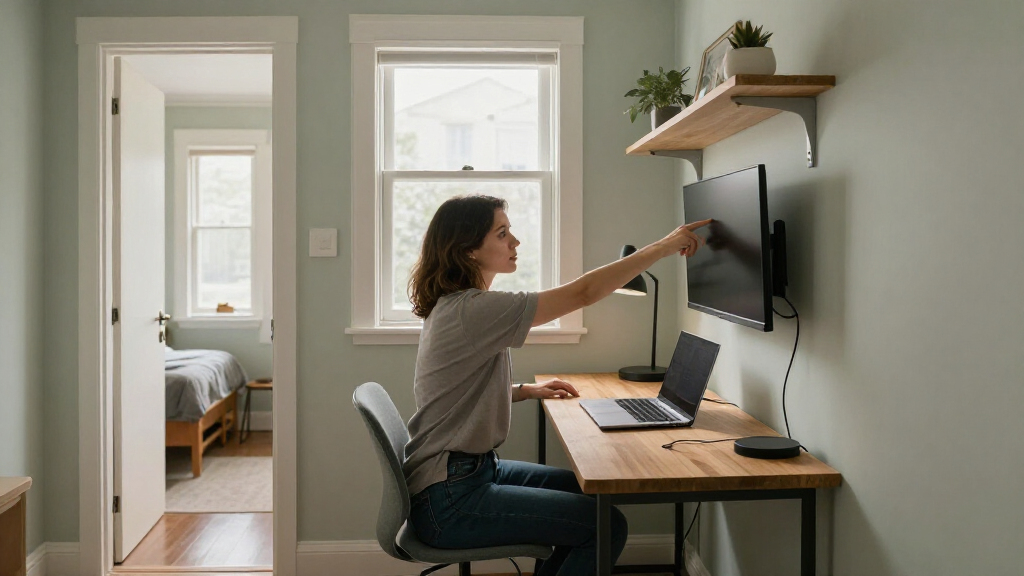
One option is to run a desk almost wall-to-wall beneath a window. Designer Clara Jung, principal at Banner Day Interiors, said placing the desk parallel to the window maximized the work surface while making it easier to enter and leave the room. A longer desk need not take up more circulation space than a small freestanding one, though its depth should suit the equipment in use.
Jung said a shallower desk may work for laptop users, while people using larger monitors may need more depth. She also advised considering how direct sunlight changes through the day: bright light can cause screen glare and interfere with video calls, so window coverings may be needed. In the project she discussed, the wall-mounted desk sat above the window sill to preserve a view; Jung described that as a project-specific choice rather than a universal rule.
A second approach uses two adjoining walls, with a wraparound work surface that replaces some need for separate furniture. Rachel Bullock, co-founder of LAUN Los Angeles, said the design addressed an awkwardly shaped room and made use of space beside an existing closet and window. She recommended at least 24 inches of depth for the main desk section, while noting that the other section could be more flexible if used mainly for storage. She also warned that a drawer placed above the knees can interfere with sitting comfortably.
For sloped ceilings and other unusual shapes, Livingetc presents bespoke built-ins as a way to fit a desk, shelves and storage to the room rather than force freestanding furniture into it. Gemma Fabbri of Studio Fabbri said head height was a key concern in a dormer office she designed. The desk was placed in a recess where movement was less likely to bring someone into contact with the slope and where the screen could be shielded from direct sunlight.
Making Every Inch Usable
For people working in a room too small for a conventional desk-and-storage setup, the examples offer different ways to use the existing footprint rather than treating a small desk as the only answer. Extending a worktop along a wall or around a corner can add desk area without adding another piece of furniture; built-ins can use recesses or sloping sections that might otherwise be difficult to furnish.
The advice also shows why a layout cannot be judged by desk size alone. Chair clearance, knee space, headroom and light affect whether the office is comfortable to use. The designers’ examples are project-specific, however, and do not establish that any one arrangement will work in every small room.
Products Worth Considering

Bose TV Speaker (2nd Gen) Compact Soundbar with Bluetooth and HDMI

Sonos Era 100 SL Compact Microphone-Free Speaker – Black

eufy Security Video Doorbell E340 Kit with Chime, 2K Resolution and 8GB Local Storage
As an affiliate, we earn on qualifying purchases.
Three Approaches for Small Rooms
The Livingetc report focuses on layout choices for compact home offices, rather than presenting a measured comparison of different furniture plans. Its examples cover a window-wall desk, a curved or wraparound desk, and joinery shaped to fit a room’s architecture. The source includes designer commentary and project photographs, but does not provide floor plans or dimensions for each room.
The recommendations depend on how the room is used. A laptop-based setup may need less depth than a desk holding a monitor and other equipment. A wraparound surface can provide more workspace, but the room still needs enough clearance for the chair and for anyone who must pass behind it. For a room with a sloped ceiling, the usable standing and sitting areas matter as much as the available wall length.
“I placed the desk parallel to the window because it maximizes the work surface and makes it easy to get in and out.”
— Clara Jung, principal at Banner Day Interiors
What the Examples Do Not Show
The supplied report does not state when it was published, provide a price range for custom joinery, or give complete room measurements for the featured projects. It is also unclear how the layouts perform for people with different accessibility needs, larger equipment, or jobs that require frequent movement around the room.
The dimensions cited by Bullock are recommendations from one designer, not a stated building or workplace standard. The report does not compare the three layouts through testing, nor does it claim that a particular plan will suit every box room. Readers would need to check their own measurements, furniture and working habits before adopting an example.
Measure Before Choosing a Layout
For anyone considering these ideas, the next step is to measure the room and map out the desk, chair and walking space before buying furniture or commissioning joinery. Check desk depth against the equipment in use, confirm that drawers will not collide with knees, and test where the chair can move. In a room with a sloped ceiling, mark out safe headroom around the planned work area.
Window position and sunlight should also be checked at different times of day, as Jung advised, to determine whether glare control is needed. The Livingetc report does not announce a follow-up study or a new product range; its published guidance leaves the choice to the room’s dimensions and the user’s needs.
Key Questions
What are the three small-home-office layouts in the report?
Livingetc describes a desk beneath a window, a work surface that wraps around two walls, and bespoke built-ins shaped to fit awkward features such as a sloped ceiling.
How deep should a desk be in a tiny office?
Rachel Bullock recommends at least 24 inches for the main section of a wraparound desk. Clara Jung says laptop users may be able to use a shallower desk. The right depth depends on equipment and how the surface will be used.
Is a desk beneath a window a good idea?
It can use a window wall efficiently and provide a view, according to designer Clara Jung. She advises checking direct sunlight and screen glare and using a window treatment if needed.
What should be checked before adding a wraparound desk?
Measure the work surface and allow space for the chair, knees and circulation. Bullock cautions against putting a drawer where it will hit the user’s knees and says chair clearance behind the desk should be considered.
How can a home office work under a sloped ceiling?
Gemma Fabbri advises prioritizing headroom and safe movement. A fitted desk can go in a recess or another area with adequate height, while the screen’s position should account for direct sunlight.
Source: livingetc.com