
TL;DR
A Family Handyman contributor says taking on several home renovations at once left multiple rooms unfinished and the house feeling like a construction site. The writer now recommends tracking jobs, finishing one project before starting another, and considering professional help when a project stalls.
A Family Handyman contributor says taking on several renovations at once left rooms in their fixer-upper unfinished and made the home feel like a construction site. In a first-person report, the writer describes how new tasks repeatedly took priority over old ones and recommends tracking projects, finishing them in sequence and reassessing when to bring in a professional.

Get home appliances delivered free with Prime
- Fast, free delivery on millions of items
- Prime Video, Amazon Music and more included
- Member-only deals all year
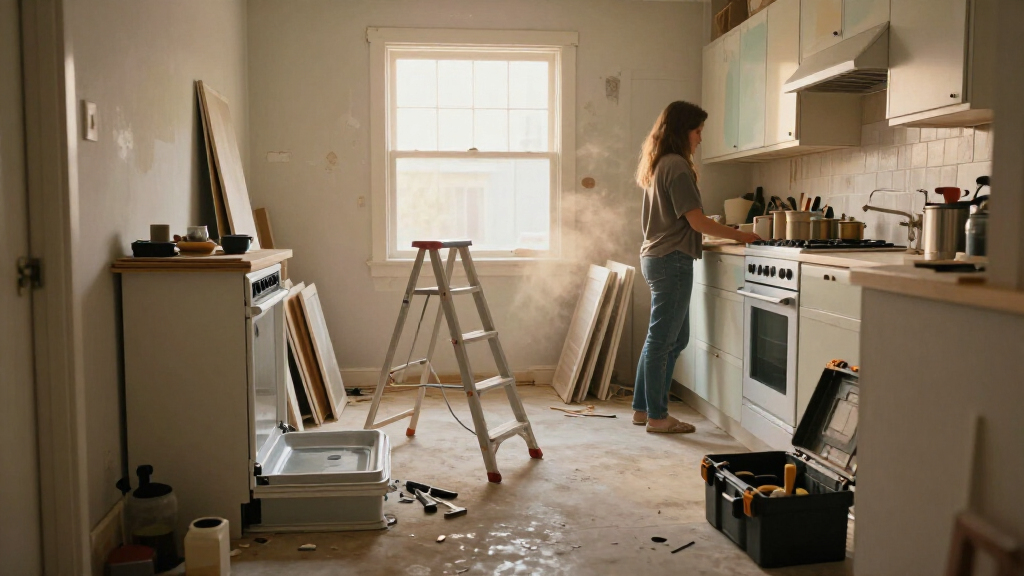
The writer describes a familiar pattern: one renovation expands into multiple jobs, and the to-do list grows faster than projects get completed. During work on the contributor’s current fixer-upper, several projects were underway at the same time. The result, they write, was a home with multiple half-finished rooms and tools and materials spread around the work areas.
The article does not report a specific renovation budget, schedule or measurable financial loss. Its account is personal rather than a survey or industry study. The writer’s central point is that taking on more jobs does not necessarily mean making faster progress: unfinished work can accumulate, while repeated changes in priority make it harder to complete any one room.
To reduce the backlog, the contributor says they use a project planner to record tasks and judge whether a week’s workload is realistic. They also describe setting aside a “95% day” every few months for small finishing jobs, such as missing trim, nail holes and outlet covers. These details are the writer’s own practices, not a tested or guaranteed method for every household.
How Unfinished Work Adds Up
For homeowners, the account highlights a practical risk of launching several renovations without a clear order: living spaces can remain disrupted while smaller finishing jobs pile up. A room may look nearly complete but still require trim, cover plates or other details before it is usable or presentable. Meanwhile, moving on to another project can stretch out the time spent working around unfinished areas.
The writer’s recommendations are aimed at making the workload visible and manageable. Listing tasks can help reveal when too much has been scheduled, while choosing a single project to finish can reduce the number of open jobs. The article presents these as lessons drawn from personal experience, not as a substitute for a contractor’s assessment, permit requirements or safety guidance.
Products Worth Considering

Philips Hue Smart Light Starter Kit with Bridge and 4 White and Color A19 Bulbs

Levoit Core 600S-P Smart Air Purifier for Large Rooms up to 2933 ft²

Roborock Qrevo S Pro Robot Vacuum and Mop with 18,500 Pa Suction
As an affiliate, we earn on qualifying purchases.
The Writer’s Change in Routine
The report follows an earlier Family Handyman column in which the contributor said they were adding a “95% day” to their DIY routine. The idea is to reserve a day every few months for small tasks left behind after larger work, rather than treating a project as finished before its remaining details are done.
The contributor also describes using a written planner to schedule work and “triage” the backlog. That can mean completing a quick job first to clear it from the list, or prioritizing a task with a time-sensitive deadline. The article compares those choices to competing debt-payment approaches, but does not present the comparison as financial advice; it is an analogy for deciding which home project to address first.
Costs and Outcomes Not Reported
The report does not specify how many projects were underway, how long they remained unfinished, or whether the writer hired a contractor afterward. It also provides no cost comparison between continuing the work independently and bringing in a professional. The suggested planning habits are based on the contributor’s experience; the source does not establish how well they work for other homeowners.
Details about the renovations themselves, including whether any involved electrical, gas, structural or roof work, are not provided. Homeowners dealing with those types of work should follow applicable safety requirements and use licensed professionals where required, rather than relying on a general scheduling strategy.
Finish the Backlog Before Expanding
The contributor’s stated approach is to use the planner to set priorities, make time for small unfinished details and complete one project before opening another. The article does not announce a new renovation deadline or a formal follow-up. Its practical next step for readers is to review the current list, identify what is time-sensitive or close to completion, and decide whether a job should be paused or handed to a professional.
Key Questions
What went wrong when the writer renovated several areas at once?
The contributor says new tasks kept taking priority, leaving several rooms unfinished and tools and materials around the house. The writer describes the home as feeling like a construction site.
What is a “95% day”?
It is the writer’s term for setting aside a day every few months to complete small tasks left behind, such as missing trim, nail holes and outlet covers.
How does the writer suggest choosing which project to finish first?
The writer recommends reviewing the project list and focusing on one job at a time. A homeowner might choose a quick task to clear it from the list or prioritize a project with a more time-sensitive deadline.
Does the report say homeowners should always finish DIY work themselves?
No. The contributor says hiring a professional to complete a project can be a reasonable option when life gets busy or work has stalled. The report does not give specific pricing or contractor recommendations.
Source: rss