
TL;DR
Pro Tool Reviews’ 2026 comparison found Milwaukee’s fourth-generation M18 Fuel 2904 faster than Bosch’s GSB18V-1330CN in all four performance tests, with a 17% average speed advantage. Bosch’s drill still completed the test tasks, and its grip, electronic angle detection and Ampshare battery compatibility may matter to buyers. The results apply to the tested models, batteries and conditions, not every drill from either brand.
Milwaukee’s fourth-generation M18 Fuel 2904 outperformed Bosch’s GSB18V-1330CN in all four tasks in a 2026 Pro Tool Reviews comparison, averaging 17% faster across screw driving, wood drilling and concrete drilling. The result gives Milwaukee the edge in this specific test, while Bosch’s drill completed the work and offers features that may suit some users better.

Get home appliances delivered free with Prime
- Fast, free delivery on millions of items
- Prime Video, Amazon Music and more included
- Member-only deals all year
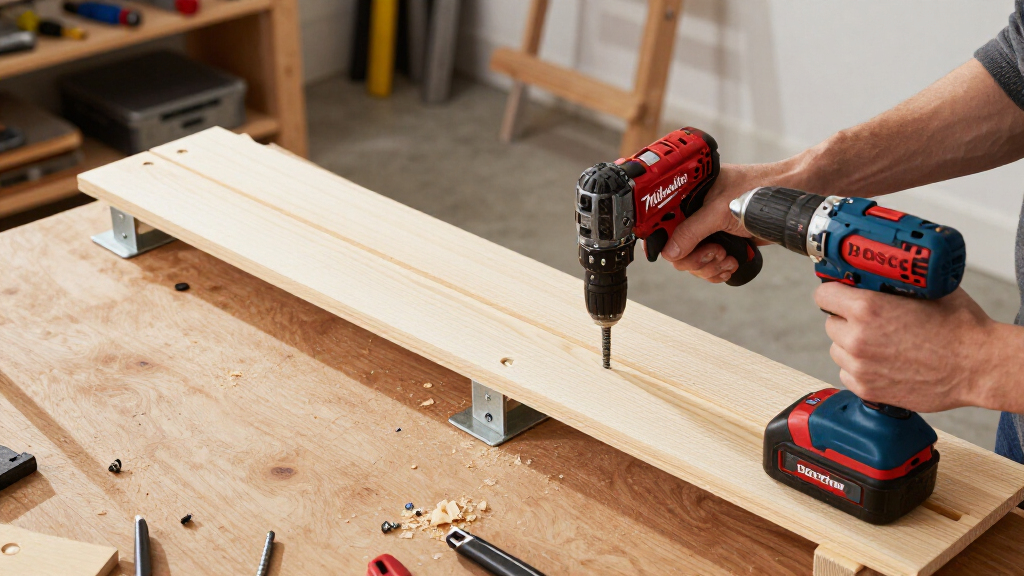
The reviewers tested both brands’ top-performing cordless hammer drills, using an 8.0Ah Milwaukee Forge battery and an 8.0Ah Bosch Core18V High Power battery. They chose high-capacity packs rather than the batteries sold in each drill’s kit, aiming to assess what each tool could do with advanced batteries. Each reported test result was an average of three runs with freshly charged batteries.
Milwaukee recorded a faster time in every test: it drove the RSS screw in 2.49 seconds against Bosch’s 2.88; drilled with a spade bit in 2.62 seconds against 3.29; completed the self-feed-bit test in 1.89 seconds against 2.09; and drilled the concrete hole in 6.84 seconds against 8.94. The largest gap was in concrete, where Milwaukee’s time was 2.10 seconds shorter.
The published specifications showed trade-offs. Bosch listed a higher maximum speed of 550/2,200 RPM, compared with Milwaukee’s 500/2,100 RPM. Milwaukee listed more torque and a higher hammer rate: 1,400 inch-pounds and 33,000 blows per minute, versus Bosch’s 1,330 inch-pounds and 30,000. Milwaukee was also shorter and lighter in the report: 7 inches and 5.6 pounds tested, compared with Bosch at 8.1 inches and 6.3 pounds tested.
Performance Versus Fit and Features
For tradespeople comparing these two specific drills, the test suggests Milwaukee delivered more speed in the tested applications while weighing less and taking up less space. Those differences can matter when a drill is used repeatedly or in tight work areas. The 17% figure is the reviewers’ average across four selected tasks, not a guarantee that Milwaukee will be faster by that amount on every job.
The comparison does not make Bosch irrelevant. Pro Tool Reviews said Bosch handled the tasks without apparent strain, and the report’s author praised its grip and balance. Bosch also has electronic angle detection, which the report described as unique among the drills the reviewers had tested. A buyer’s preferred handling, existing batteries and tool ecosystem may outweigh small or task-specific performance differences.
Both models include kickback-control technology, according to the report. Milwaukee’s One-Key option is available on the 2906 model, while Bosch supports connected features through an add-on module. Bosch batteries can also power tools in the Ampshare system, a point that may matter to users building beyond the brand’s 18V lineup.
Products Worth Considering

Dyson V9 Motorbar Cordless Vacuum

Dyson V8 Cyclone Cordless Vacuum

Dyson V15 Detect Cordless Vacuum
As an affiliate, we earn on qualifying purchases.
How the Test Was Set Up
The comparison follows years of competition in professional cordless tools. Pro Tool Reviews noted that Bosch’s Core18V batteries had once stood out, but said other manufacturers had since caught up as tool development continued. The 2026 report focuses on the Bosch GSB18V-1330CN and the Milwaukee M18 Fuel 2904, rather than comparing entire brand ranges.
Test materials included stacked and glued OSB for driving an RSS screw and drilling with a spade bit, a pine stud for a 2 9/16-inch self-feed bit, and fully cured 4,000-psi concrete for a 3/8-inch bit. The concrete test used hammer mode and aimed for a three-inch depth. Because the review used specific bits, materials, batteries and procedures, its results are best read as a controlled comparison under those conditions—not a universal ranking of all cordless drills.
The reviewer also cited Milwaukee’s size and weight advantage and Bosch’s comfortable pistol grip as factors that are difficult to capture in a table. That distinction matters because a tool’s measured speed does not fully describe how it feels during extended use or whether it fits a particular trade’s needs.
“Milwaukee was the winner in all four performance tests.”
— Pro Tool Reviews
Limits of the Head-to-Head Results
The report does not establish how the drills compare across all materials, bit sizes, battery configurations or job conditions. It reports averages from three runs per test, but the supplied material does not include full raw trial data, statistical analysis or longer-term durability results. The 17% average also does not mean Milwaukee was 17% faster in each individual task.
It is not clear from the report whether pricing, kit contents, warranty costs or battery availability were included in the verdict. Those factors can change the overall value for a buyer. The comparison also does not test every model in either company’s lineup, and the performance results should not be generalized to other Milwaukee or Bosch drills.
The report says a fifth-generation Milwaukee M18 Fuel hammer drill is expected by year’s end, but gives no confirmed launch date, specifications or test results for that model. Its performance relative to the 2904 and Bosch drill remains unknown.
Watch for Milwaukee’s Next Model
Pro Tool Reviews said the fifth-generation M18 Fuel hammer drill was expected by the end of 2026 and that its changes would be worth watching. The report did not provide a confirmed release date or detailed specifications. Any comparison with the Bosch GSB18V-1330CN will require published specifications or independent testing once the newer model is available.
For buyers making a decision now, the practical next step is to compare the exact drill and battery packages available to them, then weigh performance against ergonomics, existing platform investment and features. The published test favors Milwaukee on speed and size; it leaves buyers to decide how much Bosch’s handling and ecosystem advantages matter for their work.
Key Questions
Which drill won the 2026 Pro Tool Reviews comparison?
Milwaukee’s M18 Fuel 2904 finished faster in all four tests and averaged 17% faster overall than Bosch’s GSB18V-1330CN.
What did the review test?
It compared screw driving, spade-bit drilling, self-feed-bit drilling and drilling a three-inch-deep hole in cured concrete. Each result was the average of three runs.
Does the result mean Bosch’s drill is unsuitable?
No. The report says Bosch completed the tested jobs. It also highlights Bosch’s grip, balance, electronic angle detection and compatibility with the Ampshare battery system.
Were the drills tested with their standard kit batteries?
No. The reviewers used an 8.0Ah Bosch Core18V High Power battery and an 8.0Ah Milwaukee Forge battery, rather than the batteries supplied in the kits.
Is Milwaukee releasing a newer hammer drill in 2026?
The report says a fifth-generation M18 Fuel hammer drill is expected by the end of 2026. It does not confirm a launch date, specifications or independent test results.
Source: rss