
TL;DR

Get home appliances delivered free with Prime
- Fast, free delivery on millions of items
- Prime Video, Amazon Music and more included
- Member-only deals all year
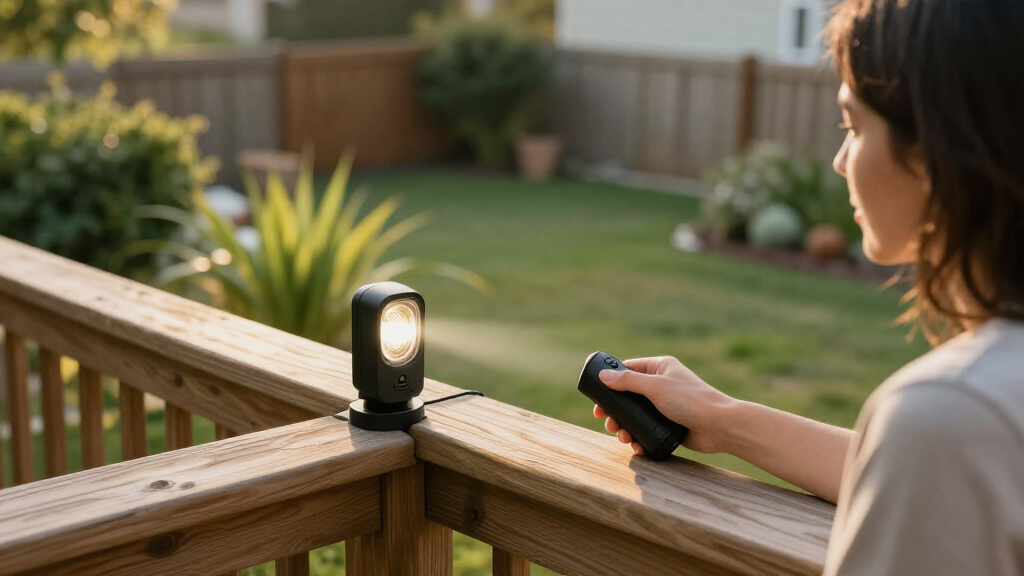
Hunker reports that LIFENGSOLER sells solar motion-sensor lights on Amazon that clip onto deck railings without drilling or wiring. The report cites claims of up to 600 square feet of coverage and up to 10 hours of light after a six-to-eight-hour charge; independent testing and security effectiveness are not established in the source material.
Hunker has highlighted LIFENGSOLER solar clip-on lights sold through Amazon as a way to add motion-activated lighting to a deck without drilling or running wiring. The report says the lights attach to deck railings and cites manufacturer or product-listing claims of up to 600 square feet of illumination, making them a lower-cost lighting option whose usefulness depends on sunlight, placement and the area to be covered.
According to Hunker, the lights use a solar panel and motion sensor: after charging, a light switches on when it detects movement. The report says charging takes six to eight hours and that the lights can provide up to 10 hours of illumination before another charge is needed. Those are stated product figures; the supplied report does not describe independent testing or explain the conditions under which the maximum coverage and runtime were measured.
The article says the units clip onto a deck railing, avoiding the drilling and complex wiring associated with some outdoor fixtures. It puts the listed cost at less than $40 per light and compares that with professional security-light installation costs of $100 to $250 per light. The comparison is Hunker’s; the source does not specify the service, region or date behind the installation range, and actual prices may vary.
Hunker advises checking the deck’s exposure before installing the lights. Its guidance is to place the solar panels where they receive at least six hours of direct sunlight daily, then identify areas such as steps or access points that need illumination after dark. For larger spaces, the report suggests spacing lights five to eight feet apart and angling them toward the yard rather than into a neighbor’s home.
A Lower-Cost Route to Deck Lighting
For homeowners seeking light near a deck, a clip-on solar fixture could avoid the wiring work and installation expense associated with some hardwired lights. The reported price and mounting approach may make it practical to add illumination in specific locations, including stairs or a sliding-door approach, without arranging electrical work. That is a convenience and cost proposition, rather than evidence that the product is a complete security system.
Lighting may help residents see outdoor areas when a sensor activates, but the source does not establish that these particular lights deter intruders or prevent break-ins. Coverage and runtime figures are presented as product claims, and real results can depend on sunlight, sensor placement, battery condition and obstructions. Readers considering them should distinguish added visibility from a guarantee of protection.
Placement Shapes Solar Performance
The report frames the lights as an alternative for spots that may fall outside the reach of existing floodlights. Its central practical constraint is the solar panel: a panel shaded for much of the day may not collect enough sunlight to recharge reliably. Hunker recommends observing the deck at different times, marking sunny locations, then checking those locations after dark to see whether they correspond with entry points that need light.
Spacing is another part of the setup. Hunker recommends one light every five to eight feet for more continuous coverage across a larger outdoor area. That is installation guidance from the article, not a measured guarantee that the gaps will be fully illuminated. Aiming lights downward can direct light toward the yard and reduce spill into nearby homes. The source provides no independent comparison with wired lights or other solar products.
“The report says a single light illuminates up to 600 square feet.”
— Hunker
Testing and Security Results Remain Unclear
The supplied source does not include independent tests confirming the 600-square-foot coverage, charging time or maximum runtime. It also does not state how brightness, weather, seasonal daylight, battery age or repeated motion-sensor activations affect performance. The product’s availability and current Amazon price are not independently confirmed in the material provided.
Hunker’s report presents the lights as a way to illuminate outdoor areas and potentially discourage unwanted visitors, but it gives no data showing whether they reduce trespassing or break-ins. It does not identify a security study or compare outcomes at homes using these lights with homes using other lighting. The degree of protection, if any, is therefore not established by the source.
Check Current Listings Before Buying
Readers interested in the lights can check the current Amazon listing for price, specifications, customer information and any changes to the product description. They can then assess whether their chosen railing locations receive enough direct sunlight and whether the sensor and beam can cover the areas they want lit. The report does not give a later test, seller update or scheduled product milestone.
Any assessment of the lights’ security value would require evidence beyond the product claims cited in Hunker, such as documented testing of brightness, detection and outdoor runtime. Until such evidence is available in the supplied material, the confirmed development is that Hunker reported on a clip-on solar lighting option; performance and crime-prevention effects remain unverified.
Key Questions
What are the lights Hunker described?
Hunker describes LIFENGSOLER solar clip-on lights sold through Amazon. The report says they attach to deck railings and use a motion sensor to turn on when movement is detected.
How long do they take to charge and how long do they last?
The report gives stated figures of six to eight hours to charge and up to 10 hours of light. The source does not provide independent test results or conditions for those maximum figures.
Do the lights prevent break-ins?
The supplied report does not show that the lights prevent break-ins. It describes them as a way to add motion-activated outdoor lighting; their crime-prevention effect is unconfirmed.
Where should the solar lights be placed?
Hunker recommends locations with at least six hours of direct sunlight each day, aimed toward areas such as deck steps or door approaches. For larger spaces, it suggests spacing units five to eight feet apart and pointing them away from neighbors’ windows.
Source: rss
Columbus Day / Indigenous Peoples' Day Picks
long weekend sales
As an affiliate, we earn on qualifying purchases.