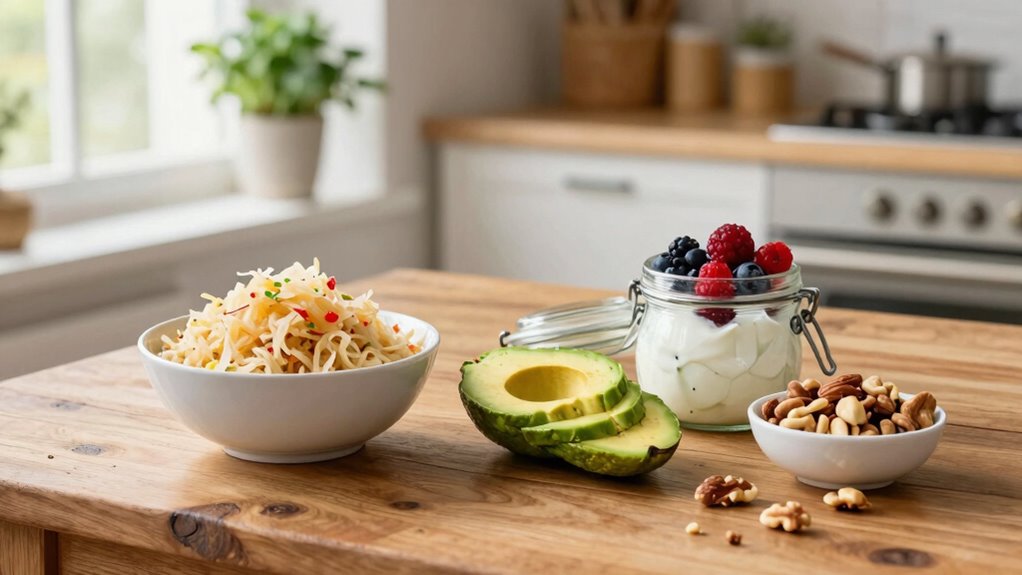

Gut-friendly eating doesn’t have to be complicated. You can simply add probiotic foods like yogurt, kefir, sauerkraut, or kimchi to your daily diet. Also, include plenty of fiber from fruits, vegetables, and whole grains to support your gut bacteria. Small, consistent changes—like snacking on nuts or adding vegetables to meals—make a big difference over time. If you stick with these simple tips, you’ll discover easy ways to improve your gut health while keeping it practical and enjoyable.

Get home appliances delivered free with Prime
- Fast, free delivery on millions of items
- Prime Video, Amazon Music and more included
- Member-only deals all year
Key Takeaways
- Small, consistent dietary changes like adding probiotic foods and fiber-rich options are effective without overhauling your entire diet.
- Focus on natural, wholesome foods rather than strict rules or calorie counting for sustainable gut health.
- Incorporating a variety of foods supports microbial diversity and overall gut resilience.
- Simple swaps, such as including yogurt or vegetables, make gut-friendly eating manageable and enjoyable.
- Prioritizing regular, mindful choices over perfection helps maintain long-term gut health habits.

Have you ever wondered how your diet impacts your gut health? The good news is, maintaining a gut-friendly diet doesn’t have to be complicated. It’s often about making simple, consistent choices rather than overhauling your entire eating routine. One of the easiest ways to support your gut is by including probiotic foods in your meals. These foods add beneficial bacteria directly to your digestive system, helping to balance your gut flora. Yogurt, kefir, sauerkraut, kimchi, and other fermented foods are not only tasty but also effective in promoting a healthy microbiome. You don’t need to eat large amounts; even small daily servings can make a difference over time.
Supporting your gut is simple: include small daily servings of probiotic foods like yogurt and kimchi.
In addition to probiotic foods, paying attention to your fiber intake is crucial. Fiber acts as fuel for the good bacteria in your gut, encouraging their growth and activity. Fruits, vegetables, whole grains, nuts, and seeds are excellent sources of fiber. You don’t have to count grams or follow strict rules—just aim to include a variety of these foods in your meals. For example, adding berries to your breakfast or snacking on a handful of almonds can boost your fiber intake effortlessly. The goal is to create a diverse and rich environment for your gut bacteria, which is key to digestion, immunity, and overall health. Supporting your microbiome with biodiversity in your diet can enhance its resilience and ability to protect your health. Incorporating a range of microbial diversity can further strengthen your gut’s defenses and promote better health. Being mindful of dietary diversity helps ensure you’re providing a broad spectrum of nutrients that support overall gut health.
You might think that keeping your gut healthy involves complicated diets or expensive supplements, but it’s really about simple, everyday choices. Incorporating probiotic foods and fiber-rich options into your diet doesn’t require a complete lifestyle overhaul. Start by making small changes, like swapping out a snack for yogurt or adding extra vegetables to your plate. These small steps are sustainable and less overwhelming, making it easier to stick with your gut-friendly habits long-term. Remember, consistency is more important than perfection. Over time, these simple dietary adjustments can lead to noticeable improvements in digestion, energy levels, and overall wellbeing.
The best part? You don’t need to track every calorie or follow strict rules. Gut-friendly eating is about nourishing your body with wholesome, natural foods that support your microbiome. With just a few mindful choices—like including probiotic foods and increasing your fiber intake—you can keep your gut happy and healthy without stress or fuss. It’s straightforward, practical, and achievable for anyone looking to improve their digestive health.
As an affiliate, we earn on qualifying purchases.
Frequently Asked Questions
Can Gut-Friendly Foods Improve Mental Health?
Yes, gut-friendly foods can improve your mental health. When you eat foods that support your gut microbiome, you promote healthy bacteria that help boost serotonin production, the chemical linked to your mood. A balanced gut microbiome influences brain function and emotional well-being. By incorporating probiotic-rich foods like yogurt and fiber-rich vegetables, you can enhance your gut health, which in turn may reduce anxiety and improve your overall mental state.
How Quickly Can Gut Health Benefits Be Noticed?
You can start noticing gut health benefits within days when you embrace digestive enzymes and fermentation benefits. Like a garden in bloom, your digestion begins to flourish as friendly bacteria multiply. You might feel lighter, more energized, or even see improvements in digestion within a week. Keep nourishing your gut, and you’ll watch your overall well-being blossom, turning simple foods into powerful allies for your health journey.
Are Probiotics Necessary for Gut Health?
Probiotics aren’t strictly necessary for gut health, but they can help. The right probiotic strains support your gut microbiome, promoting better digestion and immunity. You can also boost your gut health through a balanced diet rich in fiber, fermented foods, and prebiotics. While supplements are beneficial, focusing on natural, whole foods often provides the nutrients and probiotic strains your gut microbiome needs to thrive.
Can I Eat Gut-Friendly Foods if I Have Food Allergies?
You can absolutely eat gut-friendly foods even if you have food allergies; it’s like finding a hidden gem in your favorite bookstore. By doing elimination diets and exploring allergen-free options, you discover new, safe foods that support your gut health. It’s all about being creative and intentional—substituting ingredients and trying new recipes. With patience, you’ll build a delicious, allergy-friendly gut-friendly routine that works perfectly for you.
What Are Common Signs of an Unhealthy Gut?
You might notice signs of an unhealthy gut through digestive discomfort, like bloating, gas, or irregular bowel movements. Changes in your gut flora can cause fatigue or food sensitivities. You may also experience unexplained weight changes or skin issues. If these symptoms persist, it’s a sign your gut health needs attention. Improving your gut flora with gut-friendly foods and lifestyle changes can help restore balance and reduce these symptoms.
Conclusion
Remember, when it comes to gut-friendly eating, keeping it simple is often the best route. By choosing whole, nourishing foods and listening to your body’s signals, you can build habits that last. Don’t overthink it—sometimes, less really is more. After all, you don’t need to reinvent the wheel to support your gut health. Stick to the basics, stay consistent, and you’ll find that good digestion becomes second nature before you know it.
Cold & flu season Picks
humidifiers
As an affiliate, we earn on qualifying purchases.