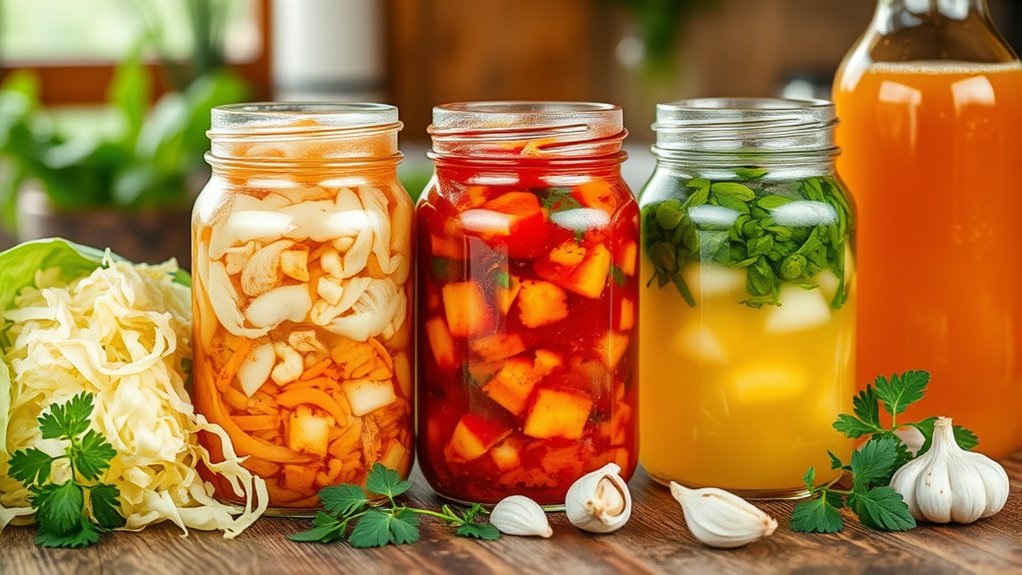

To improve your gut health, start by incorporating fermented foods like yogurt, sauerkraut, kimchi, and kefir into your diet. These foods are rich in probiotics, which introduce beneficial bacteria that support digestion and boost your immune system. Controlling fermentation techniques guarantees you get live cultures and great flavors. By choosing these foods regularly, you’ll promote a healthier gut and overall well-being. Keep exploring to discover simple ways to optimize your gut through fermentation.
Key Takeaways
- Fermented foods like yogurt, sauerkraut, and kimchi introduce beneficial probiotic bacteria that support a healthy gut microbiome.
- Proper fermentation techniques ensure the growth of live probiotics, enhancing gut health and food safety.
- Incorporating fermented foods can improve digestion, boost immunity, and promote overall well-being.
- Making fermented foods at home allows customization of flavors and probiotic content for optimal gut benefits.
- A balanced gut microbiome influenced by fermented foods can positively impact mood, immunity, and digestive function.

Your gut health plays a crucial role in your overall well-being, influencing digestion, immunity, and even mood. One of the most effective ways to support your gut is by incorporating fermented foods into your diet. These foods are rich in probiotic strains—beneficial bacteria that help balance your gut microbiome and improve digestive function. But to truly harness their benefits, it’s helpful to understand how fermentation techniques work and how they develop these beneficial bacteria.
Fermentation is an ancient process where microorganisms like bacteria and yeast convert sugars into acids, gases, or alcohol. When you consume fermented foods, you’re introducing live probiotic strains directly into your digestive system. Common fermented foods such as yogurt, kefir, sauerkraut, kimchi, and kombucha are created through specific fermentation techniques that encourage the growth of these beneficial microbes. For example, yogurt and kefir undergo fermentation with specific bacterial cultures that produce probiotic strains like Lactobacillus and Bifidobacterium. These strains are known for their ability to improve digestion and strengthen your immune response.
In making fermented foods, controlling fermentation techniques is key. Temperature, time, and ingredients all influence the development of probiotic strains and the final flavor and texture of the product. For instance, fermenting vegetables like cabbage for sauerkraut involves submerging shredded cabbage in a salt brine, which encourages lactic acid bacteria to thrive. This process not only preserves the vegetables but also boosts their probiotic content. Similarly, brewing kombucha involves fermenting sweetened tea with a symbiotic culture of bacteria and yeast, creating a tangy, effervescent drink packed with probiotics. Understanding fermentation techniques can help optimize probiotic development and food safety.
By understanding these fermentation techniques, you can even try making your own fermented foods at home, ensuring they contain live probiotic strains. Using the right salt concentrations, maintaining proper temperatures, and timing the fermentation process correctly are essential for maximizing probiotic growth. This DIY approach allows you to customize flavors and ensure you’re consuming fresh, live cultures. Keep in mind that the strains of probiotics present can vary depending on the fermentation method, so experimenting with different techniques can help you discover which foods and strains work best for your gut health.
Incorporating a variety of fermented foods into your diet taps into the power of probiotic strains and fermentation techniques. Doing so not only enhances your gut flora but also supports digestion, immunity, and overall vitality. As you become more familiar with these processes, you’ll find that supporting your gut health becomes a simple, enjoyable part of your daily routine.

Coolinario L Reuteri Yogurt Starter (10-Pack, 1.5g Sachets) Yogurt Starter Culture with Lactobacillus Reuteri Probiotics | Creamy & Delicious | Non-GMO, No Preservatives, Gluten Free
Effortless to Make at Home: Making yogurt at home is simple and rewarding. Heat 2 liters of your…
As an affiliate, we earn on qualifying purchases.
As an affiliate, we earn on qualifying purchases.
Frequently Asked Questions
Can Fermented Foods Replace Probiotics Supplements?
Fermented foods can replace probiotic supplements, but it depends on your probiotic diversity needs. They naturally contain beneficial bacteria that support gut health, but the strains and amounts vary, so supplements might be better for targeted benefits. Guarantee fermented food safety by choosing reputable sources and proper preparation. Incorporating a variety of fermented foods helps maximize probiotic diversity, giving your gut a broader range of beneficial microbes without relying solely on supplements.
Are There Any Foods to Avoid for Gut Health?
You should avoid foods that trigger food sensitivities and contain chemical additives. These irritate your gut, disrupt healthy bacteria, and cause inflammation. Processed snacks, sugary desserts, and fast foods often fall into this category. Cutting back on these foods helps your gut stay balanced and resilient. Instead, choose whole, unprocessed options that support gut health, keeping your digestive system happy and functioning at its best.
How Quickly Does Fermented Food Improve Digestion?
Fermented foods can start improving your digestion within a few days to a week, depending on your fermentation timeline and gut health. You might notice digestive benefits like reduced bloating and improved regularity fairly quickly. However, consistent intake over several weeks enhances these effects. Be patient, as your gut needs time to adapt and fully benefit from the probiotics and enzymes found in fermented foods.
Can Fermented Foods Cause Any Allergic Reactions?
Fermented foods can sometimes trigger allergenic reactions, acting like sparks that ignite your immune response. If you’re sensitive or allergic to certain ingredients, you might experience symptoms like swelling or hives. It’s essential to listen to your body and start with small amounts. If you notice any adverse reactions, consult a healthcare professional. Being cautious helps you enjoy the benefits without letting allergenic reactions shake your health.
What Are the Best Fermented Foods for Beginners?
As a beginner, start with simple fermented foods like yogurt, sauerkraut, and kefir. These require basic fermentation methods and are easy to prepare at home. Use proper storage techniques to keep them fresh and safe, such as airtight containers and refrigeration. These foods are rich in probiotics, supporting gut health. Gradually incorporate them into your diet, and you’ll enjoy their benefits while mastering fermentation techniques.

Masontops Complete Mason Jar Fermentation Kit – Easy Small/Regular Mouth Jars Vegetable Fermenting Set – DIY Equipment Essentials
PREMIUM STARTER KIT FOR THE HOME FERMENTER: Includes all the tools needed to convert a regular (small) mouth…
As an affiliate, we earn on qualifying purchases.
As an affiliate, we earn on qualifying purchases.
Conclusion
Taking care of your gut with fermented foods can boost your overall health and digestion. Did you know that around 70% of your immune system resides in your gut? Incorporating these foods into your diet is a simple, tasty way to support that immune function and improve your well-being. So, start small, enjoy the flavors, and give your gut the nourishment it deserves for a healthier, happier you.

Cultures for Health Water Kefir Grains | DIY Fermented Probiotic Drink Powder for Stronger Gut Health | Heirloom Starter Makes Limitless Supply | Non-GMO Dairy Free Vegan Sparkling Water with Enzymes
HEIRLOOM STYLE: These kefir starter grains can be used to continuously re-culture more kefir for as long as…
As an affiliate, we earn on qualifying purchases.
As an affiliate, we earn on qualifying purchases.
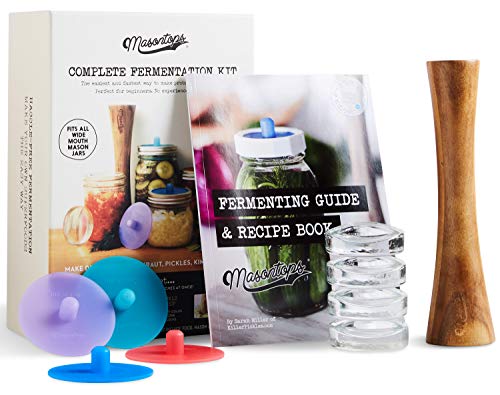
Masontops Complete Mason Jar Fermentation Kit – Pickle Kit, Sauerkraut Making Kit Kimchi Container – Fermentation Airlock Lids Wide Mouth Mason Jars
MASONTOPS COMPLETE MASON JAR FERMENTATION KIT: Includes all the tools needed to turn your ordinary wide mouth mason…
As an affiliate, we earn on qualifying purchases.
As an affiliate, we earn on qualifying purchases.